


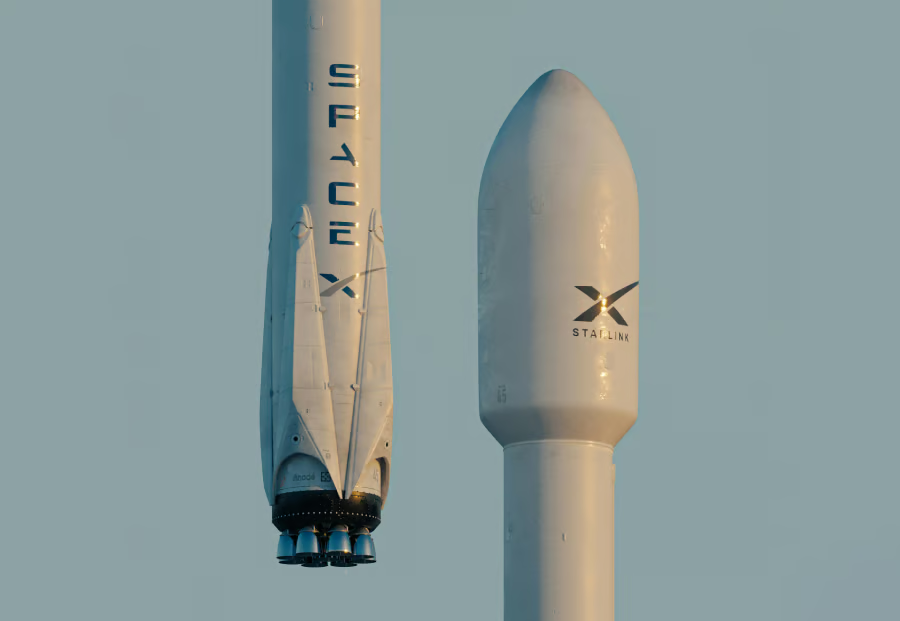
SpaceX is targeting July 23 for another attempt to launch Starship V3 after an automatic abort delayed its second test flight by one week.
The aerospace company was unable to conduct further testing for Starship V3 for two months after a booster engine failure on its first flight grounded testing while the Federal Aviation Administration (FAA) investigated. It received the all-clear on July 11 and scheduled the second test flight for a week later.
Another booster issue caused the rocket to automatically abort last week’s test, with two Raptor engines removed and replaced ahead of the upcoming flight. SpaceX announced the 13th test on X, with CEO Elon Musk also confirming the date.
Starship V3 success critical to SpaceX’s future
SpaceX views Starship V3 as the version intended for future commercial payload missions, making the upcoming test an important milestone for the program. It has conducted 12 Starship test flights since 2023, but has struggled to maintain orbit for extended periods due to the rocket’s enormous weight.
The payload for the upcoming mission will be 20 third-generation Starlink satellites, which will be tested in orbit before descending back to Earth. SpaceX has sought approval from the Federal Communications Commission (FCC) to launch 100,000 of these satellites, potentially opening the door to consumer cellular services.
In its IPO prospectus, Goldman Sachs and other banks said Starlink would be SpaceX’s second-largest revenue segment by 2030, generating $144 billion for the company. To reach that level, Starship needs to successfully reach orbit and remain there long enough for large payloads to deploy, while SpaceX also needs to place far more satellites into orbit.
More about Innovation
- Sovereign AI Explained
- The Rise of the AI-Native Factory
- Why Data Determines AI Success
- SS&C Intralinks DealCentre AI vs. Datasite: Which platform is built for the future of dealmaking?
Stock price could take another hit after test failure
Shortly after SpaceX announced it had aborted the mission, it lost about $100 billion in value, MSN reported. This shows how skittish investors are about any bad news from the company.
SpaceX had a strong start on the public market, at one point surpassing Amazon in value, but its valuation has dropped considerably over the past week. It fell below its IPO price last Tuesday and has declined 12% since then.
Part of the reason for the skittishness is SpaceX’s relatively low revenue compared with companies carrying a similar market cap, such as TSMC, Broadcom, and Meta. It is also not currently profitable, although the amount of revenue it is generating from selling server capacity to AI developers may bring it back to profitability sooner than expected.
SpaceX is not the only aerospace company to suffer setbacks. One of its main rivals, Blue Origin, experienced a major setback after its New Glenn rocket exploded on the launchpad. Although the company is targeting at least one more launch before the end of 2026, it appears likely to remain out of action for several more months.
A successful mission would mark an important step toward routine commercial Starship launches and the deployment of larger batches of next-generation Starlink satellites. Another setback, however, would likely extend development timelines for SpaceX’s most ambitious launch vehicle.
Other News: SpaceXAI has open-sourced Grok Build after a privacy backlash over excessive code uploads, giving developers greater transparency while stopping short of opening the proprietary Grok AI model itself.