


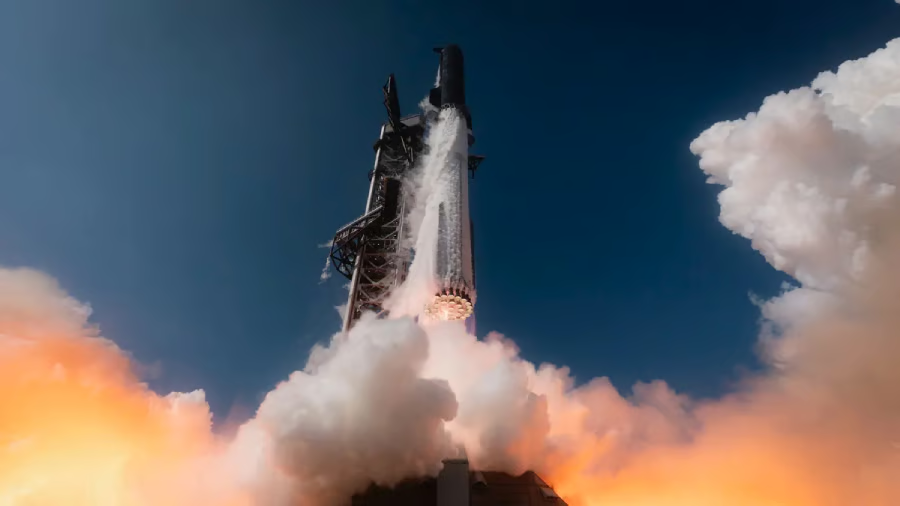
SpaceX aborted its planned Starship V3 launch at the last minute on Thursday, after an engine issue triggered an automatic abort sequence.
“Some of the engines didn’t start, triggering an automatic launch abort,” SpaceX CEO Elon Musk said on his social media platform X.
It would have been only the second launch of Starship V3 and SpaceX’s first as a public company. The first attempt in May forced SpaceX to ground Starship tests for two months, while it and the Federal Aviation Administration investigated the cause of a booster failure.
“To be confident of a good flight, two Raptors will be removed and replaced,” Musk added. “Most probable launch timing is early next week.”
A delayed launch, a bigger spotlight
As a public company, SpaceX is more exposed to botched launches, hurting its valuation. News of the postponed launch caused a four percent drop in the company’s stock price, which had already been declining since its first few days of trading.
Even with this drop, SpaceX remains one of the 10 most valuable companies in the world by market cap, at $1.65 trillion, although this has fallen by more than $1 trillion over the past week. There is no telling where the bottom is for the company, which generates far less revenue than the others in the top 10 and is not profitable.
The payload for the aborted test was 20 third-generation Starlink satellites, which would have returned to Earth shortly after orbital testing. SpaceX has sought approval from the Federal Communications Commission to launch 100,000 of these satellites, vastly expanding the availability of its Starlink service.
In its IPO prospectus, Starlink was a key part of the company’s short- to medium-term revenue strategy. This would require a major increase in Starlink customers, which, in turn, would require far more satellites in orbit. SpaceX has also reportedly been considering a consumer cellular service to challenge AT&T and Verizon.
More about Innovation
- Sovereign AI Explained
- The Rise of the AI-Native Factory
- Why Data Determines AI Success
- SS&C Intralinks DealCentre AI vs. Datasite: Which platform is built for the future of dealmaking?
Space industry reaches a critical growth point
All of this rests on the capabilities of Starship, the massive rocket central to SpaceX’s ability to launch these satellites, explore space, and transport people and resources to the Moon and Mars.
It is not the only aerospace company facing issues on the launchpad. Blue Origin, run by Amazon founder Jeff Bezos, has delayed the launch of its New Glenn rocket until at least the fourth quarter of this year, following a large explosion that destroyed part of the launchpad. Firefly Aerospace and Rocket Lab have also suffered setbacks this year.
Even though Musk and Co. are confident in a launch next week, a failed or delayed Starship program could ultimately slow the expansion of Starlink, affecting when consumers gain access to faster satellite broadband and new cellular alternatives.
Related: SpaceXAI recently open-sourced Grok Build after privacy concerns over the AI coding tool’s data collection, a move aimed at rebuilding developer trust.