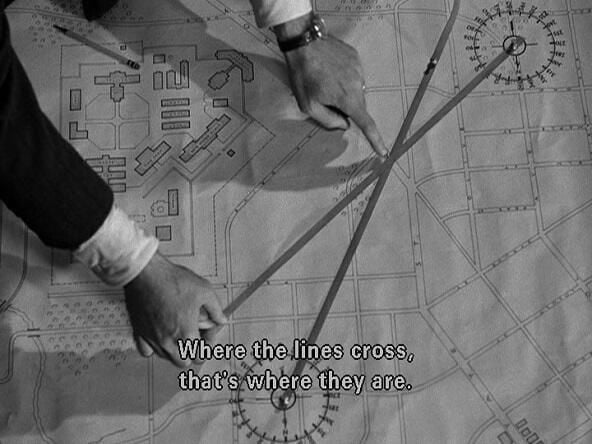
White Heat, a 1949 gangster film starring James Cagney, reached its climax with a police chase. Unbeknownst to Cagney’s character, an undercover cop had wired his car with a radio oscillator. The police used two cars outfitted with directional radio receivers, allowing them to triangulate the location of the fleeing car. The end result was … explosive.
Radio triangulation had been in use for a while, but seeing it applied to an urban environment to track a vehicle was amazing in 1949. It gave the public a window into the latest law enforcement technology–something that gangster films have been famous for over the years.
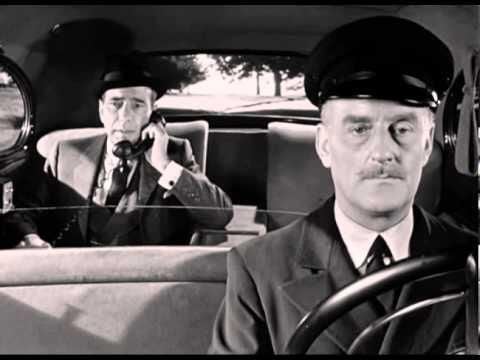
1954’s Sabrina may well be the first appearance of a phone installed in an automobile. Humphrey Bogart used the amazing device to conduct business while commuting from home to the office, leaving audiences amazed.
Car phones were first invented in 1946 but didn’t make it much further than St. Louis at the time. They weighed 80 pounds and only had three radio channels shared between the entire city, making them pretty limited. They did end up slowly spreading, and radio phones like those of 1946 remained functional until the early 80s when cellular technology took hold.
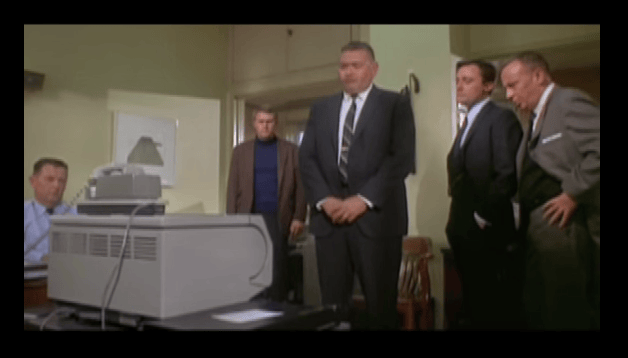
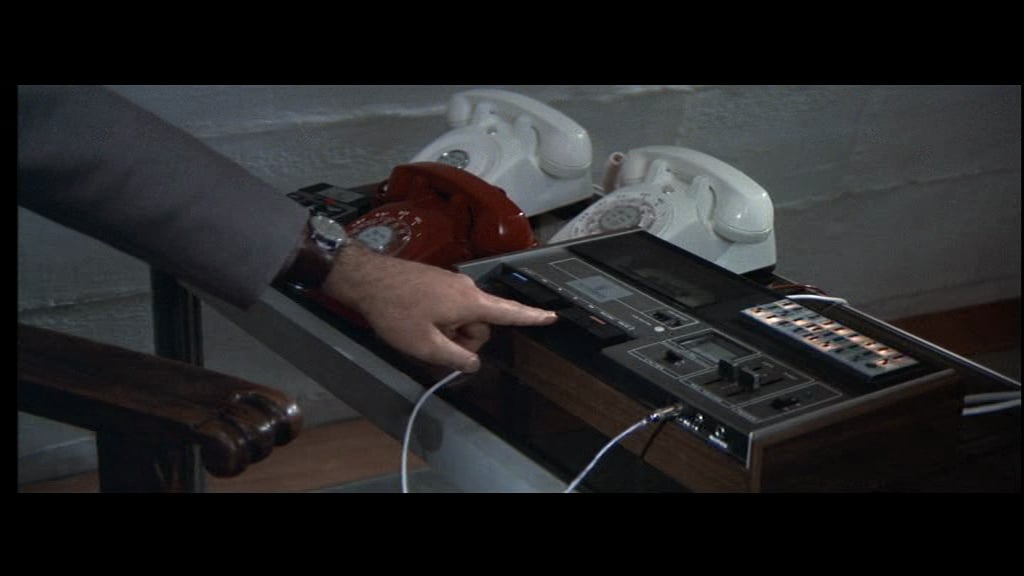
Faxing is hardly a new piece of technology: it has been used to send photographs since 1924. Modern machines, like the one seen in Bullitt, were still newfangled, though.
The 1968 film featured Steve McQueen as tough-guy police lieutenant Frank Bullitt and made its place in movie history not only for the 10-minute over-the-top car chase, but also for the first memorable appearance of the modern fax machine in a film.
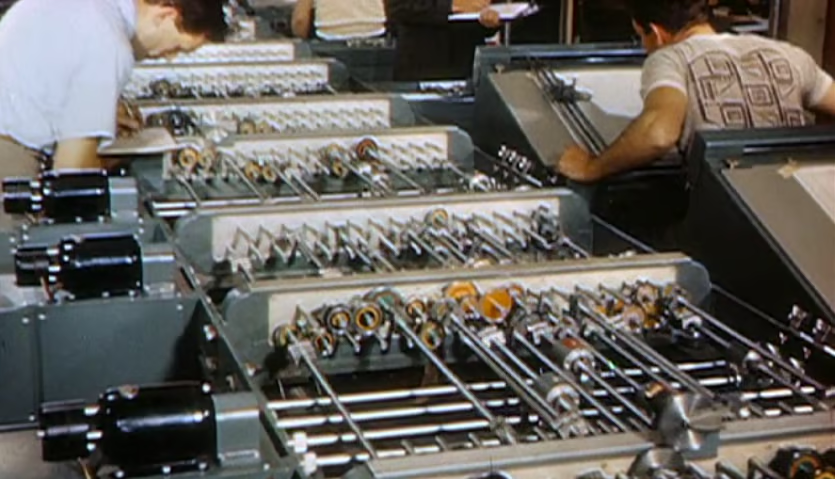
The GE Differential Analyzer, pictured above, doesn’t look anything like the modern computer, and that’s because it’s not. It’s an analog computing device that was used to solve differential equations.
1950 film Destination Moon featured stock footage of one and used it to map rocket trajectories, allowing the United States to beat the Soviet Union to the moon over 10 years before it was reality.
The FBI wouldn’t get around to developing something similar to the modern fingerprint scanner until 1975, but Diamonds Are Forever predicted it four years earlier.
Bond fooled a fingerprint-reading camera in the film using fake fingerprints. Experts pick the scene apart as unrealistic, but let’s be practical: it’s James Bond: nothing is realistic.
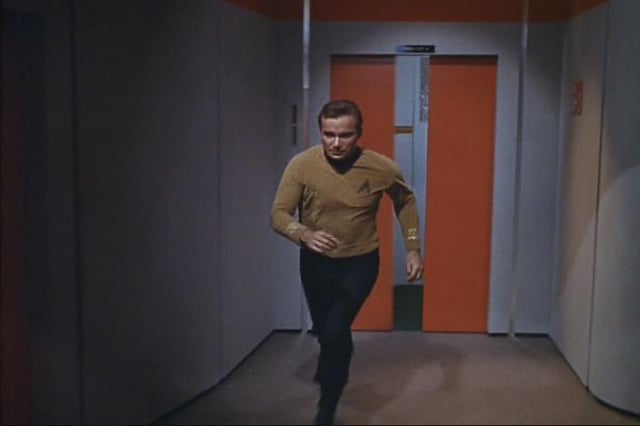
The winds of Corpus Christi, TX, made opening doors to the outside difficult at times, and in 1954 Lew Hewitt and Dee Horton invented the sliding door. Their creation wouldn’t become a commercial reality until 1960, and by the time Star Trek took to the airwaves in 1966 they were still considered amazingly advanced.
Kirk and company moved seamlessly through the ship, but they had a secret that every Trek series has shared: there’s just some extras pulling the doors apart behind the set.
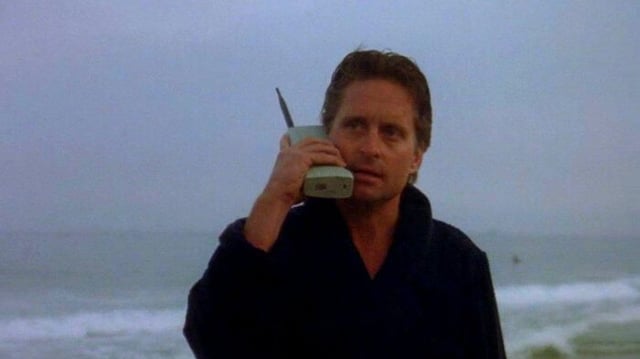
If the carphone was amazing in 1954, the brick-shaped Motorola DynaTac 8000X used by Gordon Gekko in Wall Street was just even more impressive. The cost of one of the two-pound behemoths was nearly $4,000 in 1987, making their appearance a rare mark of wealth.
That same year Danny Glover also carried a briefcase-sized mobile device to make calls in Lethal Weapon: definitely the average joe’s mobile device compared to Gekko’s amazingly compact version.
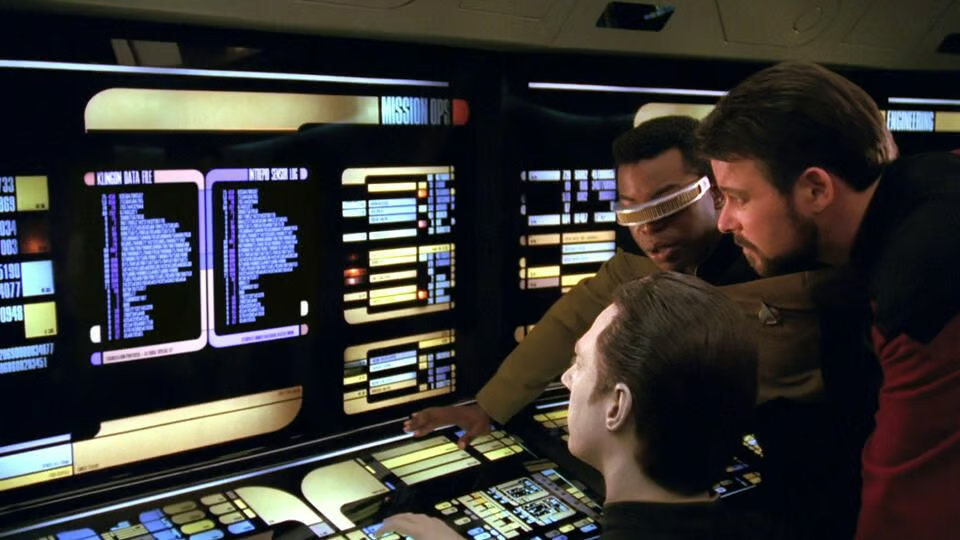
Yes, touchscreens have been around in film and TV for a long time, but it’s Star Trek The Next Generation that first gave us the equivalent of the modern multitouch ones we all use now.
Multitouch technology was functioning as early as 1982, when researchers at the University of Toronto developed a system that used a camera behind a piece of frosted glass. It operated based on detecting dark spots where fingers made contact with the surface. Hardly as advanced as TNG’s Okudagrams, but the same basic principle: a screen that takes multiple inputs at once.
LCARS consoles seemed so advanced in 1987–hard to believe similar technology already existed.
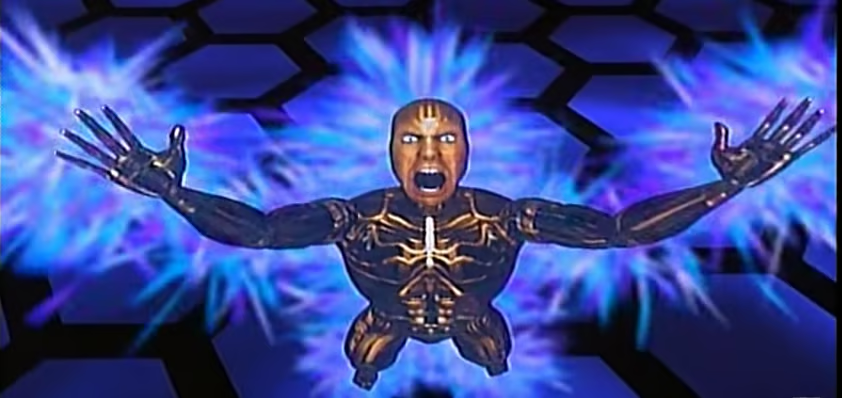
A lot of modern VR developers cite the 1992 film Lawnmower Man as the thing that drove them to get into virtual reality. Sure, it wasn’t a faithful telling of Stephen King’s original story (so much so that he sued to have his name taken off), but it did break ground in CG and VR.
Director Brett Leonard even spoke at a Toronto VR conference because he’s such an important figure in the early years of development. Virtual worlds may only now be catching up to what was imagined in 1992, but there’s no doubt Lawnmower Man brought it to wide scale public awareness, whether Stephen King liked it or not.