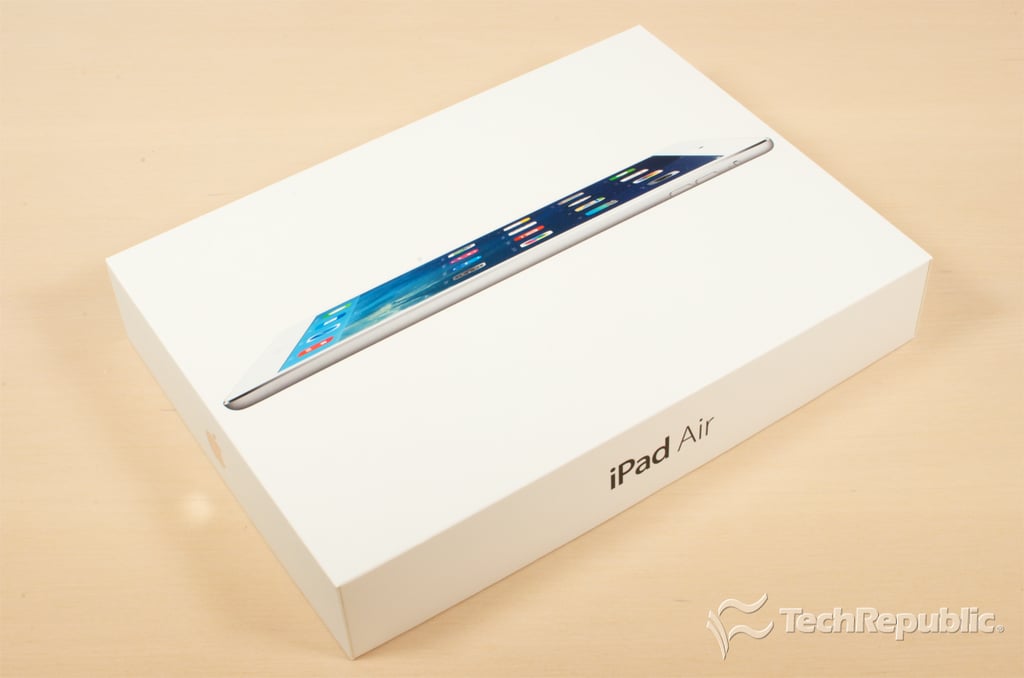
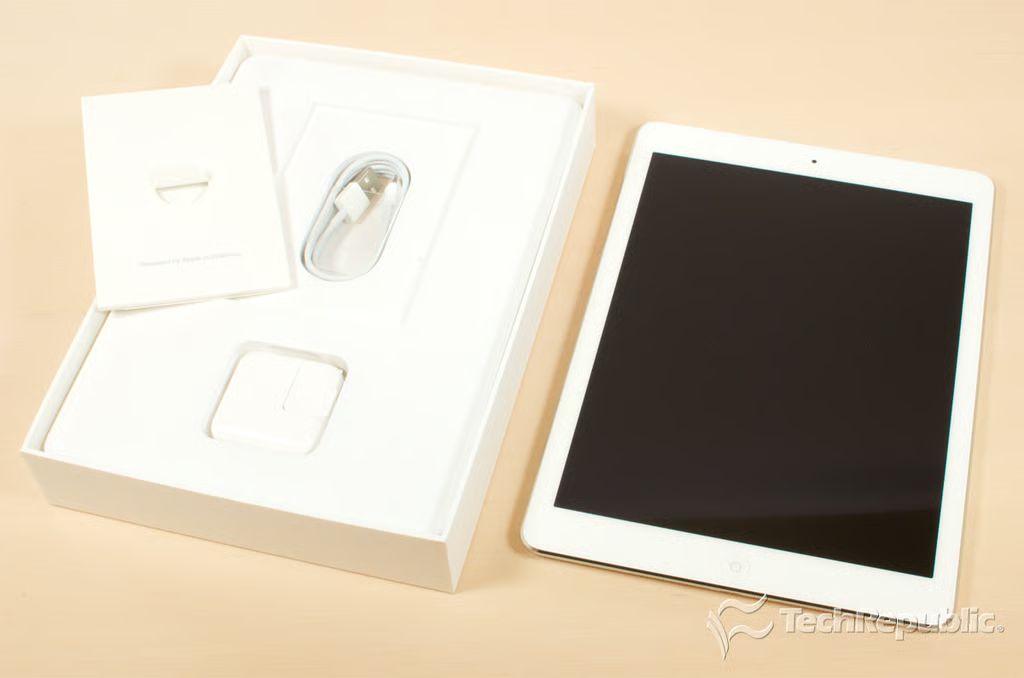
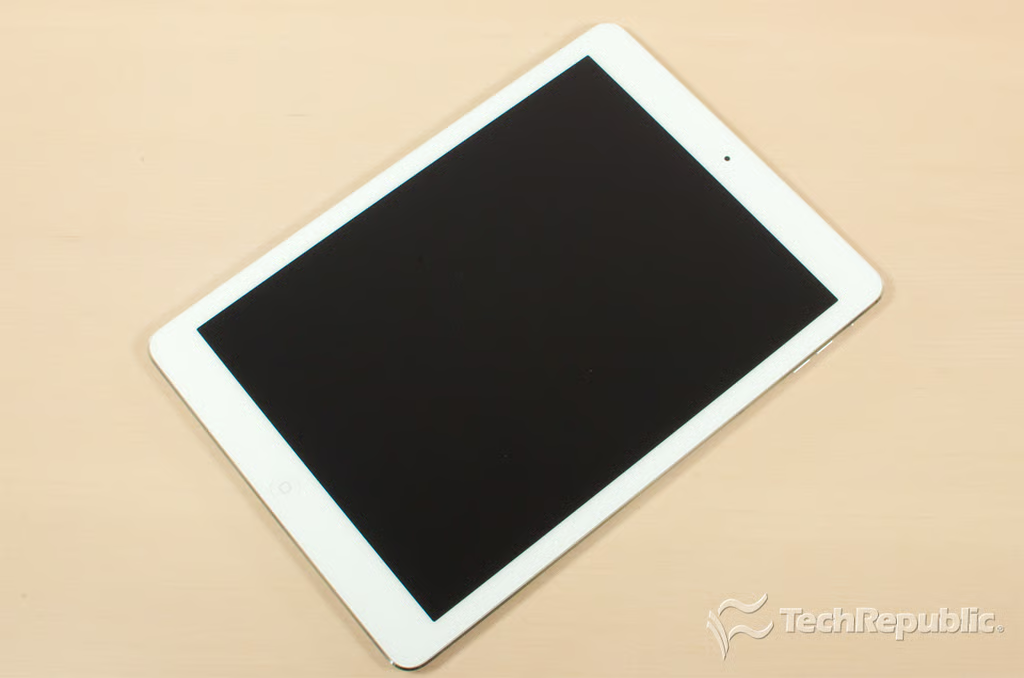
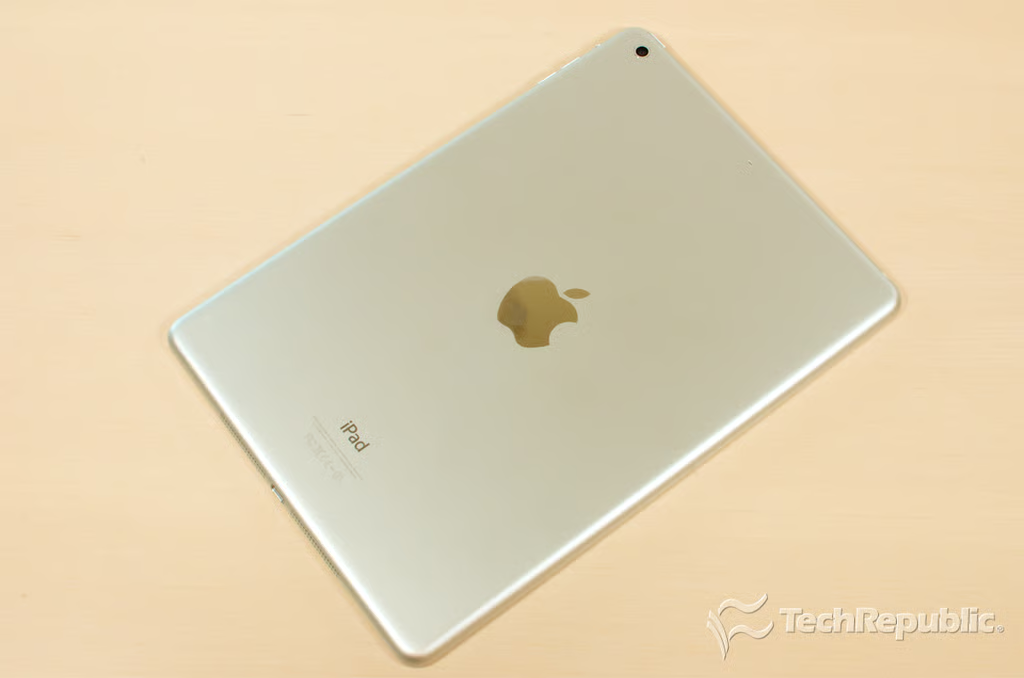
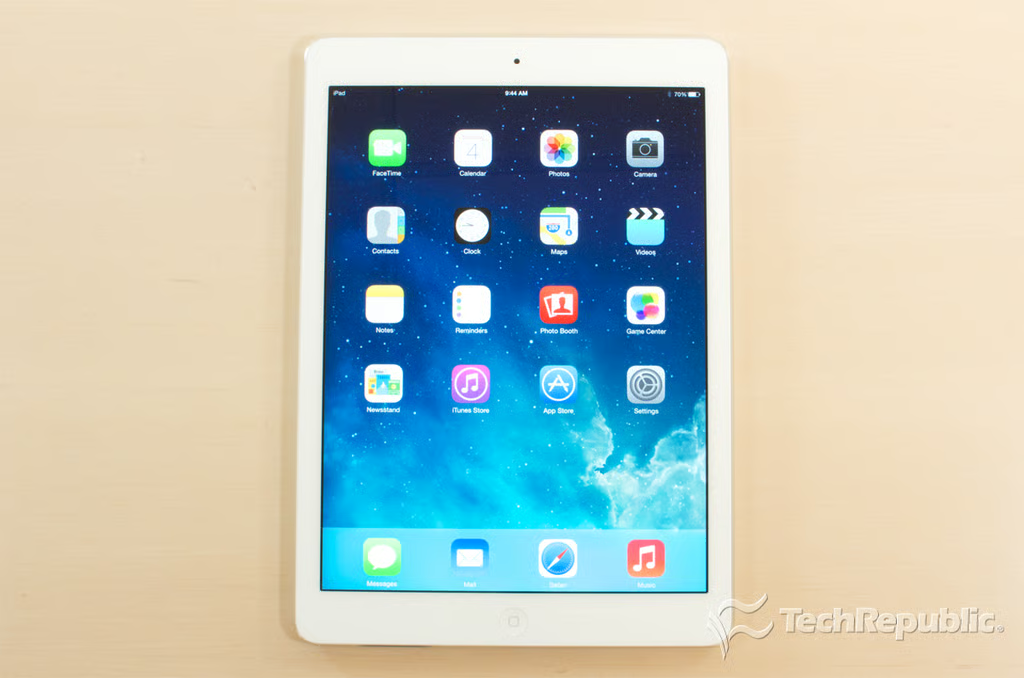
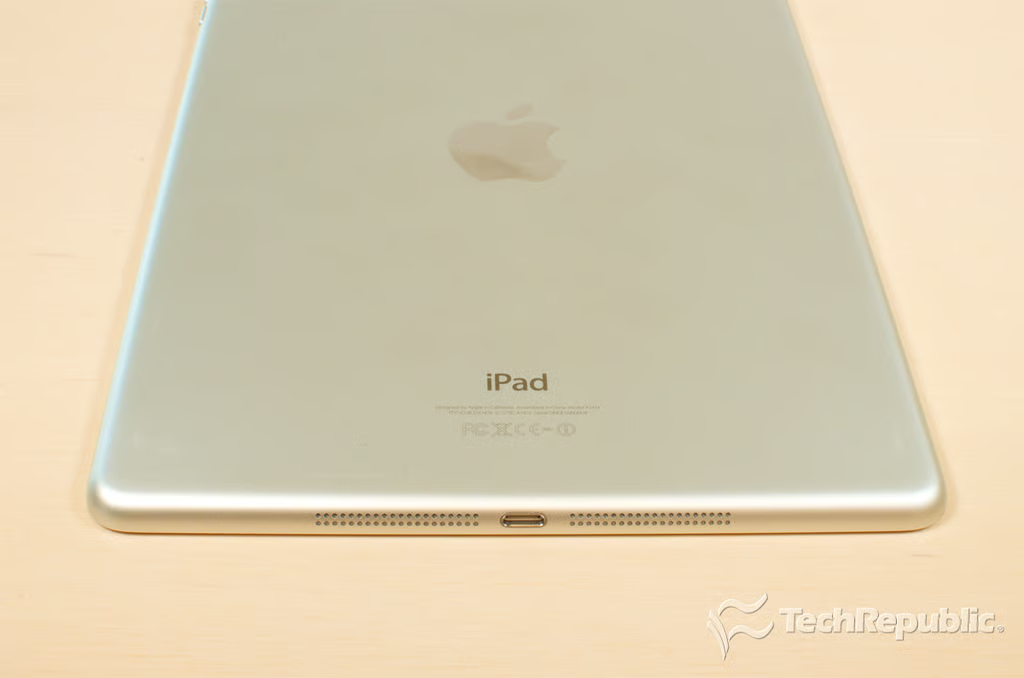
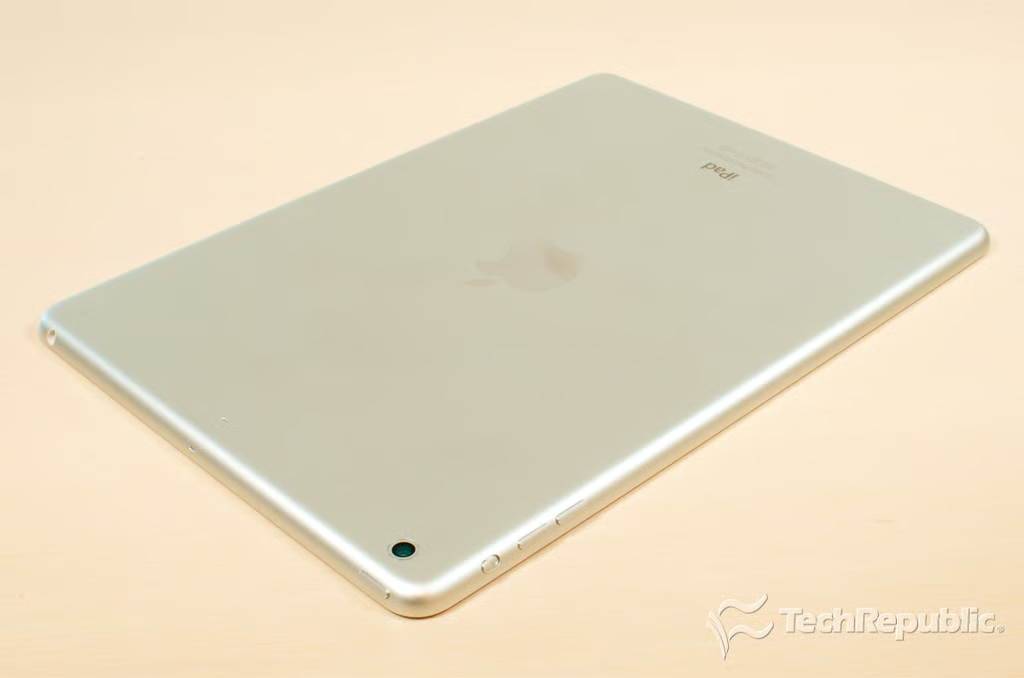
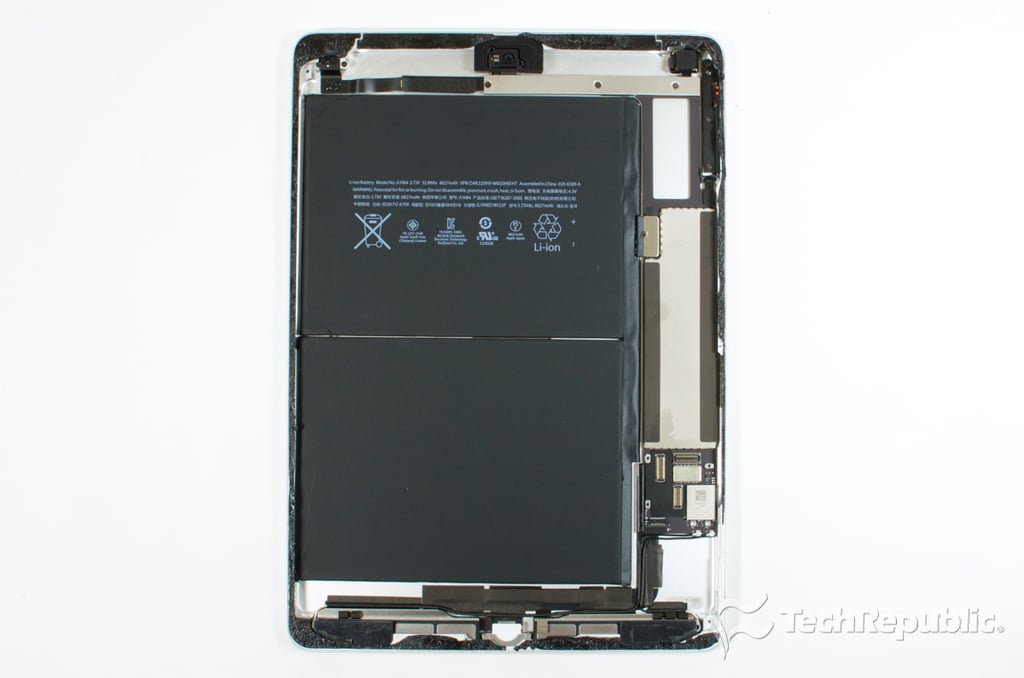
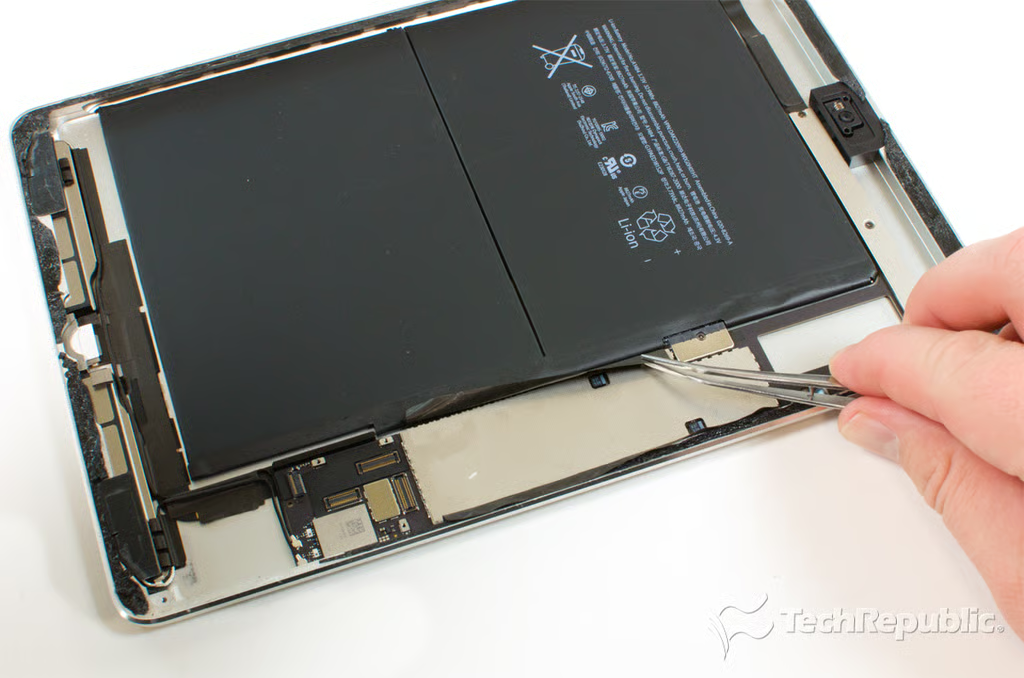
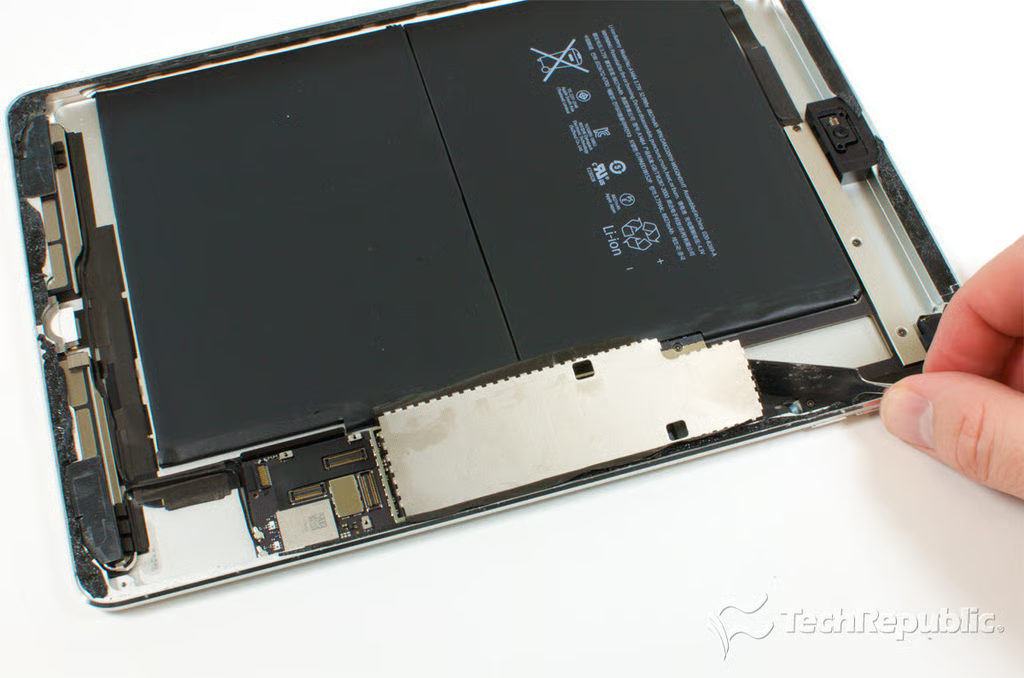
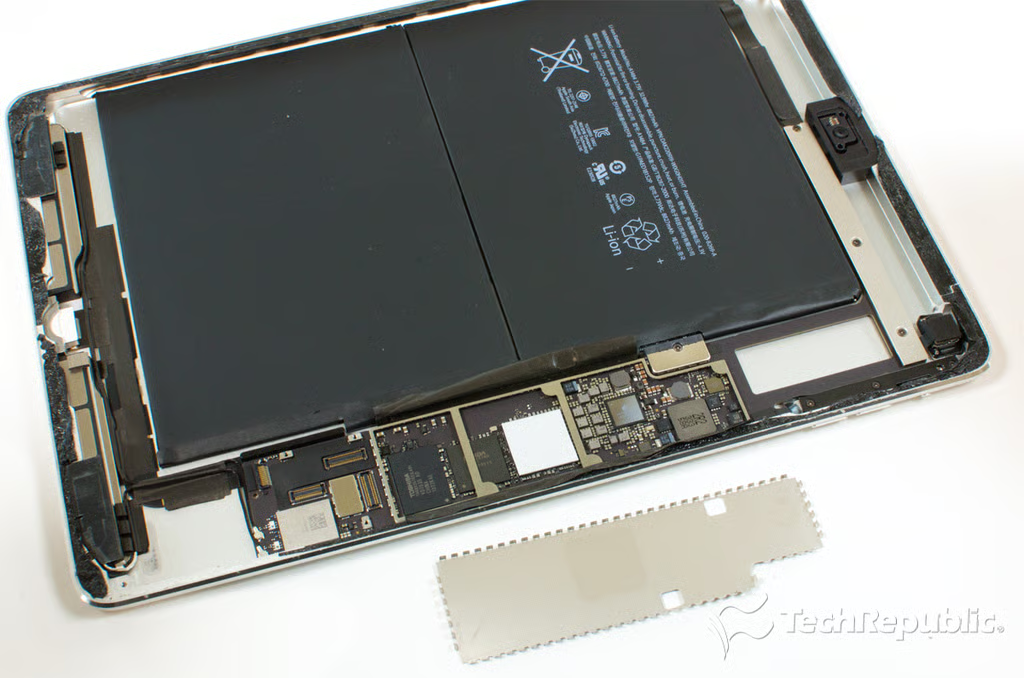
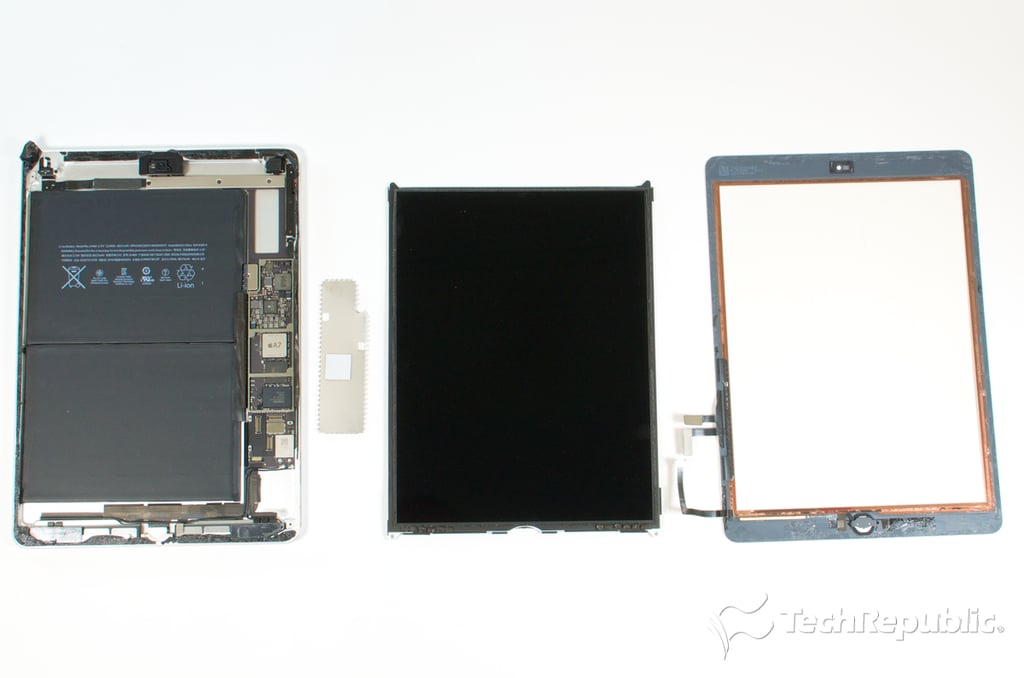
The iPad Air is the thinnest and lightest version of Apple’s full-size tablet. It also has a faster processor, better front-facing camera, a completely flip flopped internal layout, and lots of other hardware updates.
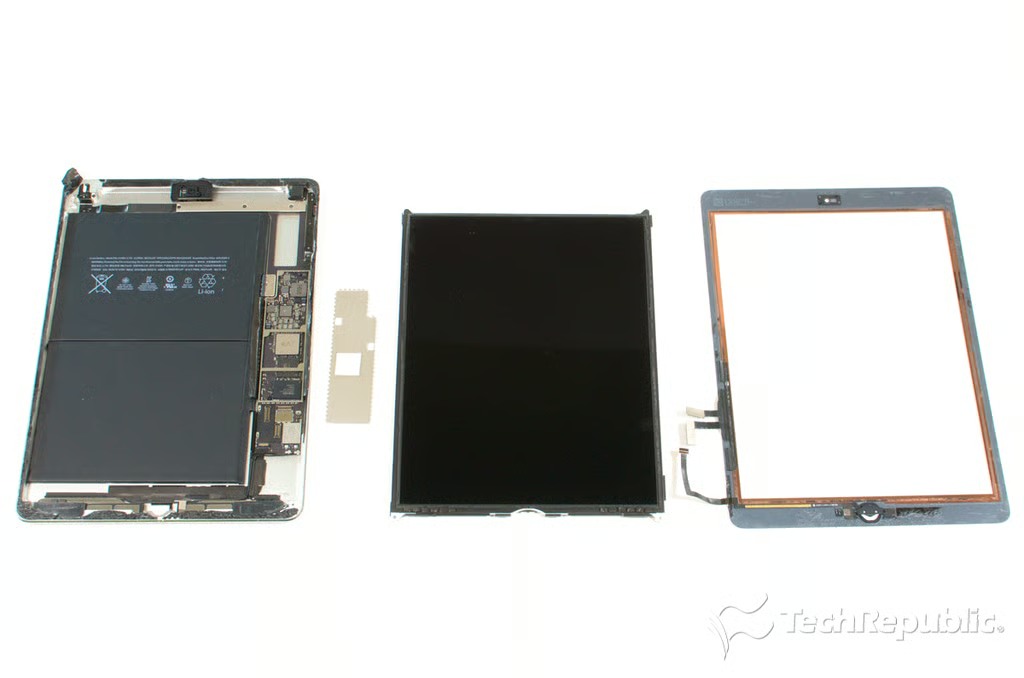
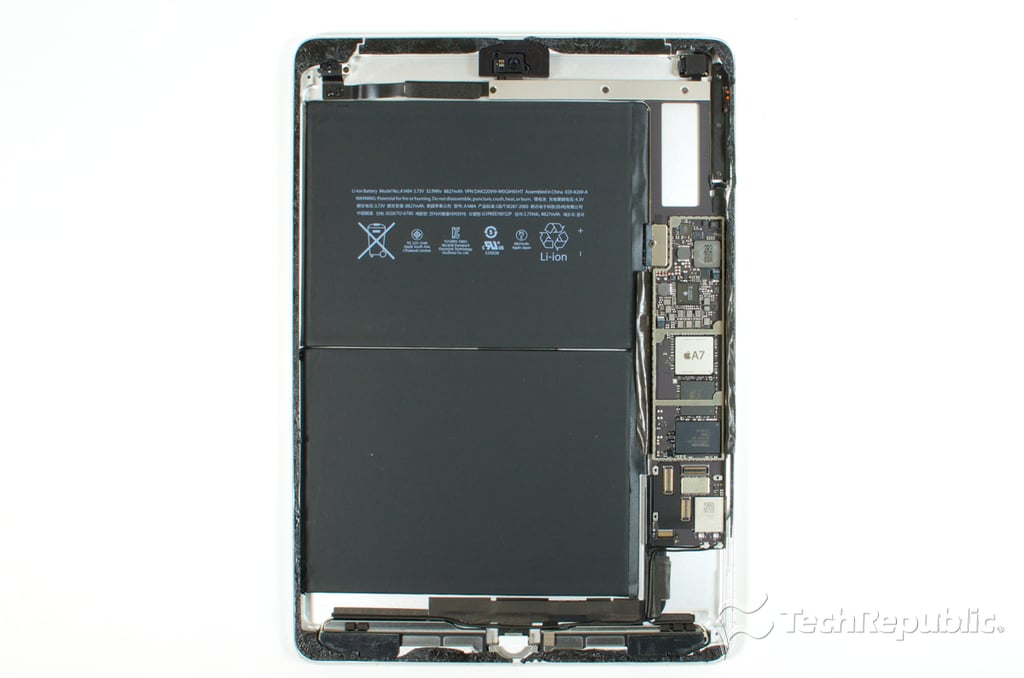
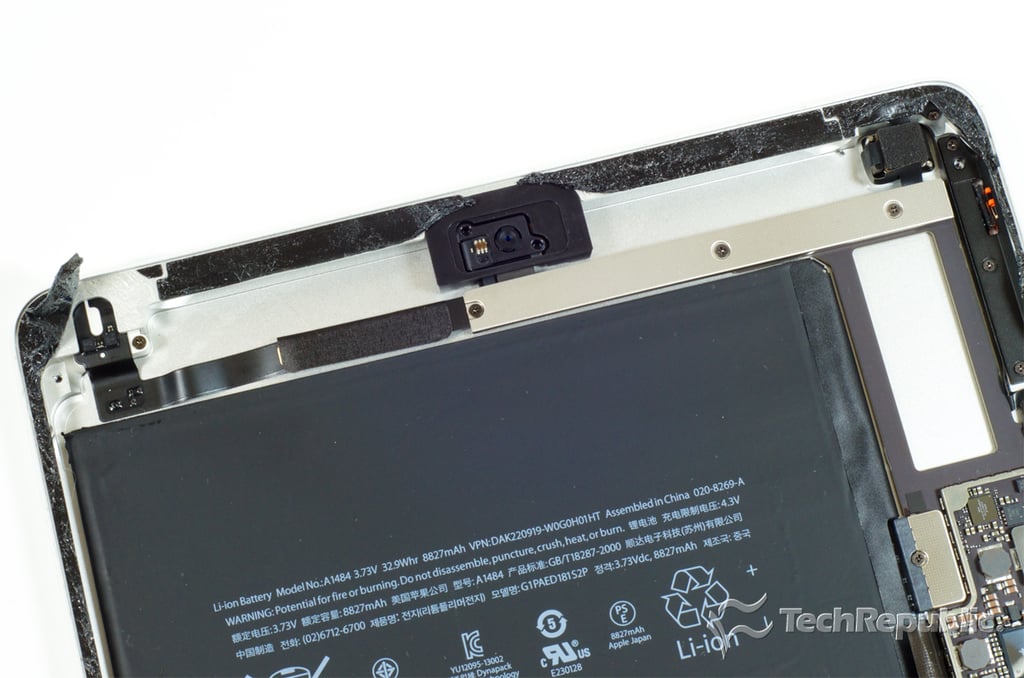
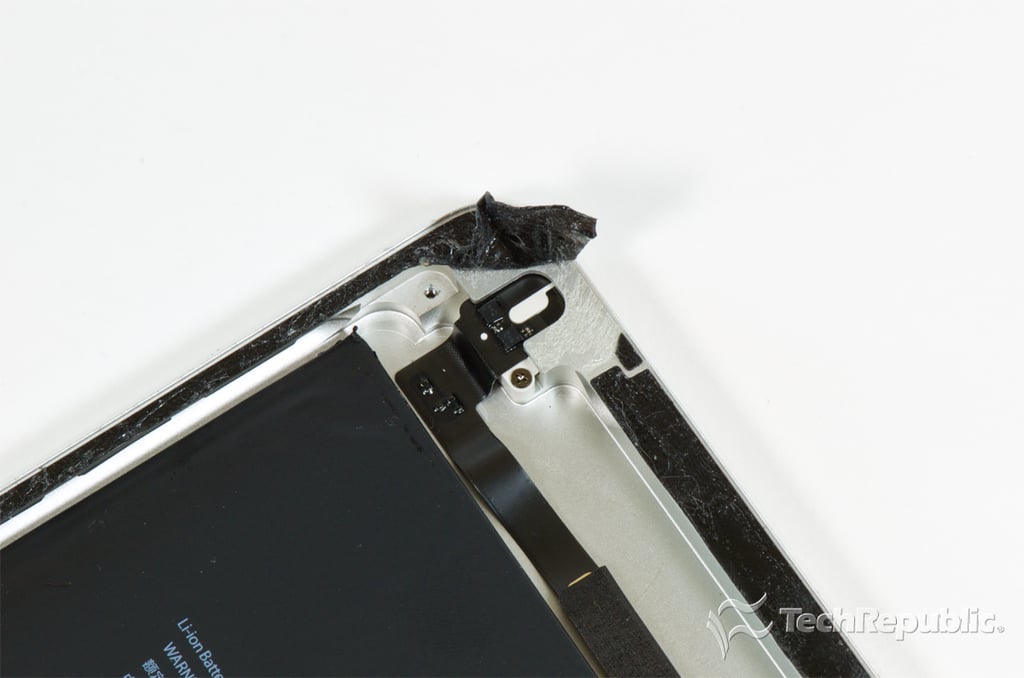
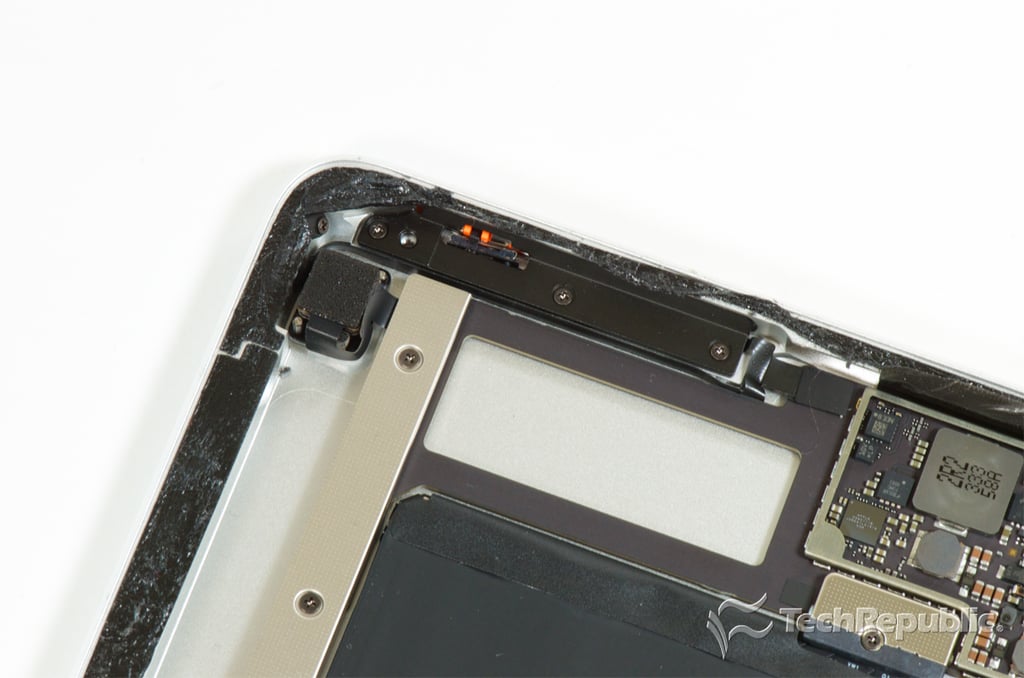
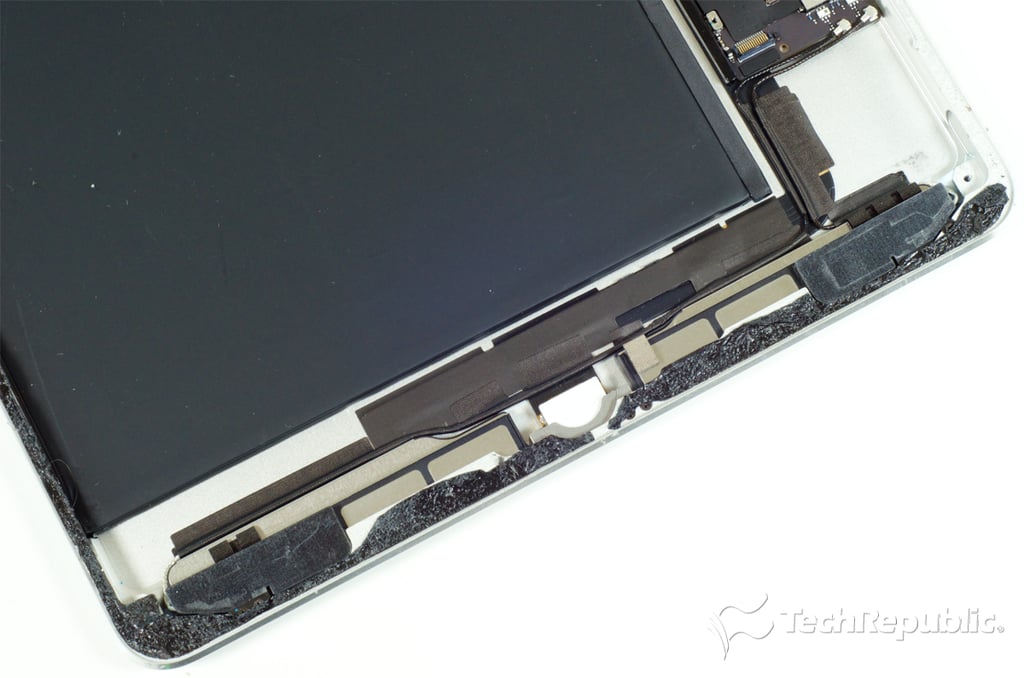
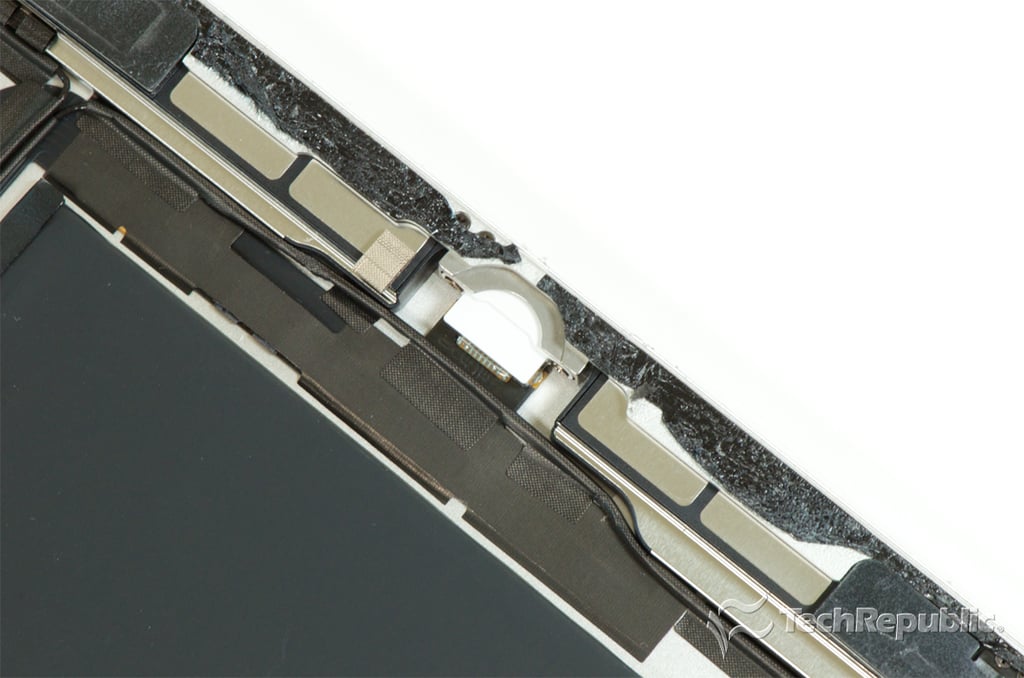
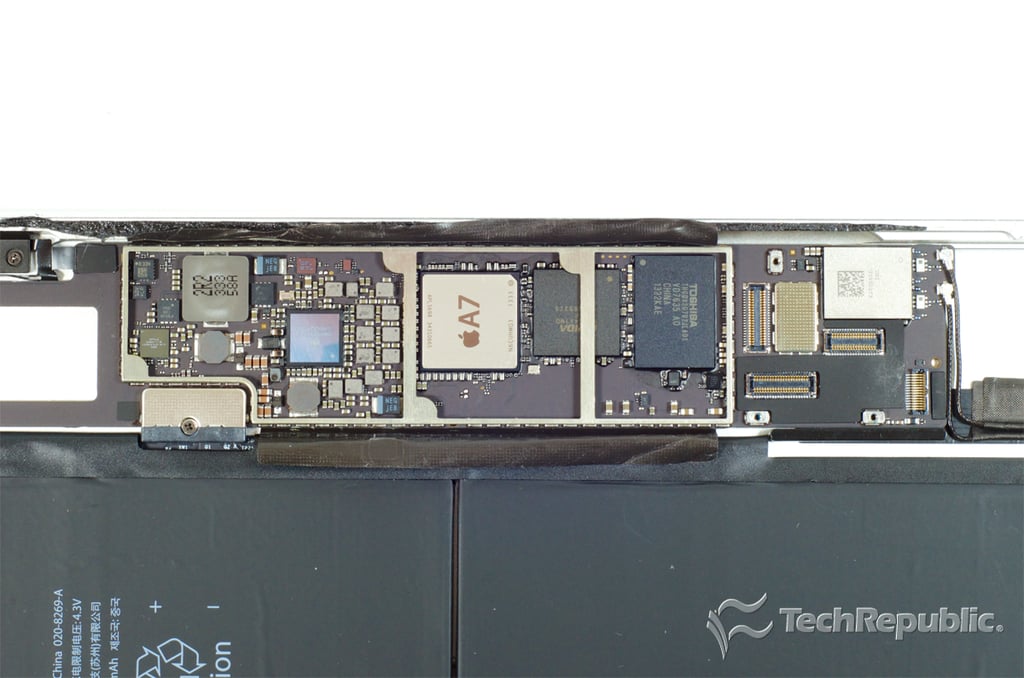
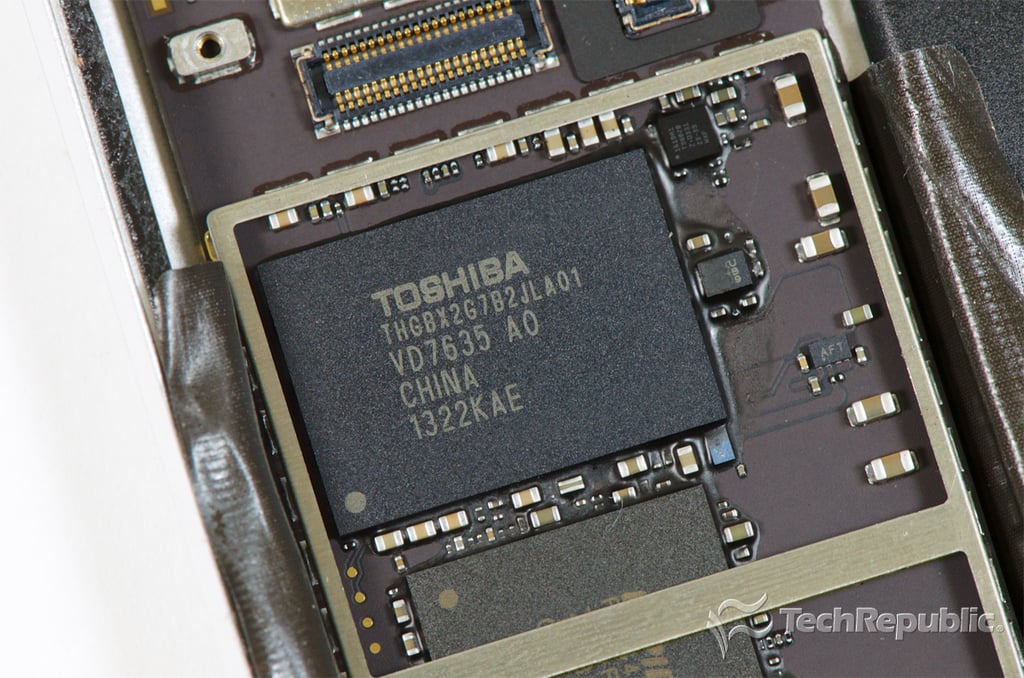
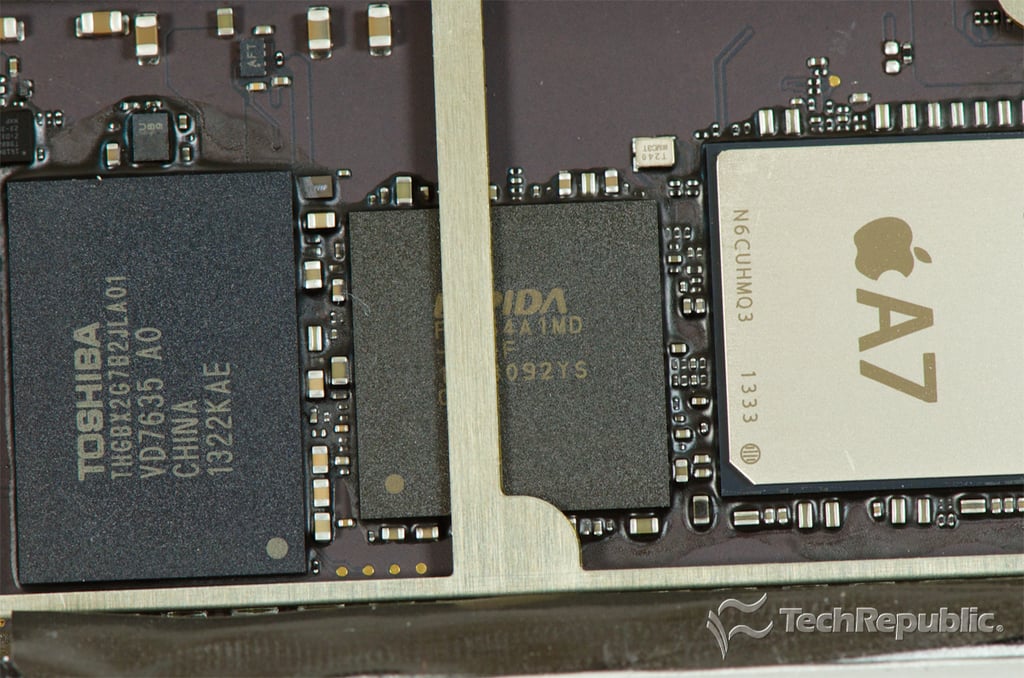
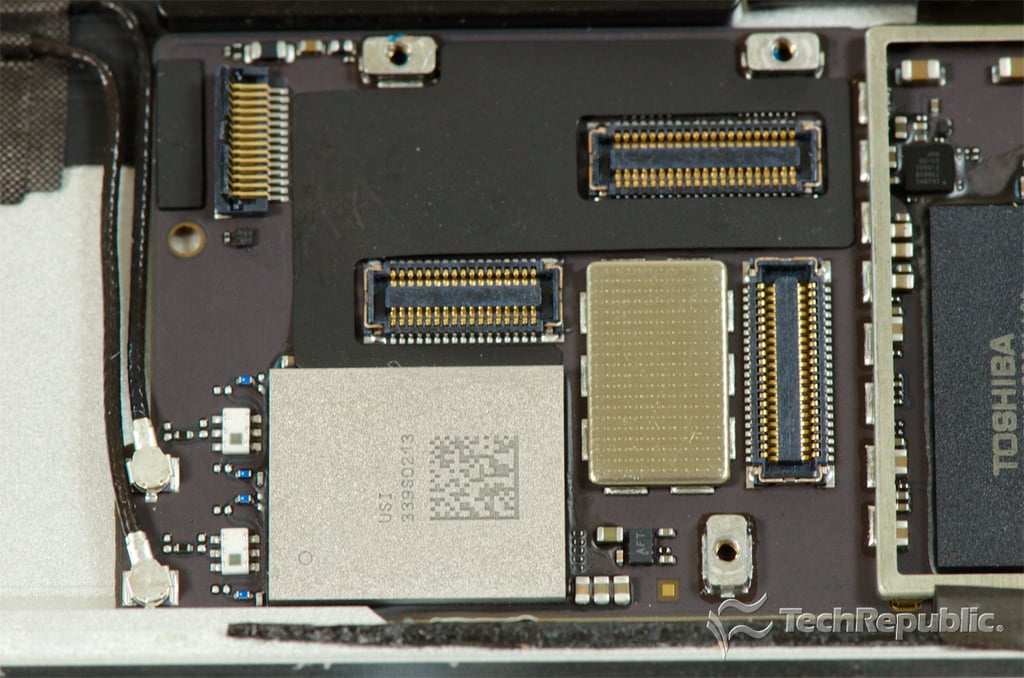
In this Cracking Open gallery, I show you how to get inside the device and give you a tour of the redesigned interior. For a detailed analysis of the teardown, check out my article and video, iPad Air teardown reveals significant internal design changes.
The iPad Air is available with 16GB, 32GB, 64GB, or 128GB of storage and comes in two finishes–Space Gray (black) and Silver (white). Wi-Fi versions of the Air start at $499 and go up to $799. Cellular models start at $629 and top out at $929.
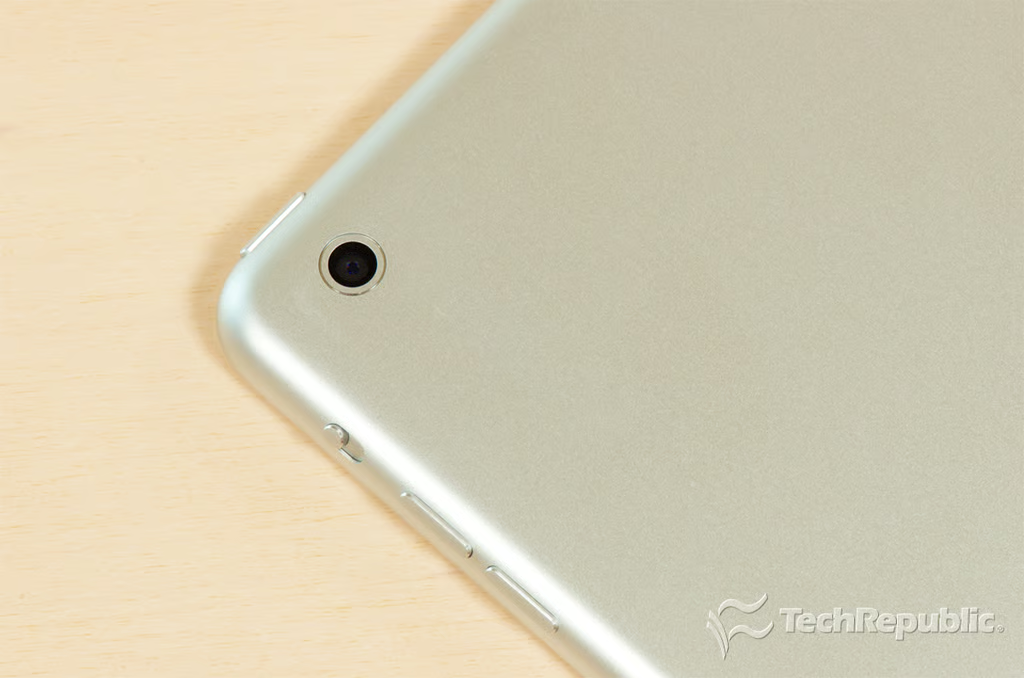
At 6.6 inches wide, 9.4 inches tall, and a mere 0.29 inch thick, the 2013 iPad Air is thinner, shorter, and narrower than the iPad 4. It also weighs nearly half a pound less (1.0 pound for Wi-Fi and 1.05 pounds for cellular).
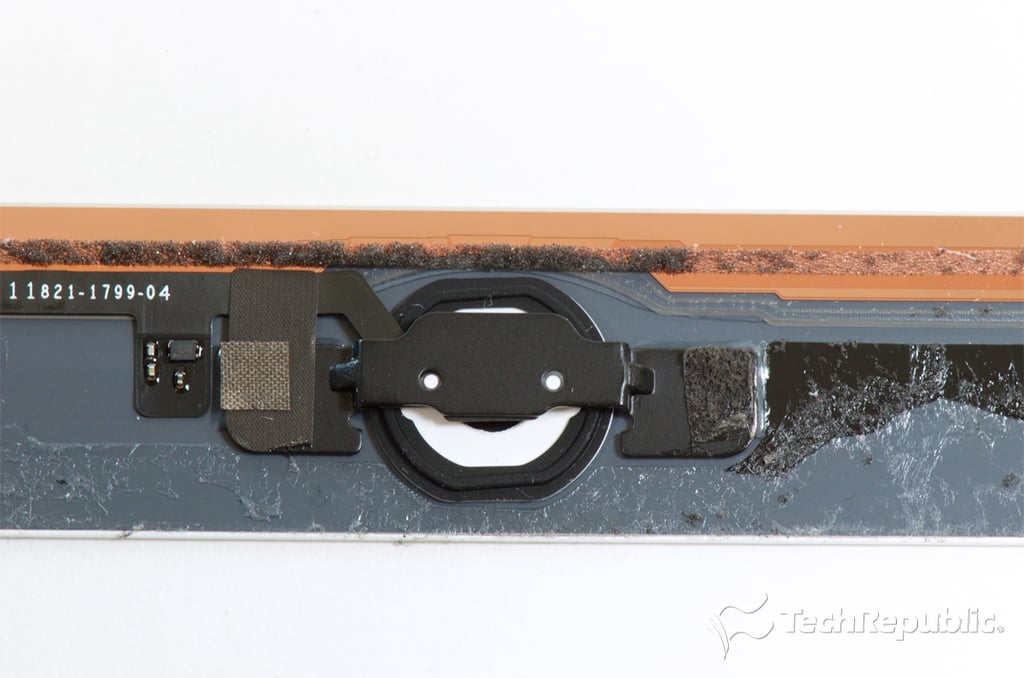
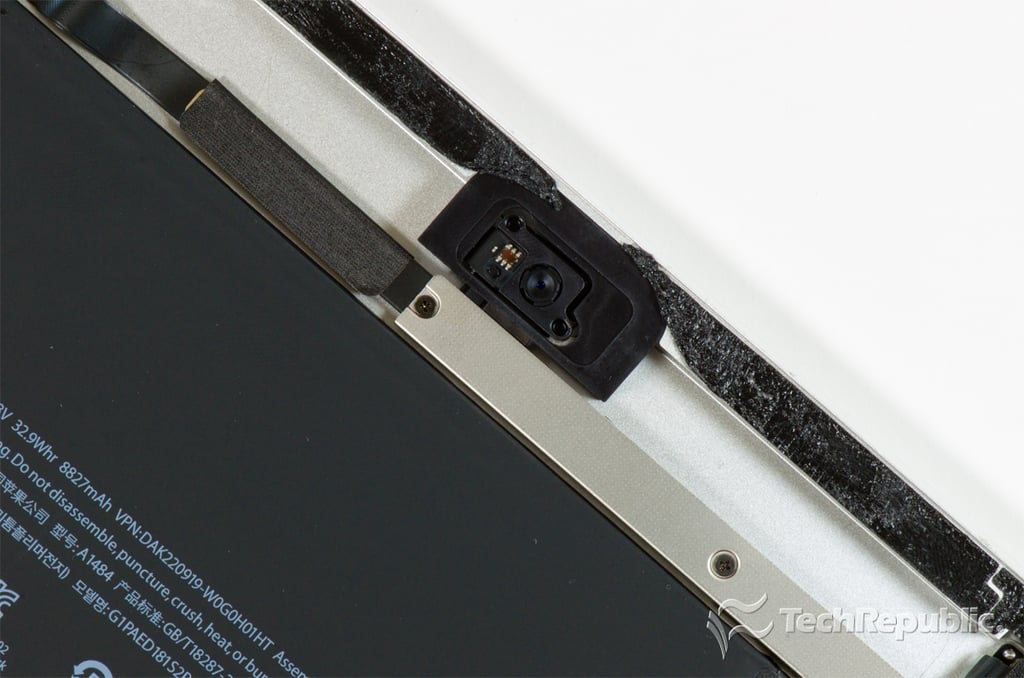
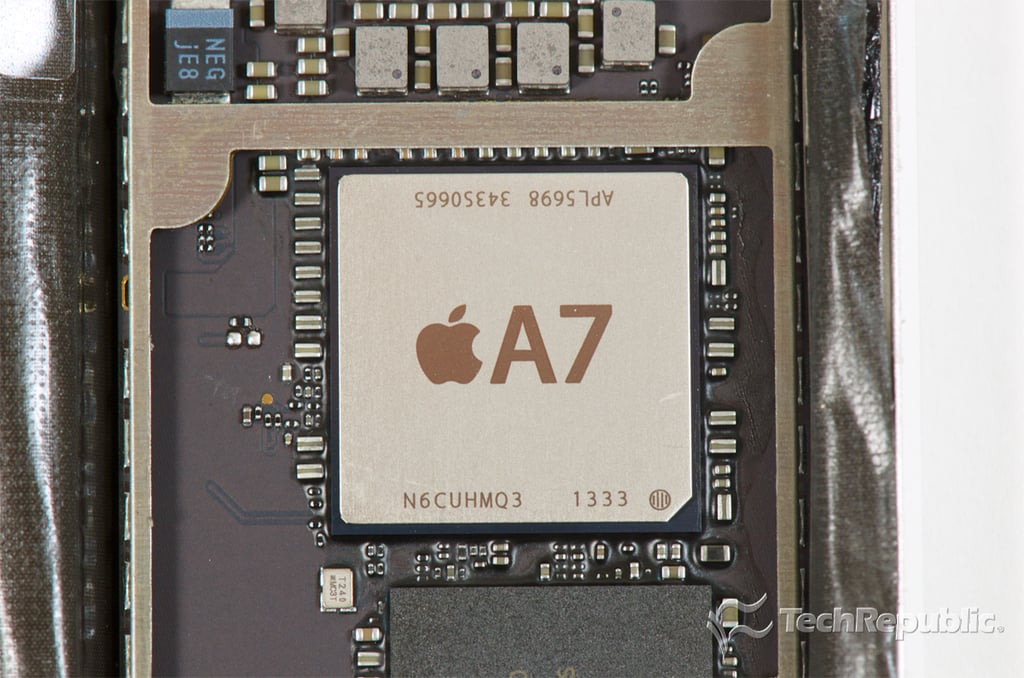
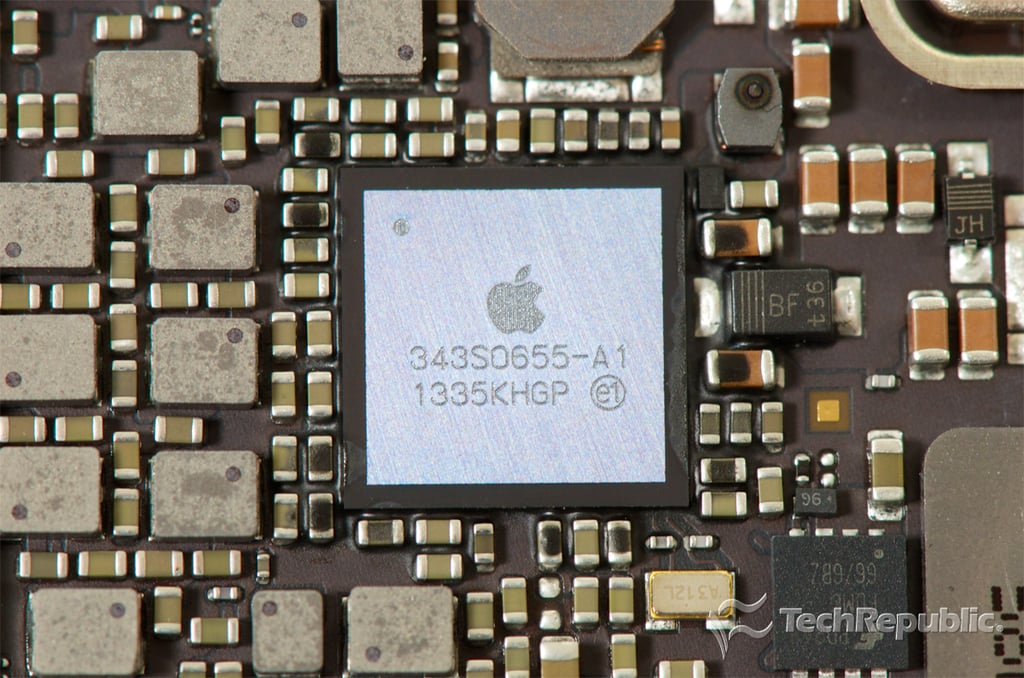
Apple didn’t upgrade the Air’s Retina display, rear-facing camera, 802.11n Wi-Fi, or Home button–no Touch ID sensor here. But they did give their flagship tablet the company’s new 64-bit A7 processor, their M7 motion co-processor, an upgraded FaceTime HD camera, and a new battery.
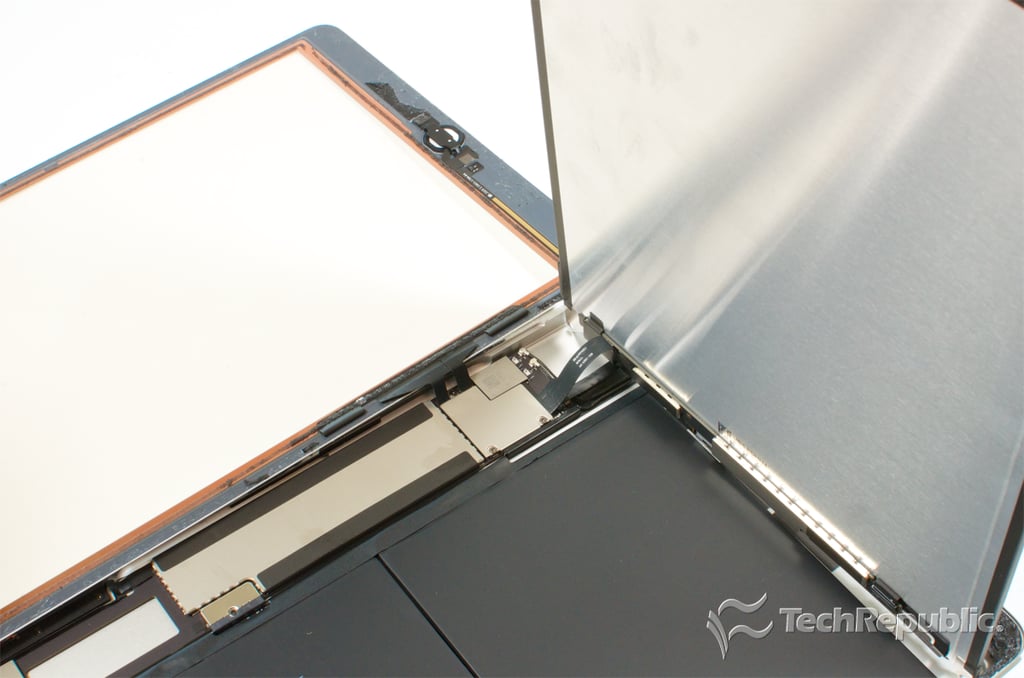
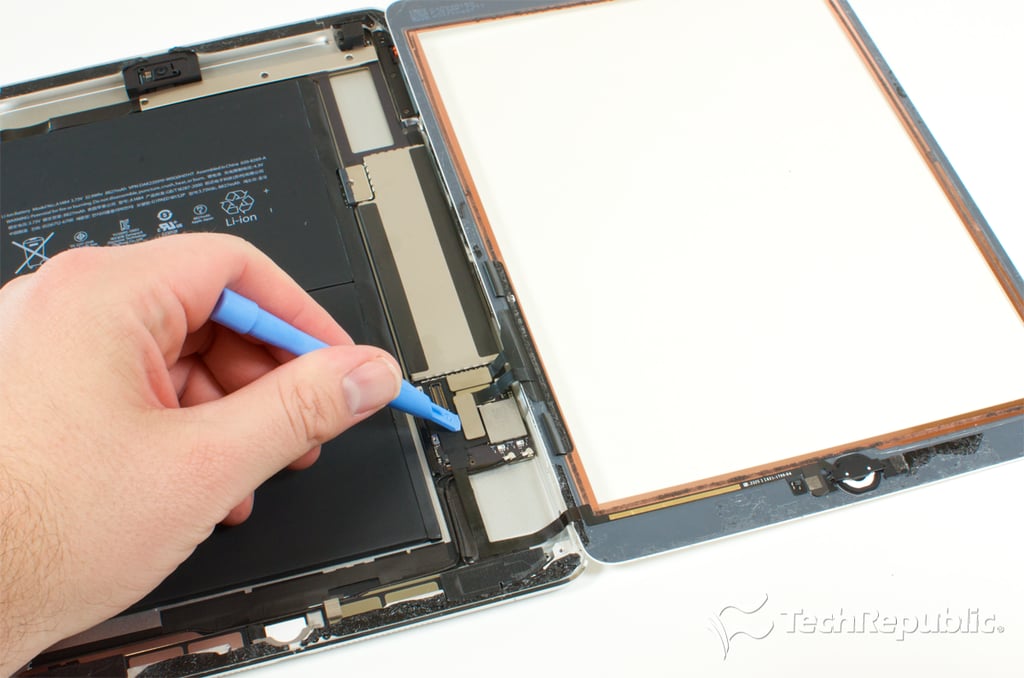
They also redesigned the internal hardware layout, which changes slightly how you crack open the Air compared to previous iPads.
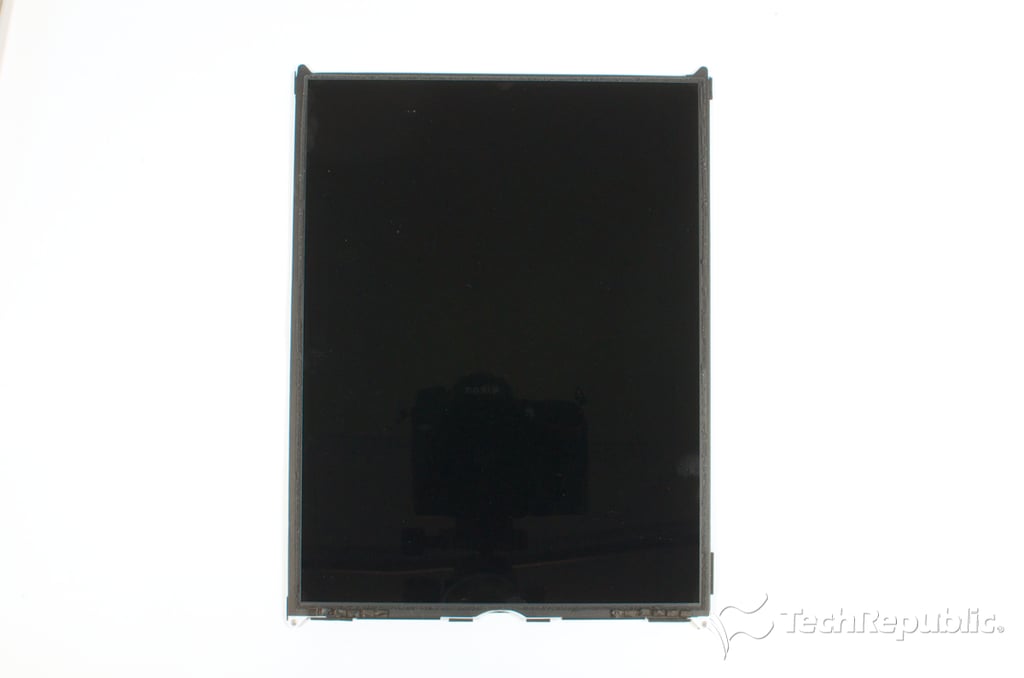
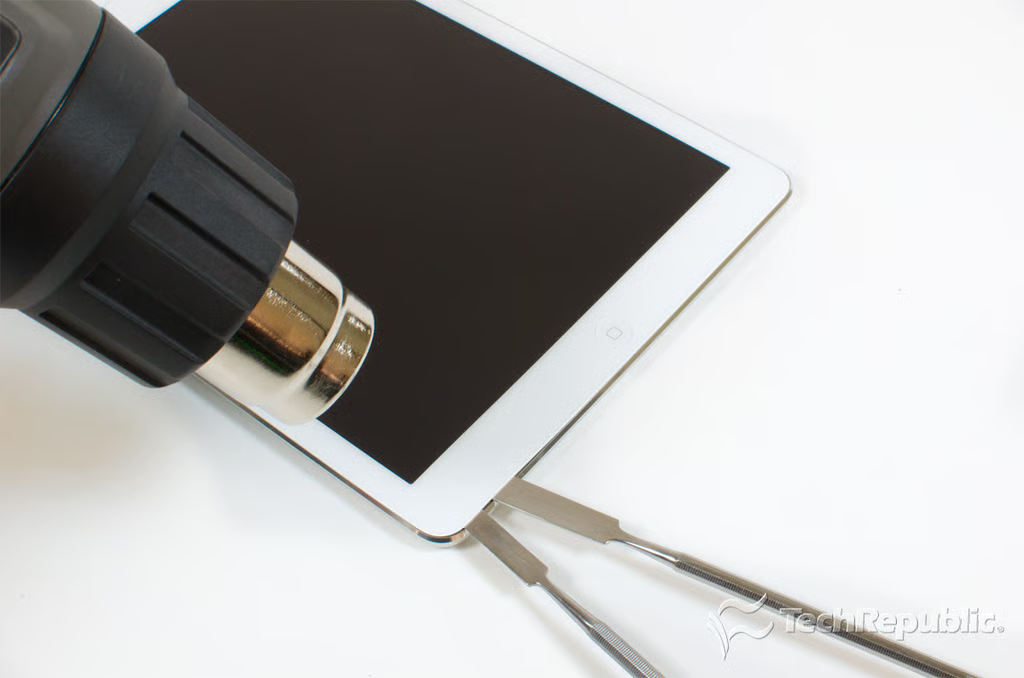
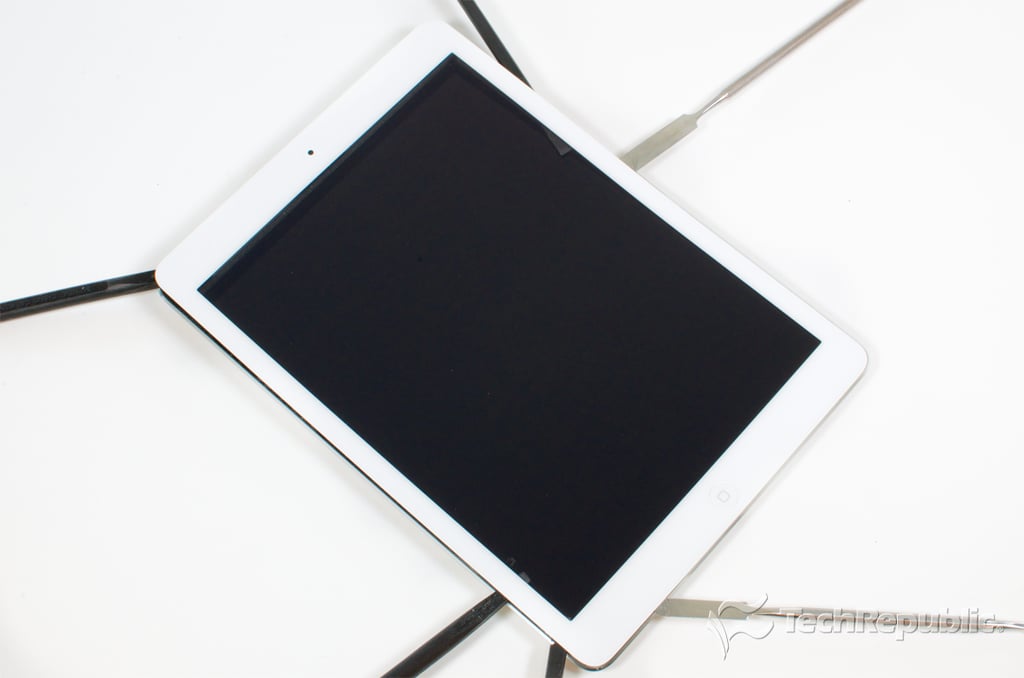
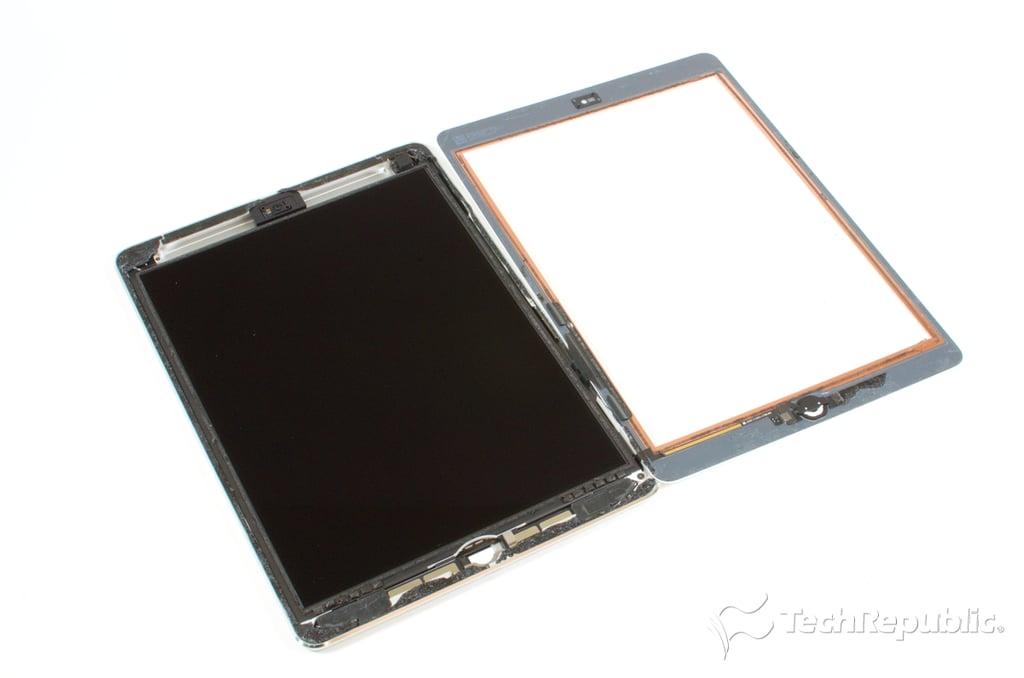
To begin opening the iPad Air, I heated the edges of the panel to loosen the adhesive that holds it to the aluminum body. Then, starting from the lower-left corner, I used a series of thin tools to gently pry the panel loose.
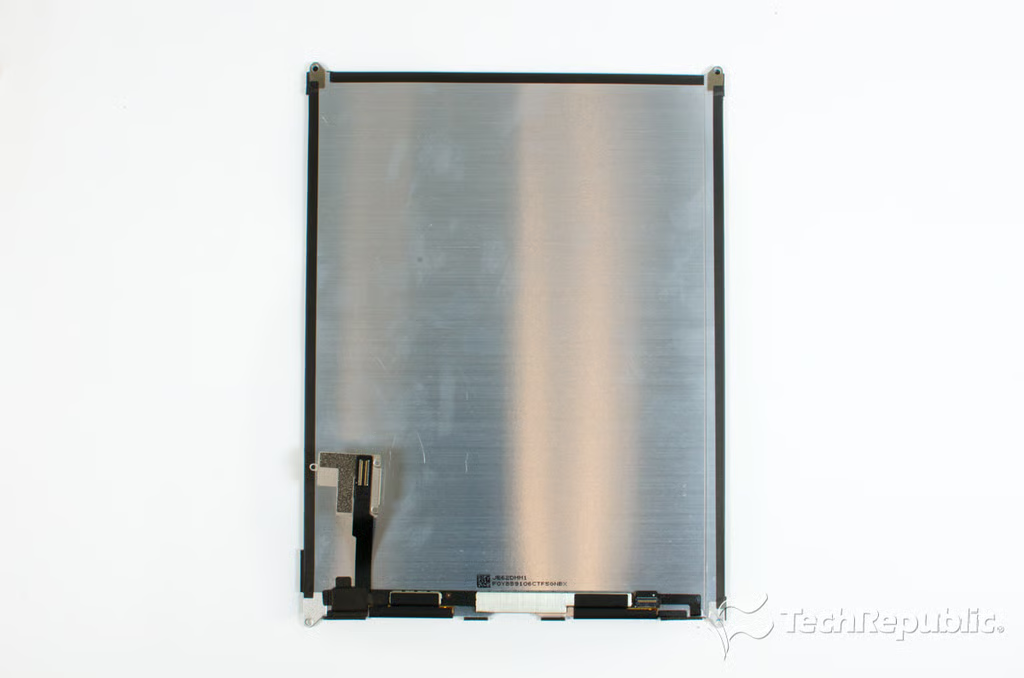
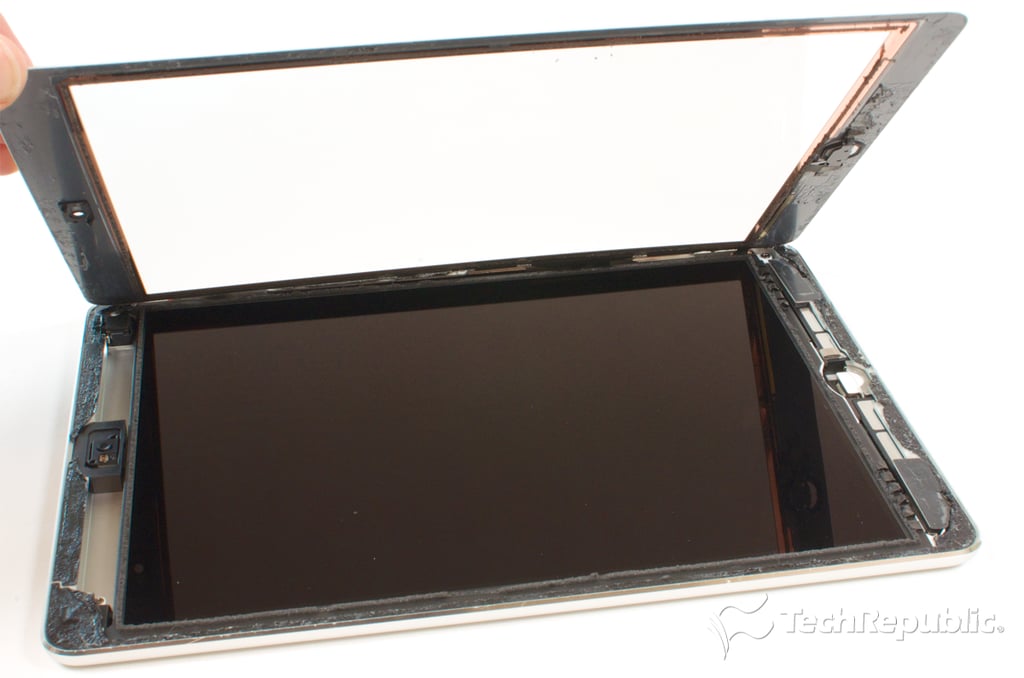
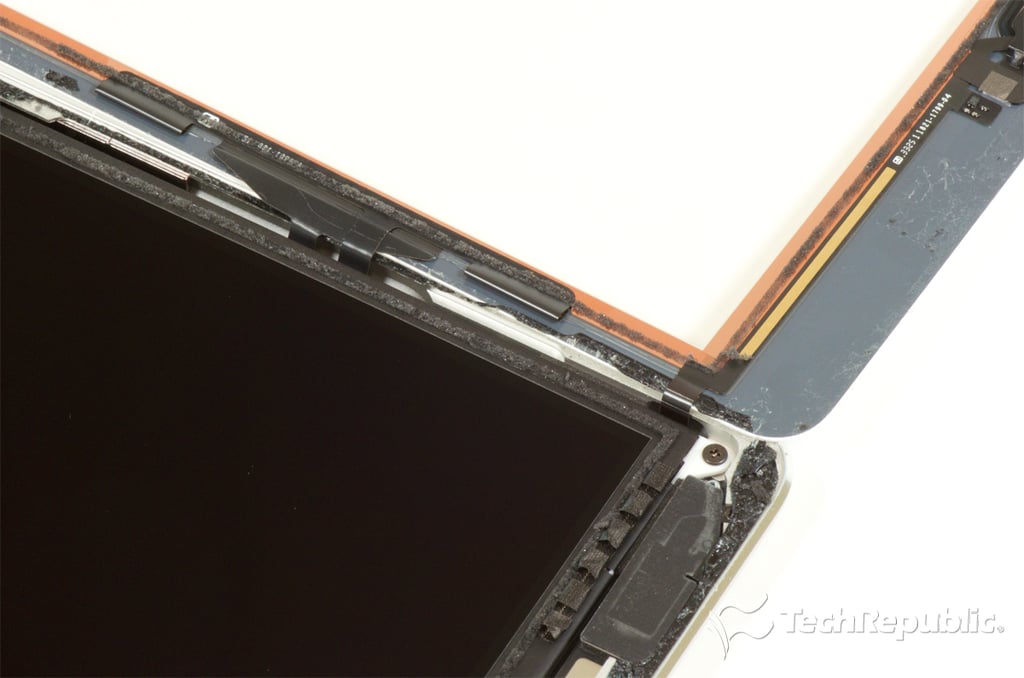
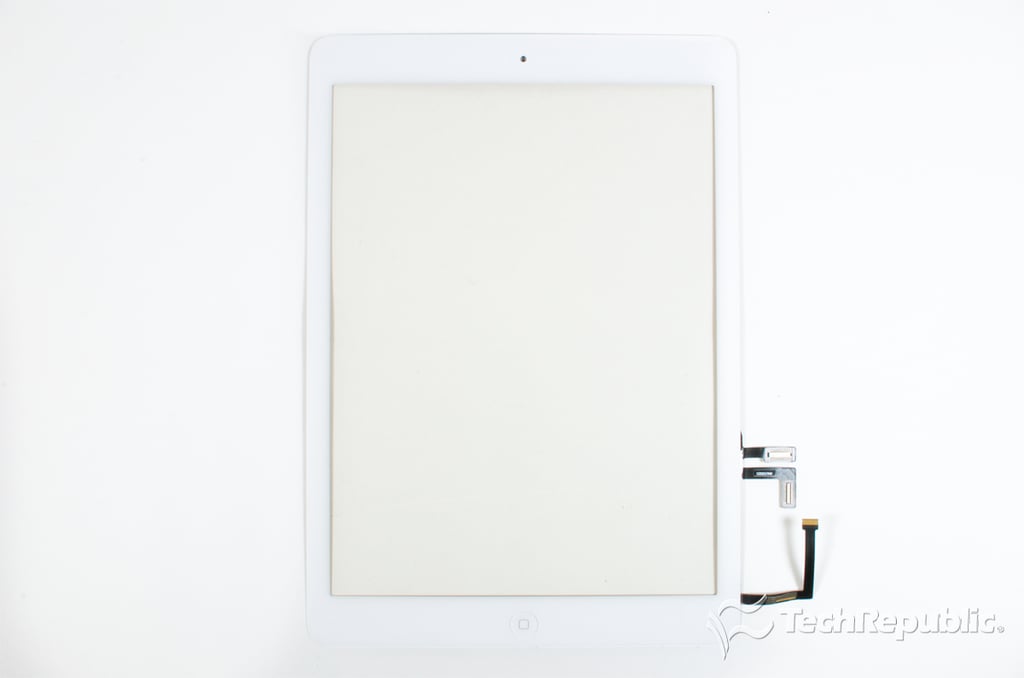
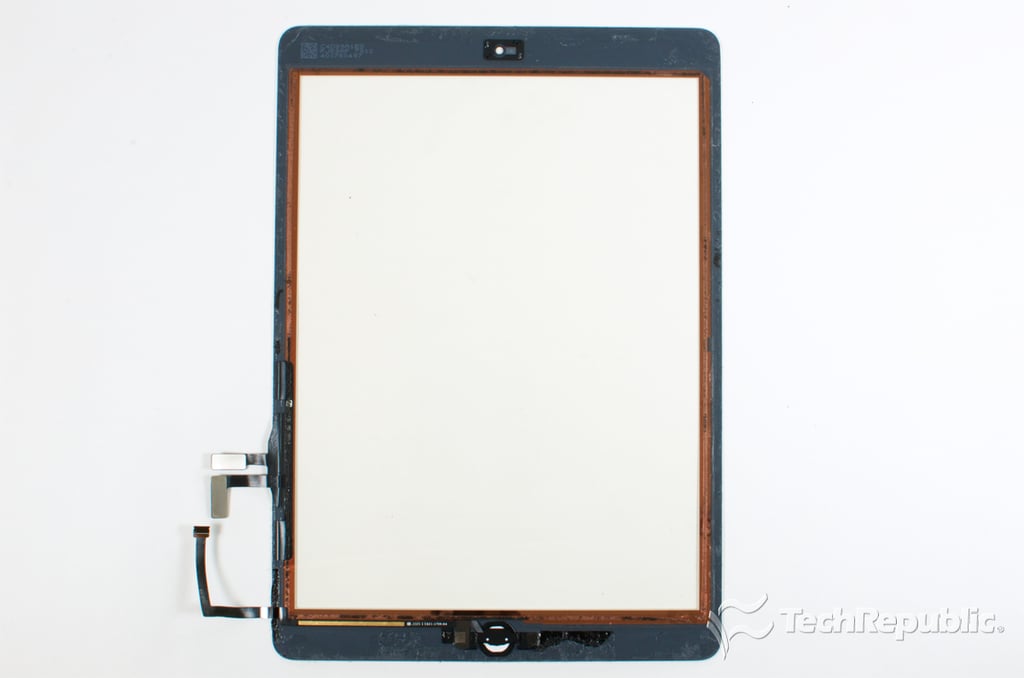
Be very careful around the lower-right corner and along the right edge. There are several thin ribbon cables there that connect the front panel to the motherboard.
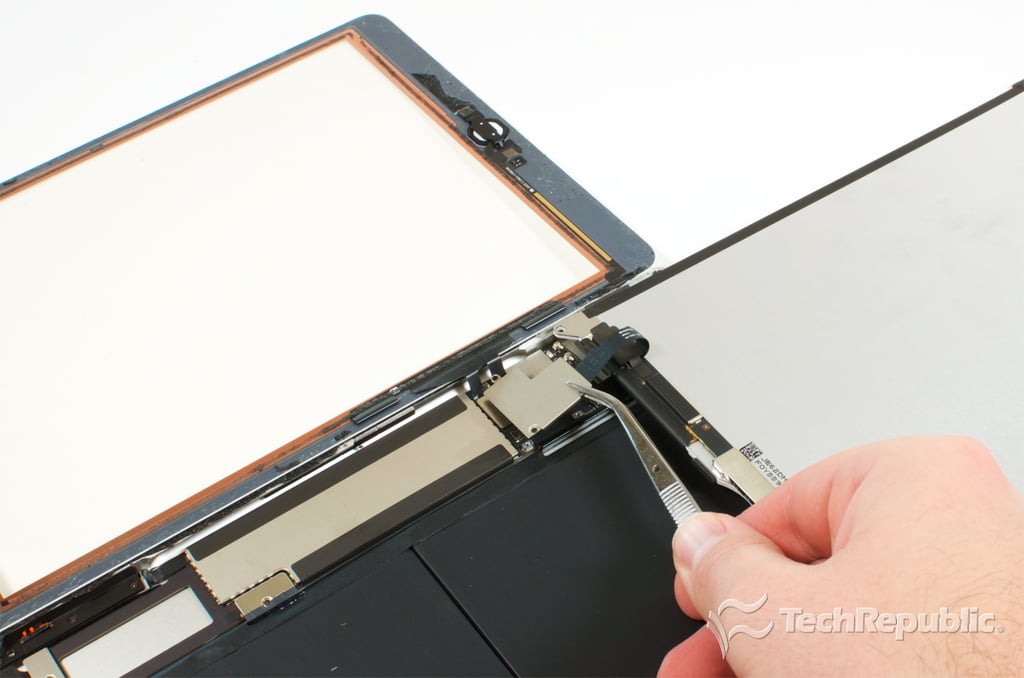
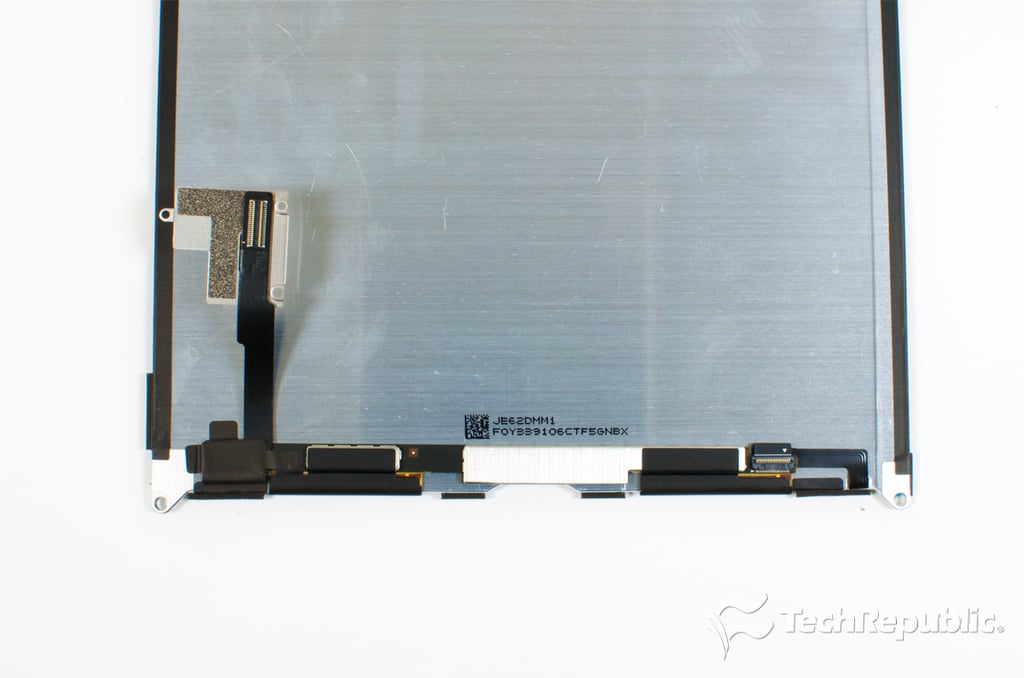
You can’t completely remove the panel until you take out the display.
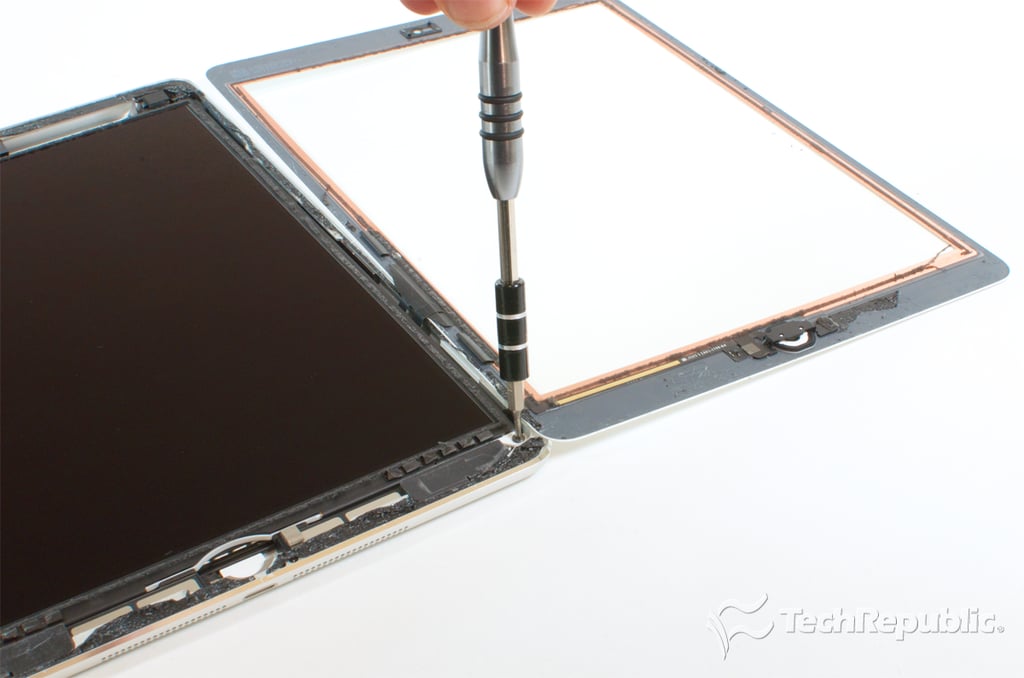
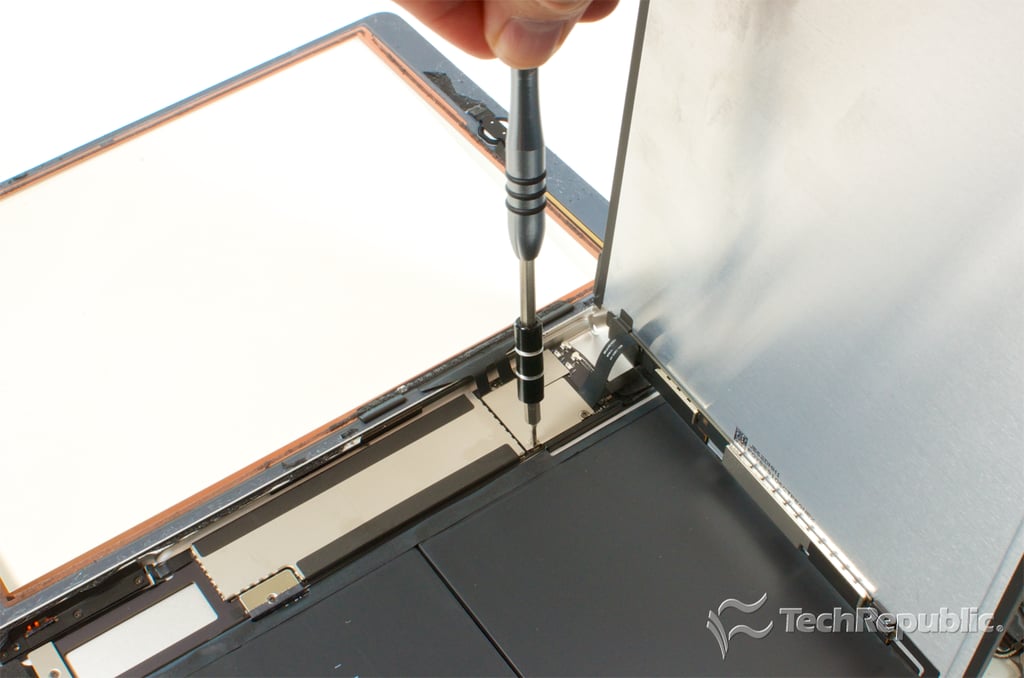
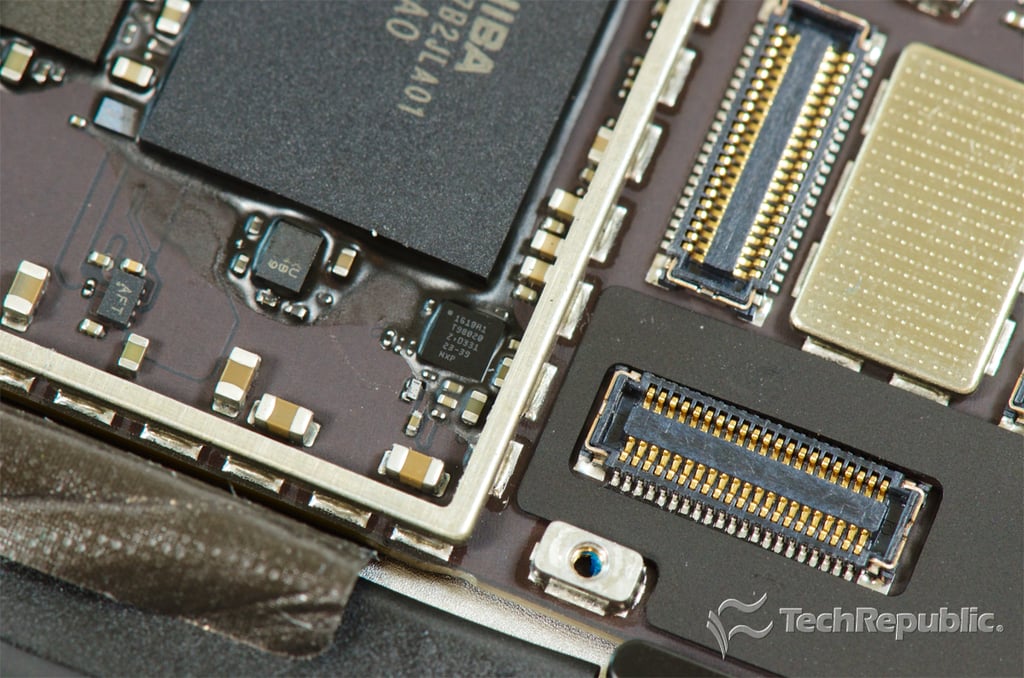
The connectors for the front panel and LCD are located under a thin metal shield, which is held in place with three screws.
Bill Detwiler is the Editor for Technical Content and Ecosystem at Celonis. He is the former Editor in Chief of TechRepublic and previous host of TechRepublic's Dynamic Developer podcast and Cracking Open, CNET and TechRepublic's popular online show. Previously, Bill was an IT manager in the social research and energy industries. He has bachelor's and master's degrees from the University of Louisville, where he has also lectured on computer crime and crime prevention.