Cracking Open the Pebble Steel - TechRepublic

Cracking Open the Pebble Steel

  • pebblestellteardown030.png

    Pebble Steel teardown

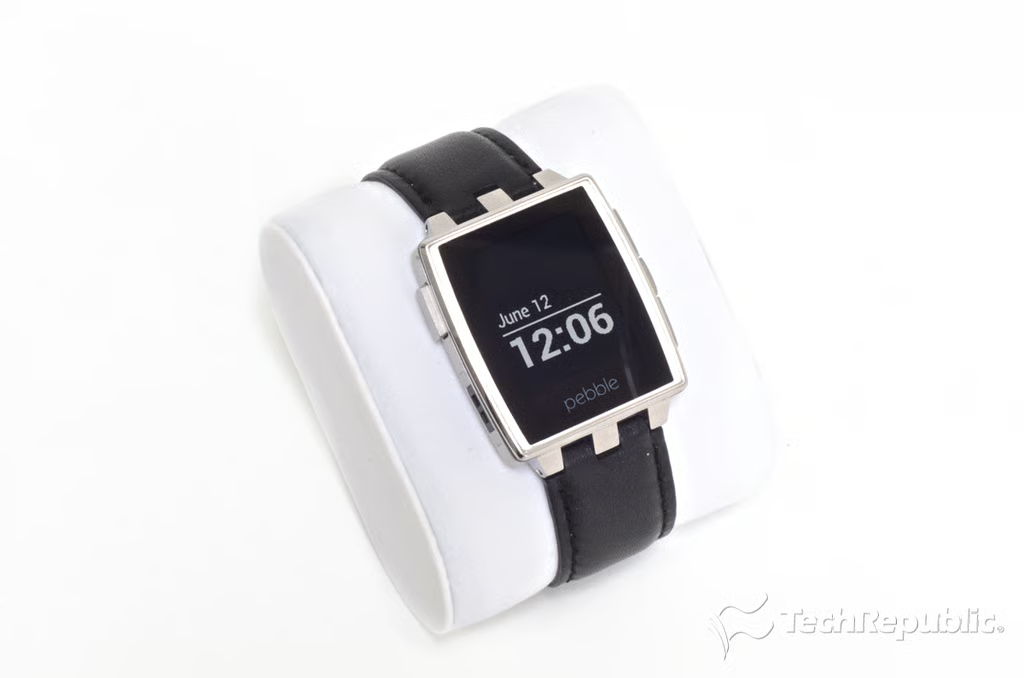
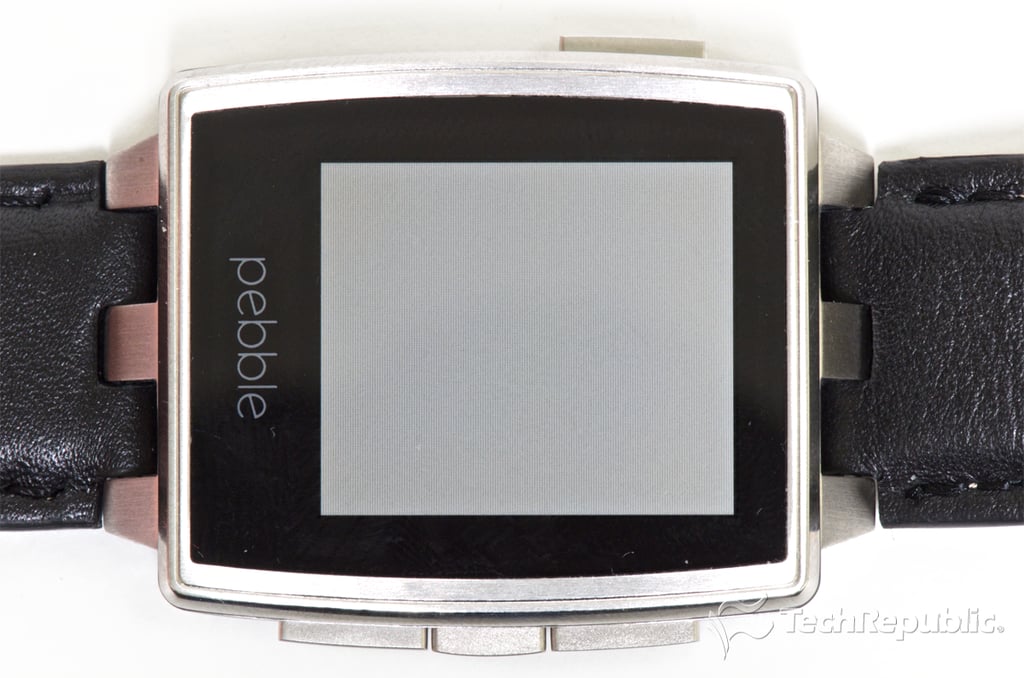
    The Pebble Steel is definitely more stylish than the original Pebble smartwatch, and thanks to its metal body and several design changes, it’s also easier to disassemble.

    In this Cracking Open gallery, I walk you through the process of disassembling the Pebble Steel and give you a tour of the internal hardware. For a detailed analysis of the teardown, check out my article and video, Pebble Steel teardown reveals easy-open case, removable components, and more storage.

  • pebblestellteardown001.png

    Cracking Open Pebble Steel: Pricing

    As of publication, the Pebble Steel is available in Black Matte or Brushed Stainless finished for $249 (USD). Plastic versions of the Pebble are available in several colors for $150 (USD).

    Bill Detwiler\/TechRepublic
  • pebblestellteardown002.png

    Cracking Open Pebble Steel: Box contents

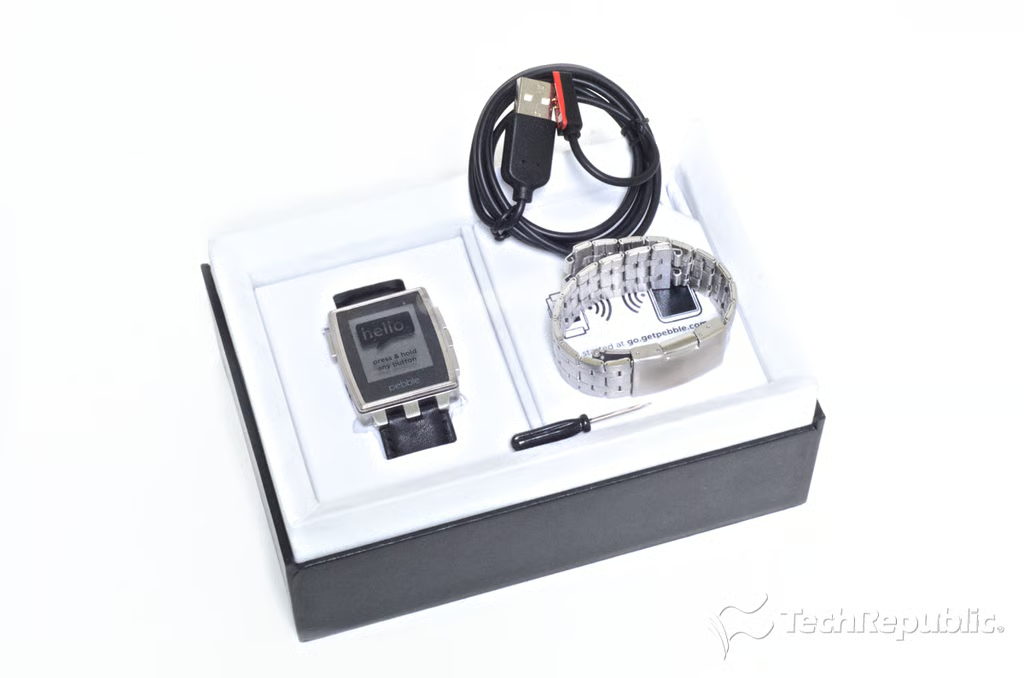
    Along with the Steel watch itself, the box contains both leather and metal bands, a screw drivers (for changing the bands), a charging cable, and product documentation.

    Bill Detwiler\/TechRepublic
  • pebblestellteardown003.png

    Cracking Open Pebble Steel: Dimensions and weight

    According to Pebble’s website, the Steel is 46mm (L) x 34mm (W) x 10.5mm (T). It weighs 1.97 oz.

    Bill Detwiler\/TechRepublic
  • pebblestellteardown005.png

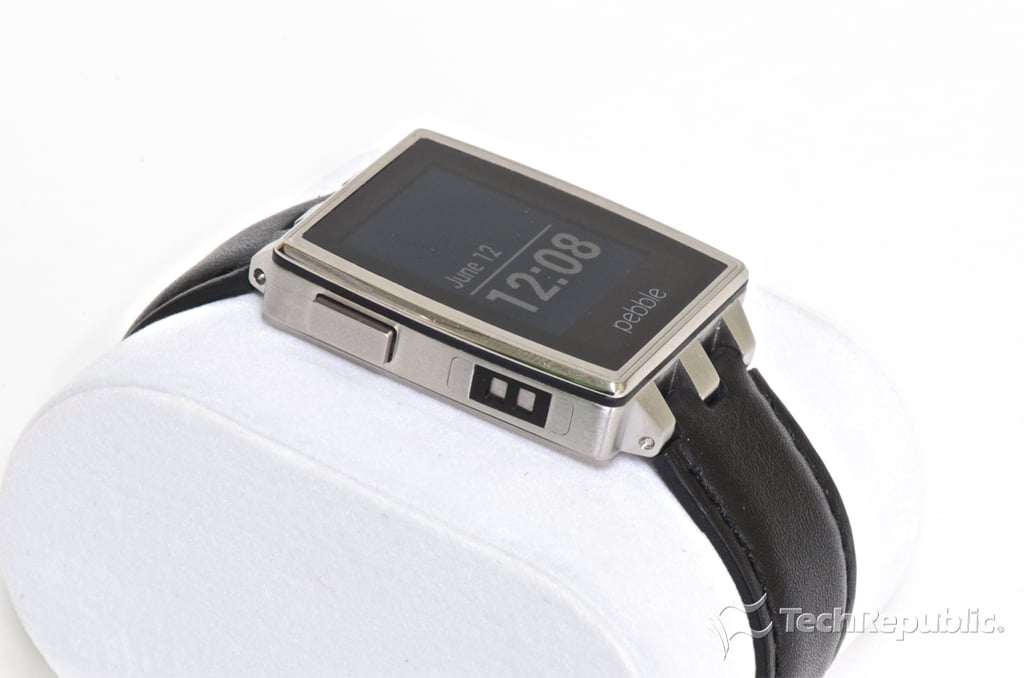
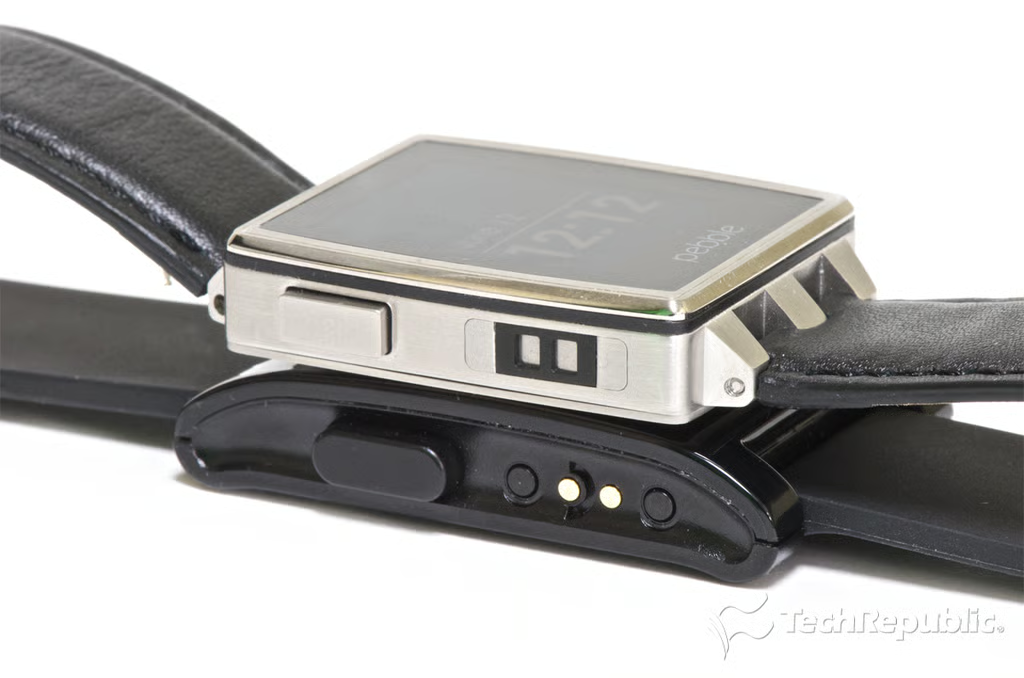
    Cracking Open Pebble Steel: Back button and charging port

    Pebble redesigned the charging port on the Steel.

    Bill Detwiler\/TechRepublic
  • pebblestellteardown004.png

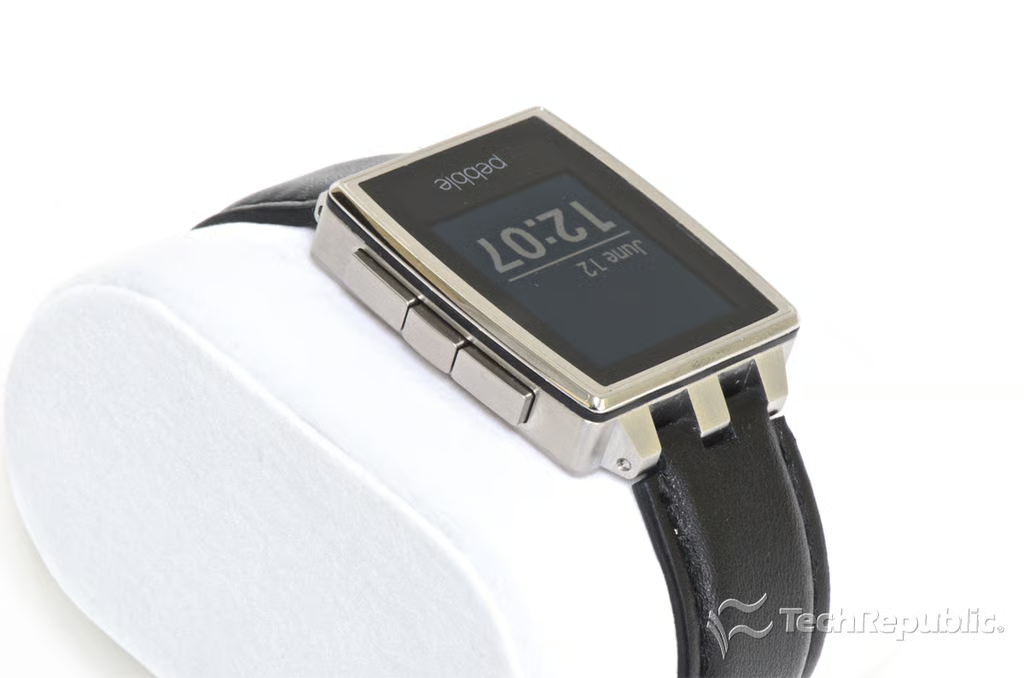
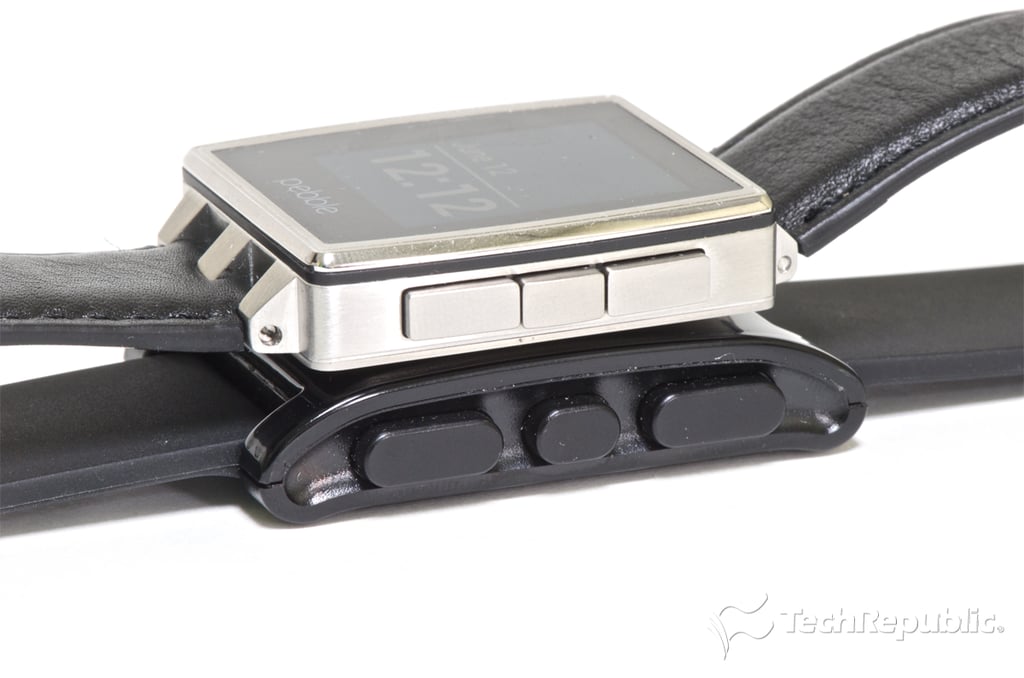
    Cracking Open Pebble Steel: Up, Select, and Down buttons

    Bill Detwiler\/TechRepublic
  • pebblestellteardown006.png

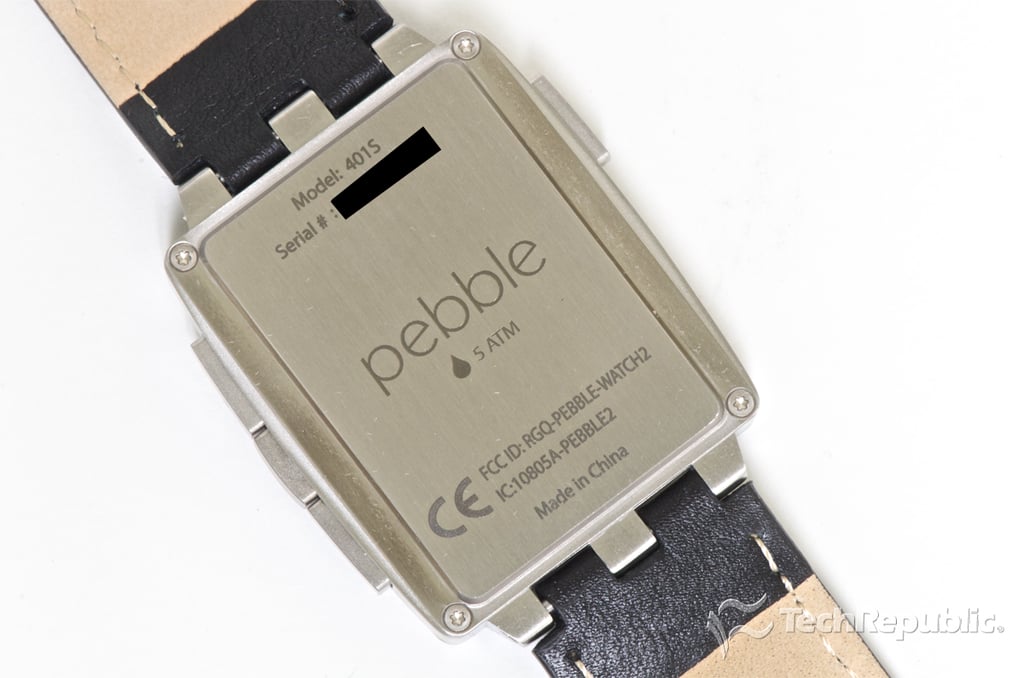
    Cracking Open Pebble Steel: Model 401S

    Bill Detwiler\/TechRepublic
  • pebblestellteardown007.png

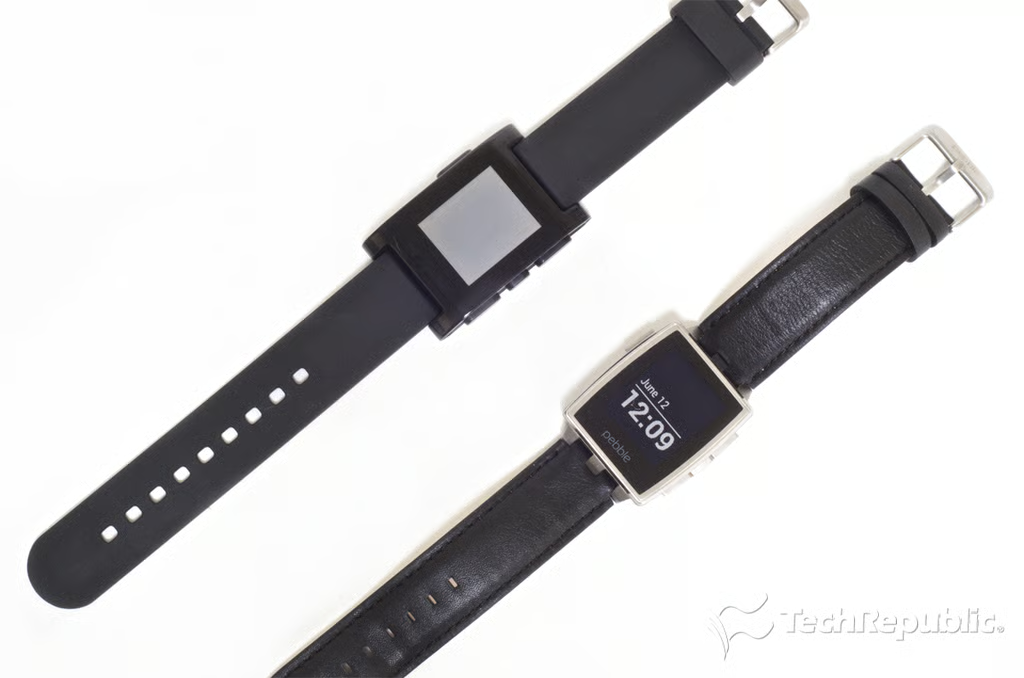
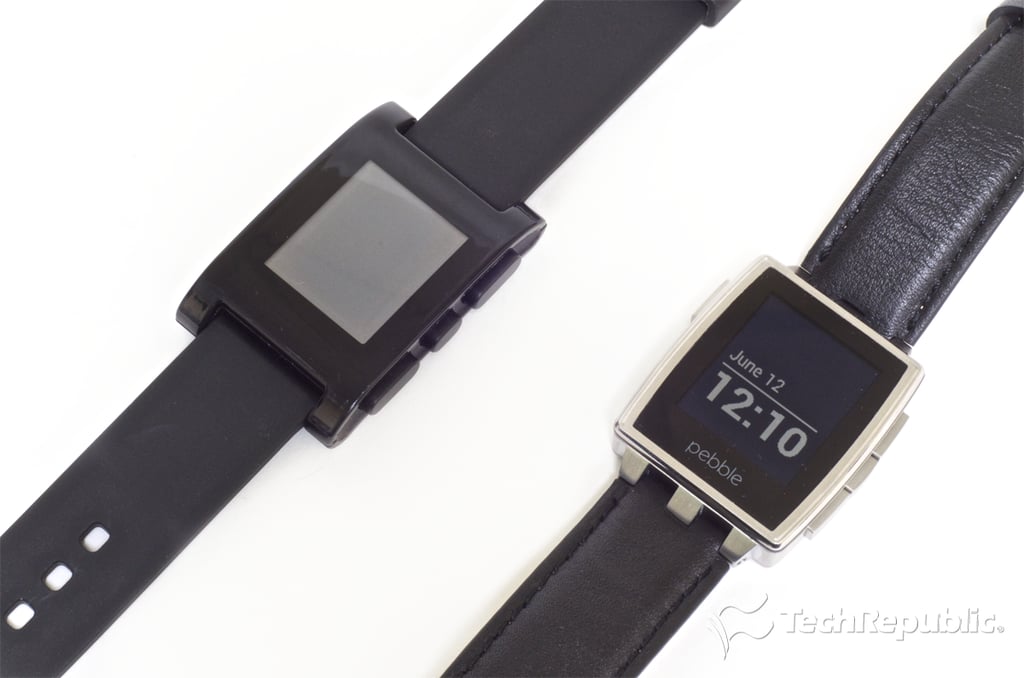
    Cracking Open Pebble Steel: Original Pebble and Steel with leather band

    Bill Detwiler\/TechRepublic
  • pebblestellteardown008.png

    Cracking Open Pebble Steel: Original Pebble and Steel watch bodies

    Although heavier than the original Pebble watch, the Steel’s body is slightly smaller.

    Bill Detwiler\/TechRepublic
  • pebblestellteardown009.png

    Cracking Open Pebble Steel: Original Pebble and Steel buttons

    Bill Detwiler\/TechRepublic
  • pebblestellteardown010.png

    Cracking Open Pebble Steel: Original Pebble and Steel charging port

    Bill Detwiler\/TechRepublic
  • pebblestellteardown011.png

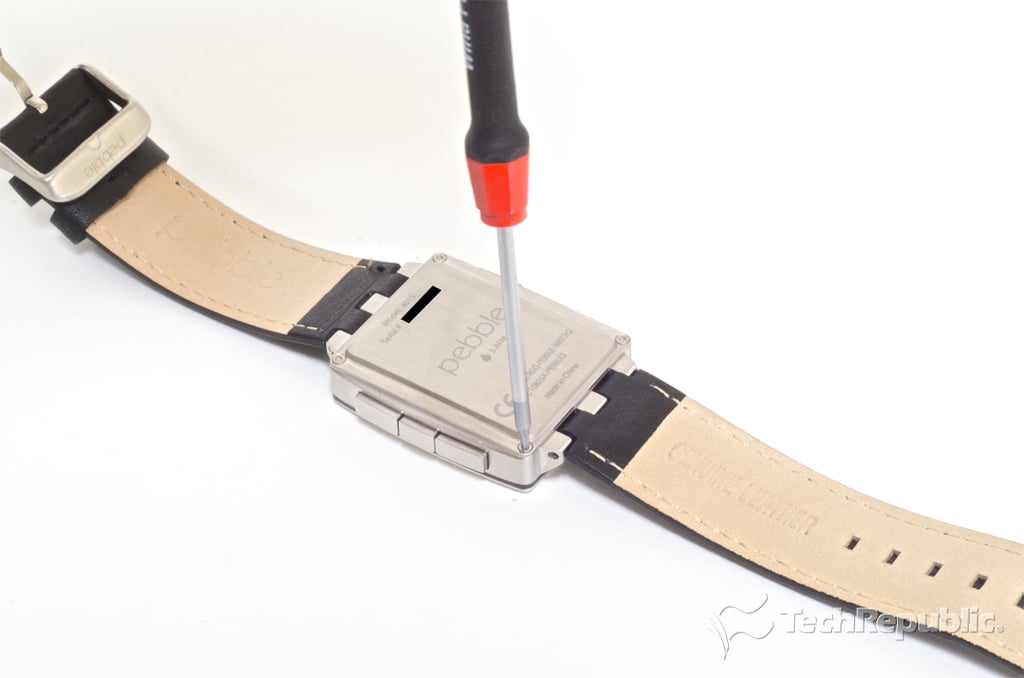
    Cracking Open Pebble Steel: Removing the Torx T4 back cover screws

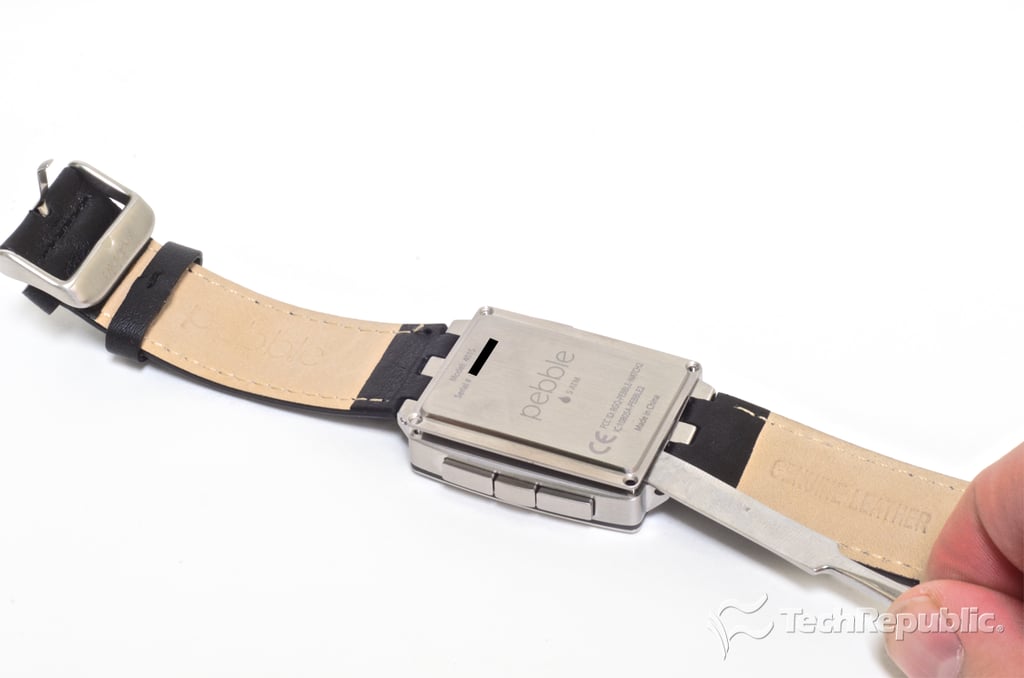
    The back cover is held on with four Torx T4 screws.

    Bill Detwiler\/TechRepublic
  • pebblestellteardown012.png

    Cracking Open Pebble Steel: Popping loose the back cover

    Bill Detwiler\/TechRepublic
  • pebblestellteardown013.png

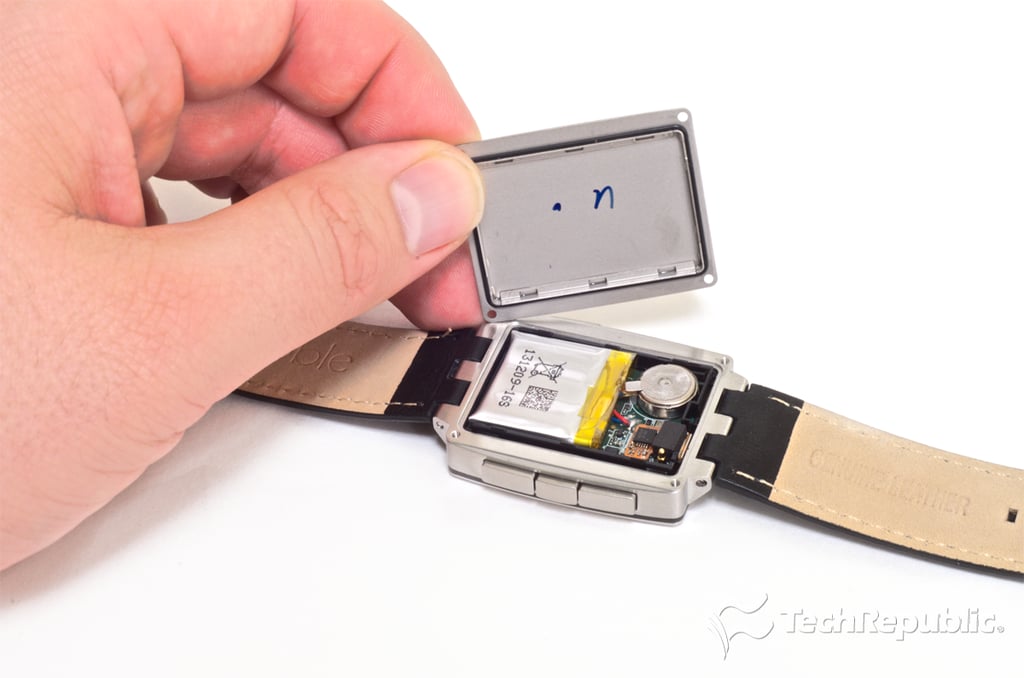
    Cracking Open Pebble Steel: Removing the back cover

    Bill Detwiler/TechRepublic
  • pebblestellteardown014.png

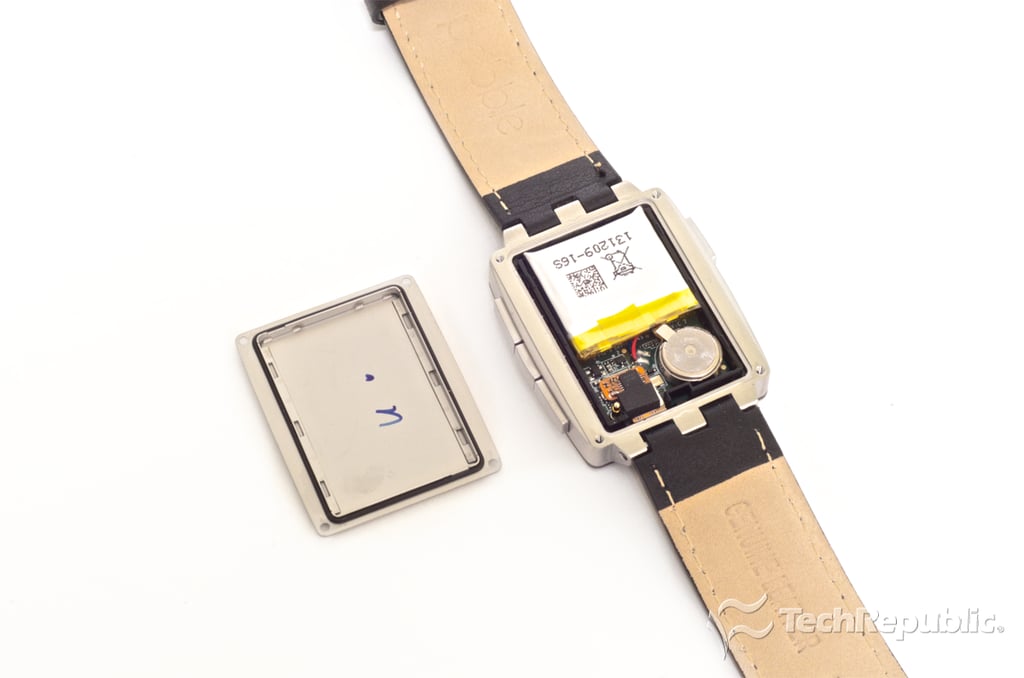
    Cracking Open Pebble Steel: Back cover removed

    Bill Detwiler\/TechRepublic
  • pebblestellteardown015.png

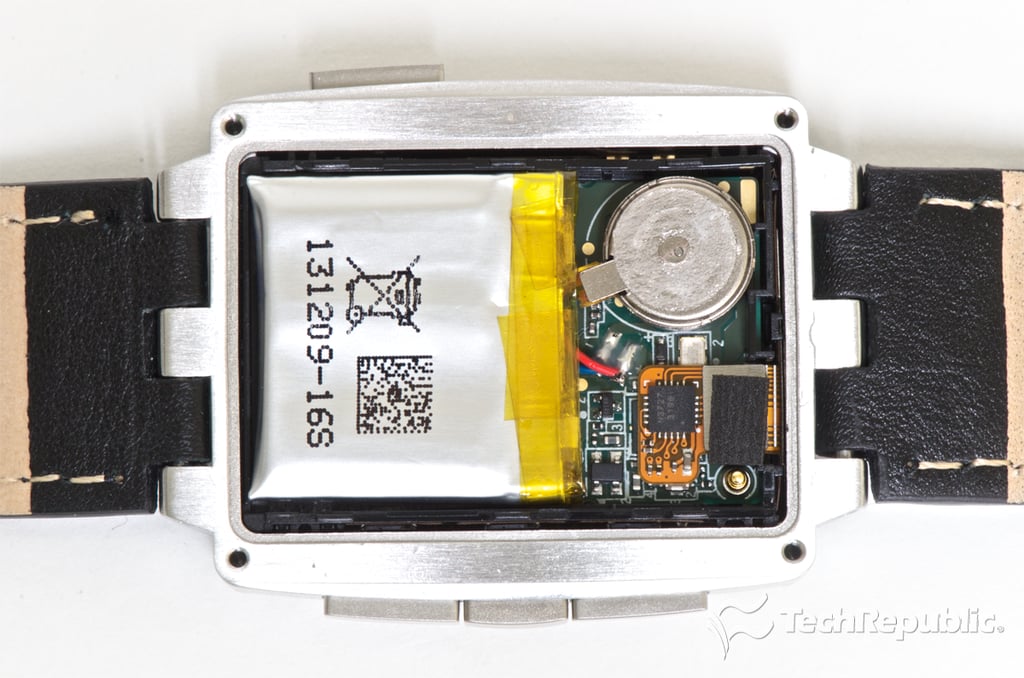
    Cracking Open Pebble Steel: Internal hardware

    Bill Detwiler\/TechRepublic
  • pebblestellteardown016.png

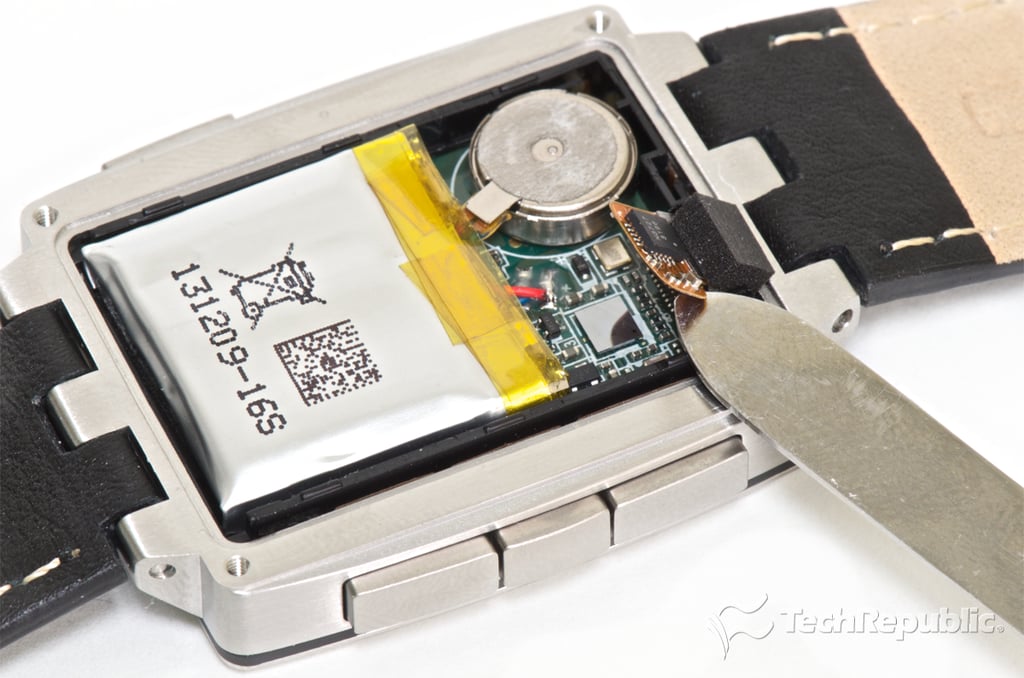
    Cracking Open Pebble Steel: Detaching the circuit board connector

    Bill Detwiler\/TechRepublic
  • pebblestellteardown017.png

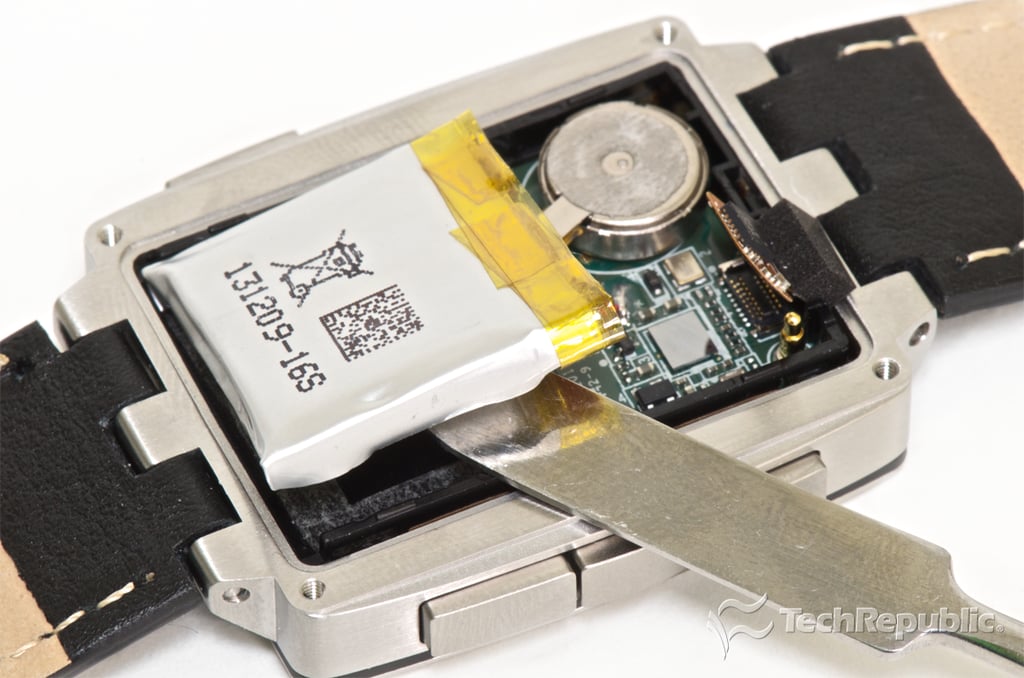
    Cracking Open Pebble Steel: Removing the battery

    Bill Detwiler\/TechRepublic
  • pebblestellteardown018.png

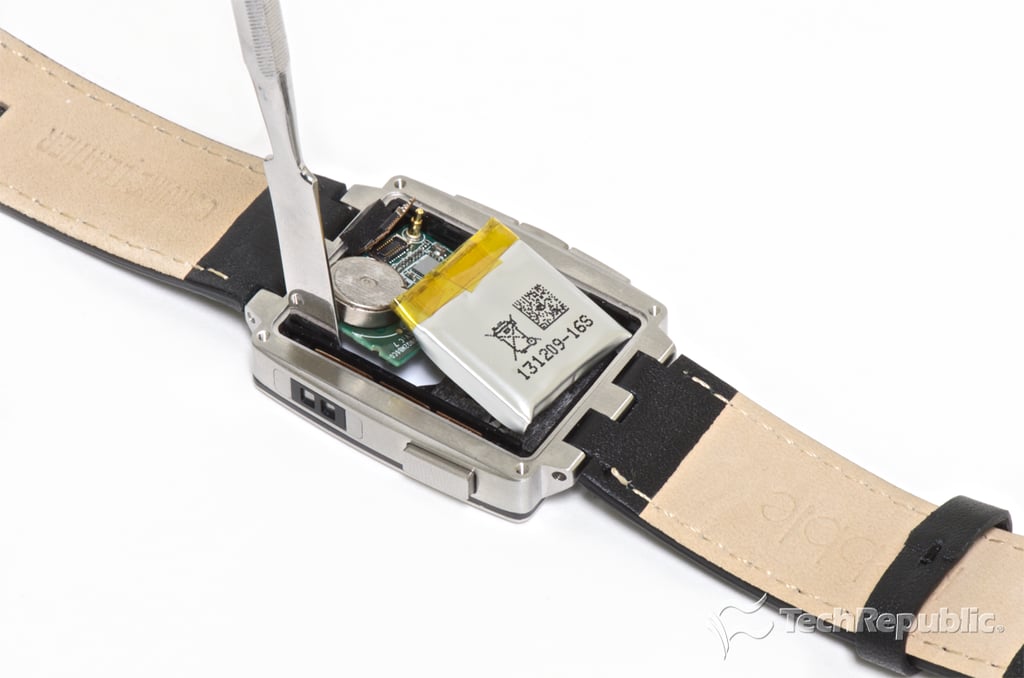
    Cracking Open Pebble Steel: Popping loose the circuit board and battery assembly

    Bill Detwiler\/TechRepublic
  • pebblestellteardown019.png

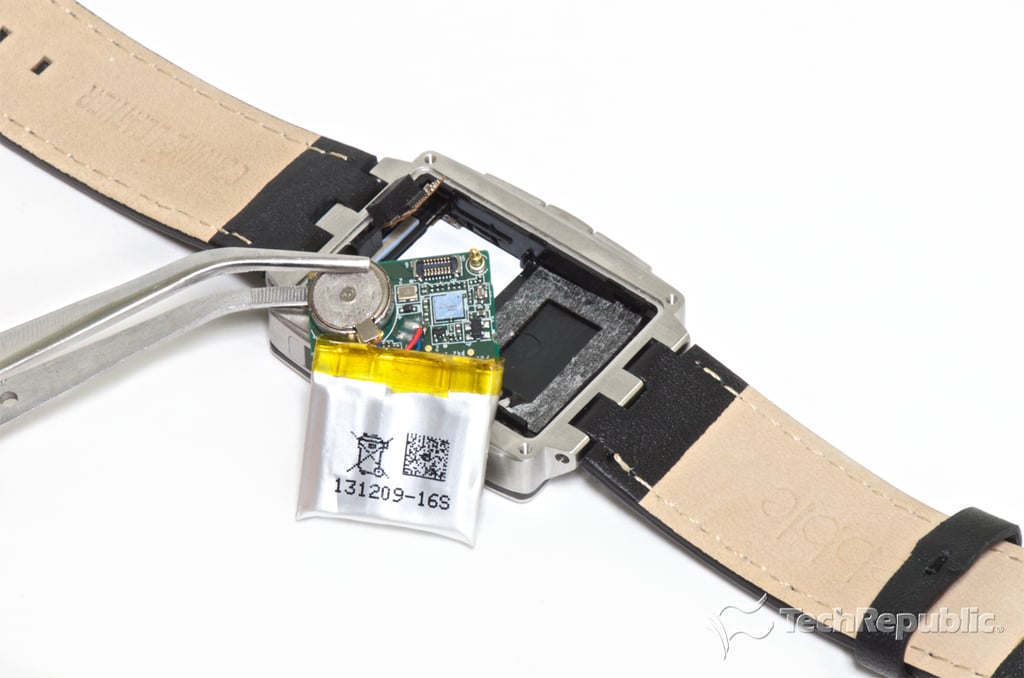
    Cracking Open Pebble Steel: Removing the circuit board and battery assembly

    Bill Detwiler/TechRepublic
  • pebblestellteardown020.png

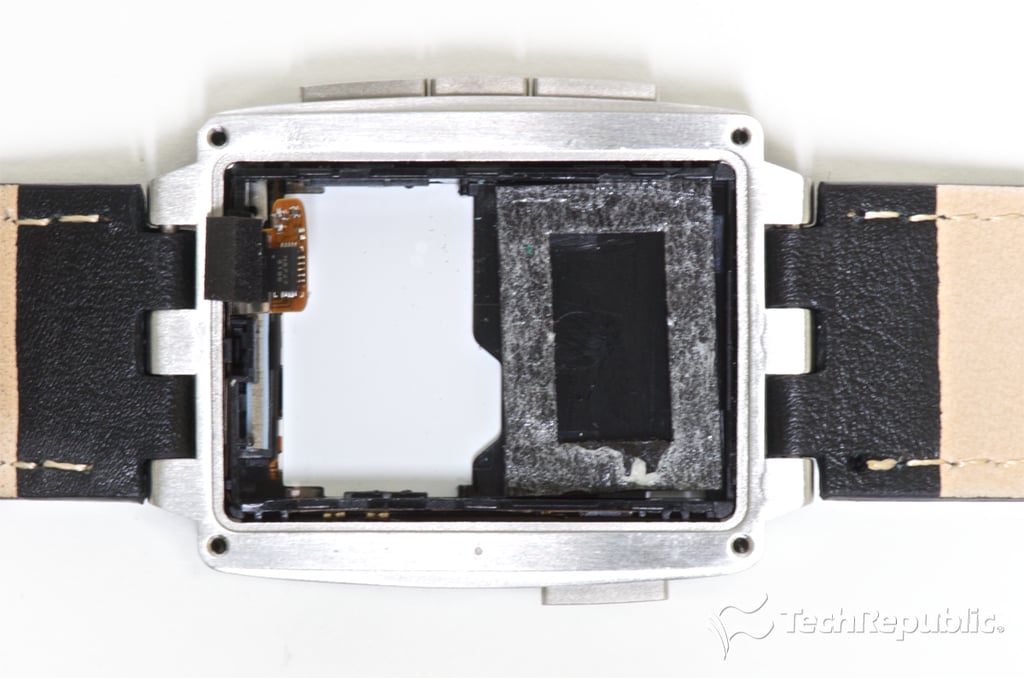
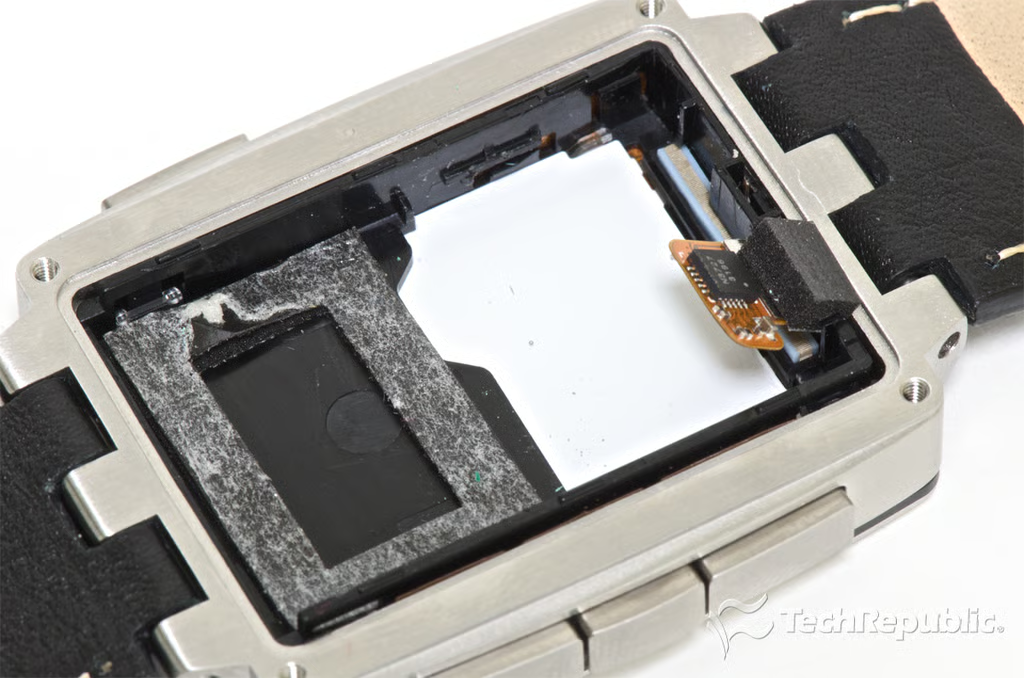
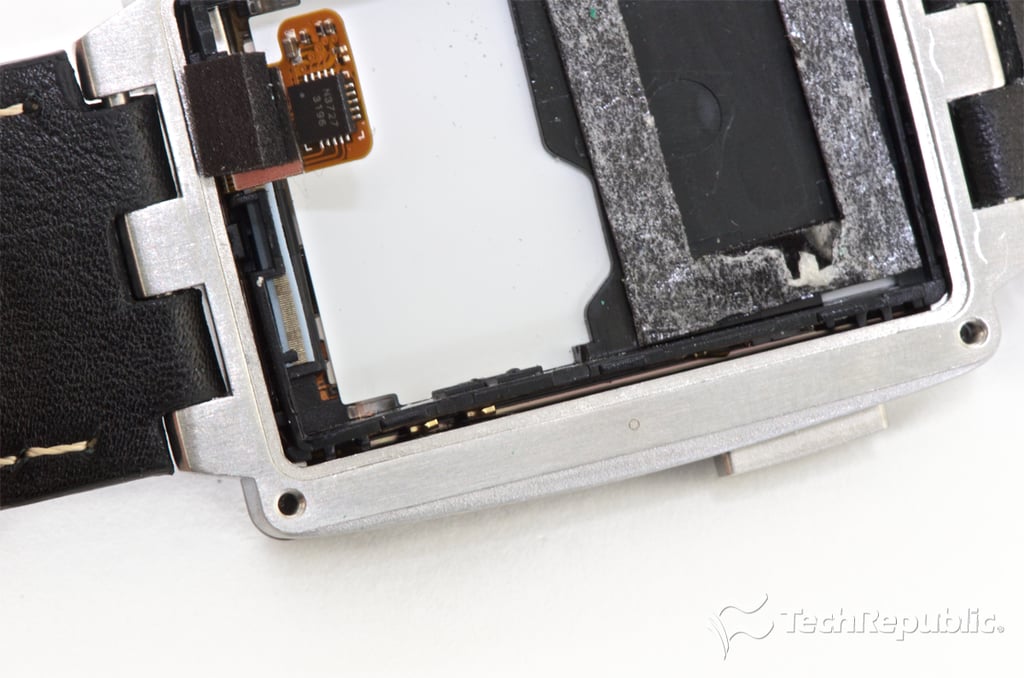
    Cracking Open Pebble Steel: Watch body with attached components

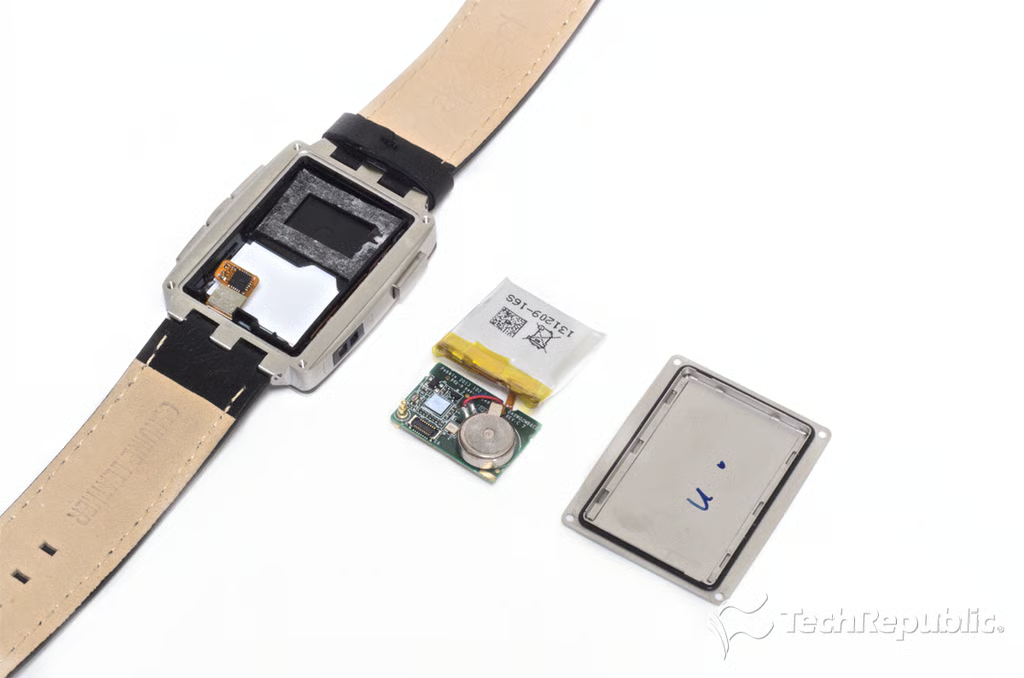
    The Steel’s “e-paper” display, button contacts, and internal plastic frame appear to be glued to the metal body. If any of the components were damaged, you could likely remove and replace the entire assembly, but as I want to reassemble this device in working order, I’m going to call this teardown complete.

    Bill Detwiler\/TechRepublic
  • pebblestellteardown021.png

    Cracking Open Pebble Steel: e-paper display

    Bill Detwiler\/TechRepublic
  • pebblestellteardown022.png

    Cracking Open Pebble Steel: Plastic internal frame

    Bill Detwiler\/TechRepublic
  • pebblestellteardown023.png

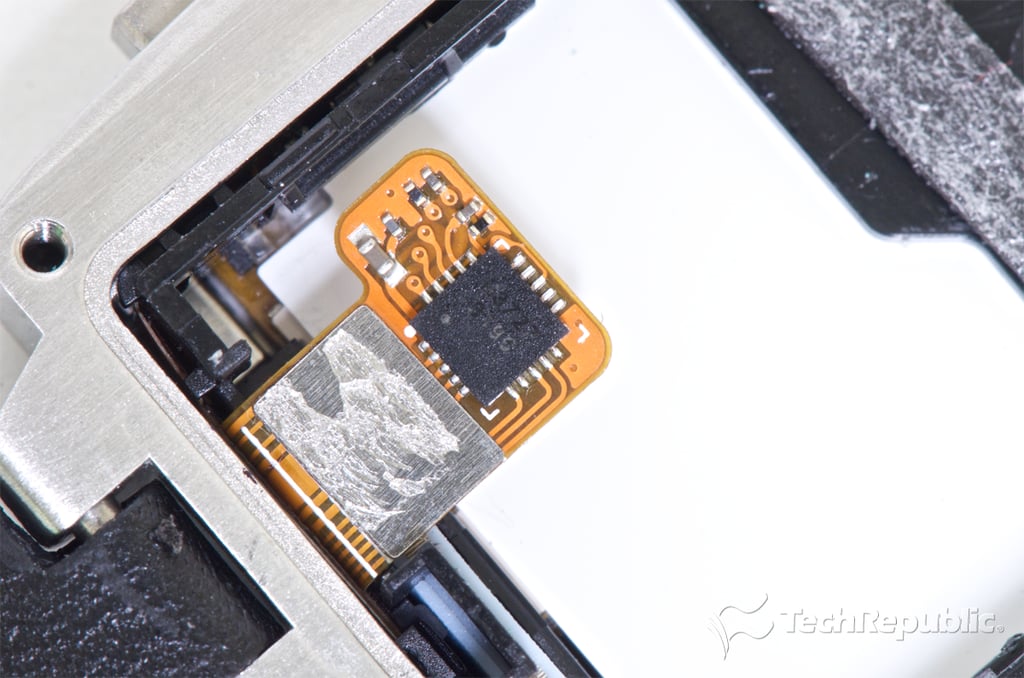
    Cracking Open Pebble Steel: Button contacts

    Between the internal frame and the metal body, you can see the button contacts.

    Bill Detwiler\/TechRepublic
  • pebblestellteardown024.png

    Cracking Open Pebble Steel: Single circuit board connector

    Bill Detwiler\/TechRepublic
  • pebblestellteardown025.png

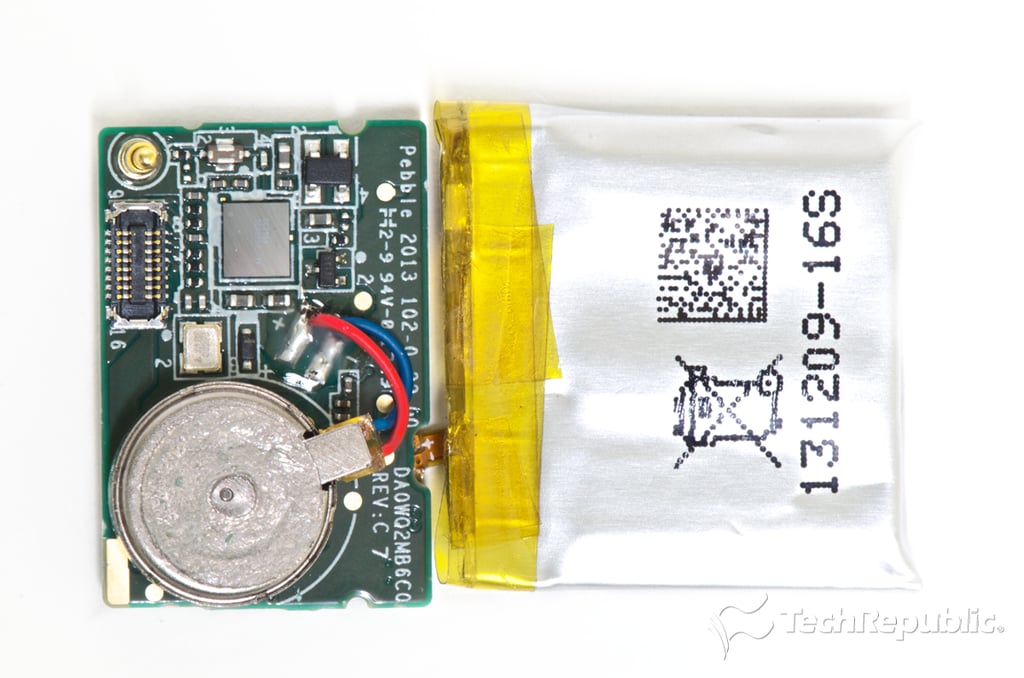
    Cracking Open Pebble Steel: Circuit board and battery assembly - Top

    Bill Detwiler\/TechRepublic
  • pebblestellteardown026.png

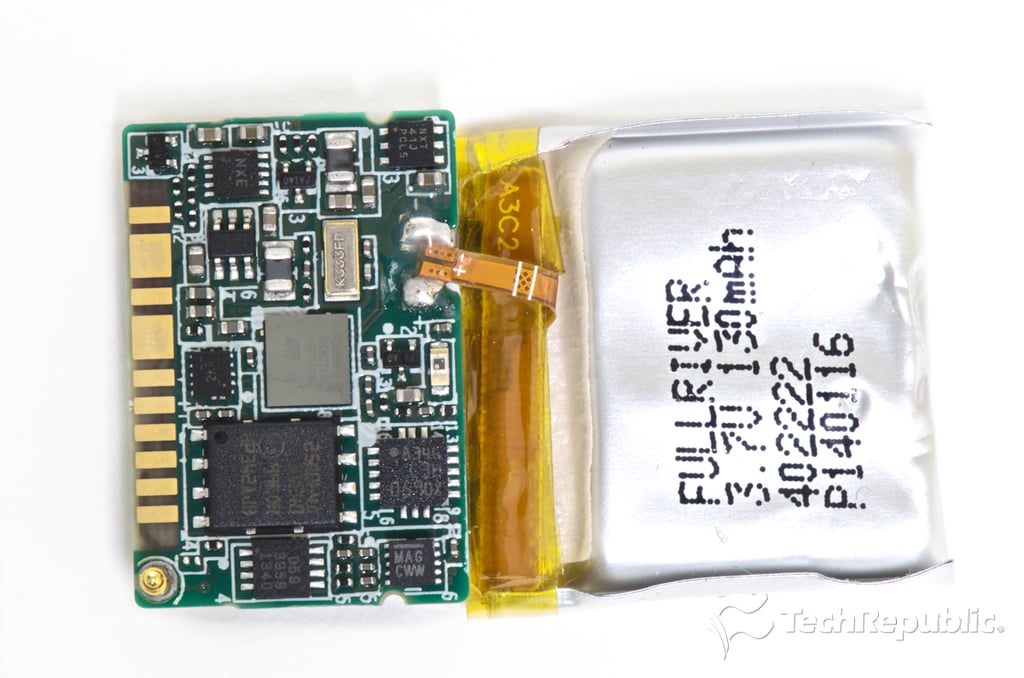
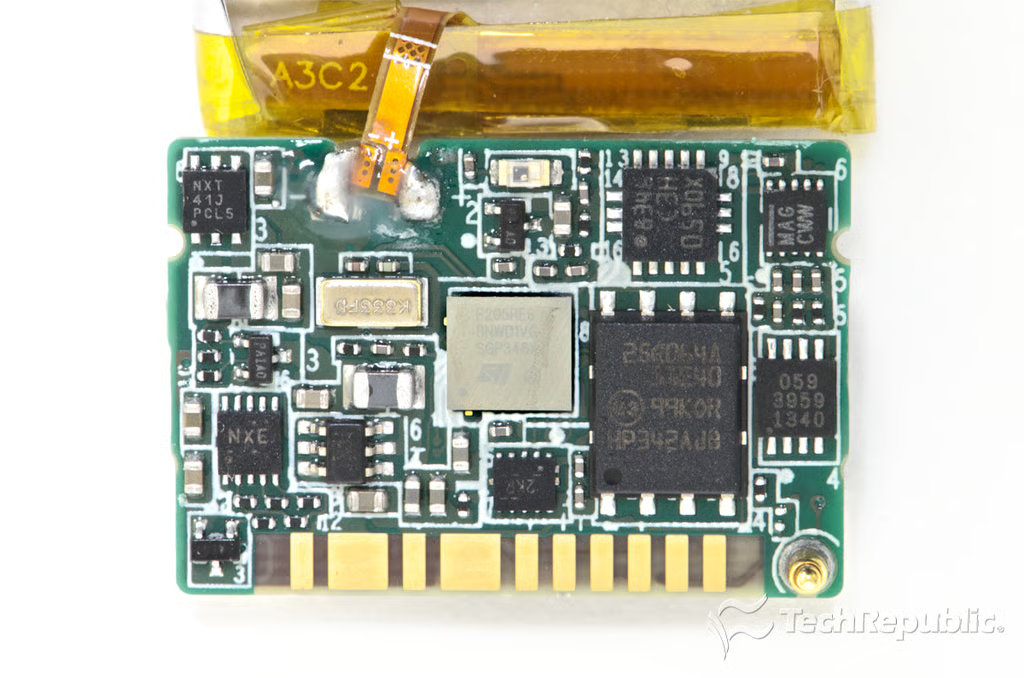
    Cracking Open Pebble Steel: Circuit board and battery assembly - Bottom

    Bill Detwiler\/TechRepublic
  • pebblestellteardown028.png

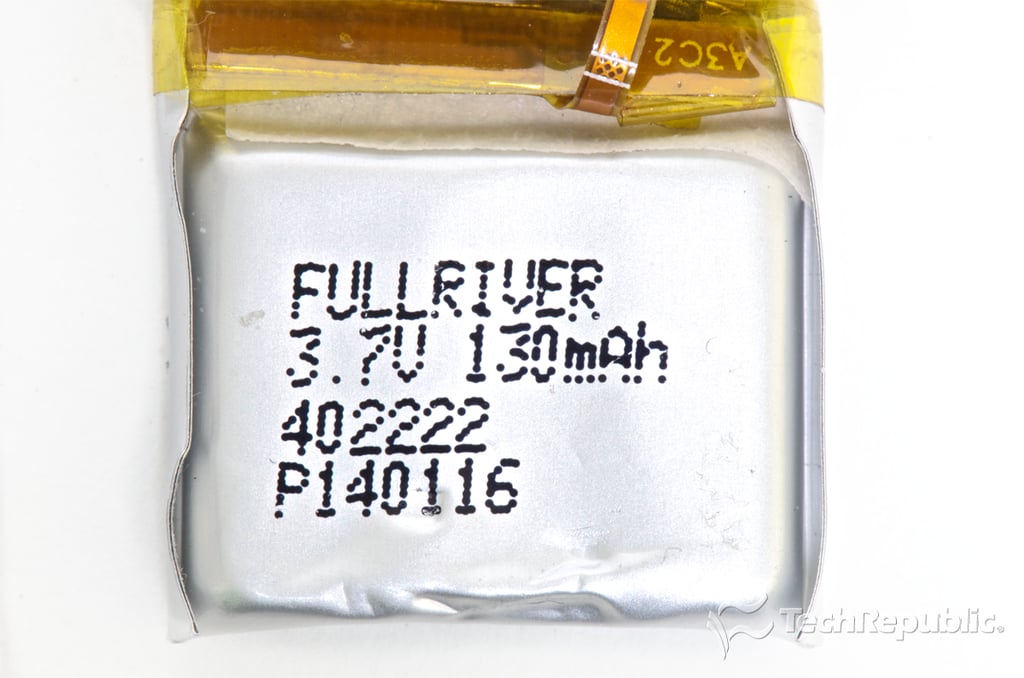
    Cracking Open Pebble Steel: Fullriver 3.7V 1.30mAh battery

    Bill Detwiler\/TechRepublic
  • pebblestellteardown027.png

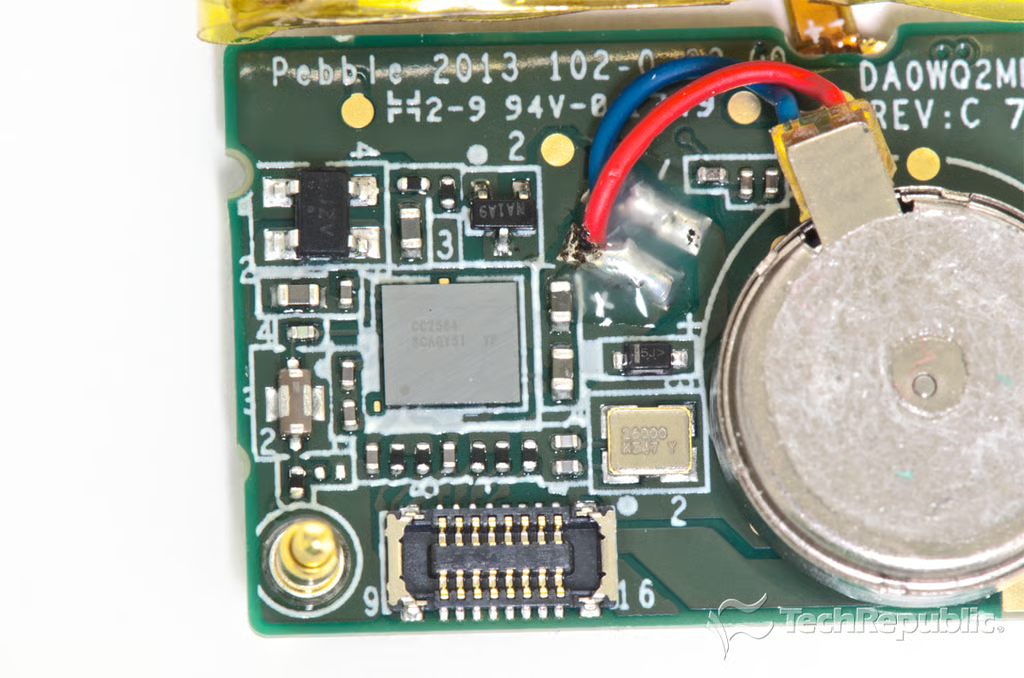
    Cracking Open Pebble Steel: Texas Instruments CC2564 Bluetooth Controller and vibration motor

    Bill Detwiler\/TechRepublic
  • pebblestellteardown029.png

    Cracking Open Pebble Steel: Circuit board

    Bill Detwiler\/TechRepublic
  • pebblestellteardown031.png

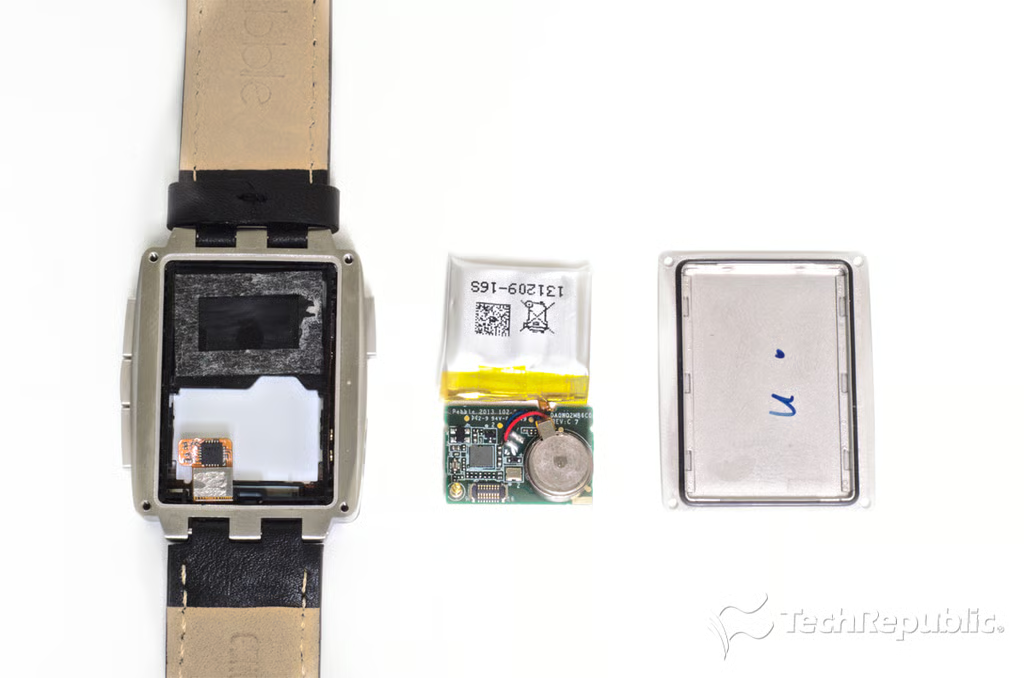
    Cracking Open Pebble Steel: Completely disassembled

    With the

    Bill Detwiler\/TechRepublic
1 of 31
BD

Bill Detwiler is the Editor for Technical Content and Ecosystem at Celonis. He is the former Editor in Chief of TechRepublic and previous host of TechRepublic's Dynamic Developer podcast and Cracking Open, CNET and TechRepublic's popular online show. Previously, Bill was an IT manager in the social research and energy industries. He has bachelor's and master's degrees from the University of Louisville, where he has also lectured on computer crime and crime prevention.