This gallery is also available as a TechRepublic Five Apps article.
Most people tend to lean toward either MS Outlook or Google\r\nfor their calendar needs. But if you need immediate access to a calendar\r\nseparate from either, or something quick and easy to connect to another\r\ncalendar, there are quite a lot of options available. From Thunderbird plugins,\r\nto full blown PIMS, there’s a calendar tool to meet just about any need.
\r\n\r\n
But what if you need something simple; something easy to use\r\nand readily available? If that’s the case, you’re still in luck \u2013 there are\r\ndesktop calendar apps out there that are ready to serve. Although you won’t be\r\nintegrating with an Exchange server, you can at least enjoy your own personal\r\ndesktop calendar and, in some cases, even link your Google calendar.
\r\n\r\n
Let’s\r\ntake a look at this list of desktop calendar apps and see if any of them offer\r\nthe features that you need.
\r\n\r\n
Credit: Images by Jack\r\nWallen for TechRepublic
\r\n\r\n
\r\n\r\n
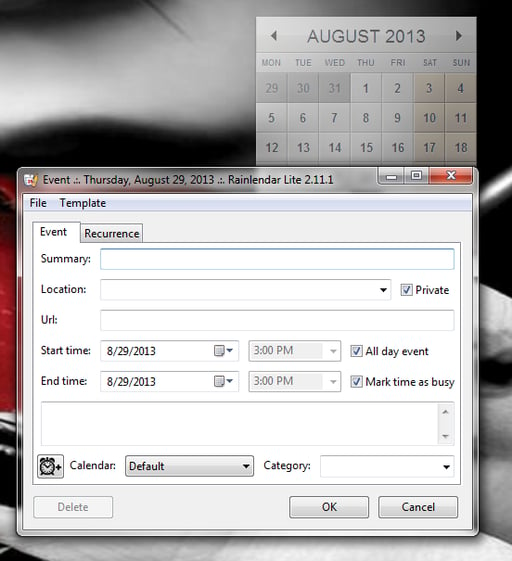
Rainlendar\r\ndoesn’t have the most user-friendly name, but it’s an outstanding entry in the\r\ndesktop calendar group. Rainlendar allows you to set up alarms, reminders,\r\ntasks, and events. You can also share your calendar and subscribe to other’s\r\ncalendars, import and edit your Outlook calendars, and much more. Rainlendar is\r\nstandards based, cross platform, and allows you to choose from various layouts.\r\nThere is also plenty of customization available for Rainlendar with skins. You\r\ncan even mix and match the skins to create a very unique layout. Rainlendar is\r\navailable for Windows, OS X, and Linux.
\r\n\r\n
Credit: Images by Jack\r\nWallen for TechRepublic
\r\n\r\n
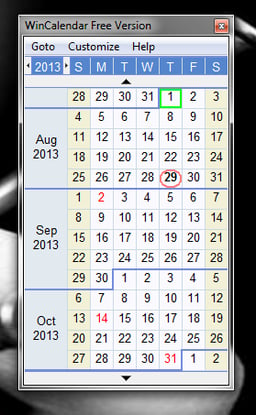
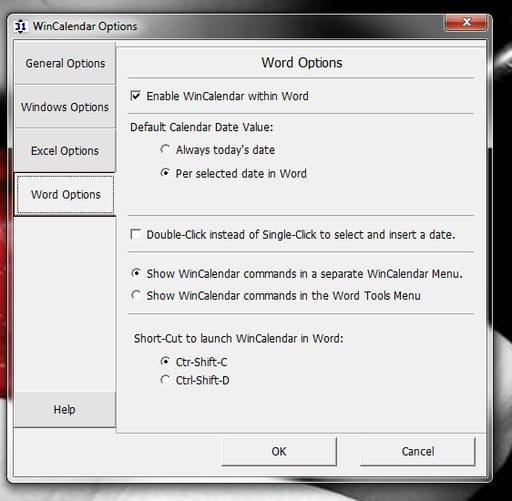
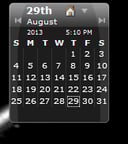
WinCalendar is a well-designed\r\ndesktop calendar that offers the ability to create printable calendars (for\r\nboth MS Word and Excel), and load by hotkey. You can customize both size and\r\nfeatures of the calendar, scroll through a perpetual calendar, and copy selected\r\ndates to the clipboard. There is support for stored daily appointments (up to\r\n20 on free version), and more.
\r\n\r\n
There are two versions of this app: Free and Paid. The free\r\ndoes have a few limitations (for more information on these limitations and\r\npricing for the paid versions, visit this page). The calendar creation\r\nfeature allows you to create printable calendars with over seventy layouts. The\r\ncalendar creator actually runs through either MS Word or Excel, which makes for\r\neasy printable calendar creation. WinCalendar is only available for Windows.
\r\n\r\n
Credit: Images by Jack\r\nWallen for TechRepublic
\r\n\r\nGoogle Calendar Windows\r\nClient does exactly what you would expect. If you have a Google account,\r\nyou can add this handy app to present your Google Calendars on your desktop.\r\nThis app will automatically sync with any Google Calendar (even from multiple\r\naccounts) and can display all tasks and events. The synchronized calendars can\r\nbe both displayed on the desktop and saved as a file for offline use. You can\r\nalso send events to Outlook or export them as vCalendar. If you do opt to use\r\nthe offline access option, do not do so on a public computer as that\r\ninformation is stored on the computer (meaning someone could access your Google\r\naccount). Google Calendar Windows Client is only available for the Windows\r\nplatform.
\r\n\r\n
Credit: Images by Jack\r\nWallen for TechRepublic
\r\n\r\n
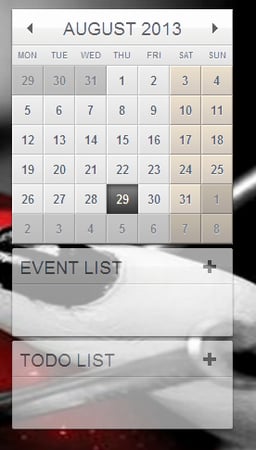
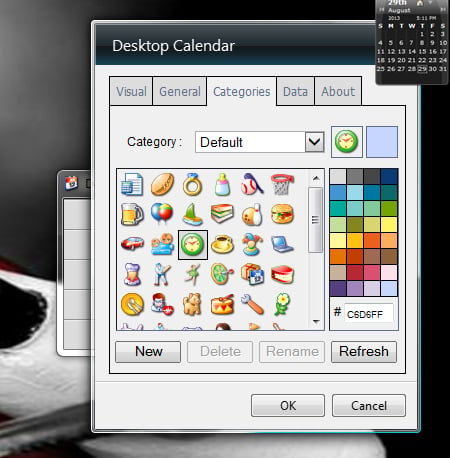
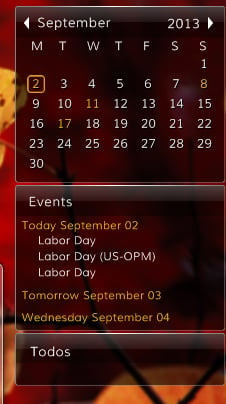
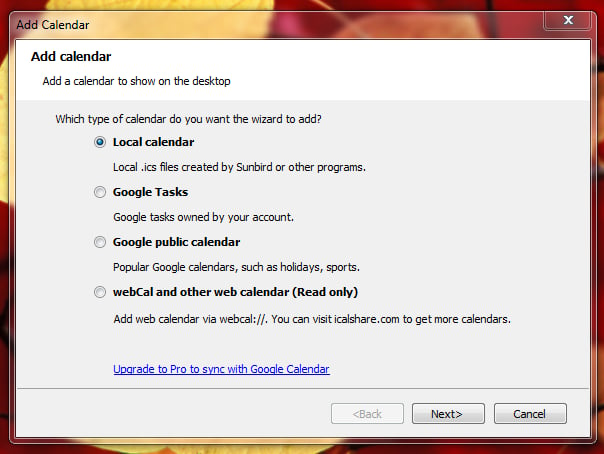
Desktop\r\niCalendar Lite is another “widget” type calendar that lives,\r\nunobtrusively, in the upper right corner of your desktop. With this handy app\r\nyou can add reminders, to-dos, events, alarms, subscribe to public Google and\r\niCloud calendars, change skins and opacity, and more. You can opt to display\r\nthree different sections: Calendars, Events, and/or To do. This is the Free\r\nversion of the Pro calendar. The Pro version can sync your own personal Google\r\nCalendar. Desktop iCalendar Lite has a system tray icon where all options can\r\nbe accessed. If you’re looking for simplicity and ease of use, Desktop\r\niCalendar Lite is a fairly smooth candidate. Desktop iCalendar Lite is only\r\navailable for the Windows operating system.
\r\n\r\n
Credit: Images by Jack\r\nWallen for TechRepublic
\r\n\r\n
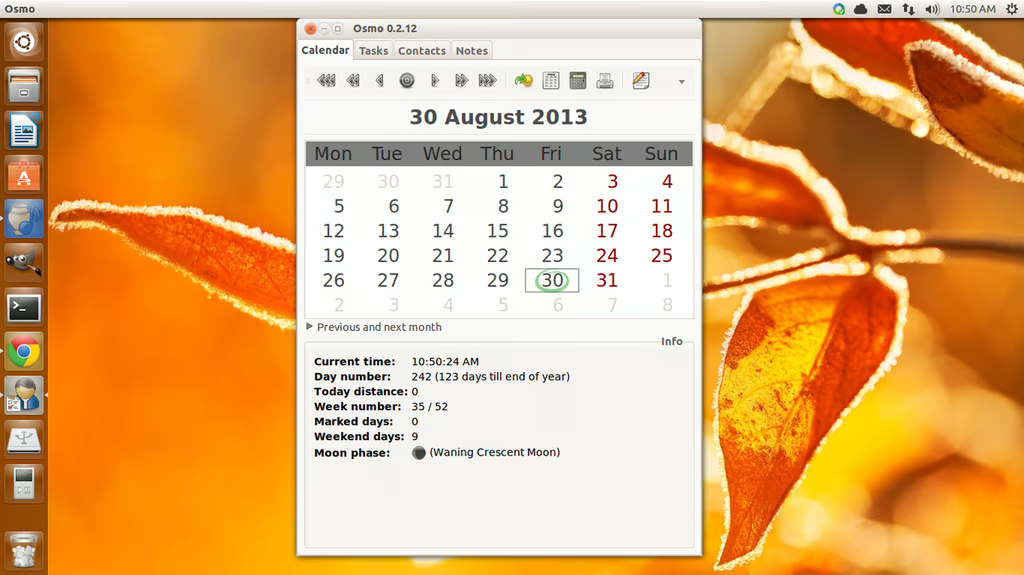
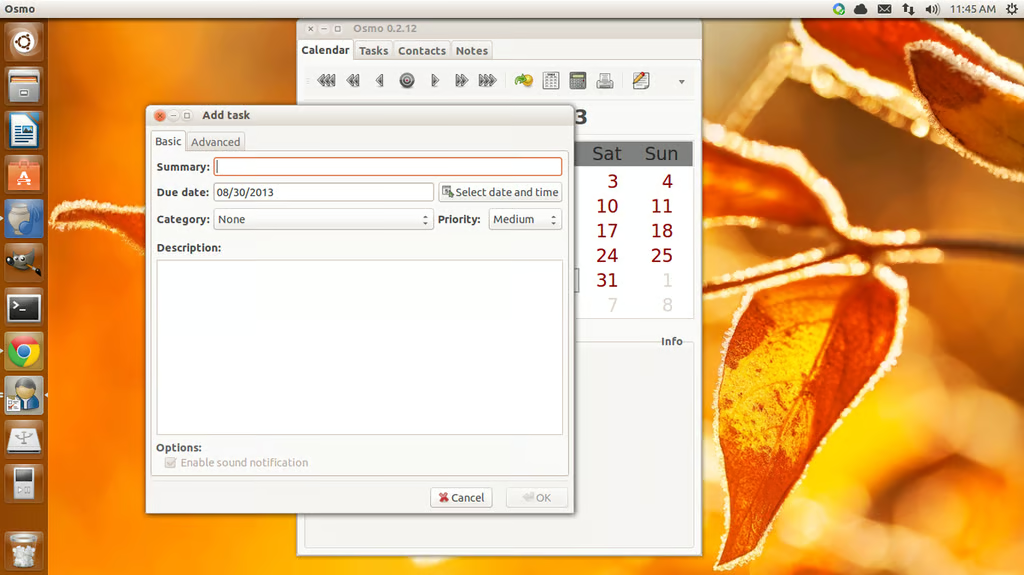
OSMO is the only entry\r\nin the list that is Linux only. OSMO is also more than just a calendar -it is a\r\npersonal organizer. With this handy desktop tool you can organize your\r\ncalendars, tasks, contacts, and notes. The calendar tool offers features like:\r\nDay notes with text attributes, date calculator, full year calendar, compact\r\nmode, iCal support, integration with Tasks and Contact modules. The one caveat\r\nwith OSMO is that it does not sync with other computers or other calendars.\r\nThis is a local calendar only. But if you’re looking for a local desktop\r\ncalendar that offers a bit more than just straight-up calendaring, OSMO might\r\nfit the bill. There is an included spell checker and you can even hide\r\ncomponents of the tool so you only see what you need. OSMO runs in the\r\nbackground and does not display a widget on the desktop. A quick right-click on\r\nthe panel icon will pop up the OSMO window.
\r\n\r\n
Credit: Images by Jack\r\nWallen for TechRepublic
\r\n\r\nThere\r\nare countless ways to keep a calendar at the ready. Some users rely upon the\r\nconstant connectedness of Google Calendar, while others prefer a more\r\nstand-alone means to keep track of their dates. But no matter what type of\r\nuser you are, there is a desktop calendar for you.
\r\n\r\n
Credit: Images by Jack\r\nWallen for TechRepublic