Photos: 10 Wi-Fi access points to consider before dipping into your tech budget - TechRepublic

Photos: 10 Wi-Fi access points to consider before dipping into your tech budget

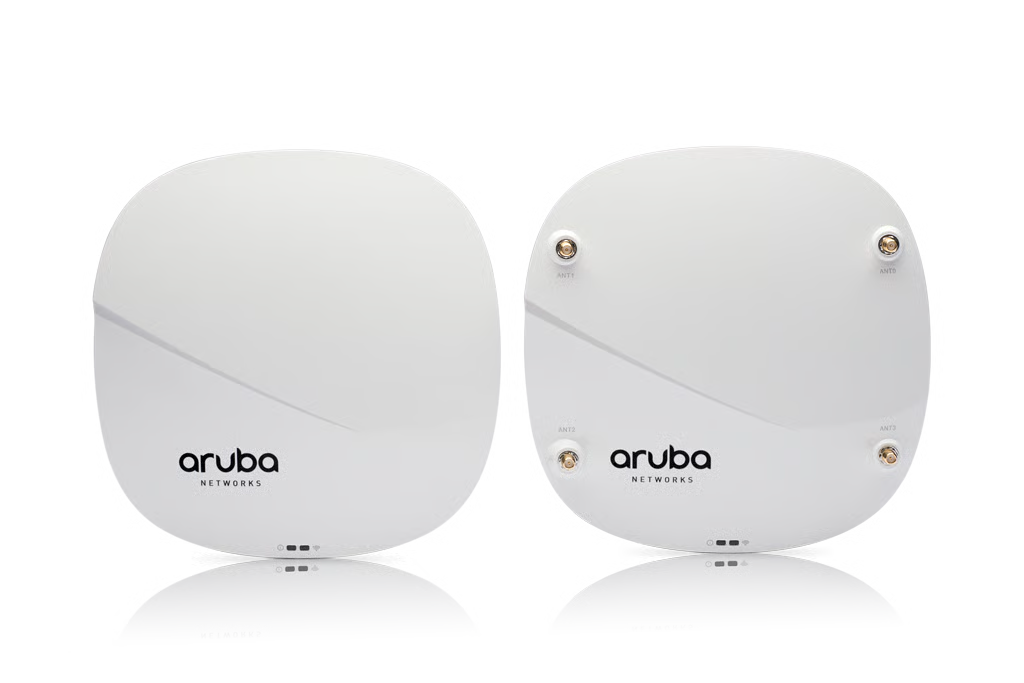
  • Aruba 320 Series

    The advantages of 802.11ac are multiuser MIMO communications, optionally 160 MHz wide channels, and completely moving out of the crowded 2.4 GHz band. MIMO requires somewhat more processing power on the receiving end to process, and a different antenna design. However, the dramatically increased speeds, combined with the release of devices that support 802.11ac, make it a worthwhile consideration for upgrading your wireless network.

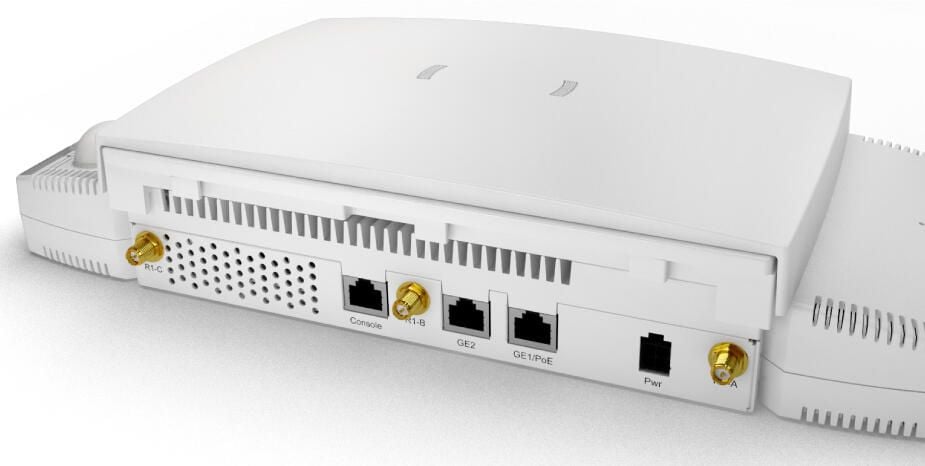
    Aruba’s 320 Series features support for\r\n802.11ac Wave 2, in 4X4:3 configuration for MU-MIMO (rated at up to 1,300\r\nMbps), and 4X4:4 for SU-MIMO (rated at up to 1,733 Mbps). Being an\r\nenterprise-grade access point, it can support 255 users per radio. The AP-325\r\n(left) contains eight integrated omni-directional downtilt antennas, while the\r\nAP-324 (right) has four dual-band external RP-SMA antenna connectors.

    Image: Aruba Networks
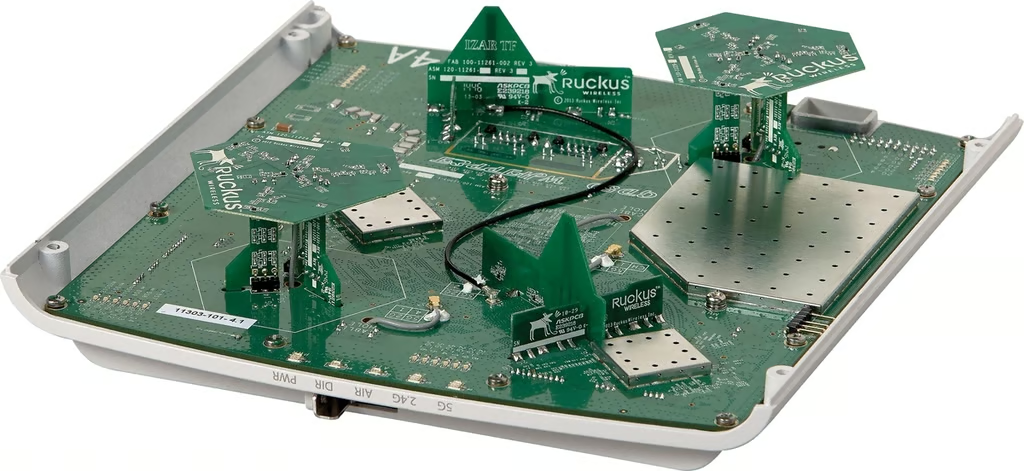
  • Ruckus ZoneFlex R710

    The ZoneFlex R710 from Ruckus Wireless (seen here\r\ndisassembled) is a full 802.11ac Wave 2 access point, with a 4×4:4 antenna\r\ndesign, which can achieve speeds up to 1733 Mbps. The R710 uses the BeamFlex+\r\nintegrated antenna design, which purportedly provides more consistent performance\r\nas clients change orientation relative to the access point.

    Image: Ruckus Wireless, Inc.
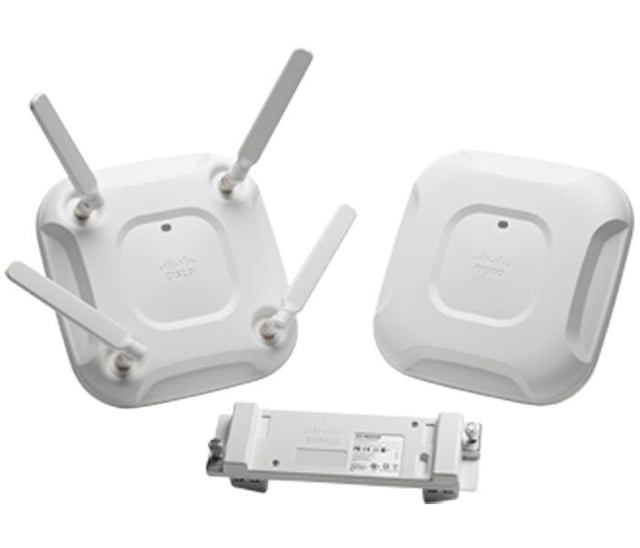
  • Cisco Aironet 3700

    The Cisco Aironet 3700 series is an 802.11ac Wave\r\n2 ready access point that can be\r\nupgraded using an add-on module. It has a 4×4:3 antenna design, which is\r\navailable in both integrated and external antenna configurations. The Aironet\r\n3700 requires the use of other Cisco software for management.

    Image: Cisco Systems, Inc.
  • 01-linksys-ea8500.jpg

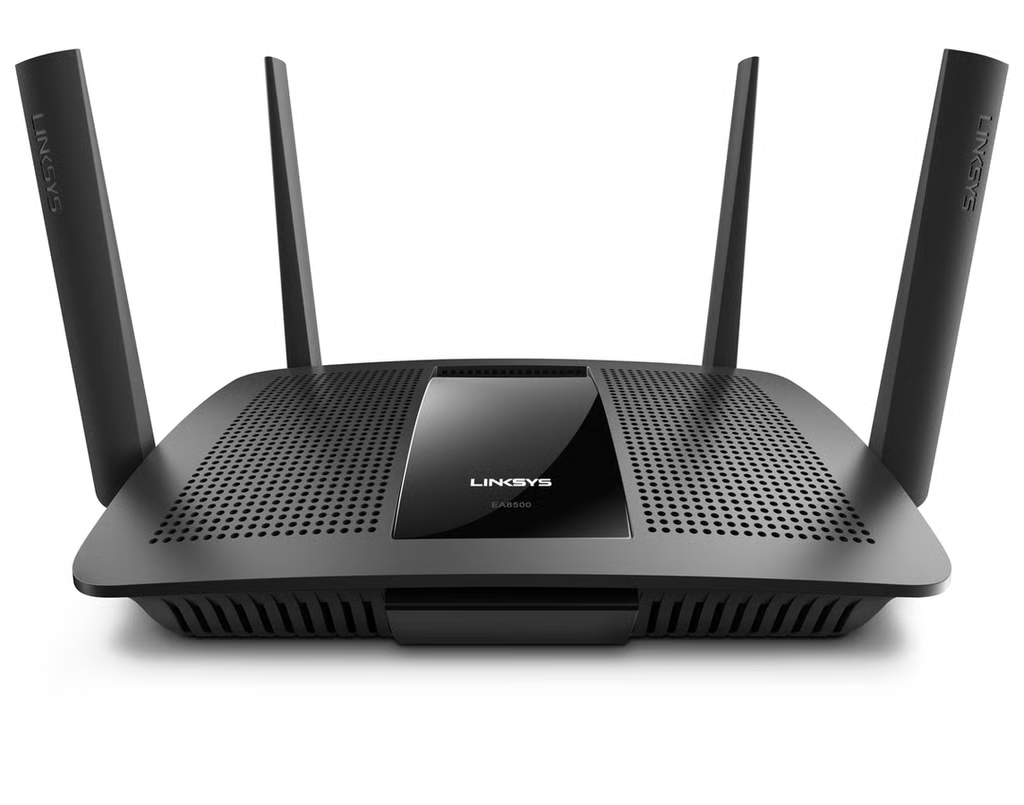
    Linksys EA8500

    The Linksys EA8500 is the first home / prosumer\r\nrouter to support 802.11ac Wave 2, which adds support for multiuser MIMO, offering\r\nspeeds approximately four times faster than Wave 1 devices. It can support 50\r\nusers, making it a better fit for home office and small business settings. At\r\nan MSRP of $279.99, it is one of the most expensive home routers available, but the\r\n802.11ac performance is very good.

  • Zebra AP 8232

    The Zebra AP 8232 is a rather ruggedly-built\r\nenterprise-grade access point with a 3×3:3 antenna design. In contrast to other\r\nenterprise access points, it has optional upgrades for light sensors and\r\nintrusion detection, as well as a 4G LTE backhaul to prevent downtime during an\r\noutage of the wired network.

    This product was previously sold by Motorola\r\nSolutions (the half of Motorola not owned by Google, which was subsequently sold to Lenovo).

    Image: ZIH Corp.
  • Linksys LAPAC1750PRO

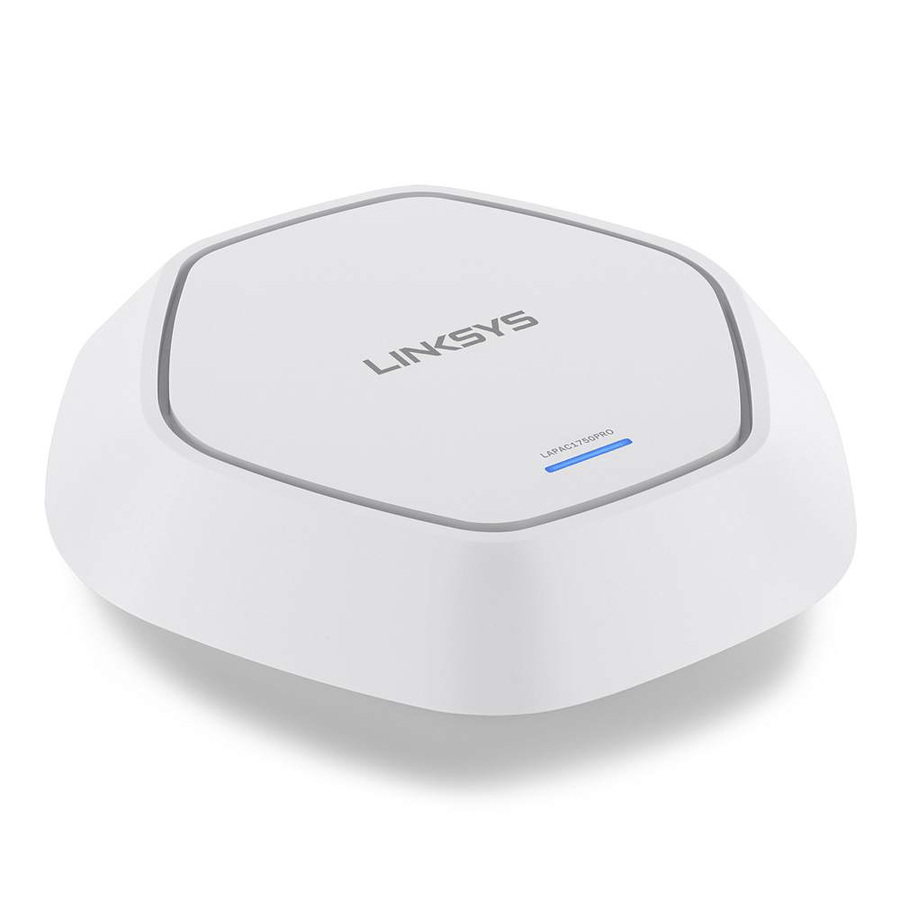
    The Linksys LAPAC1750PRO features support for 802.11ac, for a\r\nmaximum data rate of 1,750 Mbps. The antenna design is 3×3:3. This access point\r\nuses a 1 GHz Broadcom BCM53016 CPU, and Broadcom radios for\r\nboth the 5 GHz and 2.4 GHz bands.

    Image: Belkin International, Inc.
  • Ubiquiti Networks UniFi AP-AC

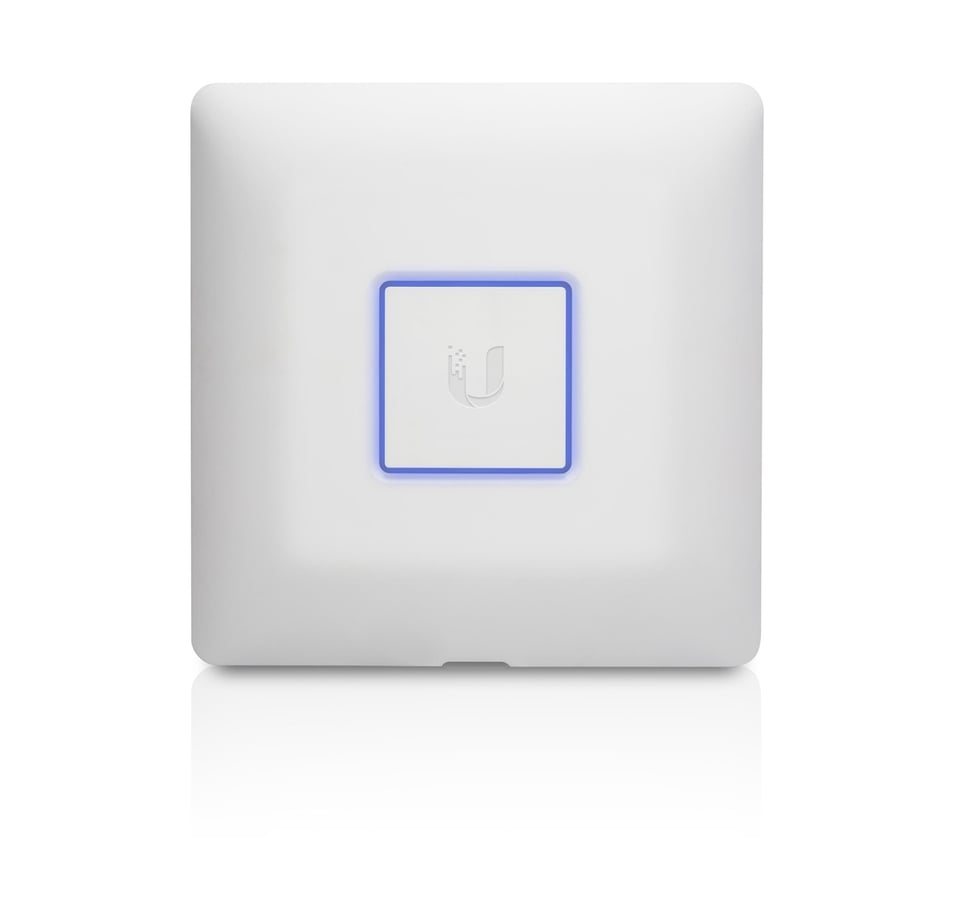
    Ubiquiti’s UniFi AP-AC supports speeds up to 1300 Mbps,\r\nusing a 3×3:3 antenna design. Ubiquiti’s licensing model does not include\r\nlicensing or software fees, which can be an important TCO consideration. The\r\nUAP-AC is also available in a ruggedized Outdoor version, which supports wall or pole mounting.

    Image: Ubiquiti Networks, Inc.
  • D-Link DAP-2695 Rev. A1

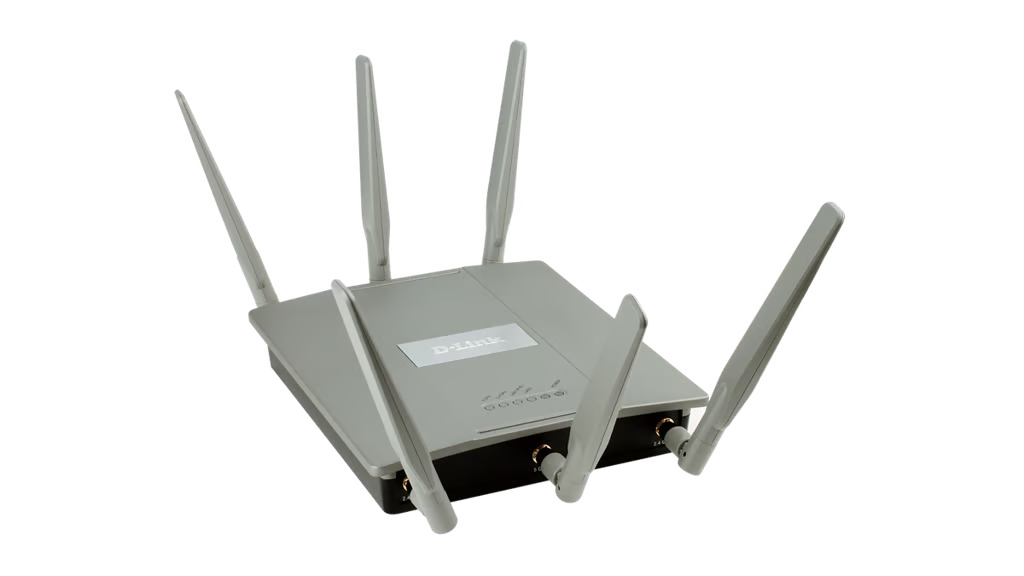
    The D-Link DAP-2695 A1 is a Qualcomm Atheros-based\r\n802.11ac access point, using a 3×3:3 antenna design with removable RP-SMA\r\nantenna connectors. Owing to the fact that it has external antennas, the system\r\nweighs 1,140 grams (2.52 lbs.), which is somewhat heavier than the 950 gram\r\n(2.094 lbs.) Aruba AP-325, which has integrated antennas.

    Image: D-Link Systems, Inc.
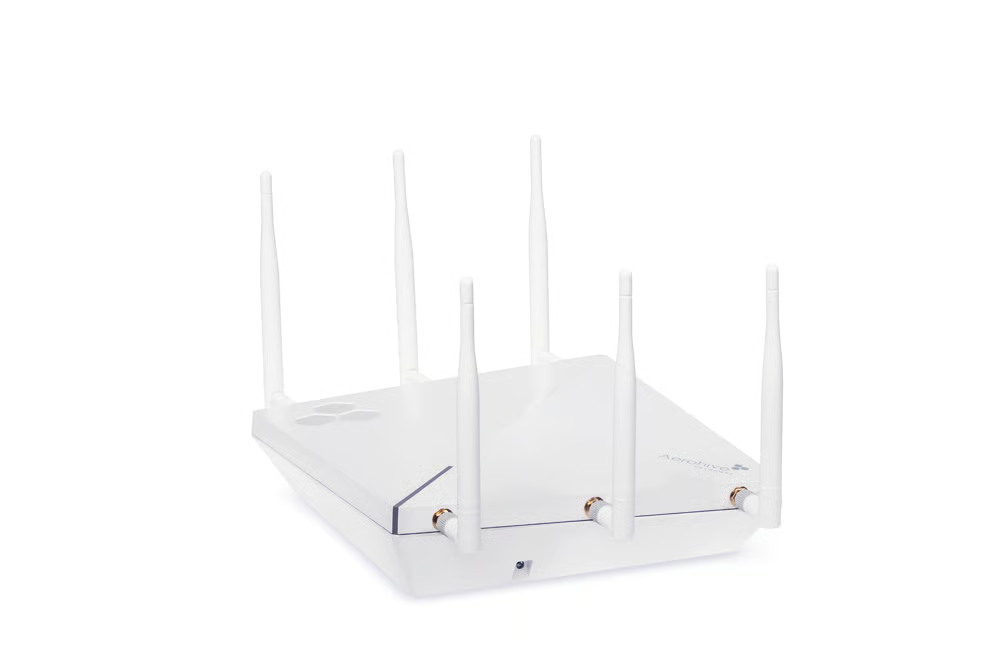
  • Aerohive AP390

    The Aerohive AP390 provides 802x11ac support with a 3×3:3\r\nantenna design. Of particular interest is the Aerohive’s HiveOS, which allows\r\nthe access points to organize into groups or “hives” that coordinate various\r\nfeatures such as cooperative RF management without a dependency on a backend\r\nnetwork.

    Image: Aerohive Networks, Inc.
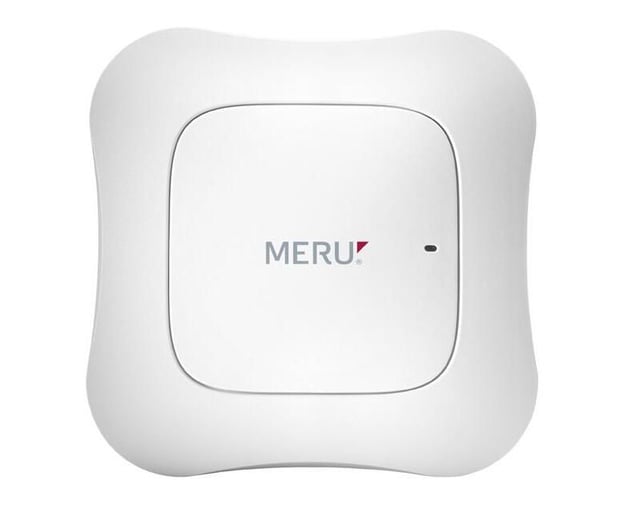
  • Meru AP832

    The Meru AP832 is a Broadcom-based 80211ac access\r\npoint with a 3×3:3 antenna design, which can achieve speeds up to 1300 Mbps.\r\nLike other solutions, it is available in an integrated antenna and an external\r\nantenna design.

    Image: Meru Networks, Inc.
1 of 10
James Sanders

James Sanders is an analyst for 451 Research. He was formerly a Staff Technology Writer for TechRepublic.