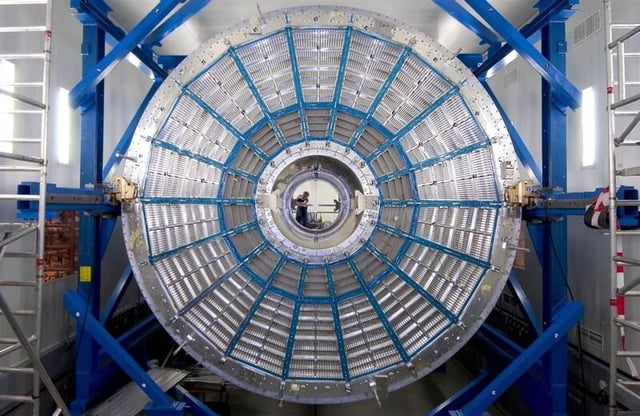
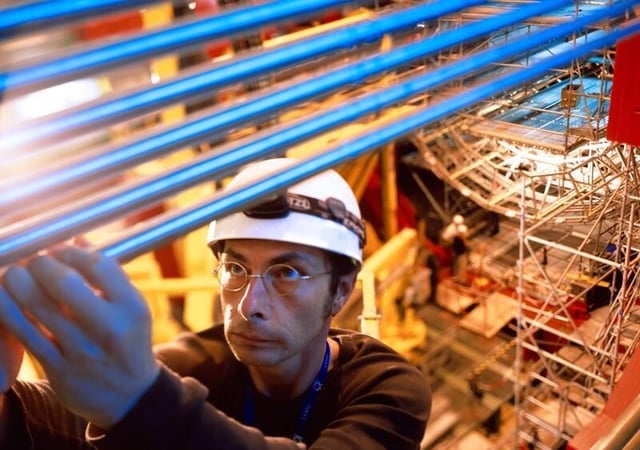
Recently, after a more than two-year hiatus, CERN’s Large Hadron Collider (LHC) began delivering data again. Let’s take a look at one of its most important experiments, ALICE.
ALICE stands for A Large Ion Collider Experiment.
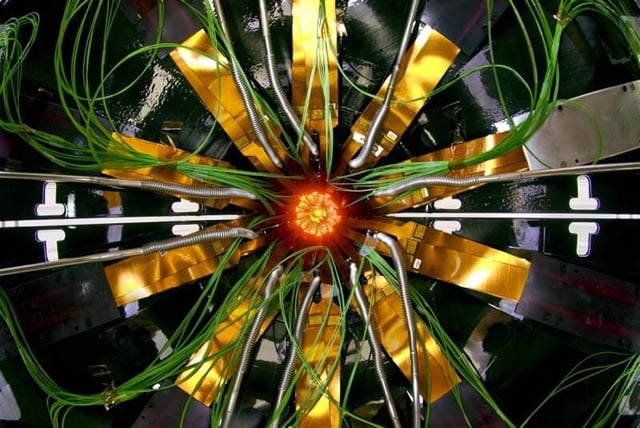
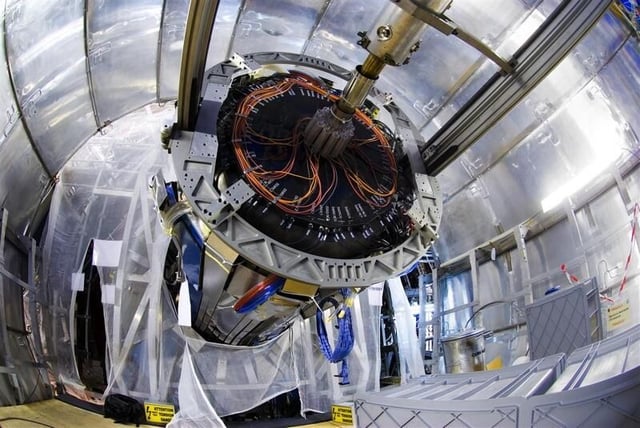
Integration of the inner tracker
ALICE works on detecting quark-gluon plasma, which is thought to be a result of the Big Bang.
Image: CERN
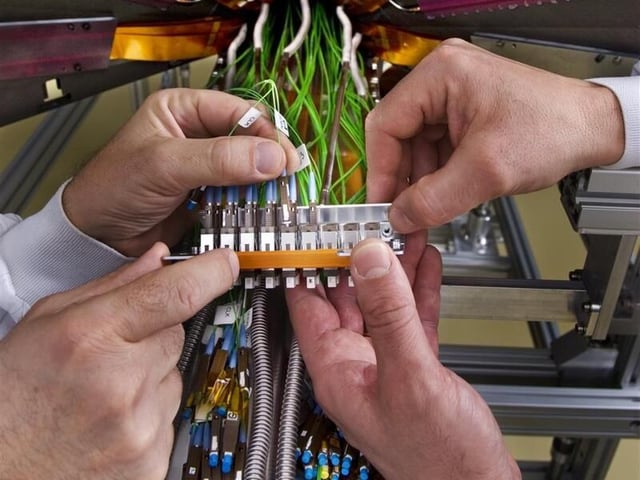
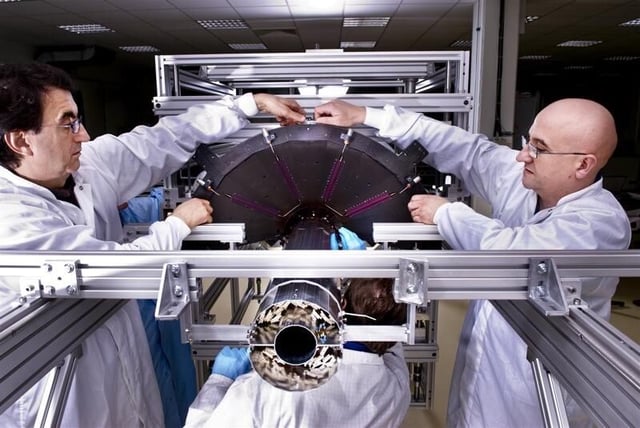
Scientists work on the inner tracker
Image: CERN
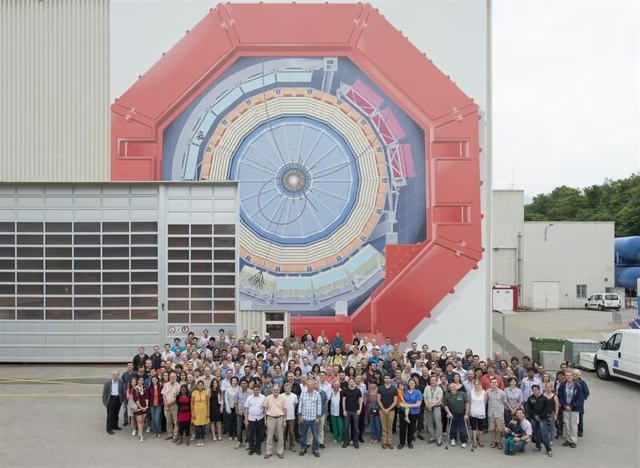
Members of the team that collaborated on ALICE
The ALICE collaboration was formed and its letter of intent was written in 1993.
Image: CERN
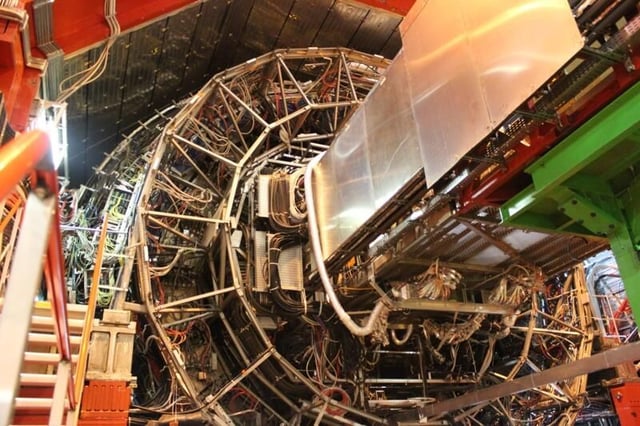
ALICE Cavern
This area is known as the ALICE cavern. DCal modules were installed to extend the measurement capabilities of ALICE.
Image: CERN
Another look at the Inner Tracking System
The Inner Tracking System consists of three layers of detectors: ITS Pixels, ITS Drift, and ITS Strips. The system tracks the movement of specific particles.
Image: CERN
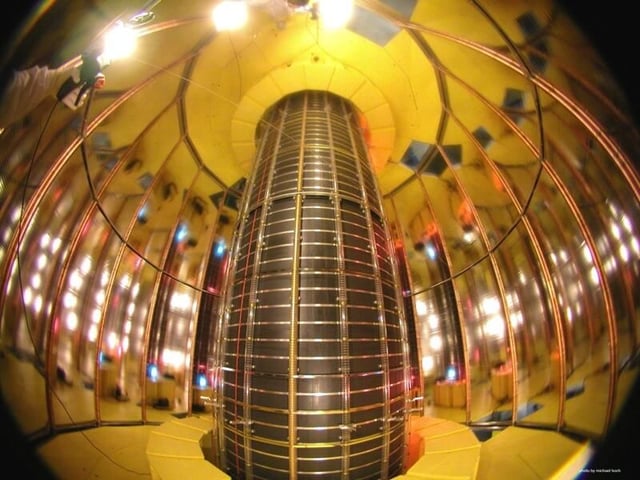
The field cage
Here is an interior look at the field cage of ALICE.
Image: CERN
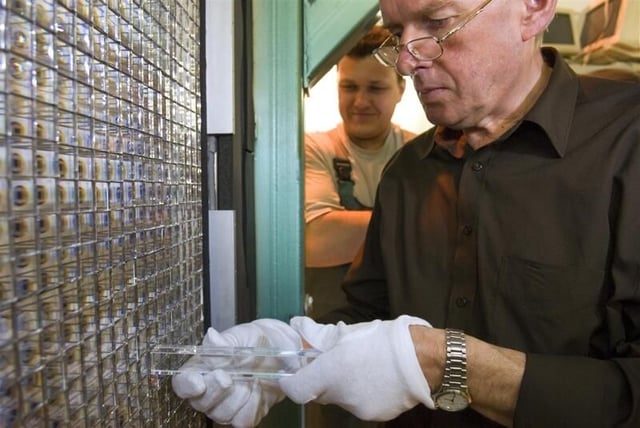
The photon spectrometer
Here scientists insert crystals into the photo spectrometer, which measures photons emerging from the particle collision.
Image: CERN
The time projection chamber
The Time Projection Chamber (TPC) in ALICE is filled with gas to detect and track particles.