Photos: Lights going organic - TechRepublic

Photos: Lights going organic

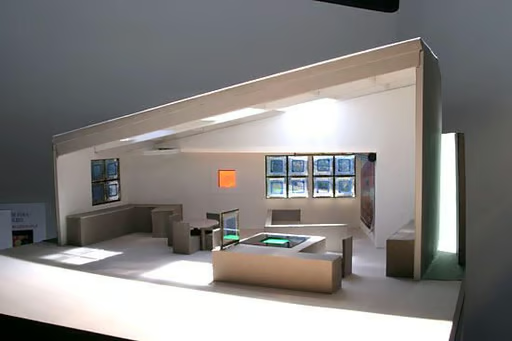
  • Room with OLED lighting

    Researchers are developing ways to use organic light-emitting diodes as a source for room lighting. By increasing the size of the sheets and the brightness, researchers think the material could become an energy-efficient replacement for the incandescent bulb. OLED lighting–organic because the films that emit light contain hydrogen and carbon atoms–could be incorporated into fabrics, furniture and other items.

    Universal Display
  • Generating a shade of white light tolerable to humans out of OLEDs has mostly been achieved, according to researchers. White gets produced by combining red, green and blue OLEDs. For years, the quality of the blue light was the limiting factor.

  • Universal Display has developed prototypes of transparent OLED screens. The terms PHOLED, TOLED and FOLED stand for different OLED (organic light-emitting diode) properties. A PHOLED is a phosphorescent OLED and can convert up to 100 percent of the electricity, theoretically, into light. TOLEDs are transparent, while FOLEDs are flexible. All three properties can be integrated into a single OLED.

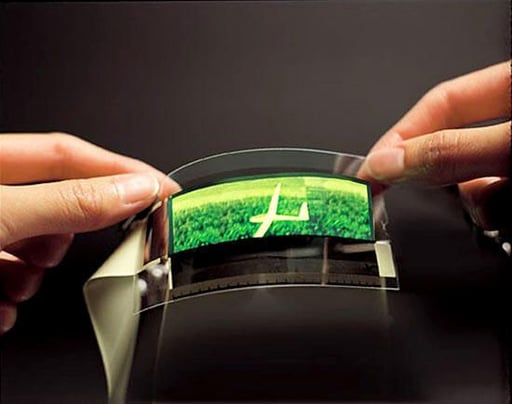
  • Universal Display is developing thin, bendable displays using flexible OLEDs, making them easier to conform to different surfaces.

1 of 4
BD

Bill Detwiler is the Editor for Technical Content and Ecosystem at Celonis. He is the former Editor in Chief of TechRepublic and previous host of TechRepublic's Dynamic Developer podcast and Cracking Open, CNET and TechRepublic's popular online show. Previously, Bill was an IT manager in the social research and energy industries. He has bachelor's and master's degrees from the University of Louisville, where he has also lectured on computer crime and crime prevention.