Screenshots: OS X Mavericks - TechRepublic

Screenshots: OS X Mavericks

  • Figure A

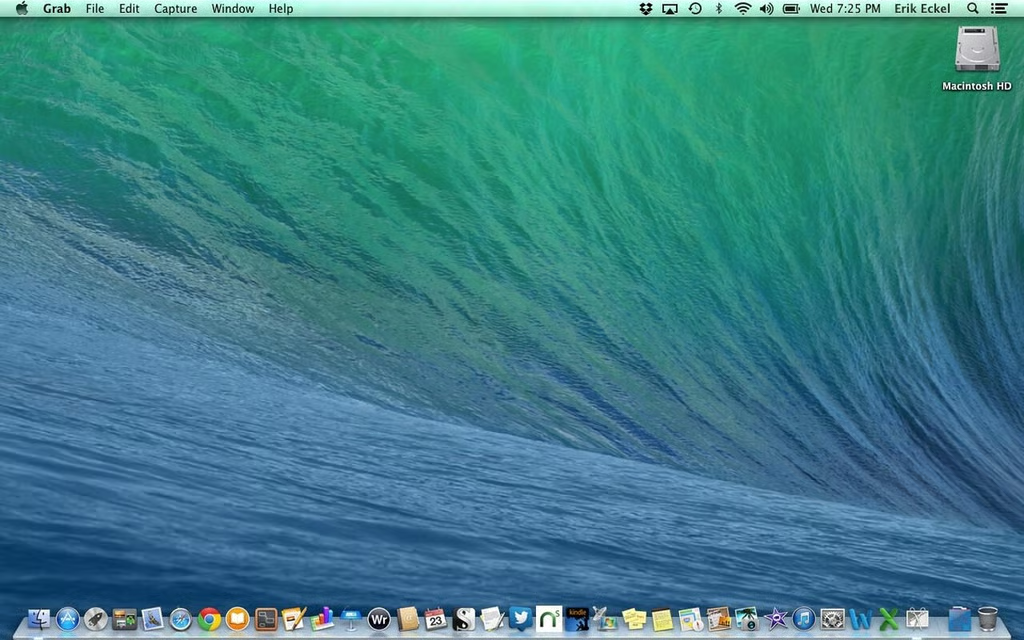
    Entire screen

    Mac OS X 10.9 Mavericks, installed here on a late 2012 MacBook\r\nPro production laptop, continues Apple’s simple interface penchant. Unlike\r\nWindows, whose user base encountered historic trouble attempting to adjust to\r\nthe lack of a Start button in Windows 8, OS X has long leveraged the power of a\r\nDock and menu bar for user operation.
  • Figure B

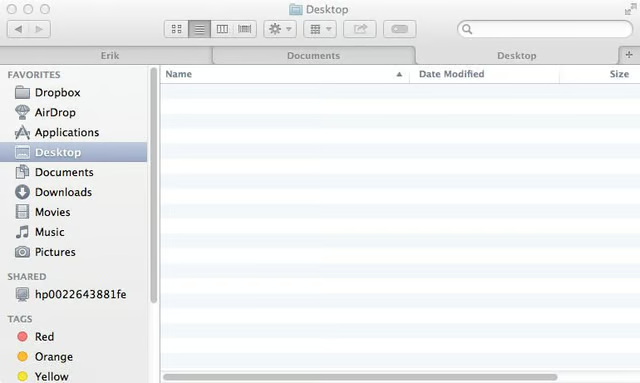
    Finder tabs

    Tabbed file management is included for the first time within OS\r\nX. Users can now leverage multiple tabs within Finder, thereby simplifying file\r\nmanagement and interaction.

  • Figure C

    App Store

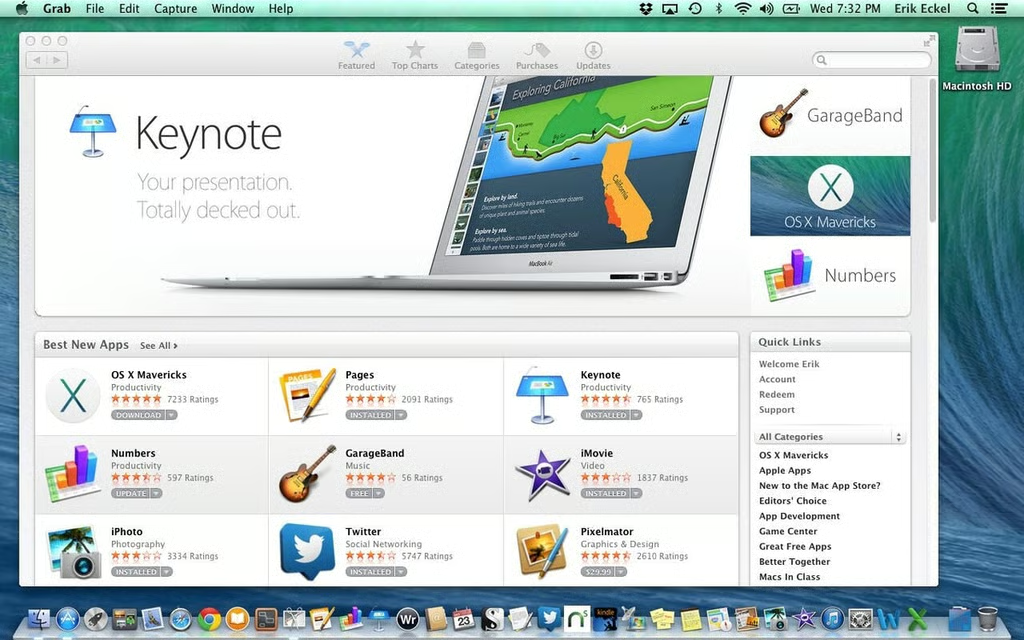
    Apple’s App Store is a true home run, with more than 50 million\r\napps downloaded. Here’s how the App Store appears to users within OS X\r\nMavericks on a Mac (as opposed to an iOS device).

  • Figure D

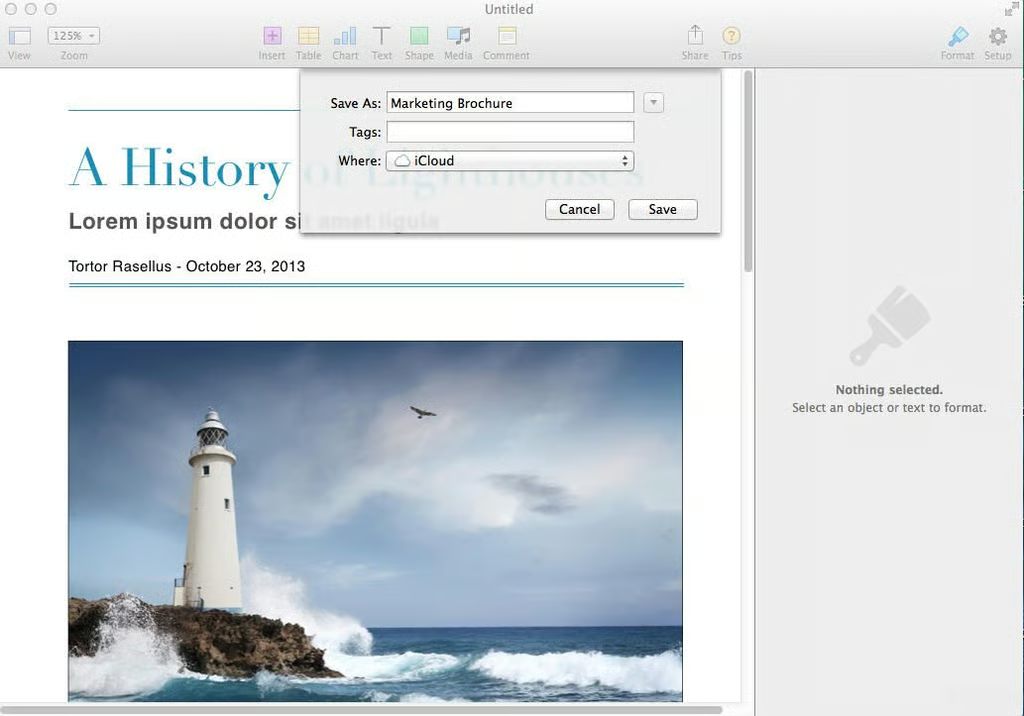
    Pages

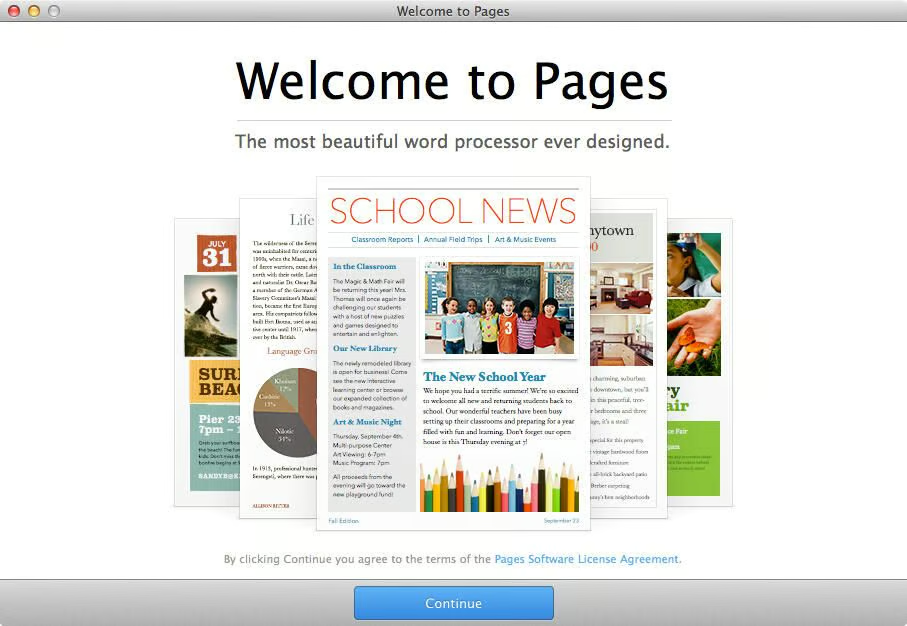
    Apple’s iWork suite, which includes Pages, Numbers, and Keynote, is consistently\r\nranked among the most popular and top paid apps within the App Store. Most\r\nusers will be hard pressed to discover any word processing features or functionality\r\nnot included within Pages.

  • Figure E

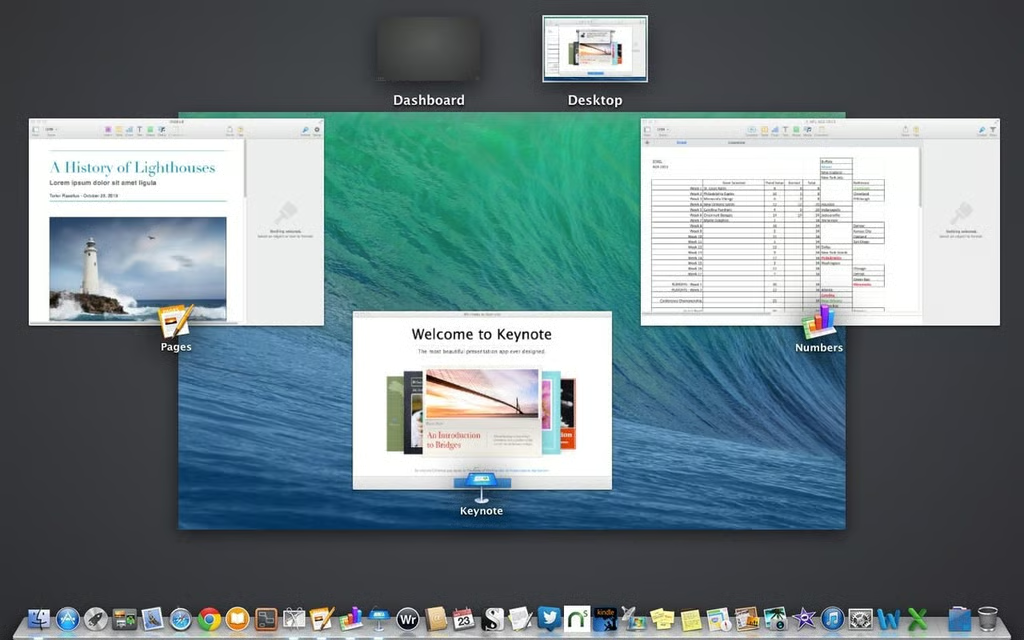
    Mission Control

    Multitasking has become more than a hallmark of particularly\r\nproductive and efficient employees; multitasking is now a necessity for anyone\r\nseeking success within a contemporary career. One side product of a frenzied,\r\nhectic pace is users often lose track of open windows. Mission Control is one\r\nway Apple makes computing easier by providing users with a simple view of open\r\napplications.

    Image: NASA
  • Figure F

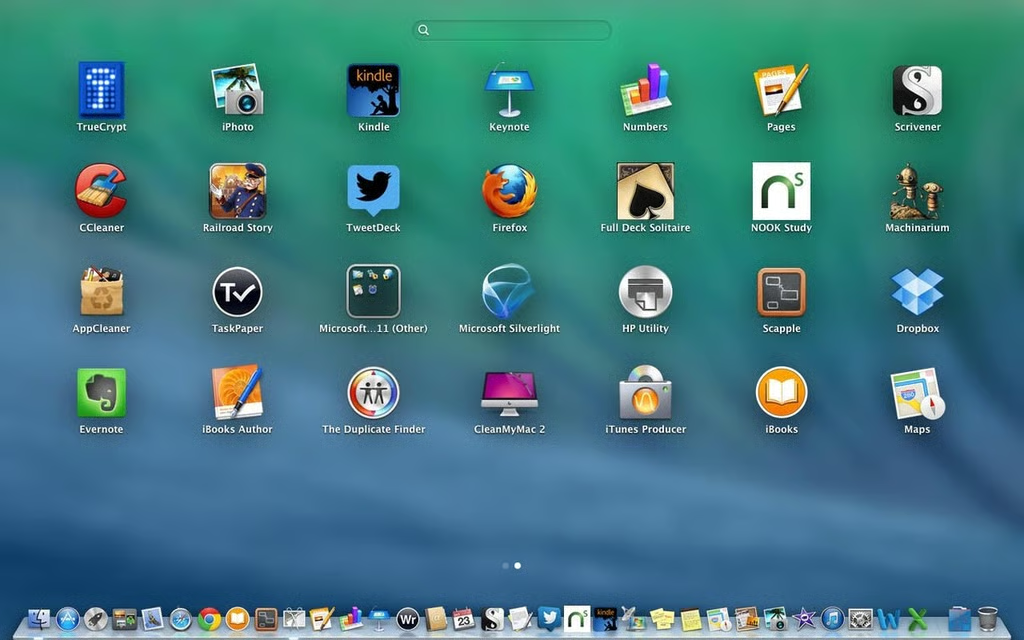
    Launchpad

    As users install applications within OS X, Mavericks lists the\r\nsoftware programs within Launchpad. The Mac Dock includes a Launchpad icon,\r\nproviding quick access to applications while eliminating the need for users to\r\nhave to navigate file structures or Start menus to locate and open applications.

  • Figure G

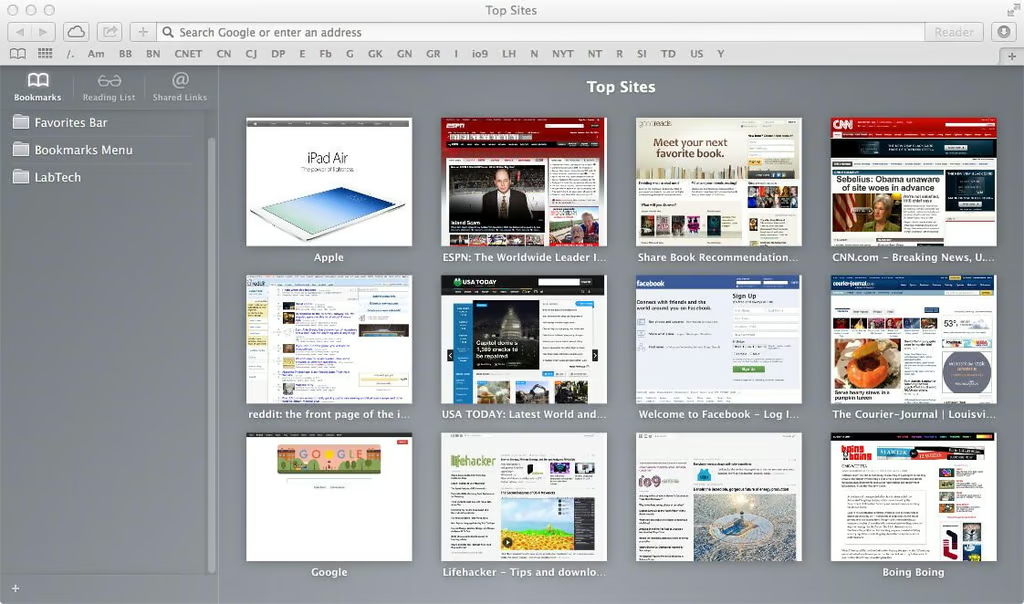
    Safari Top Sites

    Safari, Apple’s web browser, remembers the web sites\r\nusers visit most often and positions them as tiled windows within its Top Sites view. The feature is reachable by clicking a single icon parked on Safari’s\r\nmenu bar, making it easy to quickly access a user’s most frequently visited Web sites.

  • 8-Safari-Web-Site.102513.jpg

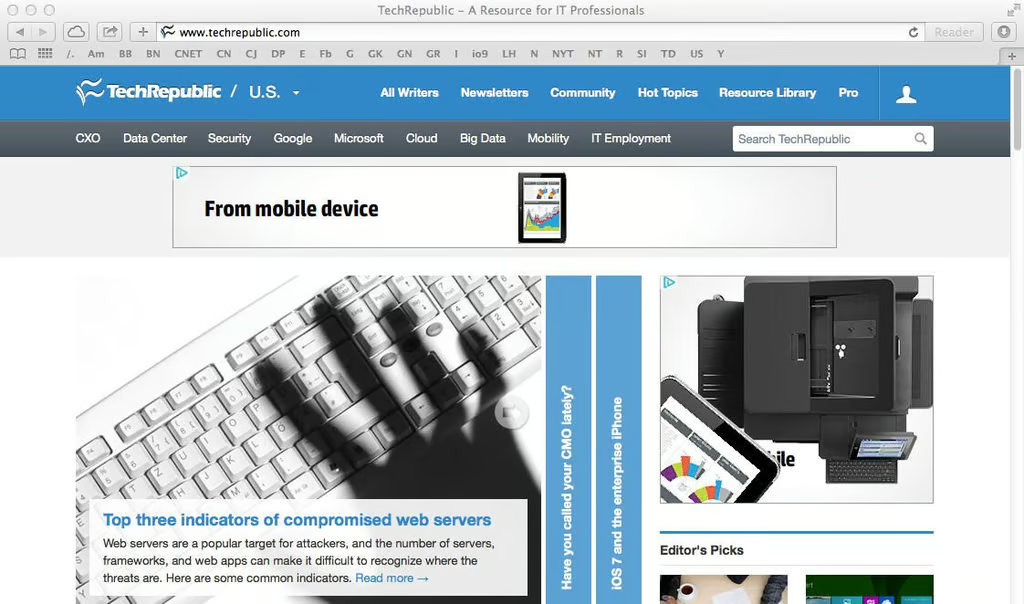
    Safari web site

    Safari dedicates minimum real estate to menu bars, toolbars, and\r\nnavigational aids. Web sites and their content become the primary focus. Safari\r\nalso receives some upgrades within Mavericks. SharedLinks enables using the\r\nsidebar to share links with Twitter and LinkedIn users, and the Web browser is\r\nbetter tuned to enable longer battery life.

  • Figure I

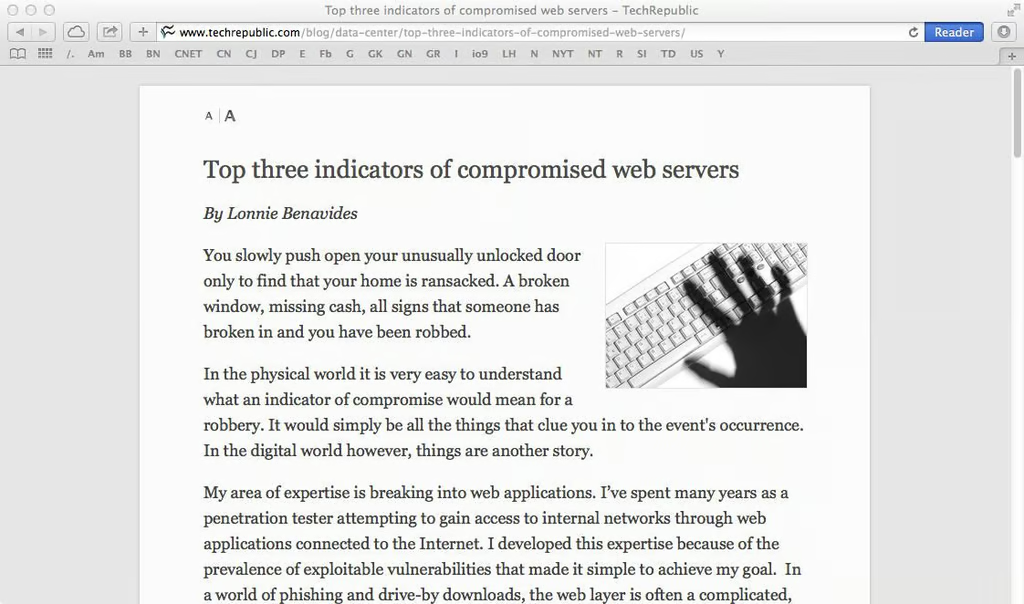
    Safari Reader view

    Safari offers a Reader view in which advertisements and other\r\nelements are stripped away. Instead, just the content the viewer seeks is\r\ndisplayed. When users are digging in, studying a difficult concept and\r\nattempting to eliminate extraneous noise and distraction, the Reader view\r\nproves helpful.

  • Figure J

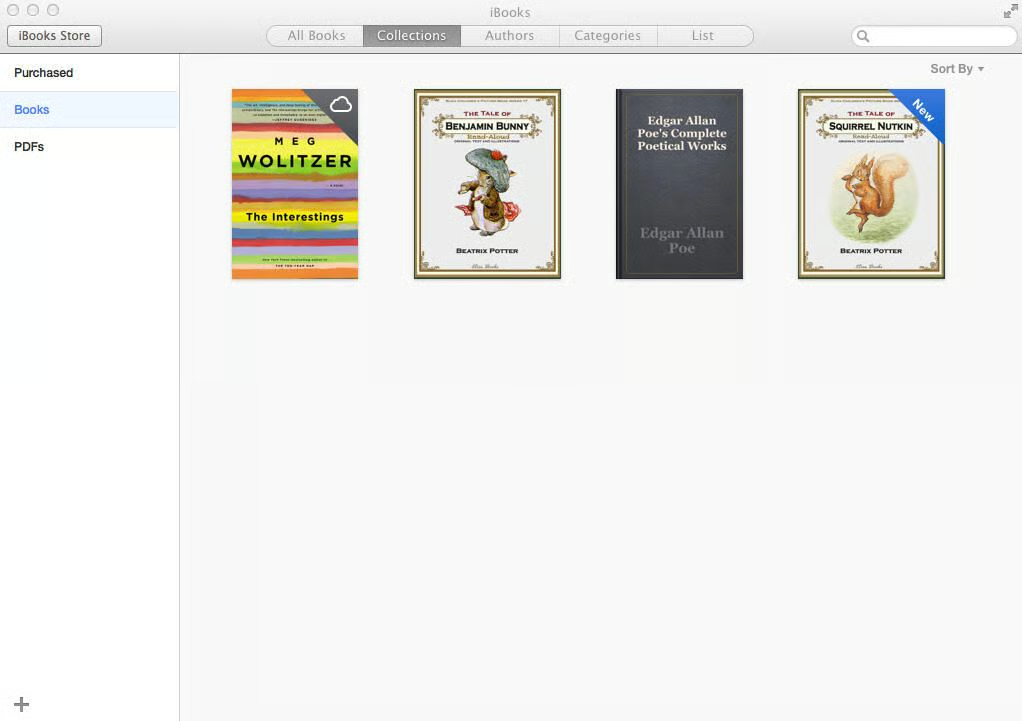
    iBooks

    iBooks is included within OS X Mavericks, meaning Mac and iOS\r\nusers’\r\ncan now share books, PDFs, and other titles across all their Apple devices.

    Image: Cory Bohon
  • Figure K

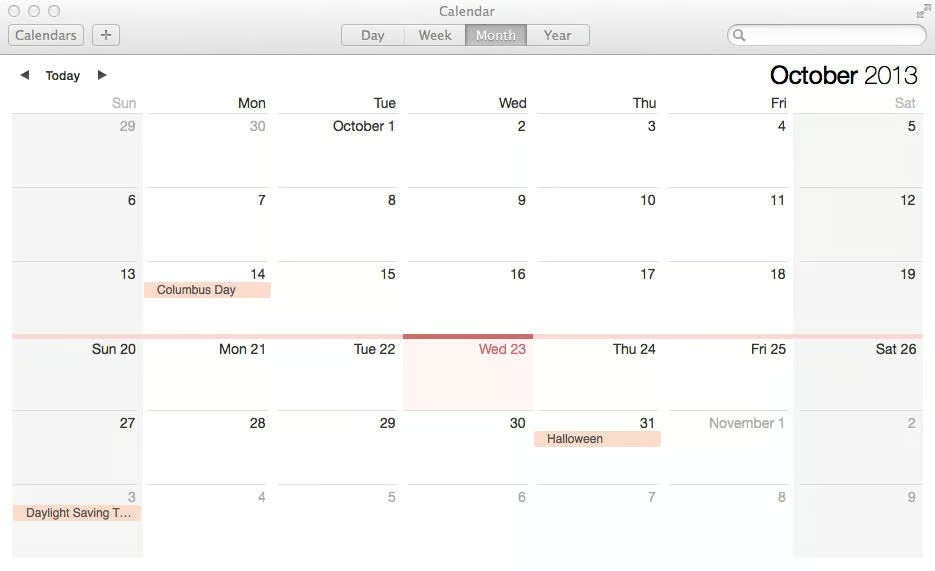
    Calendar Month

    Apple’s trend toward minimal, simplified environments proves true with Calendar in Mavericks, where the appointment program receives a\r\nrefreshed look. Toolbars, menus, navigational aids, and associated elements are\r\nminimized in favor of providing better visibility for the calendar and its corresponding\r\ndata.

  • Figure L

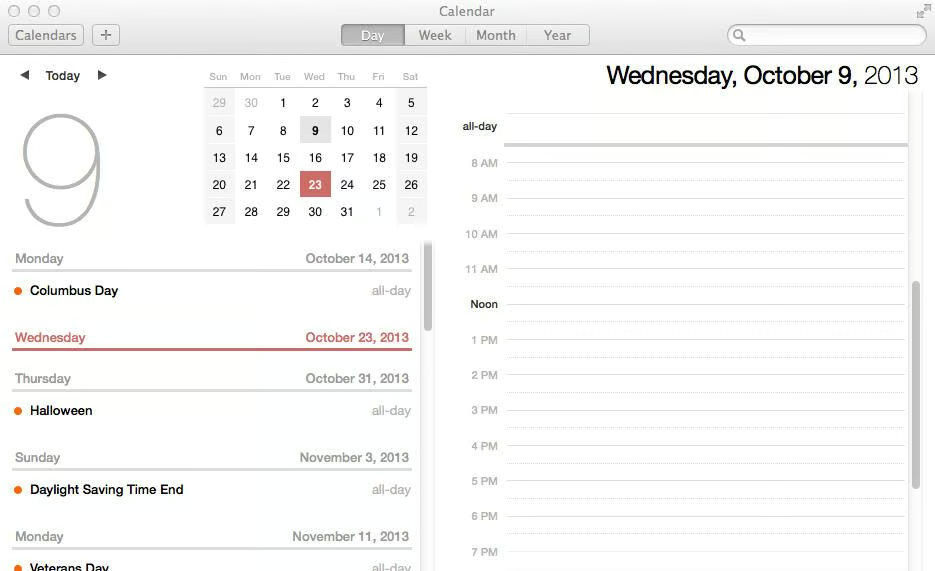
    Calendar Day

    The Mac OS X Mavericks Calendar also offers Day (shown here),\r\nWeek, and Year views. Users can even leverage the new Calendar to predict the drive\r\ntime to appointments and trigger notification reminders when it’s\r\ntime to leave for a meeting.

  • Figure M

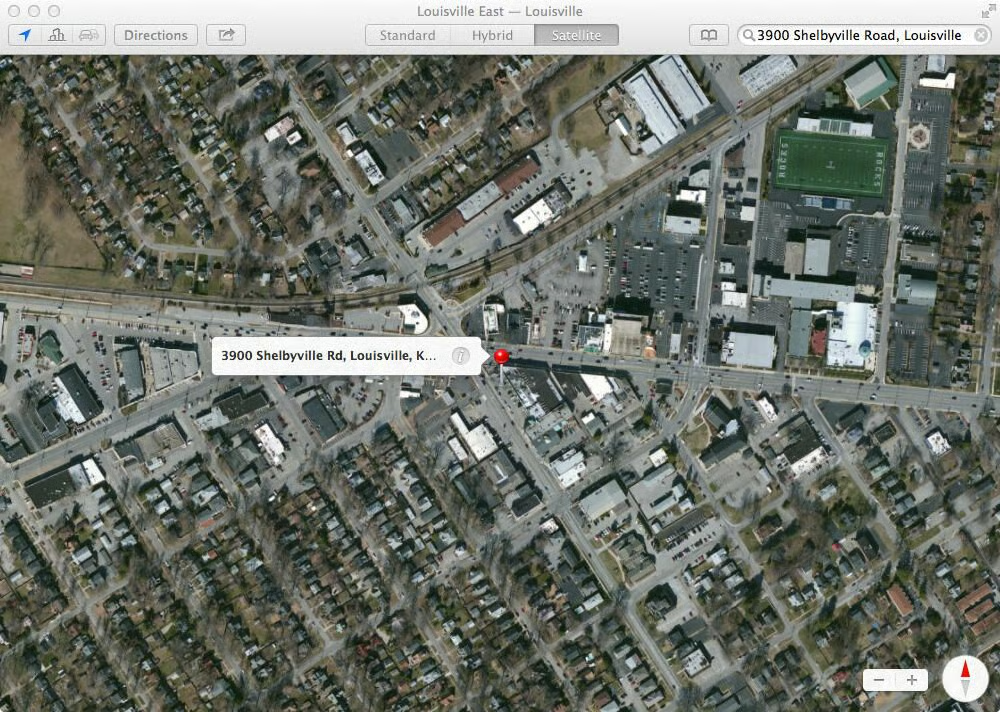
    Maps

    The Mavericks OS includes Apple’s Maps app. Most users will find\r\nthe app’s\r\nsatellite and hybrid views handy for scouting sites, determining locations, viewing landmarks, and reviewing other geographic and map information. As is\r\nApple’s\r\nstyle, the company has managed to take an application another company originally\r\nmade popular (I’d argue Google was among the pioneers to make an initial\r\nmapping splash) and improve upon it by making the feature easy to use and\r\nbeautiful to behold while leveraging the stunning graphics power of Macs and\r\nadding new Flyover capabilities.

    Image: Apple
  • Figure N

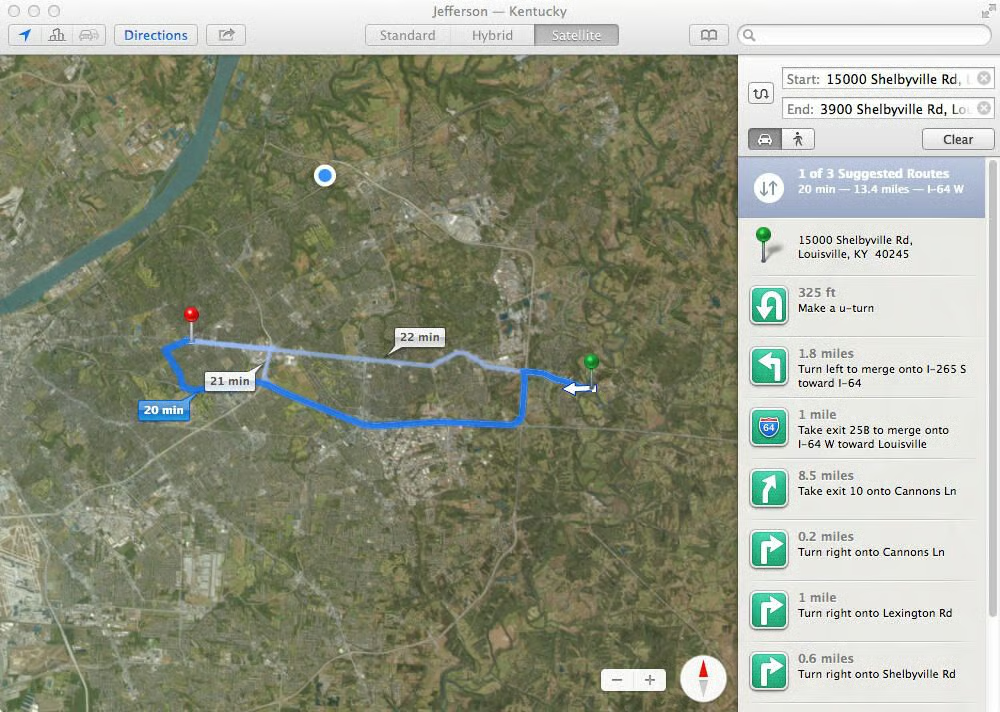
    Maps driving directions

    Driving directions simplify business travel and assist most users\r\nin determining the best driving routes. With Mavericks, users can also share\r\ndriving directions via email, Messages, AirDrop, and Twitter, among other\r\nmethods.

  • Figure O

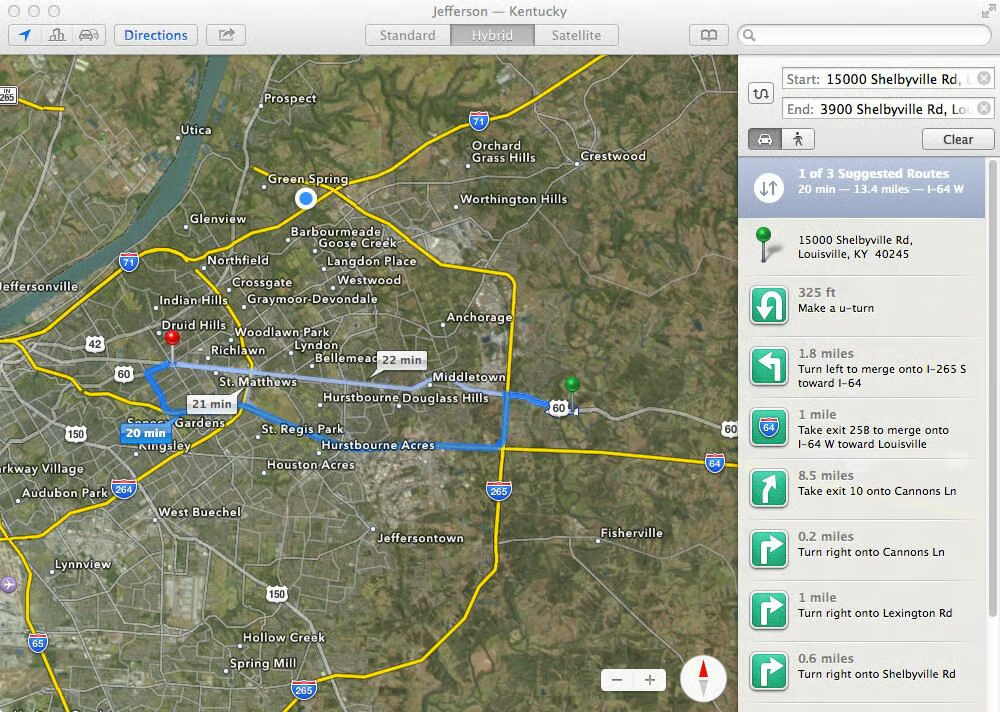
    Map details

    The Hybrid view adds additional map detail, including principal\r\nroadways and interstates, cities, and even subdivision information to assist\r\nusers in better navigating their travels.

  • Figure P

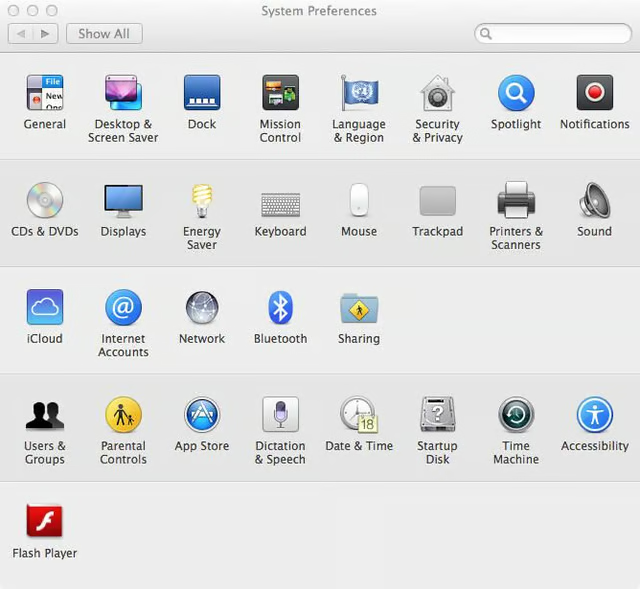
    System Preferences

    Users can configure dozens of System Preferences within OS X\r\nMavericks. Using System Preferences options, users can customize the desktop\r\nlook and feel, network configurations, security preferences, iCloud settings,\r\nand more.

  • Figure Q

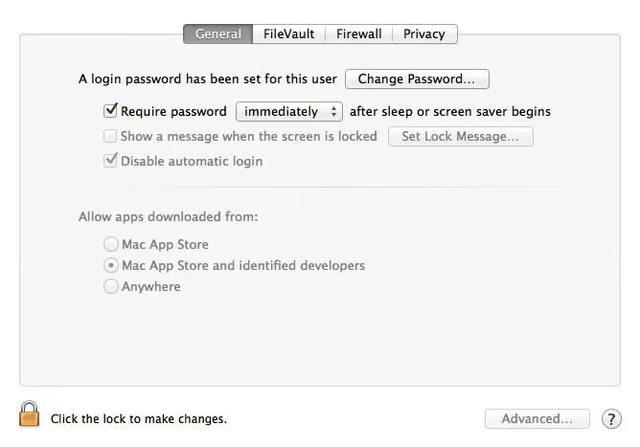
    Security and privacy

    Users can better secure their Macs by requiring a password\r\nimmediately after waking the system from sleep or the screen saver. Users can\r\nalso leverage built-in encryption (using FileVault), disable automatic login, and specify app download settings, among other security options.

  • Figure R

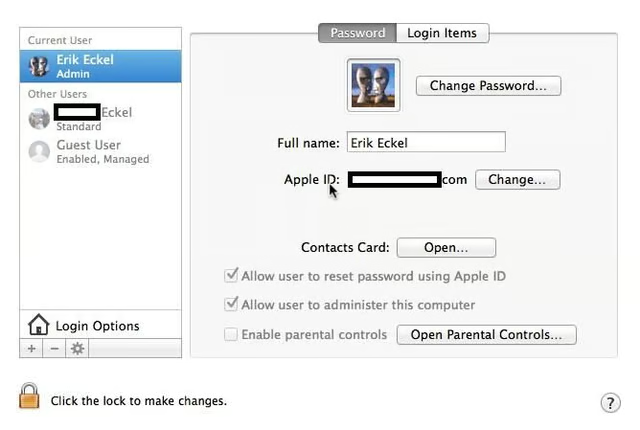
    Users & Groups

    Users & Groups settings within Mavericks are similar to those\r\nfound in more recent OS X releases. Login icons and options are set, as are\r\nParental Controls, from within the Users & Groups console.

  • Figure S

    App Store settings

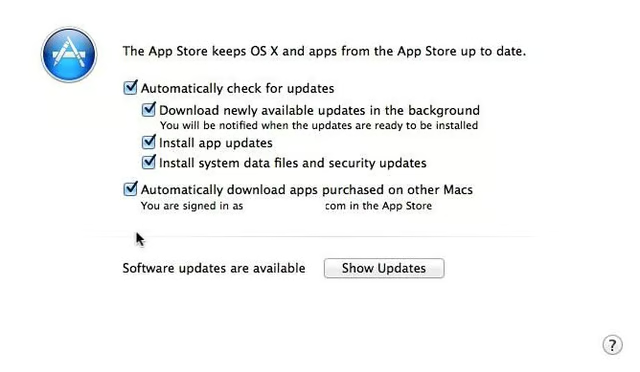
    Mavericks allows users to configure numerous App Store settings. Some of the settings include Mavericks automatically checking for app\r\nupdates, apps downloading in the background, and app updates installing automatically. Users can also choose to automatically install system\r\ndata files and security updates from within the App Store System Preferences.

  • Figure T

    Time Machine

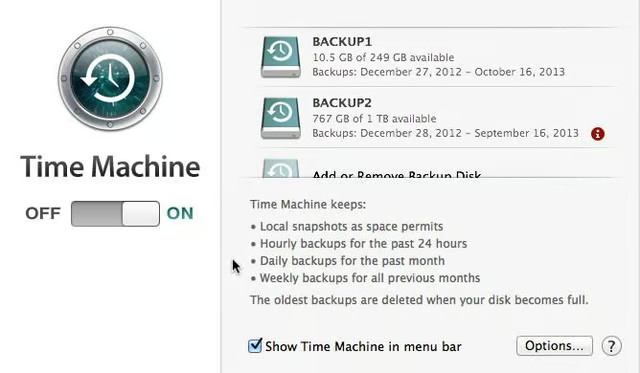
    Apple’s proven Time Machine backup application continues, largely\r\nunchanged, within Mavericks. Time Machine System Preferences enable reviewing the status of various Time Machine media, confirmation of backup status,\r\nchanging backup schedules, and more.

  • Figure U

    Tags operation

    When storing or transferring photos and creating and editing\r\ndocuments, spreadsheets, and presentations, users can assign tags to files as\r\nthe files are created and updated. Files can also be right-clicked within\r\nFinder. A resulting pop-up menu includes an option for selecting and specifying\r\ntags to individual files and folders, too. As more tags are applied, integrated\r\nsearching and retrieval of similarly related items becomes possible, enabling\r\ninfinitely customizable organization and search capabilities.

  • Figure V

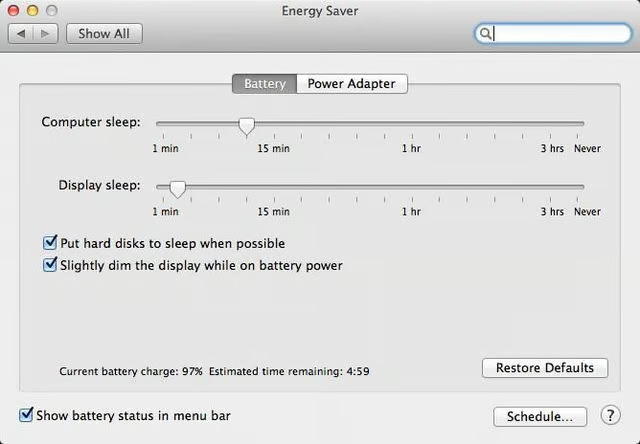
    Energy Saver

    While Energy Saver settings appear the same within Mavericks, the\r\nnew OS significantly reduces energy consumption. Mobile users will find that they\r\ncan work longer between charges, as a result. The year-old MacBook Pro shown\r\nhere is running Bluetooth, Wi-Fi, and the highest display brightness ,and it possesses a battery life estimated at just under five hours.

  • Figure W

    Notifications

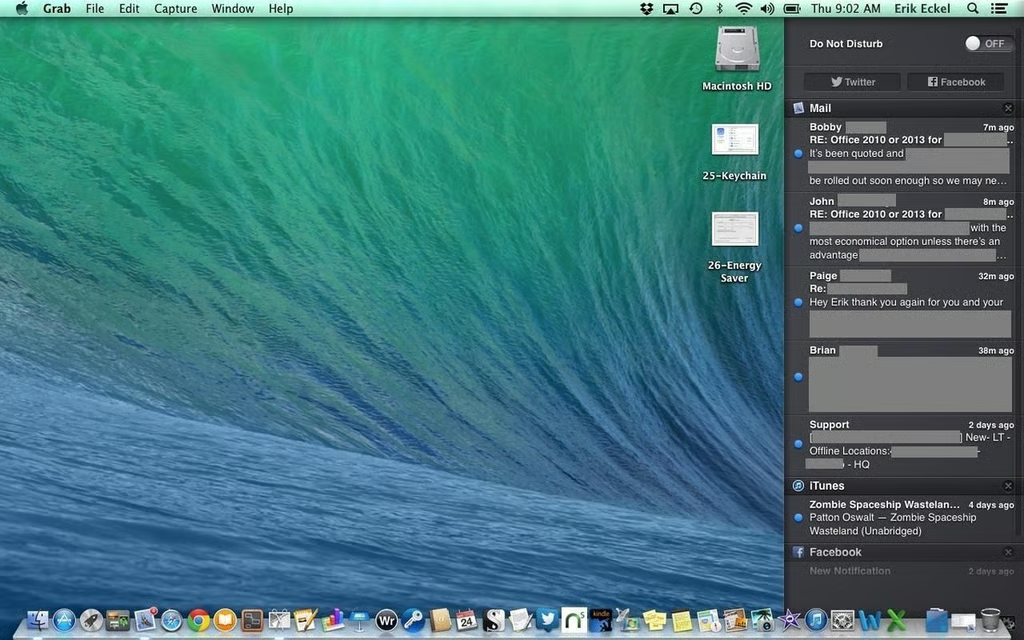
    Notifications can be customized within Mavericks to list email\r\nmessages, Facebook updates, Tweets, and more. The feature also includes a Do Not\r\nDisturb option, which is set to Off in this screenshot.

  • Figure X

    iCloud

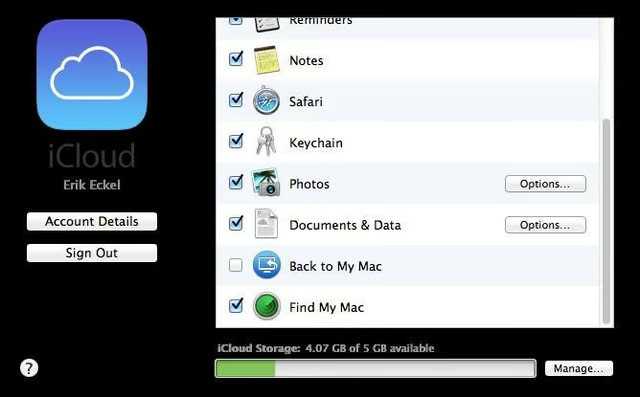
    iCloud settings now list Keychain within Mavericks. Keychain\r\nenables users to securely track passwords, credit card numbers, and other\r\nsensitive information and securely synchronize that information with the user’s\r\nother Apple and iOS devices.

    Apple, Inc.
1 of 24
Erik Eckel

Erik Eckel is a managing partner at Louisville Geek and president of Eckel Media Corp. He previously served as Executive Editor at TechRepublic. He received Microsoft Engineer accreditation from Sullivan University and earned his Bachelor's Degree in English from the University of Louisville. He's earned Network+, Windows NT 4.0 MCP+I and MCSE, and Windows 2000 Professional MCP accreditations.