Spotlight: KACE Networks KBOX 1100 Systems Management Appliance - TechRepublic

Spotlight: KACE Networks KBOX 1100 Systems Management Appliance

  • 336649.jpg

    The KBOX Systems Management Appliance

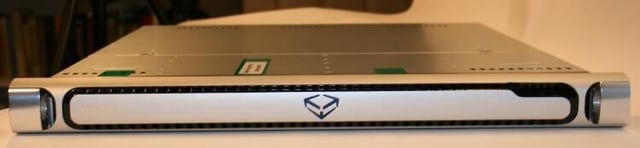
    Here is the KACE Networks’ KBOX Systems Management appliance, as seen from the front. The device is a traditional 1U rack-mount chassis.

    For a complete review, check out the TechRepublic Product Spotlight Blog.

    Images by Erik Eckel for TechRepublic

  • KBOX Side View

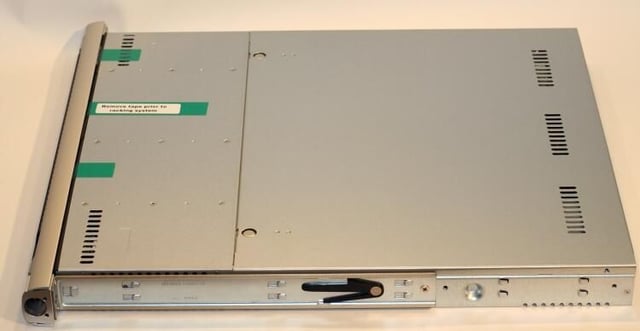
    Here’s the KBOX 1U Systems Management server, as seen from the side.

    Images by Erik Eckel for TechRepublic

  • KBOX Rear View

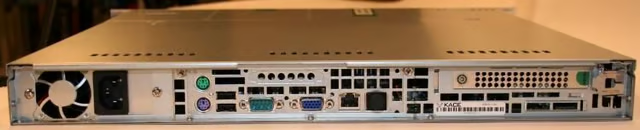
    The KBOX Systems Management Appliance boasts a pair of USB ports, a VGA port and PS/2 ports.

    Images by Erik Eckel for TechRepublic

  • KBOX Administration Console

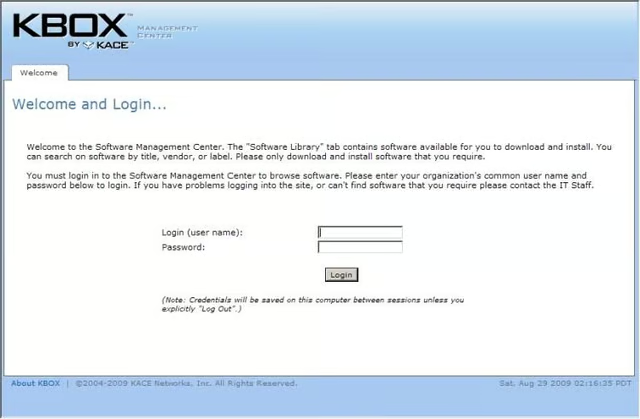
    Enterprise IT administrators log on to the KBOX systems management appliance using a Web-based console.

    Images by Erik Eckel for TechRepublic

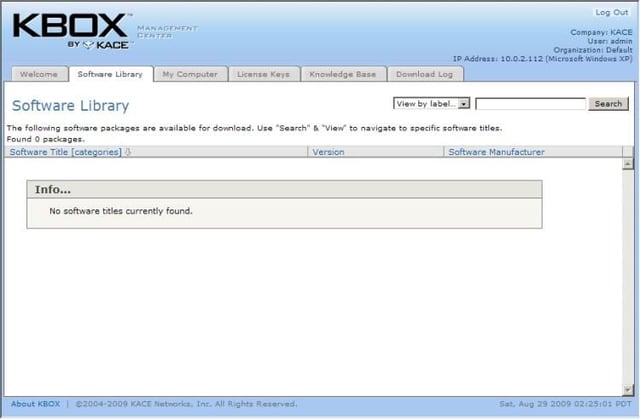
  • KBOX Administration

    Here’s the default Software Library menu. It’s within this screen that administrators can download software packages for deployment using the KBOX server.

    Images by Erik Eckel for TechRepublic

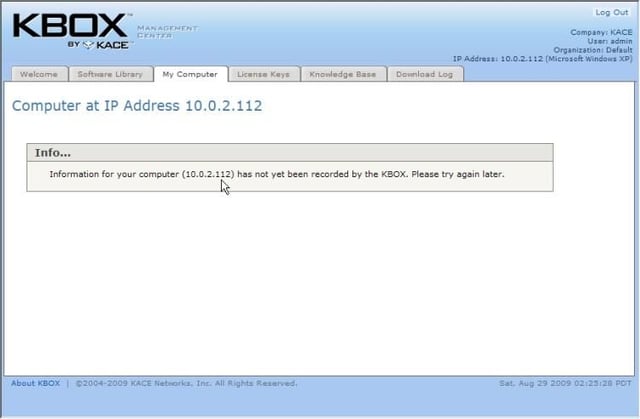
  • KBOX My Computer

    The KBOX appliance can track systems information for each computer connected to it. Here is the default My Computer Info page.

    Images by Erik Eckel for TechRepublic

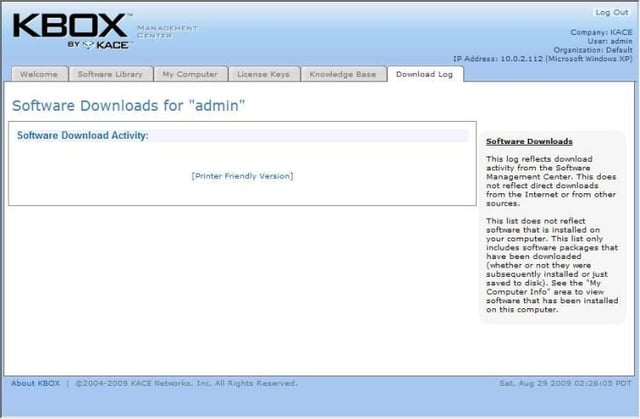
  • KBOX Software Download Activity

    The KBOX provides powerful activity logging functionality. This screen is used to record and track various software and application downloads over time.

    Images by Erik Eckel for TechRepublic

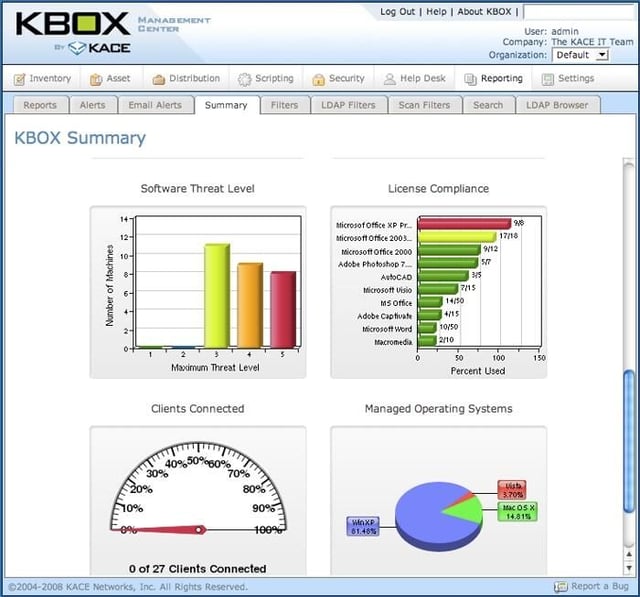
  • KBOX Management Center Summary

    The KBOX Systems Management Appliance aids enterprise IT administrators in quickly determining the status of distributed systems. Here is a dashboard feature, included within the KBOX Management Center, that provides instant feedback regarding software threat levels, connected clients, license compliance and OS distribution.

    Image courtesy KACE Networks.

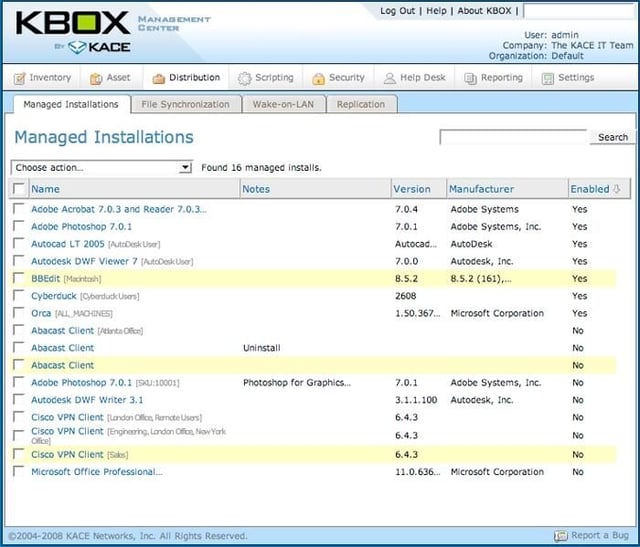
  • KBOX Managed Installations

    Using the KBOX Management Center, enterprise technology professionals can also track installation status of a wide variety of software programs and applications, as shown here.

    Image courtesy KACE Networks.

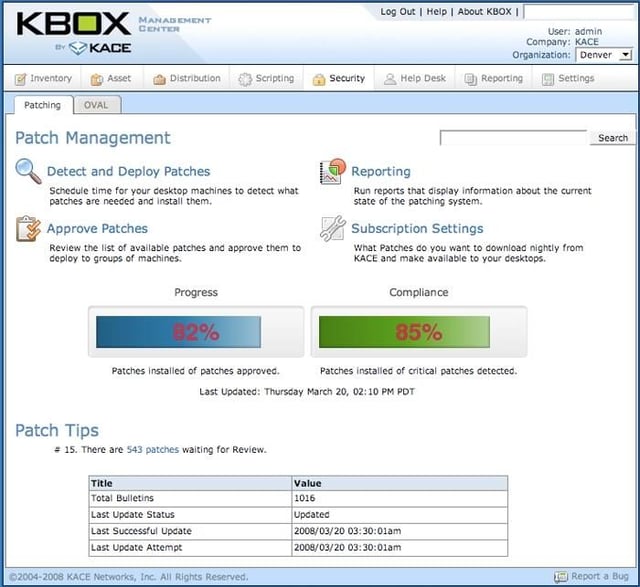
  • KBOX Patch Management

    KBOX enables centralized administration of an enterprise’s patch management efforts. Here you can see the KBOX Management Center’s Patch Management console, used to detect, deploy and approve patches, as well as generate patch management reports, track patch management activity and set subscription preferences.

    Image courtesy KACE Networks.

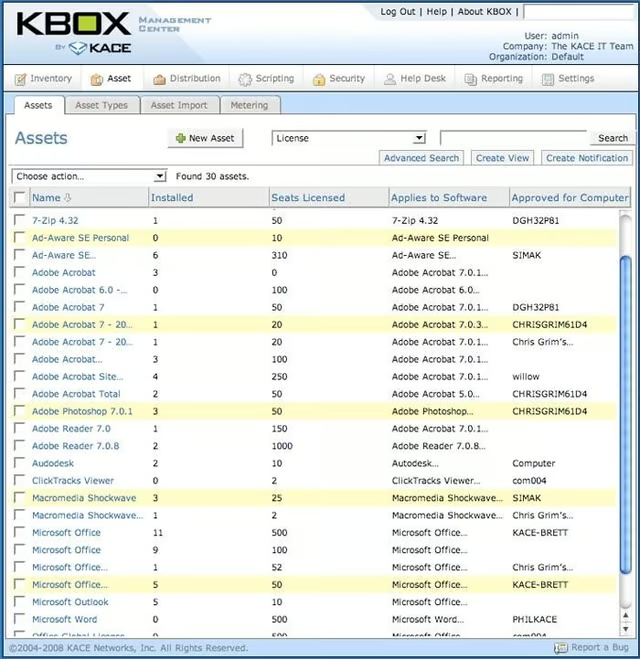
  • KBOX Asset Management

    Tracking license inventory and software compliance is challenging within enterprise environments. The KBOX Systems Management Appliance assists IS departments. The Assets console, shown here, tracks software packages and applications, inventories licenses and tracks approval and distribution throughout the organization.

    Images by Erik Eckel for TechRepublic

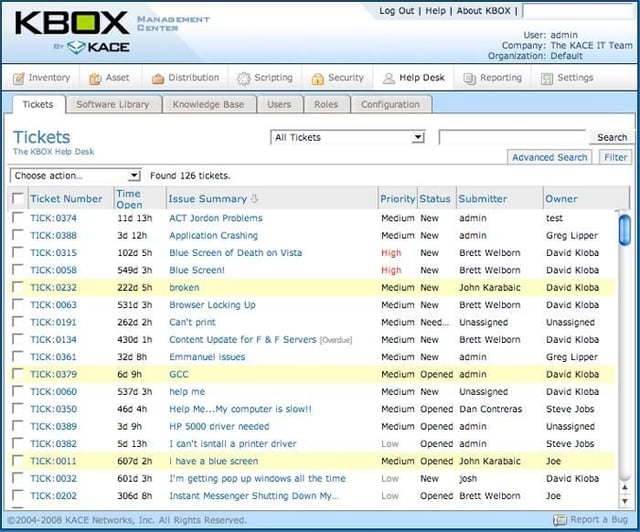
  • KBOX Help Desk Support

    The KBOX Systems Management Appliance includes help desk ticketing functionality. Using this Tickets console, enterprise technology staff can leverage the KBOX’s enterprise-wide visibility to track issues, manage support tickets and assign priorities to help desk requests.

    Images by Erik Eckel for TechRepublic

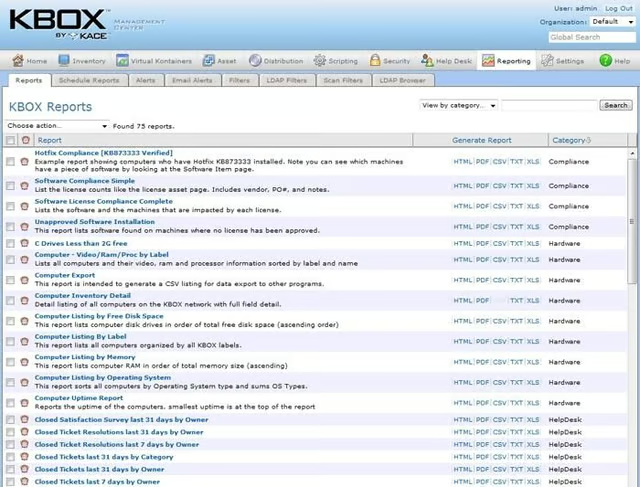
  • KBOX Reporting

    The KBOX systems management server tracks a wide range of information regarding connected systems. IT departments can use the device’s activity logs and reports to track issues, ranging from software and license compliance to system performance reports and help desk activity.

    Images by Erik Eckel for TechRepublic

1 of 13
Erik Eckel

Erik Eckel is a managing partner at Louisville Geek and president of Eckel Media Corp. He previously served as Executive Editor at TechRepublic. He received Microsoft Engineer accreditation from Sullivan University and earned his Bachelor's Degree in English from the University of Louisville. He's earned Network+, Windows NT 4.0 MCP+I and MCSE, and Windows 2000 Professional MCP accreditations.