


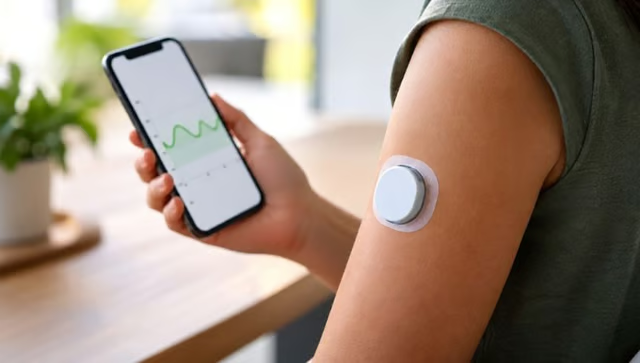
People with type 2 diabetes who don’t take insulin may have a new reason to consider wearing a continuous glucose monitor.
A clinical trial published Oct. 14 in the New England Journal of Medicine found that adults using continuous glucose monitors (CGMs) achieved better blood sugar control than those receiving routine care. The 26-week study involved 283 adults with type 2 diabetes who were not using insulin and had elevated HbA1c levels, suggesting that wearable glucose tracking could benefit some patients who have traditionally relied on occasional blood sugar checks.
For people managing diabetes through medication, diet, and exercise, the findings raise an important question: Could seeing blood sugar changes throughout the day help them manage their condition more effectively?
What the study found about blood sugar monitoring
The research, known as the CONNECT trial, took place at 22 primary care practices across the United States, according to the final peer-reviewed study.
In the study published in the New England Journal of Medicine, researchers randomly assigned 145 participants to use the Dexcom G7 continuous glucose monitoring system and 138 to receive routine care. Participants ranged in age from 21 to 84.
Participants in the routine-care group continued receiving standard diabetes management, including access to blood glucose meters and diabetes education. They also continued their existing glucose-lowering medications. This means the trial compared continuous glucose monitoring with established diabetes care, rather than with no monitoring or treatment.
Importantly, the trial enrolled adults with HbA1c levels of at least 7.5%, indicating that their average blood sugar levels were above the treatment targets commonly recommended for many adults with diabetes.
This distinction matters because the findings do not establish that everyone with type 2 diabetes who does not use insulin would experience the same benefit.
After 26 weeks, researchers reported a statistically significant difference in HbA1c, a blood test that reflects average glucose levels over approximately three months.
| Starting HbA1c | 8.8% | 8.7% |
| HbA1c after 26 weeks | 7.2% | 8.0% |
| Reduction | 1.6 percentage points | 0.7 percentage points |
After statistical adjustment, the difference in HbA1c levels between the groups at 26 weeks was 0.9 percentage points in favor of continuous monitoring. The difference was statistically significant.
Researchers also found that participants using CGMs spent a greater proportion of their day within the target glucose range of 70 to 180 milligrams per deciliter.
The CGM group’s average time within that range was 21 percentage points higher than the routine-care group’s, equivalent to approximately five additional hours per day.
The study also reported no severe hypoglycemia events among participants in either group during the trial.
These findings suggest that continuous monitoring can improve glucose management for some adults with type 2 diabetes who are not using insulin, particularly those whose blood sugar levels remain above recommended targets.
How continuous glucose monitors work
Unlike traditional blood glucose meters, which provide a reading when users test their blood, CGMs measure glucose levels throughout the day.
A small sensor placed beneath the skin measures glucose in interstitial fluid, the fluid surrounding the body’s cells. Readings are then transmitted to a compatible device or smartphone. This allows users to observe how their glucose levels change after meals, exercise, sleep, and other daily activities.
For people with type 2 diabetes who do not use insulin, that information could help identify patterns that occasional blood glucose checks might miss.
The technology has also expanded beyond prescription-only diabetes management.
For example, over-the-counter glucose monitors are making wearable blood sugar tracking more accessible, although these products have different intended uses and limitations.
Meanwhile, as TechRepublic previously reported in its comparison of Apple, Samsung, Garmin, and Oura blood sugar tracking, compatible smartwatches can display glucose information collected by a separate CGM. However, mainstream smartwatches do not measure blood glucose independently; they require a separate sensor.
The new study adds clinical evidence to the growing interest in connected health devices, but its findings specifically concern adults with type 2 diabetes who were not using insulin and whose glucose levels were above the trial’s enrollment threshold.
Why the findings could change diabetes care
Continuous glucose monitoring has traditionally been associated with people who require insulin, particularly those managing type 1 diabetes.
However, many people with type 2 diabetes manage their condition without insulin, relying instead on other medications, lifestyle changes, and regular medical appointments.
The CONNECT findings suggest that some of these patients could also benefit from continuous access to glucose information.
The trial was funded by Dexcom, the manufacturer of the G7 system used in the research. That relationship is important context when interpreting the findings. The research was published in a peer-reviewed medical journal, and the authors reported statistically significant improvements in both HbA1c levels and time spent within the target glucose range.
However, the results have limitations. The trial lasted 26 weeks, meaning it does not establish whether the improvements would persist over several years. It also did not demonstrate that continuous monitoring reduces long-term complications such as heart disease, kidney damage, or diabetes-related vision loss.
The absence of severe hypoglycemia events during the study should not be interpreted as proof that CGMs eliminate the risk of dangerously low blood sugar.
Additionally, because the trial focused on patients with elevated HbA1c levels, its findings should not automatically be extended to people whose diabetes is already well controlled without insulin.
Nevertheless, the findings could contribute to discussions about whether more people with type 2 diabetes should have access to CGMs.
They may also encourage healthcare providers and insurers to reconsider which patients could benefit from wearable glucose monitoring.
More about Innovation
- Sovereign AI Explained
- The Rise of the AI-Native Factory
- Why Data Determines AI Success
- SS&C Intralinks DealCentre AI vs. Datasite: Which platform is built for the future of dealmaking?
What the study means for people with type 2 diabetes
For people with type 2 diabetes who don’t use insulin, particularly those struggling to reach their blood sugar targets, the findings offer a reason to discuss continuous glucose monitoring with their healthcare professionals.
The study suggests that having access to glucose trends throughout the day may provide useful information beyond occasional blood tests.
However, there are several considerations before adopting a CGM:
- Medical suitability: Not everyone with type 2 diabetes needs continuous monitoring. A healthcare professional can help determine whether it would be useful, especially if blood sugar levels remain above target.
- Cost and coverage: Insurance eligibility and out-of-pocket costs vary. The study does not establish that all patients will qualify for coverage.
- Device limitations: CGMs measure glucose in fluid beneath the skin rather than directly in the bloodstream. Readings can differ from blood glucose measurements, particularly when glucose levels are changing quickly.
Readers should also distinguish established CGM technology from emerging smartwatches that claim to measure blood sugar without a separate sensor.
As TechRepublic explained in its guide to blood sugar tracking wearables, many consumer devices display glucose data from an external monitor rather than measuring it independently.
For people already managing type 2 diabetes without insulin, the next step is not necessarily buying a wearable. It is asking whether continuous glucose data could help them understand their condition and make better-informed decisions with their healthcare team.
The CONNECT study provides evidence that CGMs can improve blood sugar control for some patients beyond traditional insulin users, particularly those with persistently elevated glucose levels. Whether those benefits justify wider access will depend on longer-term research, affordability, and how effectively patients can use the information in everyday care.
Related reading: For a closer look at wearable options, check out TechRepublic’s Best Smartwatch for Blood Sugar Tracking: Apple Watch, Galaxy Watch, or Pixel Watch? to see how these devices work with continuous glucose monitors and which features matter most.