
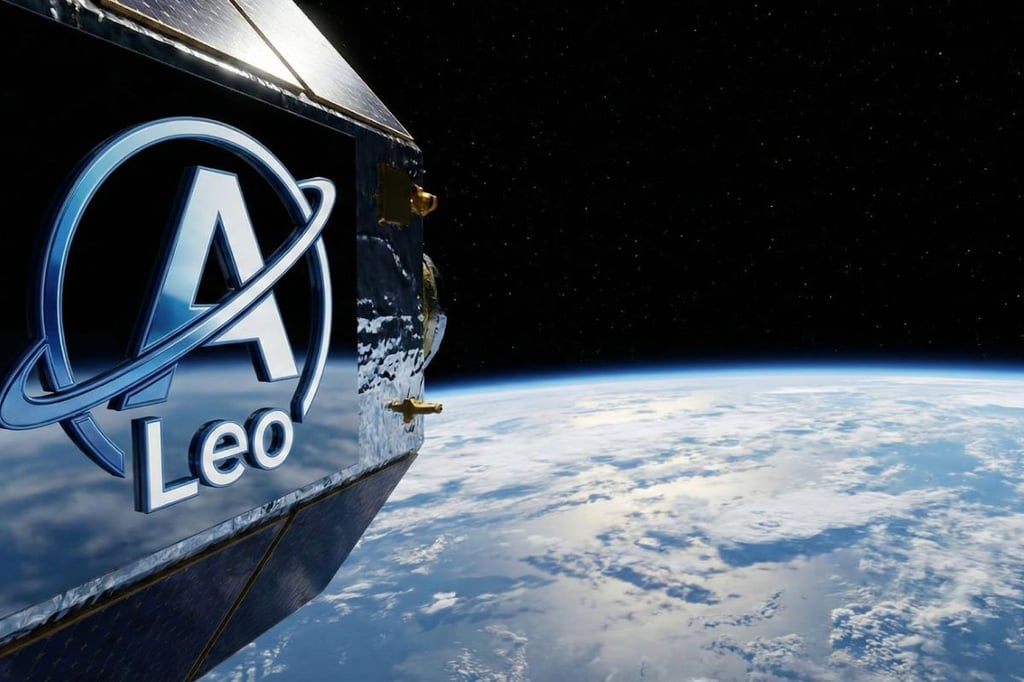


Amazon has been given the green light by the Federal Communications Commission to deploy 4,500 more low Earth orbit internet satellites as it looks to compete with Elon Musk’s SpaceX.
“Amazon Leo Gen 1 performance is impressive on its own, but lots to look forward to with Leo Gen 2: More capacity, more coverage (including polar) and additional throughput — good for customers everywhere, and especially important for big enterprise/gov customers who want max performance to move large amounts of data through our network,” wrote Rajeev Badyal, vice president of Technology for Amazon Leo, on Feb. 11 in a LinkedIn post.
The approval increases Amazon’s planned constellation of low Earth orbit satellites to about 7,700. The company launched 150 satellites using multiple rocket providers in April 2025. It expects to start offering its Leo satellite internet service later this year.
Broadening coverage
This latest set of satellites is the second generation of Amazon’s orbital systems, and they will operate at altitudes of up to about 400 miles, according to the FCC notice. The additional satellites will add support for more frequency bands and extend Leo’s geographic coverage.
The FCC said Amazon must launch half of the approved satellites by Feb. 10, 2032, and the remaining half by Feb. 10, 2035.
A separate FCC deadline requires Amazon to deploy 1,600 of its first-generation satellites before July 2026. But in late January, the company asked the agency to extend the cutoff to July 2028 or to waive the deadline altogether. The FCC hasn’t ruled on the request yet.
Amazon blamed delays on issues outside of its control, including a near-term shortage of rockets to lift the satellites into orbit, as the reason it cannot meet the deadline.
Leo is “producing satellites considerably faster than others can launch them,” Amazon wrote.
More about Innovation
- Sovereign AI Explained
- The Rise of the AI-Native Factory
- Why Data Determines AI Success
- SS&C Intralinks DealCentre AI vs. Datasite: Which platform is built for the future of dealmaking?
Space wars
The company has invested $10 billion to stand up its internet-from-space service. Leo aims to compete against SpaceX’s Starlink, which has more than 9,000 satellites in orbit and roughly nine million customers.
Amazon will spend $1 billion more on its Leo constellation this year as it deploys more satellites, according to the company’s latest quarterly report. Amazon finance chief Brian Olsavsky said the company is planning more than 20 launches this year and more than 30 in 2027.
The next Leo mission is set for Thursday, when an Arianespace rocket will launch another 32 satellites into orbit. Amazon has booked 17 other missions with the French company.
SpaceX’s Starlink has more than 9,000 satellites in orbit and roughly nine million customers. Meanwhile, Jeff Bezos’ Blue Origin joined the space broadband race last month with the launch of TerraWave, a communications network of more than 5,400 satellites that aims to rival Starlink and Leo.
Also read: Don’t miss our roundup of the best Amazon deals worth grabbing in February, from tech essentials to limited-time steals.