


Anthropic wants Claude users to stop worrying about which Claude version should do the job.
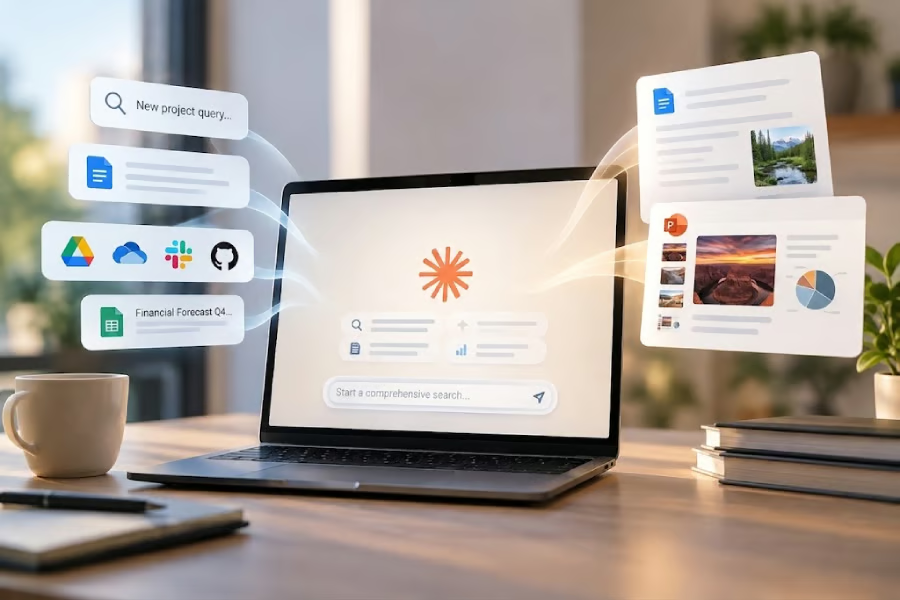
The company announced Wednesday that it is bringing Claude Cowork and its standard chat experience together, allowing users to describe what they need and letting Claude determine which capabilities to use. The change means that research, multi-step work, document creation, and presentation building can increasingly happen in the same conversation.
For workers who previously bounced between Claude’s different modes, the bigger change is not just a redesigned interface. Anthropic is trying to turn Claude into a single workspace where a task can move from idea to finished deliverable without users having to decide which AI tool to open first.
Claude docs and slides arrive
Anthropic is also introducing Claude Docs and Claude Slides in beta for paid users.
Docs lets users create and edit documents directly inside a Claude conversation, while Slides can generate presentations that users can edit, present, and download as PowerPoint or PDF files. Documents can also be exported to Google Docs or Microsoft Word.
The tools are designed for collaborative work, with shareable links that let users access and edit projects across desktop and mobile. Anthropic’s own example shows the intended workflow: A user can ask Claude to research a weekly report, write it in an established format, flag missed items, and turn the key points into a presentation.
Because both outputs come from the same conversation, the presentation can draw on the report’s context.
The bigger office software play
The consolidation pushes Claude further into territory traditionally occupied by Microsoft 365 and Google Workspace. Anthropic is no longer positioning the assistant solely as something that answers questions; it is building an environment where users can research, write, design and produce finished work without leaving the conversation.
That could matter most for knowledge workers who regularly move between research, documents and presentations. Instead of generating text and then transferring it to another application, users can keep more of the workflow within Claude.
The approach also reflects a broader push in the AI industry toward unified workspaces. OpenAI recently combined ChatGPT with its Codex coding tool, as both companies pursue enterprise users and people who want AI to complete work rather than simply respond to prompts.
More must-read AI coverage
- SS&C Intralinks DealCentre AI vs. Datasite: Which platform is built for the future of dealmaking?
- SS&C Intralinks FundCentre AI vs. Juniper Square: Which platform better supports modern private markets fund managers?
- Why Data, Not Models, Determines AI Success
- The Rise of the AI-Native Factory: How Physical AI Is Transforming Manufacturing
What Claude users and IT teams should watch
Putting more capabilities into a single Claude workspace can reduce friction when moving between AI tools, but it also means more of a user’s workflow could pass through a single system. That can include research, uploaded files, connected services and potentially sensitive business information.
Anthropic says users retain control over how Claude operates. By default, Claude asks before taking an action, while users can choose a setting that lets it continue working and check in only when something requires attention.
For businesses, that makes permissions and governance increasingly important. IT teams evaluating the new experience should pay attention to which connectors employees can use, what information Claude can access through them and how much autonomy users are allowed to give the assistant. The more Claude evolves from chatbot to workspace, the more those controls become part of an organization’s broader AI governance strategy.
The rollout starts with Pro and Max subscribers on web, desktop and mobile over the coming weeks. Team and Free plans will follow, while Enterprise administrators will receive at least 30 days’ notice before the changes reach their organizations.
Existing Cowork users should not have to rebuild their setups. Anthropic says chats, projects, artifacts, connectors, and skills will remain available. The bigger change is what happens next: Instead of choosing a specialized Claude experience for each task, users will increasingly be able to start with the job they need done and let Claude assemble the tools behind the scenes.
Related reading: For more on Anthropic’s workplace AI push, see how Claude Tag brings AI agents directly into Slack with shared context and enterprise controls.