
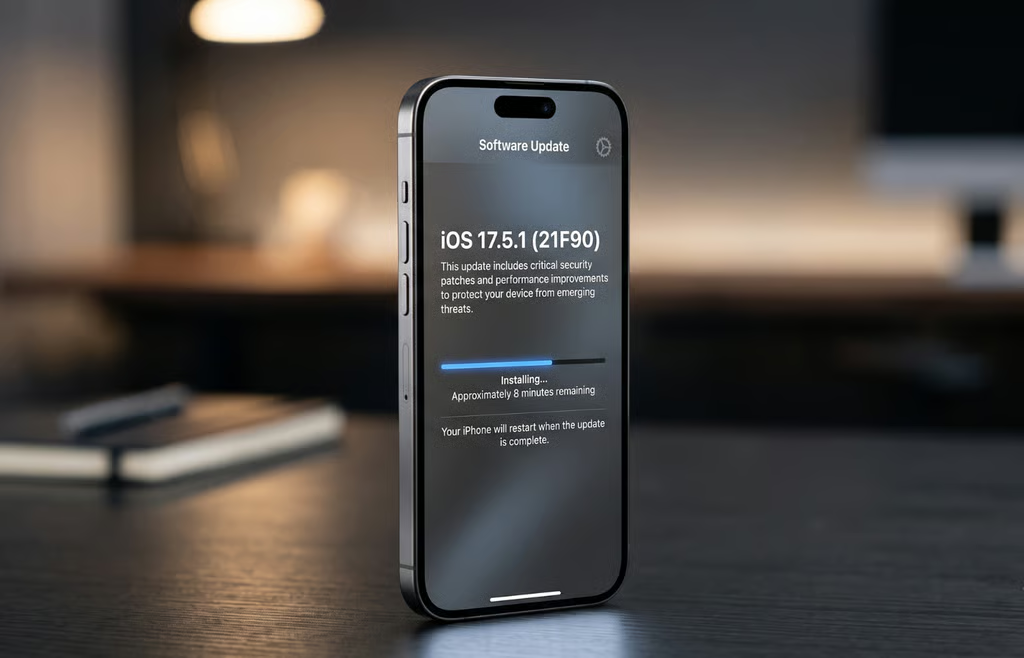


Some iPhone security fixes are getting released faster as AI gives hackers new ways to move quickly.
Reuters reported that Apple is releasing certain updates earlier rather than waiting to package them into the broader iOS 26.6 release. AI could reduce the time attackers need to exploit known software flaws, making slower update cycles riskier, the company said.
While no single attack was named as the reason for the change, recent iPhone security cases show what can happen when hackers move first.
Why some fixes are coming early
Security fixes are often bundled into larger iOS releases. Under that model, some patches would wait for the next full update.
Apple wants to shorten the time between when security updates first become public and when customers receive them, according to Reuters. The company said there was no evidence the newly patched flaws had been used in attacks.
Once a flaw is known, every delay gives attackers more time to study it and search for unpatched devices.
Apple has increasingly responded to active security threats
Apple has issued several emergency security updates in recent years to address zero-day vulnerabilities that were either actively exploited or believed to have been used in highly targeted attacks:
- In February 2025, Apple fixed an iOS and iPadOS flaw that it said may have been used in an “extremely sophisticated attack against specific targeted individuals.”
- In February 2026, the company fixed an iOS flaw that it said may have been used in an “extremely sophisticated attack against specific targeted individuals.” Devices running earlier versions of iOS were affected.
- In March 2026, Google researchers disclosed DarkSword, an iOS hacking campaign that used several unknown vulnerabilities to compromise iPhones. Google said commercial surveillance vendors and suspected state-backed attackers had used the tool in separate campaigns since at least November 2025.
Those incidents fit into a broader pattern of spyware and surveillance risks aimed at journalists, government officials, activists, and other high-profile users. Apple’s Rapid Security Responses were designed to deliver important security fixes between larger software updates, giving the company a faster way to patch urgent flaws.
While most iPhone users are unlikely to be targeted by such attacks, security experts have long warned that once details of a vulnerability become public, other threat actors may begin developing their own exploits. That makes the time between disclosure and widespread patch adoption increasingly important.
Apple has not said its latest release strategy is a response to any specific campaign. However, its decision to deliver some security fixes sooner suggests the company sees greater value in shortening that exposure window as attackers gain access to faster research and automation tools.
Faster fixes affect users and IT teams
AI does not make every hacker advanced. It can, however, speed up parts of the attack process, including reviewing software changes, spotting patterns, and testing possible exploits.
Slow patching gives attackers more room to work.
Companies managing iPhones may need to treat urgent mobile updates with the same seriousness as laptop and server patches. Waiting for a larger feature release may leave high-value devices exposed longer than necessary.
Regular users should install iPhone security updates quickly, even when the update looks minor.
Apple’s release change points to a tougher patching reality. Security fixes now have to compete with attackers who may be able to study flaws faster than before.
Also read: Apple’s rumored shift in its chip roadmap could make the next Mac upgrade cycle more complicated for power users.