


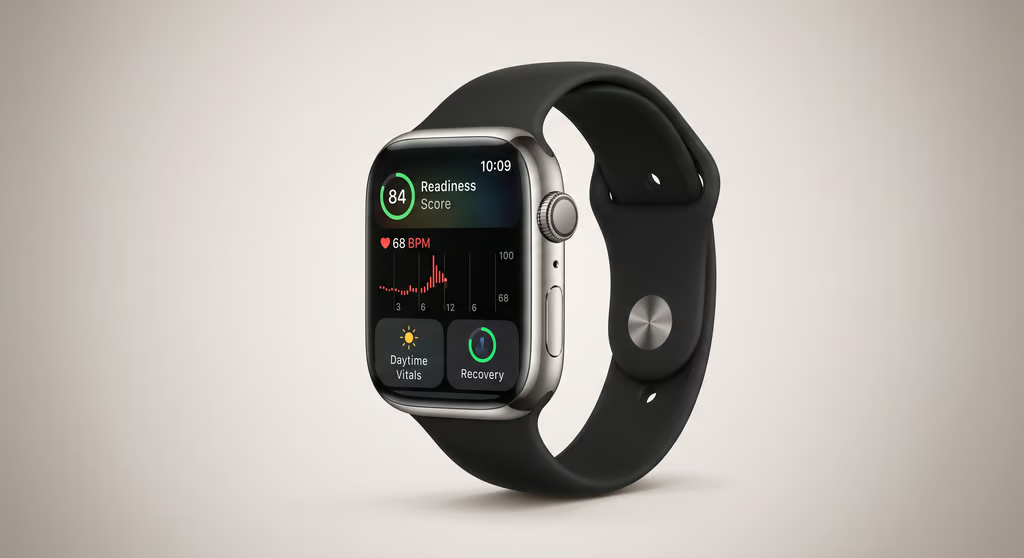
Apple Watch Series 12 is designed to collect more health information while you are simply going about your day.
Apple unveiled the $399 smartwatch during its Sept. 9 event, adding a new Health Sensing System, S11 chip, more frequent heart-rate and HRV measurements, new recovery tools, and audio features including Live Rewind and Siri Recap.
The design may look familiar, but the bigger question is whether those behind-the-scenes changes are useful enough to justify upgrading from a recent Apple Watch
A quick look at the biggest Series 12 changes
| Feature | What changed in Apple Watch Series 12 |
|---|---|
| Health sensing | More frequent background heart and HRV measurements, plus Recovery HRV |
| Daily health guidance | Readiness and daytime Vitals join the health tools |
| Audio Intelligence | Live Rewind, Siri Recap, and Sound Recognition |
| Battery and charging | Longer outdoor workout tracking and more use from a 15-minute charge |
| Step tracking | Updated pedometer and a new watch-face complication for daily steps |
| Design and durability | New ceramic case options and Ceramic Shield 2 on aluminum models |
Health sensing follows more of the day
Health Sensing is where most of the new hardware goes to work. Series 12 collects more information outside workouts and sleep, then feeds it into several health and recovery tools.
- Heart rate. The watch measures heart rate every five seconds throughout the day. Apple calls it its most accurate heart-rate sensing yet among wearables.
- HRV and Recovery HRV. Heart rate variability can be measured as often as every five minutes. Recovery HRV focuses on readings taken while your body is at rest, which can add context if you follow recovery through Apple Watch.
- Readiness. A score from 0 to 10 draws from recent activity and training load alongside sleep and vitals. Recommendations range from Recover to Go For It, and your score can update as fresh measurements arrive.
- Daytime Vitals. Vitals now has a waking-hours view together with overnight health data, letting you check recent measurements before the next morning.
- Health Age. Arriving later in 2026, the redesigned Health app compares selected health metrics with your chronological age. Heart, sleep, and fitness data can contribute to the estimate.
Consistent wear becomes more important with these features because the new system has more opportunities to collect data across the day.
Audio features and faster charging round out daily use
Away from health tracking, Series 12 has a few additions you are more likely to notice during ordinary moments.
Conversations get a rewind button
Miss a name or a few words and Live Rewind can bring the previous 15 seconds back as text on your wrist. Siri Recap can save a summary afterward if you want something to revisit.
Sound Recognition handles a different situation. Your watch can alert you when it recognizes sounds such as an alarm or doorbell.
Live Rewind and Siri Recap enter beta later in 2026. Both need an iPhone 16 or newer, excluding the iPhone 16e, with Apple Intelligence enabled, and initial availability excludes the EU.
Apple says raw audio used by Live Rewind is processed in protected hardware and deleted afterward. A chime and visual indicator appear when the feature is active.
A short charge goes farther
Finding a low battery shortly before leaving home should be less disruptive. Fifteen minutes on the charger can provide up to 12 hours of use.
Long outdoor sessions also get extra room. Workout tracking can run for up to 10 hours with heart-rate sensing active, although regular battery life remains up to 24 hours.
Series 12 starts at $399 in the US, with preorders open now and retail sales beginning Sept. 18.
Upgrading or switching starts with how you use a watch now
Coming from an older Apple Watch, start with what you actually use today. Open Health and Fitness on your iPhone and look at the screens you return to during a normal week. If recovery, HRV, or workout data rarely gets opened, paying for a watch that collects more of it may not change your routine very much.
Switching from another smartwatch calls for a different check. Apple’s health features live closely with the iPhone ecosystem, and a compatible iPhone is also part of the equation if Audio Intelligence is one reason you are considering Series 12. Check both devices before assuming a new watch unlocks every advertised feature.
People who train for long sessions or regularly follow recovery trends should examine the new hardware closely.
If you are following Watch data because of a health concern, keep Readiness, Vitals and Health Age in the wellness category and take medical questions to a clinician.
Notifications, timers and occasional workouts may still be well served by a recent model. Check watchOS 27 compatibility before upgrading, since some new software features may reach your current watch without a hardware purchase.
Find out more on what Apple announced for 2026, from the foldable iPhone Duo to iPhone 18 Pro and AirPods 5.