


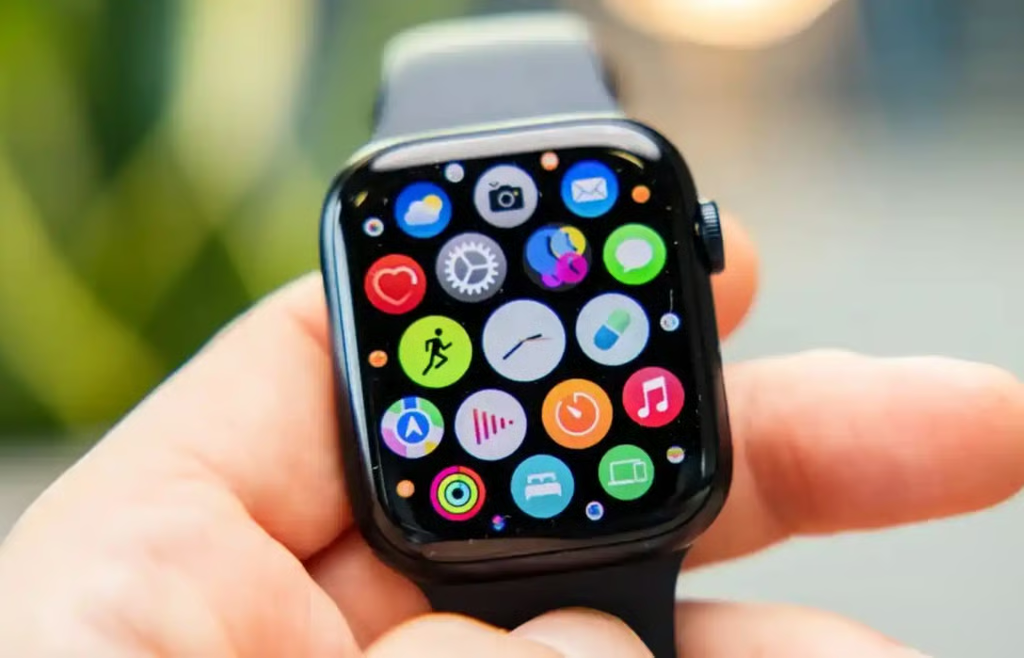
watchOS 27 brings Siri AI, but not to many existing Apple Watches.
Apple has confirmed that watchOS 27 will not support several Apple Watch models that were compatible with last year’s software, marking one of the biggest device support cuts in the platform’s history. The new operating system, unveiled during WWDC 2026, will only run on the Apple Watch Series 9, Series 10, Series 11, Ultra 2, Ultra 3, and SE 3, according to information released by Apple.
The biggest surprise is the number of watches losing access to the latest software. Models that supported watchOS 26 but are no longer eligible for watchOS 27 include the Apple Watch Series 6, Series 7, Series 8, first-generation Apple Watch Ultra, and Apple Watch SE (2nd generation).
Initially, Apple’s compatibility page also appeared to exclude the Apple Watch Series 9. However, Apple later confirmed to 9to5Mac that the Series 9 will receive watchOS 27 after all.
“Apple has now confirmed to 9to5Mac that watchOS 27 is indeed compatible with the Apple Watch Series 9,” 9to5Mac reported.
Biggest WatchOS compatibility reduction yet
The move represents a sharp departure from Apple’s recent approach to Apple Watch software support.
Last year’s watchOS 26 supported the same devices as watchOS 11, including Apple Watch Series 6 and newer models, second-generation Apple Watch SE devices, and all Apple Watch Ultra variants. By comparison, watchOS 27 removes support for several generations at once.
The decision has drawn attention because some of the affected devices are relatively recent. The Apple Watch Series 8 and first-generation Apple Watch Ultra both launched in 2022, while the second-generation SE remains one of Apple’s more affordable smartwatch options.
AI features may be driving the decision
Apple has not publicly explained why support was cut so aggressively, but several reports point to hardware requirements tied to new artificial intelligence features.
watchOS 27 introduces Siri AI, along with new workout insights, expanded Workout Buddy capabilities, interface refinements, and other updates announced at WWDC.
Multiple reports noted that every supported watch contains either Apple’s S9 or S10 chip. The S9, introduced with the Apple Watch Series 9 and Ultra 2, brought a more powerful Neural Engine designed to accelerate machine-learning workloads.
TechRadar reported that the unsupported models were dropped “presumably because those models can’t handle the new Siri AI,” while Macworld similarly pointed to the S9 chip as a likely dividing line between supported and unsupported devices.
Apple has not officially confirmed that Siri AI requirements are the reason for the compatibility changes.
What it means for existing owners
Owners of unsupported watches will still be able to use their devices after watchOS 27 launches later this year. Core functions will continue to work, and Apple is expected to continue providing basic maintenance and security updates for some time.
However, users will no longer receive the newest watchOS features, and future app compatibility could gradually become more limited as developers adopt capabilities tied to newer software versions.
The change stands in contrast to Apple’s iPhone support strategy.
While watchOS 27 drops support for several watches released in the early 2020s, iOS 27 will continue to support the iPhone 11 lineup, which first launched in 2019.