


Corporate IT departments bogged down by repetitive, manual work are starting to get relief as artificial intelligence takes over routine tasks. From device management to streamlining workflows, AI is replacing the so-called “human middleware” that once connected fragmented systems.
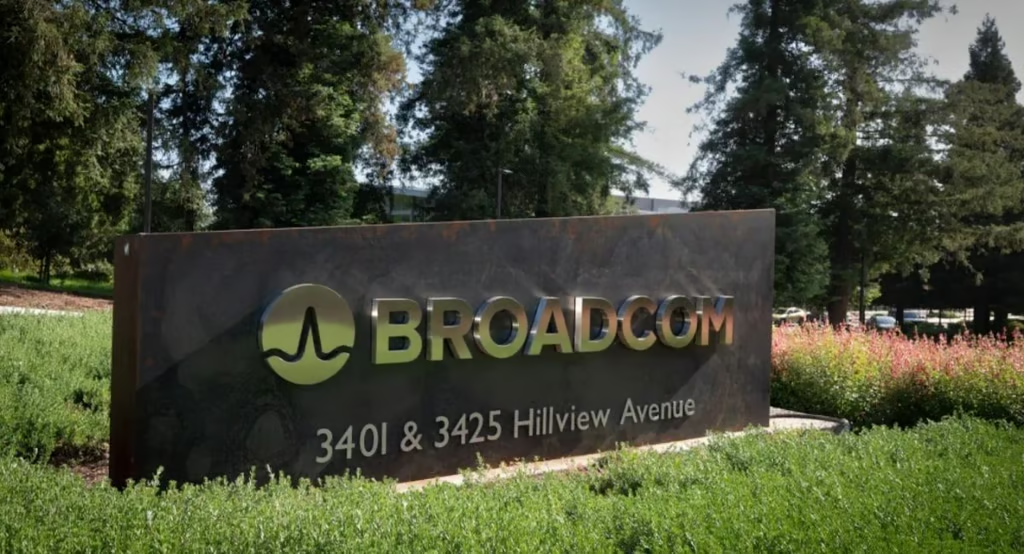
The Wall Street Journal reports that Broadcom has deployed such a platform to run day-to-day IT operations, freeing staff from time-consuming chores and cutting downtime.
When the only human step is packing the box
Broadcom once relied on IT staff for every stage of an employee’s laptop life cycle. This included selecting and configuring devices, delivering them to workers, handling repairs, and reclaiming them when someone leaves the company.
Now, according to The Wall Street Journal, most of that work runs without human intervention through an AI-powered automation platform developed by XOPS. The technology connects information within Broadcom’s IT systems, creating a complete view of each device and managing everything from initial setup to end-of-life processing.
The result is a workflow where people are only involved twice: packing a laptop for shipment to an employee and checking it back in when it’s returned.
The growing strain on corporate IT workloads
At Broadcom, just about 40 IT staff support a workforce of 50,000, a ratio that leaves little room for anything beyond essential maintenance. That imbalance reflects a broader reality for many large companies, where small IT teams are expected to manage sprawling systems and thousands of devices. Much of that effort involves acting as “human middleware,” manually linking data and processes across disconnected systems.
A survey by GroWrk found that the most common pain points in managing IT assets are:
- Inventory monitoring and maintenance (52%)
- Global hardware procurement (50%)
- Retrieving hardware after offboarding (41%)
- Enforcing cybersecurity measures in distributed devices (39%)
- Meeting compliance standards in multiple countries (30%)
In a 2020 report by Camunda, a whopping 97% enterprise IT leaders say process automation is now critical to achieving digital transformation goals. The consensus points to why automation is increasingly on the table as companies look for ways to relieve overloaded IT departments.
Automation takes over core tasks
Instead of relying on staff to handle repetitive IT work, automation platforms like XOPS can run entire processes with minimal staff involvement.
At Broadcom, this includes routine tasks, from provisioning devices to resolving common issues. The system also tracks laptops sitting in storage and identifies software licenses that are going unassigned, giving the company clearer oversight of its hardware and software assets.
These capabilities allow IT staff to focus on higher-priority needs. Centralizing these functions also shortens response times and reduces the risk of errors.
More must-read AI coverage
- SS&C Intralinks DealCentre AI vs. Datasite: Which platform is built for the future of dealmaking?
- SS&C Intralinks FundCentre AI vs. Juniper Square: Which platform better supports modern private markets fund managers?
- Why Data, Not Models, Determines AI Success
- The Rise of the AI-Native Factory: How Physical AI Is Transforming Manufacturing
Millions saved, headcounts held, and industries transformed
Broadcom’s embrace of automation has brought more than faster workflows. By reducing downtime for engineers, clearing unused laptops, and reclaiming idle software licenses, the company has saved millions of dollars each year, per Stanley Toh, Broadcom’s head of enterprise end-user services and experience. The decision to invest in XOPS rather than expand its small IT team may also be contributing to those savings.
Across industries, more and more companies are using automation to cut costs. Bain & Company reports that top automation leaders cut process costs by an average of 37%. The momentum is accelerating, with Stonebranch finding that 98% of organizations plan to expand automation this year.
The impact extends to other sectors, where AI-driven automation is also taking hold. Salesforce CEO Marc Benioff says AI now performs 30% to 50% of the company’s work, calling it a “digital labor revolution” changing how work is done.
As automation and AI take on more enterprise workloads, the power demands of data centers are soaring. Find out who’s paying the rising utility bills.