


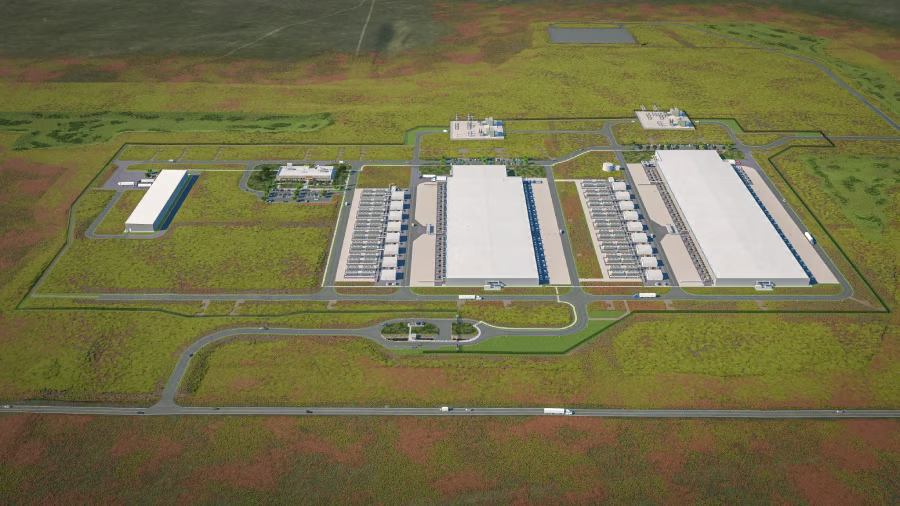
Meta’s AI data center being built in Cheyenne, Wyoming, has run into a water scare before the facility has even opened.
A rare bacterium linked to severe infections was found in water used on parks and golf courses. Officials said the city’s drinking water was not affected, but Cheyenne still paused its reclaimed-water irrigation program while crews drained and disinfected the network.
Meta told the Wyoming Tribune Eagle that general contractor Fortis stopped the discharge after officials notified the company, began hauling industrial wastewater offsite, and found no trace of the bacterium through independent environmental testing.
February testing started the investigation
Cheyenne’s Board of Public Utilities found Cupriavidus gilardii during routine testing in February. Months of review led officials to Goat Systems LLC, a contractor working on Meta’s Project Cosmo campus, according to the Wyoming Tribune Eagle.
Goat Systems had sent pipe-flushing water from the construction site into the city sewer. Frank Strong, the utility board’s engineering and water resources division manager, told the outlet that the discharge resulted from work to clean cooling-system pipes.
“As soon as we became aware of the bacteria and then of where it was coming from, we shut them down immediately,” Strong said.
Cheyenne LEADS CEO Betsey Hale said the bacterium was already present in the environment and was not created by the construction process.
More about data centers
- Stargate Norway: OpenAI’s First AI Data Center in Europe
- AI Data Centers’ Soaring Energy Use: Who Pays for Higher Utilities Costs?
- China’s Submerged AI Data Center Could ‘Influence Global Sustainable Computing’
- Google to Power Data Centers With Nuclear Energy by 2030 in First-Of-A-Kind’ Agreement
Sprayed irrigation water carried a health risk
Cheyenne’s reuse system treats wastewater for public irrigation. Sprinklers changed the exposure risk because sprayed water can break into small airborne droplets.
Strong said the aerosol effect increased the potential for health issues. UC San Francisco infectious disease expert Monica Gandhi told SFGATE that people could be infected by inhaling droplets carrying Cupriavidus gilardii.
Known infections are rare, with higher risks for people who are already sick or immunocompromised. Gandhi said the bacterium can cause severe lung and blood infections and, in some cases, sepsis.
“I wouldn’t want it anywhere,” she said.
AI infrastructure plans face local utility review
Cheyenne later revoked the project’s access to city treatment facilities and barred the use of similar wastewater in certain data center cooling work. Some closed-loop systems can use glycol or other chemicals that municipal plants are not designed to process.
Chips and power contracts often dominate AI capacity plans. Utility approvals can also decide whether a build stays on track.
For tech companies and cloud customers, Cheyenne is a warning about execution risk. A wastewater dispute can strain sustainability claims and give nearby communities more reason to question large AI campuses before they open.
Also read: Samsung is taking AI infrastructure offshore with a floating data center plan to ease pressure on land, power, and cooling.