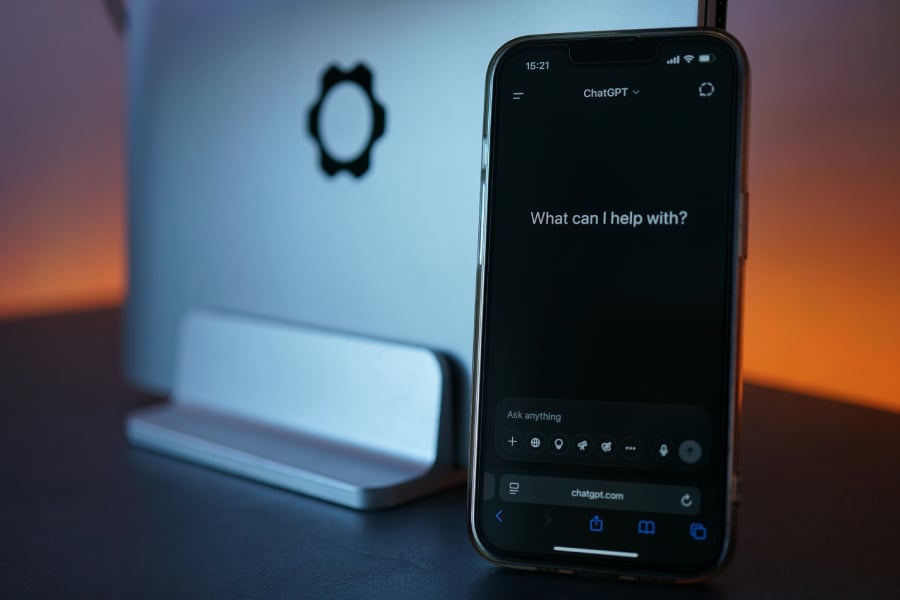
Source:Tim Witzdam/Unsplash
ChatGPT cheat sheet for 2026, covering features, pricing, availability, support for older devices, how it works, and top competitors in one guide.

ChatGPT is OpenAI’s AI assistant that helps people think, write, build, and solve problems… all in one place.
What started as a simple chatbot has evolved into a far more capable tool. Today, ChatGPT can generate and edit text, analyze files, create images, write and debug code, and even pull in up-to-date information from the web. Instead of switching between apps, users can move from idea to execution within a single, continuous conversation.
In practice, ChatGPT functions less like a standalone app and more like a flexible workspace — part writer, part researcher, part developer — adapting in real time as tasks become more complex
ChatGPT supports a wide range of assistant-style tasks:
Most of this happens within a single conversation, with context carried forward as tasks develop.
ChatGPT runs on OpenAI’s family of large language models, including the GPT-4o and GPT-5 series, as well as smaller reasoning-focused models such as o3 and o4-mini. These models are designed for different levels of speed, cost, and depth, allowing the system to handle everything from quick replies to more complex, multi-step tasks.
Most ChatGPT interactions take place in the cloud, where the system can access more powerful compute resources along with features like web browsing, file handling, and image generation. In enterprise and government setups, deployments can run in more controlled environments, such as Azure-hosted instances, to meet stricter requirements around security and data handling.
OpenAI currently groups ChatGPT capabilities across a few main model types:
ChatGPT also includes data controls that let users manage how their conversations are handled, while business and enterprise plans apply stricter safeguards around data access, storage, and compliance.
ChatGPT is accessible through several entry points, depending on how you prefer to use it:
Availability and features can vary by region, plan, and device.
ChatGPT doesn’t rely heavily on local hardware, since most of the processing happens remotely. As long as a device can run a modern browser or the official app, it can handle standard ChatGPT use.
That means older laptops, phones, and tablets can still perform everyday tasks like chat, writing, and basic file uploads without issue. Differences start to show with newer features, such as real-time voice, video, or faster interactions, which depend more on app support and connection stability.
Higher-tier capabilities are typically unlocked through subscription plans.
ChatGPT offers several pricing tiers as of 2026:
ChatGPT has evolved step by step, with each release adding new capabilities.
Updates continue to roll out regularly, with improvements delivered over time.
To start using ChatGPT:
ChatGPT does not require a separate activation step.
Once signed in, it is ready to use, with features available based on your plan, device, and region. Upgrading your subscription unlocks higher limits and additional capabilities.
These platforms overlap in core features like chat, writing, coding, and multimodal tools, but differ in their ecosystems, integrations, and deployment options.
While ChatGPT is a powerful general-purpose assistant, it still has important limitations to keep in mind:
ChatGPT also lacks independent judgment and should not be relied on as the sole source for high-stakes decisions in areas such as legal, financial, or medical advice.
Getting the most out of ChatGPT often comes down to how you interact with it. These best practices can help improve both accuracy and usefulness:
Ultimately, ChatGPT works best as an interactive tool rather than a one-step solution. The more clearly you communicate your intent and refine outputs over time, the more useful and accurate the results become. Treating it as a collaborative assistant — rather than a static answer engine — can unlock far more value across everyday tasks and complex workflows alike.
If you want to get the most out of Apple Intelligence, this cheat sheet breaks down everything you need to know.
Liz Ticong is a staff writer for eWeek and TechRepublic focused on AI, cybersecurity, enterprise software, and data. She has more than 10 years of editorial experience as a technology industry writer, combining reporting, product research, and hands-on software testing in her coverage. Her work has been published on Datamation, Enterprise Networking Planet, and TechnologyAdvice.com. She writes technology news, software reviews, product comparisons, and buyer’s guides for business and IT readers.

