
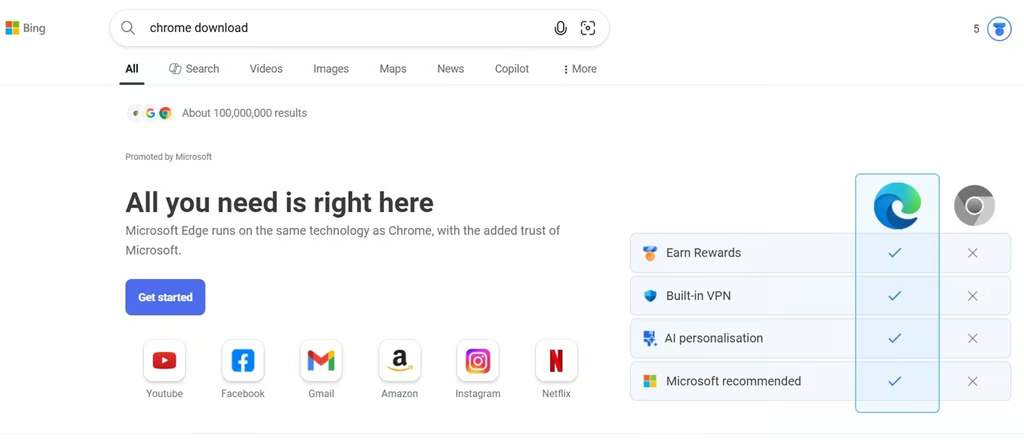


Microsoft is trying a new way to stop users downloading Google Chrome.
Once again, Microsoft is adjusting how it discourages users from switching browsers, reinforcing a broader pattern seen across major technology platforms. As with Apple, which has long promoted Safari as the privacy-first alternative to Chrome, Microsoft is pushing harder to keep users inside its own ecosystem, anchored around Edge on Windows.
This renewed effort comes at a time when browser choice has become a proxy battle for wider control over services, data, and default user behavior. Browsers are no longer just tools for accessing the web; they are gateways into search, advertising, cloud services, and AI assistants. Keeping users from leaving Edge has implications far beyond the browser itself.
A new banner on Chrome’s download page
The latest development was reported by Windows Report. “If you open the Chrome download page in Microsoft Edge, you may see a new banner at the top.” While Microsoft has long displayed prompts on Chrome’s download page, this version marks a subtle but important shift in tone.
Instead of presenting a direct comparison between Edge and Chrome, “Microsoft now focuses on protection.” The banner no longer emphasizes performance parity or shared technology. Instead, it encourages users to stay with Edge by highlighting security and safety, positioning the browser as the more responsible choice.
This approach reflects a growing emphasis across the industry on online threats, scams, and data breaches. By framing browser choice as a security decision, Microsoft is appealing to concerns that resonate with a broad range of users, not just technically savvy ones.
Security as the new selling point
Microsoft now frames Edge as an all-in-one option with features like private browsing, password monitoring, and protection against online threats. These are not new capabilities, but the way they are being packaged and presented is significant.
Microsoft has experimented with security messaging before, but it has traditionally balanced that narrative with technical claims. Apple has taken a similar route with Safari, focusing heavily on privacy, tracking prevention, and fingerprinting resistance in its campaigns against Chrome. Microsoft’s latest banner suggests it is doubling down on the same playbook.
What stands out most in this iteration is what has been removed from the message.
Dropping the Chromium argument
For years, Microsoft has stressed that Edge is built on the same Chromium base as Chrome. The argument was simple: users could get Chrome compatibility without leaving Microsoft’s browser, along with tighter Windows integration and additional features.
This time, those points are missing. The message stays centered on built-in safety features. By dropping references to Chromium entirely, Microsoft appears to be testing whether security alone is a stronger deterrent than technical equivalence.
This change has implications. By not mentioning Chromium, Microsoft avoids reminding users how similar the two browsers are. Instead, it creates a distinction rooted in trust and protection, even though both browsers share much of the same underlying code.
Redirecting users to Microsoft’s safety narrative
Clicking the “Browse securely now” button does more than dismiss the Chrome download attempt. Users are redirected to “a dedicated Online Safety page on Microsoft’s website.”
This page expands on the themes introduced in the banner, highlighting features such as InPrivate browsing, password monitoring, scam and scareware protection, and Edge Secure Network, Microsoft’s built-in VPN. The experience feels less like a quick reminder and more like an onboarding flow designed to reinforce Edge’s role as a security product.
By sending users to a separate page, Microsoft extends the interaction beyond the moment of hesitation. The implication is clear: choosing Edge is framed as an active decision to stay safe online, not just a default option.
Industry backlash and concerns over choice
Not everyone views this approach as benign. The Browser Choice Alliance, which includes Google Chrome among its members, has criticized Microsoft’s tactics. The group told Forbes, “Microsoft is pushing misleading messages about browsing security to interfere with users’ choices over their downloads.”
They went further, arguing that “Microsoft should stand on the side of users instead of glossing up the same old pop-ups with new messaging, and end its campaign to undermine consumer choice and lock out competing browsers.”
These concerns echo long-standing regulatory debates in both the US and Europe, where default settings and pre-installed software have been scrutinized for limiting competition. While Microsoft technically allows Chrome to be downloaded, the repeated prompts and evolving messaging raise questions about how free that choice really is in practice.
Seen through that lens, Microsoft’s new banner is less a minor UI tweak and more another move in an ongoing battle for control over how users experience the web.
Need more enlightenment? Google’s Dark Web Report tool will soon go dark.