
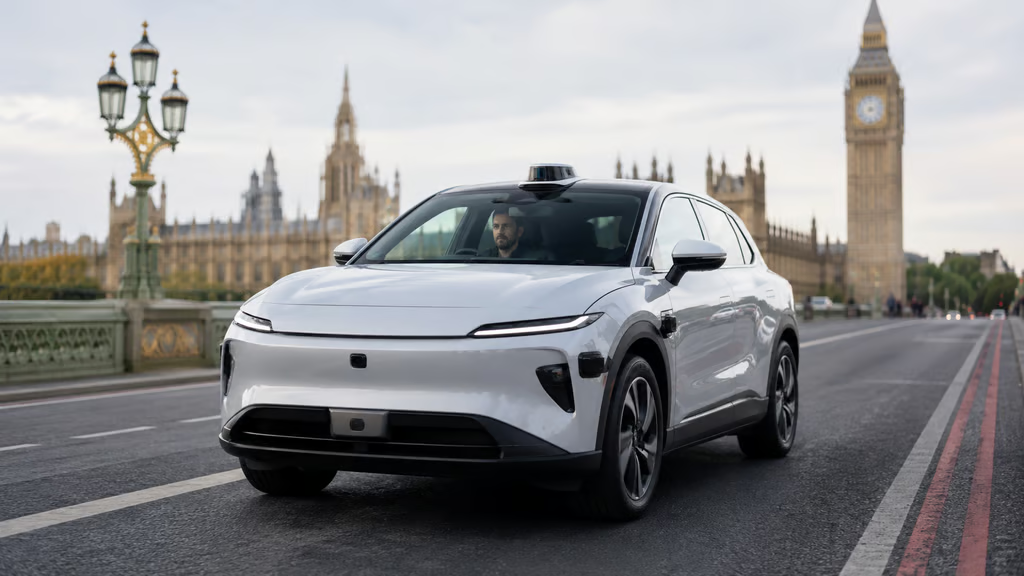


Transport for London has licensed a number of Wayve’s electric Ford Mustang Mach-E vehicles for supervised passenger trips through Uber, moving the companies closer to offering autonomous rides in the capital later this summer.
The cars will handle the driving, but every trip will include a trained, TfL-licensed private-hire driver who can take control. The approval opens the door to rides with real passengers, not a driverless taxi service.
According to the joint announcement, TfL inspected the vehicles against its policy and safety standards before granting the private-hire vehicle licenses. Wayve equips the cars with its AI Driver system, cameras, and radar.
London is using existing ride-hail rules for the first stage
Private-hire trips in London require what Wayve calls a “triple lock”: the operator, driver, and vehicle must all be licensed by the same authority. Uber already holds a TfL operator license, and the onboard drivers will have private-hire licenses. Licensing the Wayve vehicles completes that chain.
Trips will operate under the UK government’s automated vehicle trialling code. The code requires a safety driver to remain ready and able to override the vehicle, and it leaves that person responsible for safe operation even while the automated system is driving.
More than 100,000 Londoners joined Uber’s interest list during the eight weeks before the announcement. A smaller group is expected to take early rides later this summer and provide feedback before a broader public launch, although Wayve and Uber have not given a date for that rollout.
The setup gives Wayve passenger and operating experience without removing the human fallback. It also lets Uber introduce autonomous trips through the same private-hire framework it already uses for human-driven rides.
Wayve is taking the next operational step by adding licensed passenger journeys to years of road testing in London.
Driverless service still needs a separate permit
The vehicle licenses do not authorize Uber or Wayve to remove the driver. A no-driver passenger service would enter the UK’s separate automated passenger services system.
Under government guidance for automated passenger services, a taxi-like service cannot receive a permit without consent from the relevant local licensing authority. Transport for London would therefore have to approve a future London application before the Driver and Vehicle Standards Agency could grant the permit.
That leaves London at an earlier stage than markets where passengers can already book limited autonomous services. In Singapore, riders can use an app to request autonomous trips within a defined operating area. Other companies are working through different stages of deployment, including testing autonomous driving software on Tokyo roads and mass-producing purpose-built robotaxis. Wayve and Uber’s London service will still require a licensed driver behind the wheel.
London’s new licenses place Wayve and Uber between road testing and fully driverless deployment. Selected passengers can ride while Wayve’s system controls the vehicle, but the licensed person behind the wheel remains the safety and legal fallback.
The next major step would be approval for a service that operates without that driver. Until then, London is getting supervised autonomous Uber rides rather than fully driverless robotaxis.
Also read: Tesla plans to sell its purpose-built Cybercab for $30,000 or less as it pursues another route to commercial robotaxi service.