


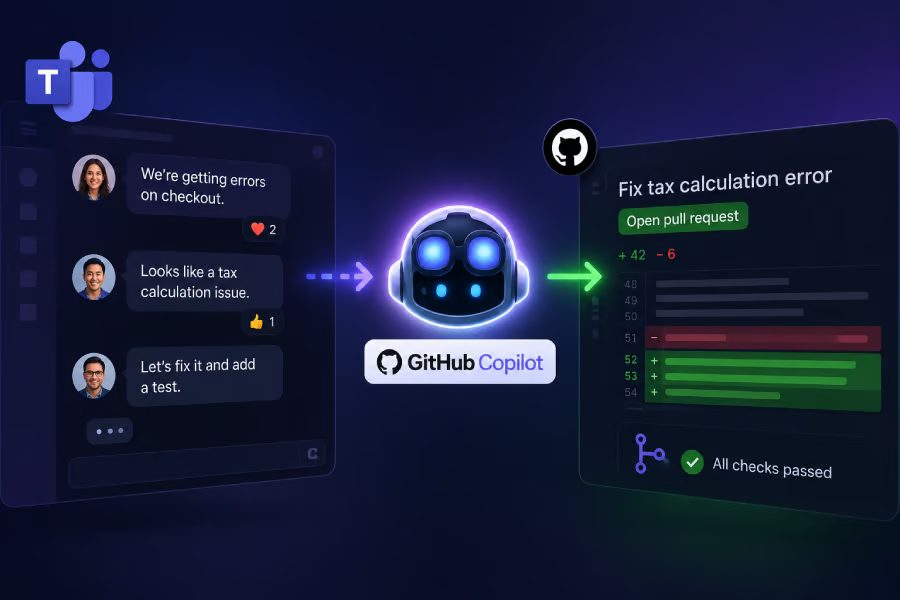
GitHub is removing a tedious step from AI-assisted coding: explaining to the coding agent everything the team already discussed.
The Copilot coding agent can now use Microsoft Teams conversations as context for a software task, combining what developers have discussed with information from the connected GitHub repository.
That allows the agent to investigate an issue, implement changes, and create a pull request without requiring a developer to first reconstruct or summarize the team’s conversation as a new coding prompt.
The result is a shift from context transfer to a different kind of context access. Consider a typical development conversation:
A development team might discuss an application error in Teams, identify the affected component and agree on a possible fix. Instead of copying that discussion into a new prompt, a developer can @mention GitHub’s coding agent in the conversation.
The agent can then use the Teams discussion alongside the connected repository to investigate the issue, make changes and open a pull request for review.
While Copilot in Teams was introduced in September 2025, the latest development builds on that foundation by making the conversation itself a more direct source of context for the coding agent.
The workflow also remains tied to GitHub’s existing development controls. Copilot’s output is not simply pushed from a casual chat straight into production. The workflow remains subject to GitHub’s existing repository permissions and pull-request controls, meaning Copilot’s changes can still be reviewed before they are merged.
That makes the change less about adding another AI interface to workplace chat and more about reducing the distance between where software decisions are made and where those decisions are implemented.
More must-read AI coverage
- SS&C Intralinks DealCentre AI vs. Datasite: Which platform is built for the future of dealmaking?
- SS&C Intralinks FundCentre AI vs. Juniper Square: Which platform better supports modern private markets fund managers?
- Why Data, Not Models, Determines AI Success
- The Rise of the AI-Native Factory: How Physical AI Is Transforming Manufacturing
Why Teams Context Matters for Copilot
At the center of this change is context. Enterprise AI vendors have increasingly connected their assistants to the documents, messages and business systems employees already use. There is another enterprise concern that could be behind this push: shadow AI.
The term generally refers to employees using AI systems that have not been approved by their organization, often because the sanctioned tools do not fit the task or are harder to use.
Keeping the AI workflow inside tools an organization already manages can reduce some of that pressure. Instead of a developer copying a private code fragment or internal project discussion into an unsanctioned chatbot because it works for them, the company can provide an approved agent within the workplace environment where the work is already happening.
Taken together, the integration could reduce the back-and-forth involved in transferring requirements from workplace conversations into coding tools.
Availability and pricing
Microsoft says the Teams integration is currently available in public preview through the desktop and web apps. Developers will need access to the relevant Teams environment, GitHub repository and Copilot coding agent capabilities.
The bigger shift is where the coding prompt begins. Instead of developers repeatedly translating workplace discussions into instructions for an AI agent, the conversation itself can increasingly become part of the agent’s working context.
Other News: Microsoft is removing the legacy WMIC command-line tool from Windows 11 beta builds, pushing administrators toward PowerShell and other newer management tools.