


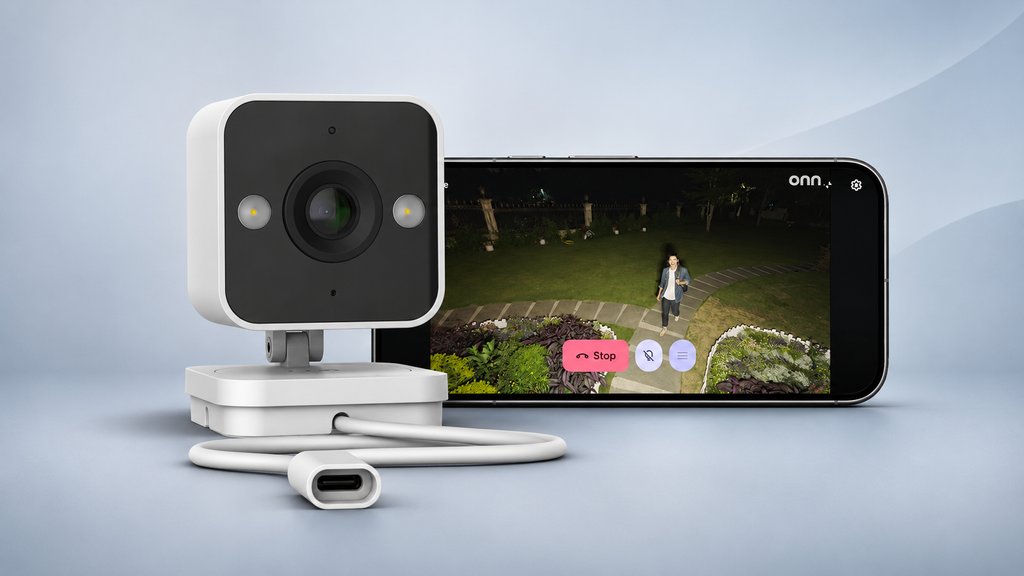
Walmart’s $35 security camera is learning to recognize familiar faces. The hardware is inexpensive, but a year of access to its new feature costs $100 for buyers who sign up for an annual subscription.
Google announced on Nov. 25 that it is expanding Familiar Faces, its facial recognition feature, to Walmart’s onn Outdoor Camera Plug-In and onn Outdoor Floodlight Camera Hardwired. The cameras cost about $35 and $77, respectively, in the US, and require Google Home Premium for facial recognition.
The Google Home update gives existing camera owners more detailed alerts without replacing their hardware. But even if the subscription fits your budget, there’s another consideration: where those cameras store facial biometric data.
Facial recognition comes at a recurring cost
Getting an alert that someone is at your door is useful. Knowing it might be a family member could save you from opening the live feed every time. Familiar Faces attempts to recognize people the camera has learned to identify and provide more specific notifications.
In the US, Google Home Premium offers two subscription tiers:
- Standard: $10 per month or $100 annually, including Familiar Faces and 30 days of event video history.
- Advanced: $20 per month or $200 annually, adding video history search and 60 days of event video history on compatible devices.
You can skip the $20 plan if facial recognition is all you’re after. At Walmart’s listed price of $34.87, the plug-in camera would cost $134.87 in the first year with an annual Standard subscription, before taxes.
Google AI Pro and Ultra subscribers should check their existing subscription benefits before paying separately. Pro includes Home Premium Standard, while Ultra includes Advanced.
One Premium subscription covers eligible devices in the same Google Home household. Owners still using older Nest devices should also review the Nest app retirement and migration deadlines before expanding their setup.
Facial recognition isn’t the only addition. As The Verge reported, owners of both onn cameras and the second-generation wired Nest Cam Outdoor can trigger or silence a 30-second alarm while watching live footage. Google cautions that new features may take time to reach all users.
Same app, different approach to facial data
Don’t assume two cameras connected to the same Google Home app handle facial data the same way. Google’s familiar face detection documentation confirms that onn cameras store facial biometrics in the cloud. Newer Nest cameras configured through Google Home retain that data in internal memory, while older models configured through the Nest app also use cloud storage.
Privacy protections vary across camera brands. Amazon-owned Ring’s TAKE encryption system, for example, limits video encryption key retention while preserving cloud-based features.
Google allows owners to delete facial profiles and disable recognition on individual cameras. These settings operate separately from Gemini’s memory management controls.
Eligible household members can access saved face profiles, so check who has access to your Google Home setup before enabling recognition. Google also advises obtaining permission before saving facial data where local laws require consent. Familiar Faces is unavailable for cameras located in Illinois.
A camera overlooking your front door might benefit from recognizing family members. One overlooking a busy sidewalk might not. Facial recognition is not proof of someone’s identity, and if knowing someone is there is enough, you can leave the feature disabled and still receive ordinary person alerts.
Thinking about putting AI agents to work on your team? Explore AI courses from The Neuron Academy to build the skills to evaluate where agents can help and where you still need a human in the loop.