


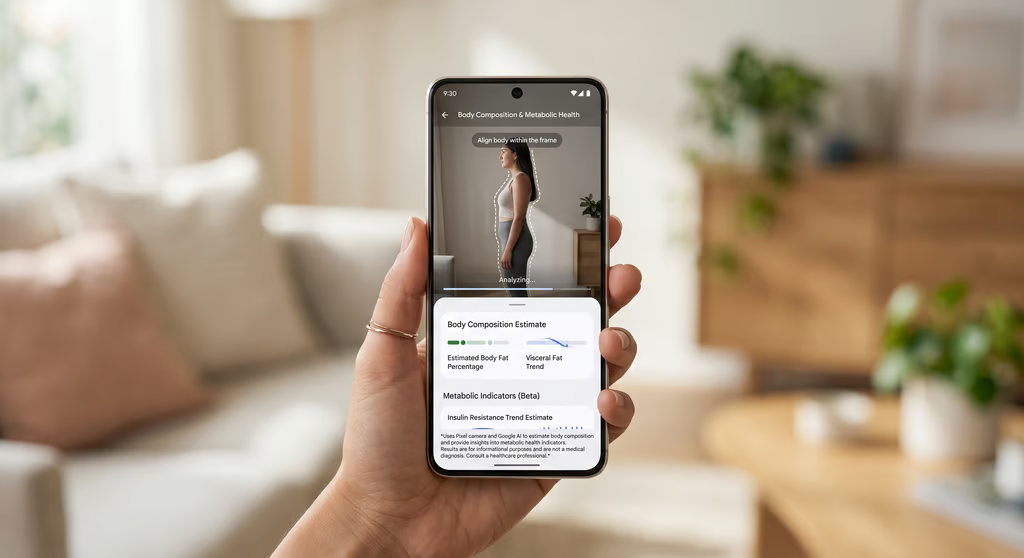
Your next blood sugar insight might come from a phone camera.
Google is testing whether AI can use smartphone images to reveal body-composition clues linked to insulin resistance, bringing a familiar device into a health area usually associated with glucose monitors and smartwatches.
If you track glucose with a CGM or smartwatch, your phone could eventually contribute clues about insulin resistance from a simple set of photos.
Phone photos can reveal clues BMI misses
Google calls the technology PhotoScan. Its AI model analyzes front and side smartphone photos to estimate body-fat percentage and where fat is carried around the body. Pixel phones were used during part of the study, according to Google Research.
Body composition adds information a height-and-weight calculation cannot capture. People with similar height and weight can carry fat very differently, including around the abdomen, where fat distribution is associated with metabolic risk.
Testing found that image-derived measurements improved insulin-resistance prediction compared with a model using age, sex, and BMI. Performance came close to models using clinical DXA body scans. DXA is a standard method for measuring body composition.
Therefore, the comparison shows how closely phone images could approximate information normally gathered with specialized medical equipment.
All the system needs from the phone is its camera. AI extracts the metabolic clues from the images, so smartphone health technology could contribute to blood-sugar risk tracking even without a dedicated glucose sensor.
Insulin resistance tracking is expanding across devices
Eligible Pixel Watch and Fitbit devices are also getting Insulin Resistance Trends, which uses wearable data collected over time to estimate changes in insulin resistance.
A watch and a phone would contribute different kinds of information. Wrist sensors can follow sleep, activity, and physiological patterns over days or weeks. Camera scans, on the other hand, can capture body-composition changes at specific points.
Future versions could pull from more than the camera. Researchers mention wearable data, CGM readings, and routine blood tests as possible inputs for a broader at-home view of metabolic health.
Insulin resistance could change how you track blood sugar
If you check your blood sugar after meals, use a CGM, or keep an eye on prediabetes risk, insulin-resistance tracking could tell you something a glucose graph does not.
A glucose reading shows what your blood sugar is doing at a given moment. An insulin-resistance estimate could indicate how well your body is responding to insulin over time. Paired with phone or watch data, it could help explain patterns that a glucose reading alone cannot.
Judge any future feature by how well it explains the estimate. Look for access to your history and options to export or delete your data. If a system presents an insulin-resistance trend, you should be able to understand what influenced it.
Body-photo analysis has a different privacy profile from step counts or heart-rate tracking. Check whether images stay on your device, whether they are stored after processing, and who can access the resulting health data.
PhotoScan remains a research project. If the work reaches consumer devices, a Pixel phone could eventually contribute metabolic information alongside watch and glucose data.
Other major companies are taking their own routes into blood-sugar tracking. Read more about Apple’s work on non-invasive glucose monitoring and Samsung’s Galaxy Watch AGEs Index.