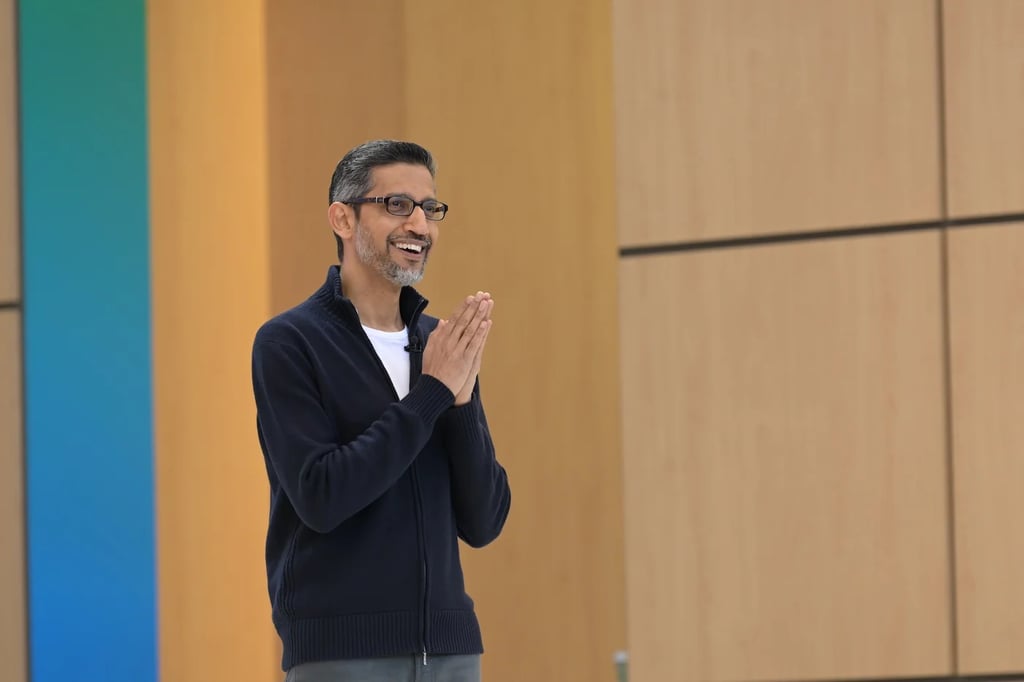
Google CEO Sundar Pichai speaks at Google I/O on May 20, 2025 in Mountain View, California. Image: Google
OpenAI’s $3B bid to acquire Windsurf collapsed after talks stalled, clearing the path for Google to license its AI coding tools and hire key team members.

Google has made headlines for initiating a deal with Windsurf for approximately $2.4 billion. But the deal, which comes after OpenAI failed to acquire Windsurf, isn’t a full-on acquisition; instead, Google is licensing Windsurf’s AI coding tools, and Windsurf’s CEO, Varun Mohan, and several other teammates headed to Google’s DeepMind division for permanent roles.
OpenAI had lined up what would have been its largest purchase yet, aiming to spend around $3 billion to fully integrate Windsurf’s AI coding technology. The plan was to secure exclusive rights over the startup’s software and intellectual property; however, negotiations eventually broke down in the middle of 2025, paving the way for Google to step in.
“We’re excited to welcome some top AI coding talent from Windsurf’s team to Google DeepMind to advance our work in agentic coding,” Chris Pappas, a spokesperson with Google, said in a recent email with TechCrunch.
Formerly known as Codeium, Windsurf has a coding tool with the same name as the company. The coding tool that uses AI agents in order to streamline and optimize the day-to-day coding workflow. It offers automated code completion, code generation, debugging, project analysis and understanding, and more.
The deal with Google is expected to bolster the tech giant’s position in the current AI coding landscape.
While Google frames this as a strategic expansion, some industry observers describe it as a classic acquihire — a move designed to lock in specialized talent without committing a full-scale takeover.
Google has made numerous acquisitions in recent years. Some of the tech giant’s most notable acquisitions include:
Between their own AI platform, the deal involving Windsurf, and their recent acquisitions, Google is quickly increasing their competitiveness in several key areas, specifically cloud security, desktop virtualization, data integration, and AI.
Although there’s no shortage of innovation coming from the Google team, Mohan and his Windsurf colleagues will be driving Google’s DeepMind division for the foreseeable future. It will take time before their contributions reach the public eye, but it will be interesting to see what they come up with.
Read our coverage of this year’s Google I/O 2025 keynote, where Sundar Pichai unveiled new AI milestones and shared the company’s vision for the next decade.
J.R. Johnivan is a technology writer and computer repair professional with 20 years of experience. His work explores emerging technologies, including next-generation LLMs, their societal impact, and how they can improve professional workflows. He began writing while studying computer networking, eventually combining his passion for technology with a career in content. He also brings expertise in project management, HR, and CRM software, giving him a practical, business-focused perspective on today’s tech landscape.

