


While tech layoffs are increasingly tied to AI, GoPro is cutting nearly a quarter of its workforce for a very different reason.
In its third round of layoffs in just two years, the company plans to cut 145 of its 631 employees, according to a Form 8-K filing with the Securities and Exchange Commission (SEC). Unlike many recent workforce reductions driven by aggressive AI investment, GoPro’s move signals something more old-fashioned—and more concerning: a company under financial pressure.
The action camera maker says the cuts are part of a broader restructuring effort expected to cost up to $15 million in severance, with completion slated for the end of 2026. But behind the corporate phrasing is a clearer reality: GoPro is tightening its belt after a sharp decline in performance, as it fights to stay competitive in a rapidly evolving imaging market.
Revenue decline signals deeper challenges
According to a 2025 report, GoPro’s revenue fell by 37% year-over-year, marking a significant decline in retail sales.
Although the company didn’t directly tie the layoffs to its recent revenue decline, it cited restructuring efforts — moves that typically signal cost-cutting after financial losses. If true, then GoPro becomes an exception among the numerous companies that have slashed their workforce in recent months due to automation.
For many of these companies, which have reported strong profits, the job cuts aren’t tied to low revenue but to increased AI spending. Oracle, for example, reported a 14.2% year-over-year increase in sales for Q4 of 2025, but recently laid off thousands of employees amid increased AI spending.
The Verge notes that the sales decline is due to fierce competition from DJI and Insta360. The rise of smartphones with advanced cameras has also contributed to the decline in sales.
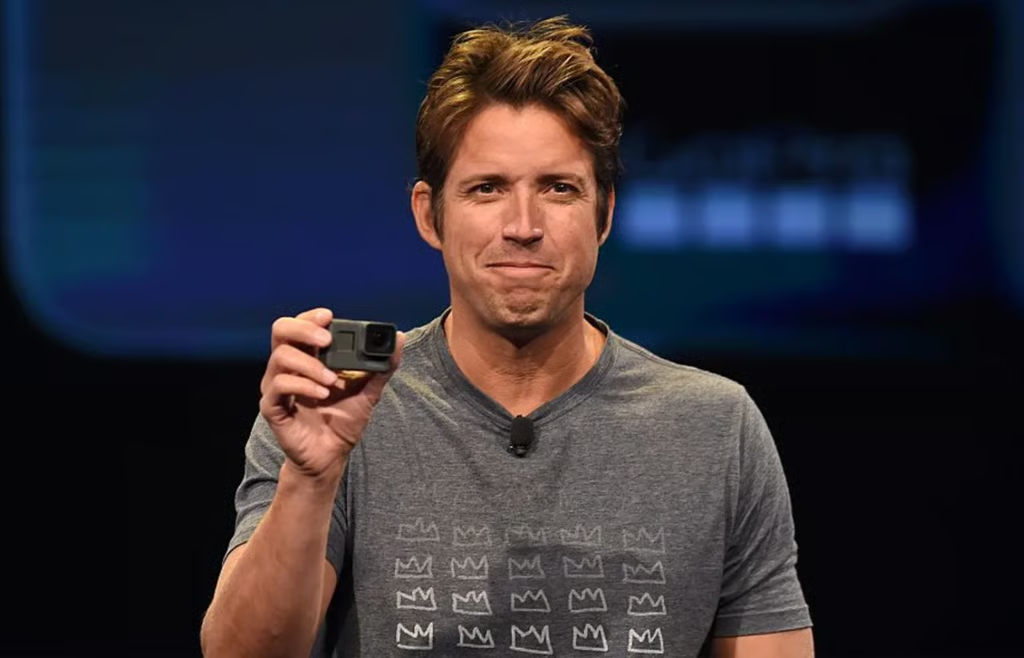
Still, GoPro CEO Nicolas Woodman is betting on a comeback.
The company’s upcoming cameras, set to debut at this month’s NAB show, are designed to reignite sales, powered by a new GP3 processor. Woodman says the upgrade will push GoPro into the ultra-premium imaging market, opening the door to a higher-end segment that could drive both revenue and brand growth.
A promising future with a smaller workforce
GoPro’s latest camera isn’t just a new addition to the company’s long line of products; this one, the company says, is aboard NASA’s Orion spacecraft. It’s a big bet that could determine whether this year will be better than the last. And if this launch does the magic it is expected to, we are unsure whether its workforce will remain lean or grow.
For a company that has survived 24 years in business, Woodman’s continued optimism may be its most valuable and most tested asset as it heads into what could be its most consequential product launch since its revenue decline.
For a contrasting take on layoffs driven by AI investment rather than financial strain, check out this deeper look at Atlassian’s recent workforce cuts and strategy shift.