


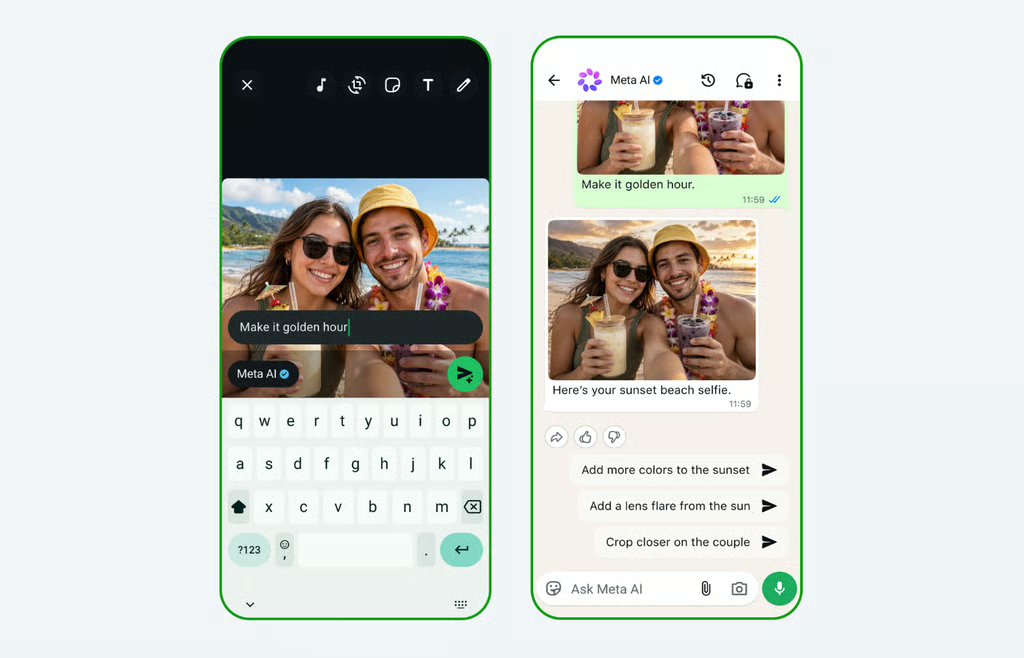
Meta has a new AI image generator… and it is built directly for the company’s social apps.
On July 7, the tech giant launched Muse Image, its first image-generation model from Meta Superintelligence Labs. The model now powers image tools in Meta AI, Instagram, and WhatsApp, with support for Facebook and Messenger expected later.
According to Meta, Muse Image promises to make creating AI-generated visuals faster and easier. But alongside the new creative tools come fresh questions about privacy, ownership, and how AI will interact with the photos people already share online.
What Muse Image can do
Muse Image can generate and edit images from text prompts. Users can ask Meta AI to create original artwork, transform existing photos, design invitations or greeting cards, and make targeted edits by selecting part of an image and describing the desired change.
Meta is also bringing Muse Image to Instagram Stories, where it will power dozens of new AI effects that let users quickly change backgrounds, artistic styles, and visual themes.
The model is part of Meta’s broader Muse family of AI systems. According to Meta AI Chief Alexandr Wang, Muse Image works alongside Muse Spark, which helps interpret prompts, gather relevant information, and plan before generating an image.
Why Instagram users may want to check their settings
Muse Image also introduces one of Meta’s more controversial AI features to date: users can @ mention public Instagram accounts in prompts.
According to Meta, tagging a public Instagram username allows Meta AI to reference publicly available photos when generating an image. That means someone’s public Instagram content could be used to create new AI-generated visuals, depending on that person’s account settings.
Reports indicate that public Instagram accounts may be opted into this capability by default. Users who do not want their public content used this way can review their Instagram privacy controls under the app’s “Sharing and reuse” settings.
For creators, influencers, business owners, and professionals who use Instagram as part of their public identity, the feature raises new questions about consent, likeness, and the extent of control people have over AI-generated versions of themselves.
What users should do now
For everyday users, Muse Image is worth treating like both a creative shortcut and a settings check.
People with public Instagram accounts should review whether their posts can be used to create AI-generated images, especially if they are creators, freelancers, executives, or anyone whose likeness is tied to their work. Users who experiment with the tool should also be careful about uploading private photos, work materials, or images that include other people without permission.
The simplest takeaway: Muse Image may make AI image creation easier, but users should know what they are sharing before they let the model play with their photos.
Meta is making AI part of the feed
Muse Image reflects Meta’s broader AI strategy. Rather than asking people to visit a separate AI app, the company is embedding generative AI directly into Instagram, WhatsApp, and Meta AI so image creation becomes part of everyday conversations and social posting.
The company also plans to expand Muse-powered features into Facebook and Messenger while continuing to build additional AI models, including one focused on video generation.
Whether Muse Image succeeds will depend on more than the quality of its images. Users increasingly expect AI tools to be convenient without sacrificing privacy or control. As Meta brings AI deeper into its social platforms, striking that balance may prove just as important as generating the perfect picture.
Continue reading: If you’re interested in Meta’s latest privacy changes, check out our guide to WhatsApp usernames and how they let you message people without sharing your phone number.