


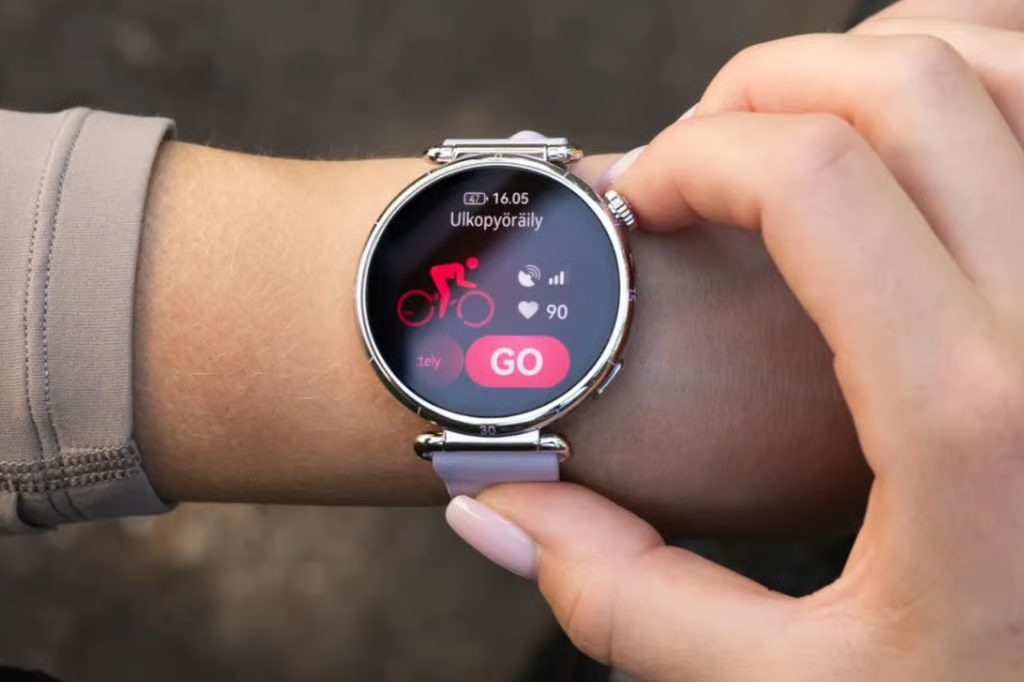
Your smartwatch may soon do more than count steps. It could flag your diabetes risk before symptoms even surface.
Huawei has unveiled a new diabetes risk assessment feature for its latest smartwatch, the Huawei Watch GT 6 Pro. Announced on Feb. 10 at the World Health Expo 2026, the feature can assess a wearer’s risk of developing diabetes without the need for needles. Through sensors built into the device, the feature can flag diabetes risk in wearers.
The innovation’s non-invasive nature positions Huawei ahead of rivals like Apple and Samsung, which are long rumored to be pursuing similar capabilities.
Meaningful insights for diabetes monitoring
Non-invasive blood glucose tracking has been a highly sought-after breakthrough in wearable technology. Unlike finger-prick tests or continuous glucose monitors, the Watch GT 6 Pro device cannot directly measure blood glucose levels and won’t provide a specific glucose number.
Instead, Huawei’s new feature, referred to as Diabetes Risk Study or Diabetes Risk Assessment, takes a different approach to evaluate a user’s risk of developing diabetes or prediabetes.
The tool analyzes a range of physiological signals to estimate risk levels, using biometric sensors and photoplethysmography (PPG), an optical sensor technology already common in smartwatches for heart-rate monitoring. Over a three- to 14-day monitoring window, the watch collects and analyzes multiple health indicators, including resting heart rate, sleep patterns, heart rate variability, and other metabolic indicators.
Research has shown correlations between some of these data points and increased diabetes risk, particularly elevated heart rate.
After sufficient data is gathered, the algorithm provides users with a simplified result inside the watch’s companion app: Low, Medium, or High risk. If users land in the Medium or High categories, the app encourages them to speak with a healthcare professional for further screening.
A wellness tool, not a diagnosis
As reported by Android Authority, Huawei positioned the feature as an early-warning wellness and screening tool rather than a diagnostic instrument, as it is not intended to replace lab testing or clinical glucose monitoring.
Much like other smartwatch alerts today, such as irregular heart rhythm or blood pressure notifications, the diabetes risk feature is designed to prompt medical follow-up, not to provide definitive diagnoses.
At the end of the day, the tool is about awareness and prevention. Still, the risk-assessment approach may motivate users to pay more attention to their health, while companies work toward true non-invasive glucose measurement.
Delivered through software
The diabetes risk feature didn’t require new hardware. It arrived via an over-the-air software update, which goes to show the powerful capabilities of modern wearable sensors alongside advanced algorithms.
Currently, the feature is exclusive to the Watch GT 6 Pro. It plans to expand availability to additional smartwatch models in the future, expanding access across its wearable ecosystem.
Huawei has also publicly promoted the capability, highlighting continuous blood sugar risk monitoring alongside other health innovations, such as blood pressure tracking, as part of a broader push into preventive digital health.
More about Innovation
- Sovereign AI Explained
- The Rise of the AI-Native Factory
- Why Data Determines AI Success
- SS&C Intralinks DealCentre AI vs. Datasite: Which platform is built for the future of dealmaking?
Availability and accuracy
Of course, there are notable caveats to the new feature.
First, the Watch GT 6 Pro is not currently available in the United States, restricting adoption in one of the world’s largest smartwatch markets.
Furthermore, independent accuracy testing is still quite limited. Huawei has presented research backing the feature, but widespread third-party testing, especially comparisons against clinical CGMs, has yet to occur. Until clinicians and regulators can evaluate the data, most experts will treat the results as informative but not definitive.
Accuracy will be the main factor determining whether consumers and regulators embrace the technology.
Competitive pressure on Apple and Samsung
Huawei’s move raises the competitive stakes for other big-name tech companies like Apple and Samsung, both of which have reportedly spent years researching non-invasive glucose monitoring, with repeated reports of prototypes and patent activity.
Although Huawei hasn’t solved full glucose measurement, launching a risk-assessment model is still a meaningful step that could encourage rivals to accelerate their own similar rollouts.
Smartwatches have already evolved from step counters into sophisticated health platforms capable of ECGs, blood oxygen tracking, sleep analysis, and blood pressure monitoring. Diabetes risk detection represents the next chapter.
A significant step toward preventive health
Smartwatches have come a long way, and diabetes risk detection is pushing wearables deeper into preventive medicine, where early awareness can dramatically improve health outcomes.
If Huawei’s system proves accurate, it could help millions identify risk factors earlier, prompting lifestyle changes or clinical testing before diabetes fully develops.
For now, the company holds an innovation lead in the race toward non-invasive diabetes monitoring. Whether that lead translates into global adoption will ultimately depend on regulatory approvals, clinical validation, and how quickly competitors respond.
Either way, Huawei has fired the starting gun on the next major smartwatch health race, and the rest of the industry is now under pressure to catch up.
For more on Huawei’s latest hardware push, check out our coverage of the new Mate 70 Air and what it signals for the company’s global smartphone strategy.