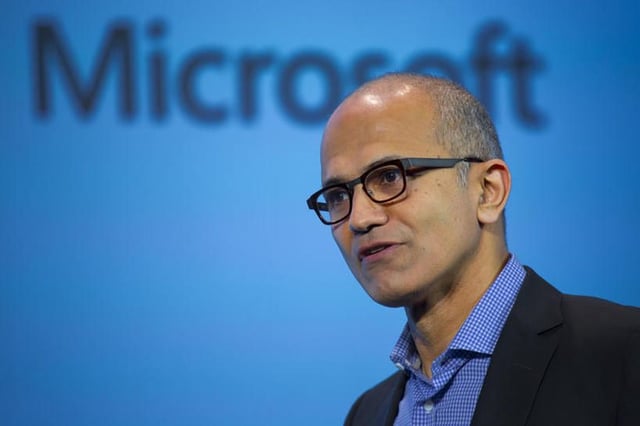
Image: James Martin/CNET
Microsoft has eliminated approximately 15,000 roles since May. The company’s CEO said layoffs are the “enigma of success.”

Earlier this month, Microsoft cut approximately 9,000 roles across various business units, including its sales and Xbox gaming divisions; this followed more than 6,000 layoffs in May aimed at reducing management layers. CEO Satya Nadella said the company’s recent layoffs are “weighing heavily” on him.
In Nadella’s July 24 letter to staff, he expressed gratitude to the employees who were let go and acknowledged that, despite the layoffs, metrics such as market performance, CapEx investments, and overall headcount — which remained unchanged — demonstrate that Microsoft is “thriving.” Indeed, in fiscal 2024, the company reported $245 billion in annual revenue, marking a 16% year-over-year increase.
The executive described the need for layoffs amid strong performance as “the enigma of success in an industry that has no franchise value.” Franchise value refers to the long-term competitive advantage or brand loyalty that allows a company to sustain profits over time — something Microsoft enjoys due to its dominant software ecosystem. Nadella was likely referring to the AI industry, where long-term profitability remains uncertain.
But that’s where any semblance of an explanation for the deeply unpopular layoff decision ends. Notably, Microsoft has invested tens of billions on data centres and AI development that it must now recoup. While reducing headcount may not significantly offset these costs, it could help reassure investors concerned about the scale and pace of AI infrastructure spending.
All major tech companies are pouring money into AI talent, custom chips, data centres, and promising startups in a bid to win the AI race. The stakes are high: controlling a widely adopted, powerful AI platform could translate into economic and geopolitical influence.
The tech giant has been aggressively hiring for Microsoft AI — the team responsible for developing consumer AI products such as Copilot and Bing AI — including several recruits from Google DeepMind.
Shifting away from the layoffs, the CEO emphasised the need for Microsoft to “reimagine its mission” going forward. While Bill Gates once envisioned the company as a “software factory, unconstrained by any single product or category,” Nadella said this is no longer sufficient. Microsoft must now function as an “intelligence engine,” delivering AI capabilities at scale.
“Just imagine if all 8 billion people could summon a researcher, an analyst, or a coding agent at their fingertips, not just to get information but use their expertise to get things done that benefit them,” he wrote. “And consider how organizations, empowered with AI, could unlock entirely new levels of agility and innovation by transforming decision-making, streamlining operations, and enabling every team to achieve more together than ever before.”
Naturally, Microsoft wants to reap the oft-touted efficiency benefits of AI itself, currently writing up to 30% of coding projects with generative AI. Still, it’s not unreasonable to assume that a few of the eight billion people Nadella referenced are more concerned about being replaced by AI at work, or the environmental impacts — like water shortages, air pollution, and power outages — caused by the massive data centres, than they are about interacting with Copilot.
Microsoft will also prioritise security and quality alongside AI to achieve its broader vision. Nadella urged remaining staff to have a “growth mindset.”
“It might feel messy at times, but transformation always is,” he said.
TechRepublic has reported on layoffs this year at Scale AI, Amazon, Salesforce, and Duolingo, in addition to Microsoft.
Restructuring and workforce reductions have become a defining trend in tech since the post-pandemic reset. Companies that hired aggressively during lockdowns to meet soaring demand for digital services later found themselves overstaffed. In 2022 alone, more than 100,000 jobs were cut across major firms like Google, Meta, and Amazon.
Now, AI is playing a new role. Since OpenAI’s ChatGPT gained public attention in late 2022, companies have rushed to adopt AI to increase productivity and remain competitive. This has led to more aggressive performance targets, soaring individual output expectations and, in some cases, the replacement of human roles with AI systems.
In such a fast-moving landscape, a single misstep can carry significant consequences. Scale AI laid off approximately 200 employees after reportedly losing customers due to its deepening partnership with Meta — a direct competitor to several of its clients — and for allegedly leaking confidential files.
While it is furiously building its in-house AI team, Microsoft is not letting go of its partnership with OpenAI. In fact, Microsoft has recently been vying for a larger stake in Sam Altman’s startup.
Fiona Jackson is a news writer who started her journalism career at SWNS press agency, later working at MailOnline, an advertising agency, and TechnologyAdvice. Her work spans human interest and consumer tech reporting, appearing in prominent media outlets such as TechHQ, The Independent, Daily Mail, and The Sun.

