
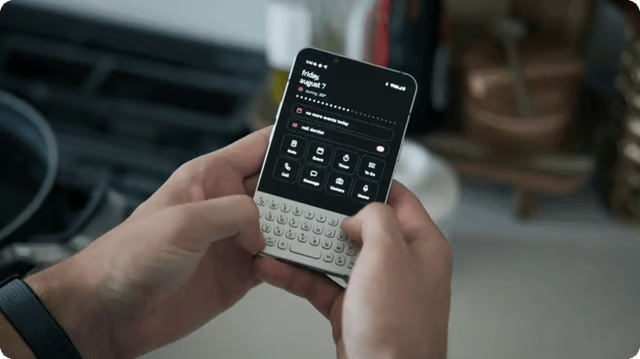


Minimal built its first phone around an E Ink screen meant to make scrolling less appealing. For the Phone 2, the company is taking a different approach.
The new model replaces E Ink with a 3.92-inch AMOLED display and adds 5G, a faster MediaTek Dimensity 8300 processor, and upgraded cameras while keeping the physical QWERTY keyboard. Pricing starts at $599, with shipping scheduled to begin in December.
But by removing the deliberately restrictive display, Minimal is making its phone easier to use while asking whether a smaller screen, a physical keyboard, and purpose-built software can provide the distraction reduction that E Ink once provided.
AMOLED, 5G and faster hardware change the formula
The AMOLED screen may be the most obvious change, but it is far from the only one.
According to its Kickstarter campaign, which AndroidAuthority says has crossed $800,000, exceeding the initial $100,000 target, the device now comes with a more capable set of internals.
The 3.92-inch 1080 × 1240 AMOLED display runs at 90Hz, a substantial change from the 4.3-inch E Ink panel on the original phone. Powering the device is MediaTek’s Dimensity 8300 chip, paired with 8GB of RAM and either 256GB or 512GB of storage.
Unlike the previous version, the Minimal Phone 2 will have 5G internet connectivity.
The keyboard has also been upgraded with backlighting and better keycaps.
The phone also adds a 50MP rear camera, a 20MP front camera, a 3,000mAh battery, 27W wired charging, and 15W Qi wireless charging.
Minimal also includes a 3.5mm headphone jack, dual stereo speakers, a programmable physical switch, and a side fingerprint scanner.
Taken together, the specifications make the Phone 2 much less of an experiment in deliberately limited hardware and more of a compact Android smartphone with an unusual input system.
Mobility must-reads
- Big Apple OS Makeover: Here’s What to Expect & When
- MWC 2025: Nothing Shows Off (3A) Phones With AI Organization Tool
- Bad News for App Developers: Most Apps Fail to Hit $1,000 Monthly Revenue Within Two Years
- Mobile Device Computing Policy
The idea behind the Minimal Phone
Minimal’s approach is to make a smartphone useful without encouraging the same level of constant screen use as a conventional phone.
The company says users can still access their everyday Android apps. Its small-screen design is another part of that approach: the idea is that a smaller display leaves less room for the kind of extended scrolling that can consume time on larger smartphones.
The original phone pushed that idea further with an E Ink display, which made animations and scrolling slower by design. The Phone 2 moves to AMOLED for a more responsive experience, but the basic idea remains the same: provide the functions of a smartphone while making the device less conducive to prolonged, passive screen use.
Availability and pricing
That launch comes with some history to account for. The first Minimal Phone, which was also crowdfunded, faced shipping delays before reaching customers, and some owners have since reported problems with the device, including display and software issues.
The Phone 2 is a less restrictive device than its predecessor, and that may make it more practical for everyday use. But the redesign also removes one of the features that most clearly separated the Minimal Phone from a conventional Android handset.
Once the device reaches customers, the real test will be whether AMOLED solves the original model’s usability problems without also eliminating the friction that made Minimal’s anti-distraction pitch convincing.
Other News: Apple is reportedly planning a major glass-focused redesign for its 2027 iPhone, potentially giving the flagship smartphone a dramatic new look for its 20th anniversary.