


Massive Telstra Outage Hits Mobile Networks, Rail, and Payments in Australia
One network failed. Much of daily life stumbled with it.
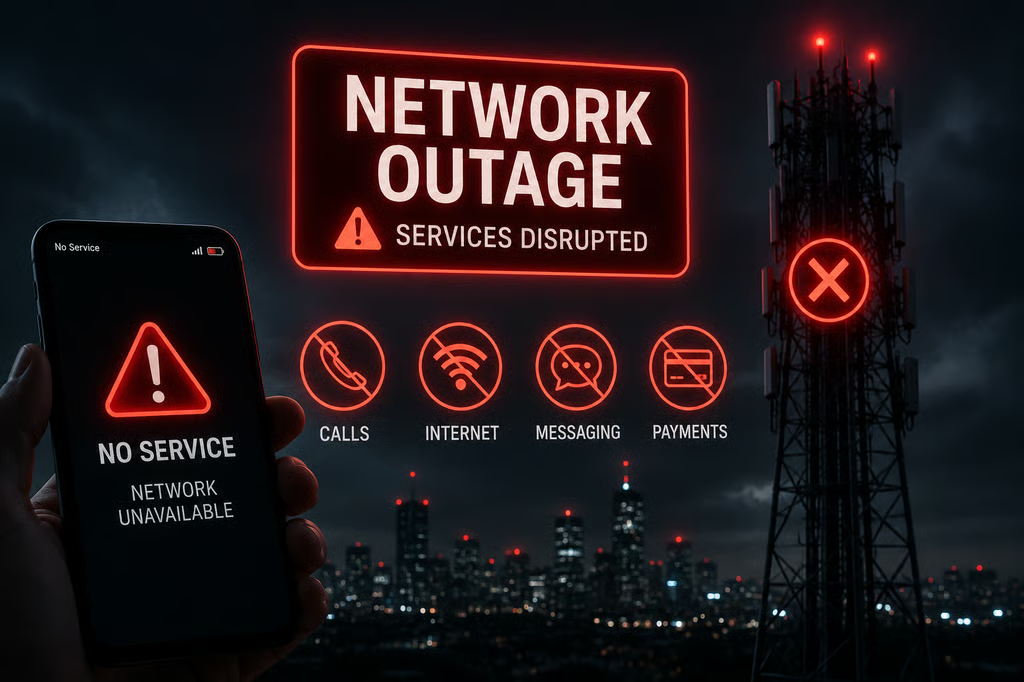
Australia’s largest telecommunications provider, Telstra, suffered a nationwide outage on July 8 that disrupted mobile connectivity, rail communications, freight operations, electronic payments, and some emergency calls. The company attributed the failure to a software defect.
The disruption reportedly lasted for 12 hours and highlighted how deeply telecommunications networks underpin essential services well beyond phone calls. Telstra apologized for the inconvenience and restored services, while government officials launched an investigation into the infrastructure failure and its wider effects.
An unusual cause of service disruption
Incidents with this level of disruptive impact are often associated with cyberattacks, but Telstra denied these claims. Michael Ackland, the company’s chief financial officer, said the issue stemmed from a software defect in time-keeping servers located in Sydney and Melbourne, according to reporting by the BBC. The company said that no signs of malicious activity were found.
Telecom networks generally rely on highly accurate time synchronization to coordinate functions across systems. If that timing becomes inconsistent or unavailable, network components may no longer operate as intended, potentially disrupting services that rely on them.
A single outage with far-reaching effects
The outage extended well beyond mobile connectivity, affecting rail services in Victoria and New South Wales because their communications systems relied on Telstra’s network, according to the BBC. Freight operations also experienced disruptions.
Businesses and consumers who depended on mobile connectivity for everyday transactions also felt the effects of the outage. Taxi drivers were unable to work, while retailers and cafés reported problems processing electronic payments, resulting in lost sales.
Perhaps the most serious effect involved emergency services. Telstra confirmed that some emergency calls failed during the outage. According to Reuters, the company conducted over 300 welfare checks for affected callers, with six cases requiring referrals to emergency services.
Past teleco disruptions resurface concerns
The July 8 outage is the latest major telecommunications disruption in Australia. Reacting to the incident, Prime Minister Anthony Albanese called the outage “deeply concerning.”
Australia’s second-largest telecommunications provider, Optus, faced several high-profile outages in recent years. Last year, a 13-hour service outage was linked to three deaths. The company also faced another outage in 2023 that lasted a day and a cyberattack in 2022 that exposed the data of millions of people.
Communications Minister Anika Wells said such events show “exactly why” telecommunications providers are the least trusted in Australia. Ackland, however, said Australians should continue to have confidence in Telstra while acknowledging the seriousness of the outage.
For businesses in critical sectors with less tolerance for operational failures, this is a reminder that planning for events like this and implementing backup plans are non-negotiable.
Related News: Australian businesses are racing to adopt AI, but many still lack the security controls to manage it safely. Learn what’s driving the growing AI security gap.