


Personal CRM software helps individuals organize contacts, track follow-ups, manage schedules, and keep important relationship details in one place. Unlike traditional CRMs built mainly for sales teams, personal CRMs are better suited for solo professionals, freelancers, consultants, and anyone who wants a simpler way to manage personal and business relationships.
I reviewed the best personal CRM tools based on contact management, calendar integrations, reminders, task tracking, meeting scheduling, customization, affordability, and ease of use. HubSpot stood out as the best overall free personal CRM, while Pipedrive, monday CRM, Notion, and ClickUp are better suited for visual timelines, task and time tracking, personal project databases, and customizable workflows.
| HubSpot CRM | ||
| Pipedrive | ||
| monday CRM | ||
| Notion | ||
| ClickUp |
- Overview of the personal CRM software
- How I chose the best personal CRM software
- Why you can trust TechRepublic
- What is a personal CRM?
- Benefits of personal CRM tools
- Key features to look for in a personal CRM software
- How to pick the right personal CRM
- Methodology: How did I evaluate the best personal CRM software?
- Frequently asked questions
Overview of the personal CRM software
| HubSpot CRM | ||||
| Pipedrive | ||||
| monday CRM | ||||
| Notion | ||||
| ClickUp |
How I chose the best personal CRM software
To evaluate the best personal CRM software, I compared platforms based on core contact management features, automation, customization, ease of use, pricing, and customer support. I also reviewed product documentation, verified user feedback, and conducted hands-on testing to assess each tool’s usability, reliability, and overall value for individuals and solo professionals.
Why you can trust TechRepublic
| Why you can trust TechRepublic |
| To provide readers with reliable recommendations, the TechRepublic editorial process follows strict standards for research, product evaluation, and provider scoring. In this review, I evaluated five personal CRM software based on contact management, reminders, calendar integrations, task tracking, customization, ease of use, pricing, and overall value for individual users. My full methodology also included firsthand testing of platform usability and analysis of real user feedback to determine how well each tool supports personal relationship management, productivity, and organization. I also leverage the following experience when conducting software reviews:
 Bianca Caballero Bianca CaballeroSales and Marketing Analyst at TechRepublic |
What makes HubSpot CRM the best overall free personal CRM tool
Overall rating: 4.73/5
Pricing: 4.31/5
General features: 4.9/5
Ease of use: 5/5
Support: 4.38/5
Expert score: 4.38/5
HubSpot CRM is a powerful AI-powered platform that offers modules for managing sales, marketing, customer service, operations, content, and commerce processes. Users who need a personal CRM can leverage its robust contact management, appointment scheduling, and note-taking capabilities. It also allows you to set communication cadences via email, phone calls, Facebook Messenger, and Slack.
Why I chose HubSpot CRM
HubSpot delivers one of the most capable free personal CRM experiences I evaluated, particularly for individuals who want more than basic contact storage and reminders. The platform combines contact management, communication tracking, scheduling, and productivity tools in a way that feels far more comprehensive than most free personal CRM options.
Its free features include meeting scheduling, email templates, document storage, email tracking, and integrations with tools like Slack and Facebook Messenger. Users who eventually need more advanced functionality can upgrade to access calendar sync, workflow automation, calling capabilities, and contact grouping features for more structured relationship management.
Because HubSpot was originally designed with sales and marketing teams in mind, the platform can feel more feature-rich than some individuals require. Users looking for a simpler, more lightweight personal CRM experience may find platforms like Pipedrive or Notion easier to manage day-to-day.
For more information, read the full HubSpot review.
HubSpot CRM pricing
Visit HubSpot
Features
- Contact management: Manage your personal contacts, link related records, and attach notes to each contact record.
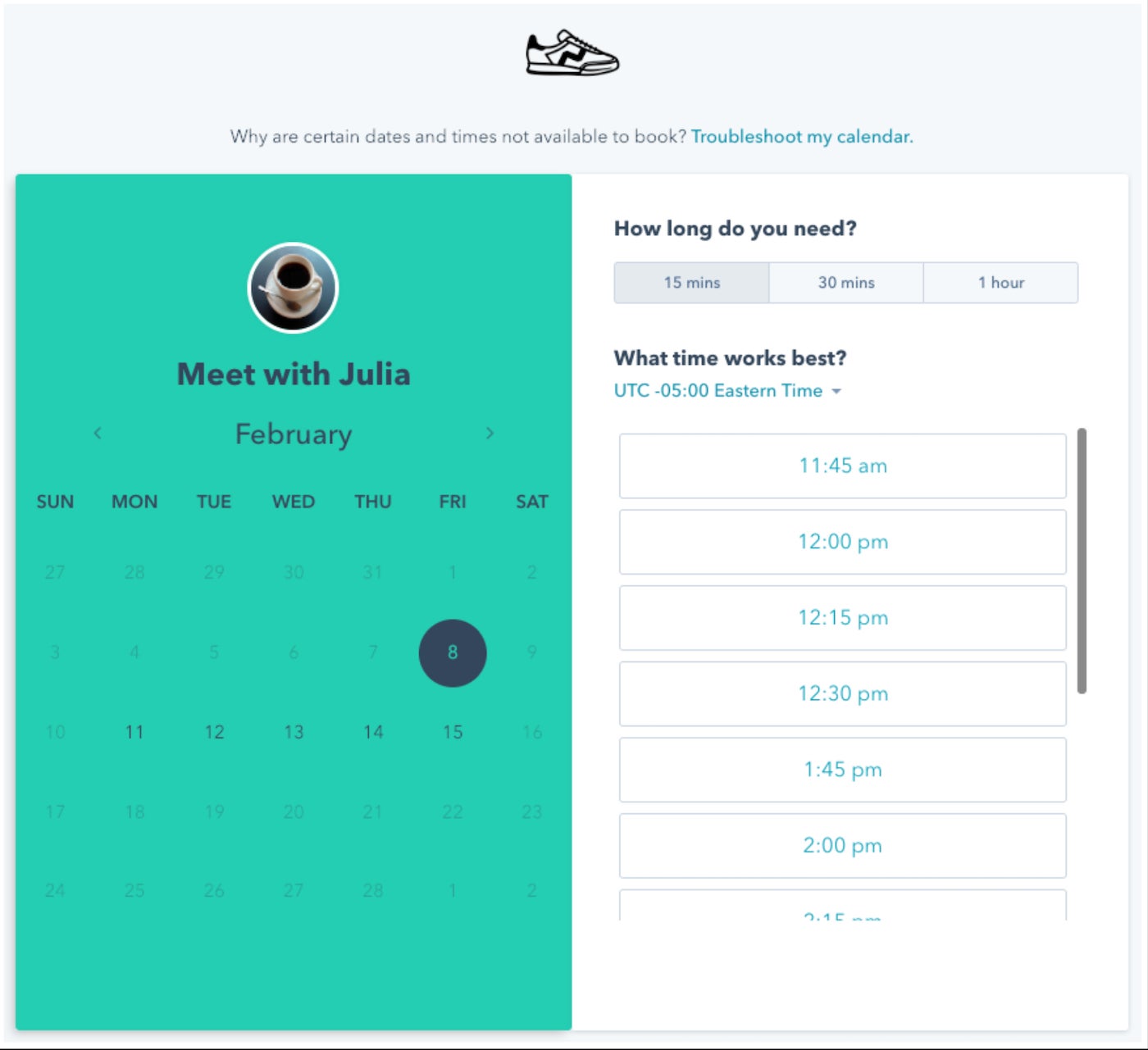
- Meeting scheduler: Automatically book meetings with your personal contacts and sync appointment schedules with your Google or Office 365 calendar.
- Multichannel communications: HubSpot CRM allows you to reach out to your contacts via email, Facebook Messenger, Slack, and phone.
Pros and cons
| Pros | Cons |
|---|---|
What makes Pipedrive the best for visualizing personal timelines?
Overall rating: 4.67/5
Pricing: 4.38/5
General features: 4.72/5
Ease of use: 5/5
Support: 4.38/5
Expert score: 4.19/5

Pipedrive is a sales-focused CRM that individuals can leverage to organize and grow their personal networks. It allows you to sync your address book, email, and calendar so you can easily keep track of meeting cadences. In addition to its robust contact management features, it includes systematized to-do lists, collated note-taking features, and appointment reminders.
SEE: 10 Best CRM Software for 2025
Why I chose Pipedrive
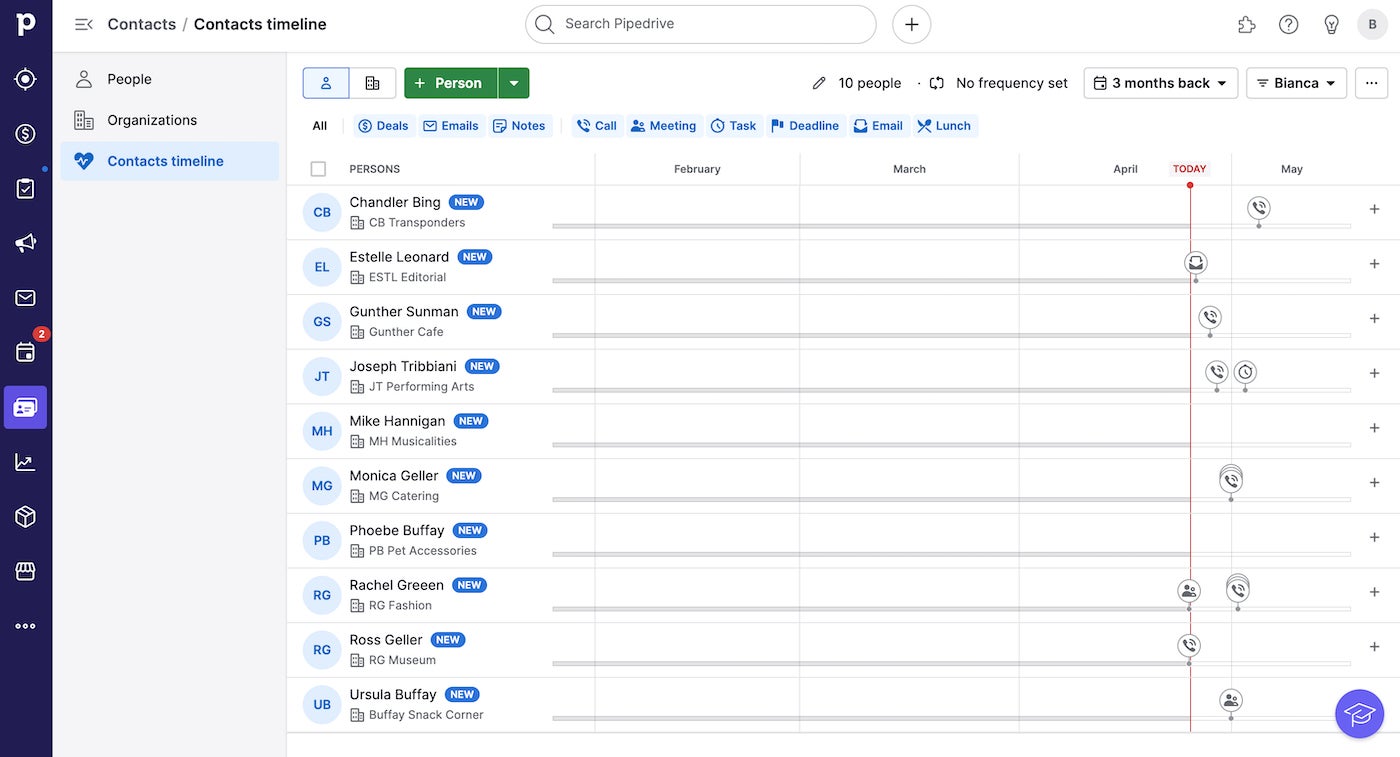
Pipedrive is a solid option for individuals who want a visual personal timeline for managing contacts, activities, and follow-ups. Its clean interface and drag-and-drop functionality make it easy to organize relationships, track interactions, and customize activity timelines without dealing with a complicated setup.
One area where Pipedrive performs particularly well is follow-up management. Users can automate recurring reminders, schedule activities, and trigger follow-up emails to stay organized with appointments, daily tasks, and personal routines. That simplicity makes it especially appealing for individuals who want structure and visibility without the heavier sales and marketing features found in platforms like HubSpot.
The main limitation is that some advanced tools, including document and project management features, require add-ons or higher-tier plans. Even so, Pipedrive remains one of the more approachable personal CRM tools I tested, particularly for users who prioritize ease of use and visual organization.
For more, head over to my detailed Pipedrive review.
Pipedrive pricing
Visit Pipedrive
Features
- Visual contacts timeline: Pipedrive lets you drag and drop reminders, events, meetings, and goals into a visual contacts timeline for easier task organization.
- Meeting scheduler: Use Pipedrive’s scheduling tool to sync your calendars, share your availability, and schedule emails, video calls, and appointments.
- Smart Docs: Centralize your document management process, send trackable files, auto-fill documents with data from Pipedrive records, and sign documents electronically.
Pros and cons
| Pros | Cons |
|---|---|
What makes monday CRM the best personal CRM for task and time tracking?
Overall rating: 4.46/5
Pricing: 3.88/5
General features: 4.61/5
Ease of use: 4.5/5
Support: 4.69/5
Expert score: 4.25/5

monday CRM is a highly customizable platform that enables users to manage personal contacts and tasks from a visual pipeline. It also offers features for logging notes and ideas, such as digital whiteboards and embedded files. Its intuitive interface and no-code automation make it easy for anyone to learn, navigate, and use.
Why I chose monday CRM
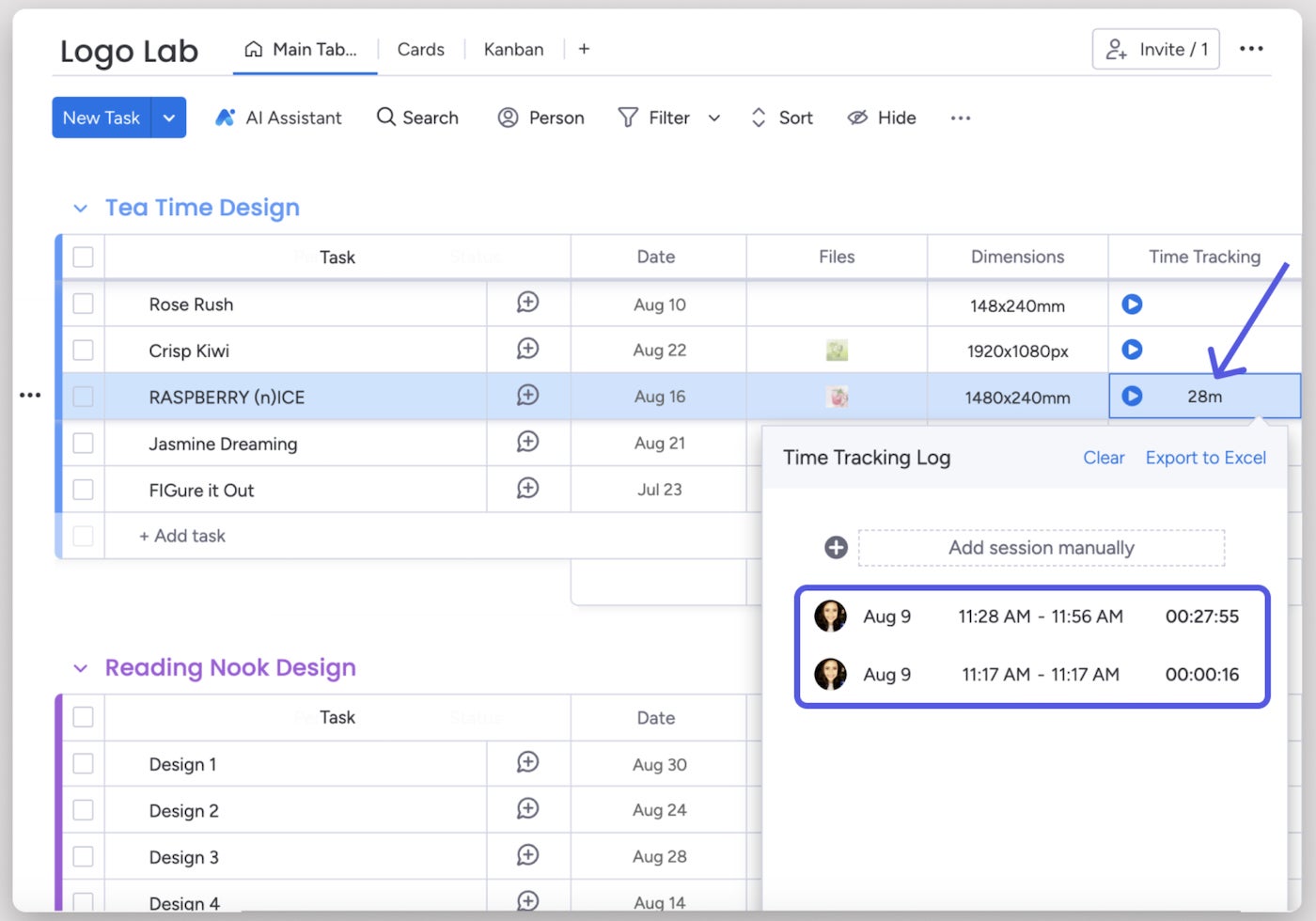
monday CRM is particularly useful for individuals who want stronger task and time tracking capabilities alongside personal relationship management. In my evaluation, its customizable dashboards and extensive template library made it easy to adapt the platform for contact organization, personal projects, goal tracking, and appointment management.
The platform includes more than 200 templates that users can tailor for workflows involving tasks, schedules, and personal pipelines. Its built-in time-tracking columns and automated reminders are also especially practical for managing recurring responsibilities, monitoring productivity, and keeping important follow-ups from slipping through the cracks.
The biggest limitation is pricing. monday CRM requires a three-user minimum on paid plans, which can make it less cost-effective for solo users compared with platforms like HubSpot or ClickUp. Even so, for individuals who prioritize visual workflows, customization, and integrated task management tools, monday CRM delivers a flexible and intuitive experience.
Check out our monday CRM review to learn more.
monday CRM pricing*
*All monday CRM plans have a three-user minimum
Visit Monday
Features
- Unlimited contact database: Store unlimited contacts in monday CRM’s database and log activities, tasks, calls, and meetings associated with each contact record.
- Automation center: Build workflows and automate reminders for task deadlines, emails, and appointments using monday CRM’s ready-made automations.
- Monday AI: Leverage AI to generate and edit email messages, replies, subject lines, and email templates to save time and effort.
Pros and cons
| Pros | Cons |
|---|---|
What makes Notion the best for designing personal project databases?
Overall rating: 4.43/5
Pricing: 4.5/5
General features: 4.56/5
Ease of use: 4.6/5
Support: 3.63/5
Expert score: 3.81/5

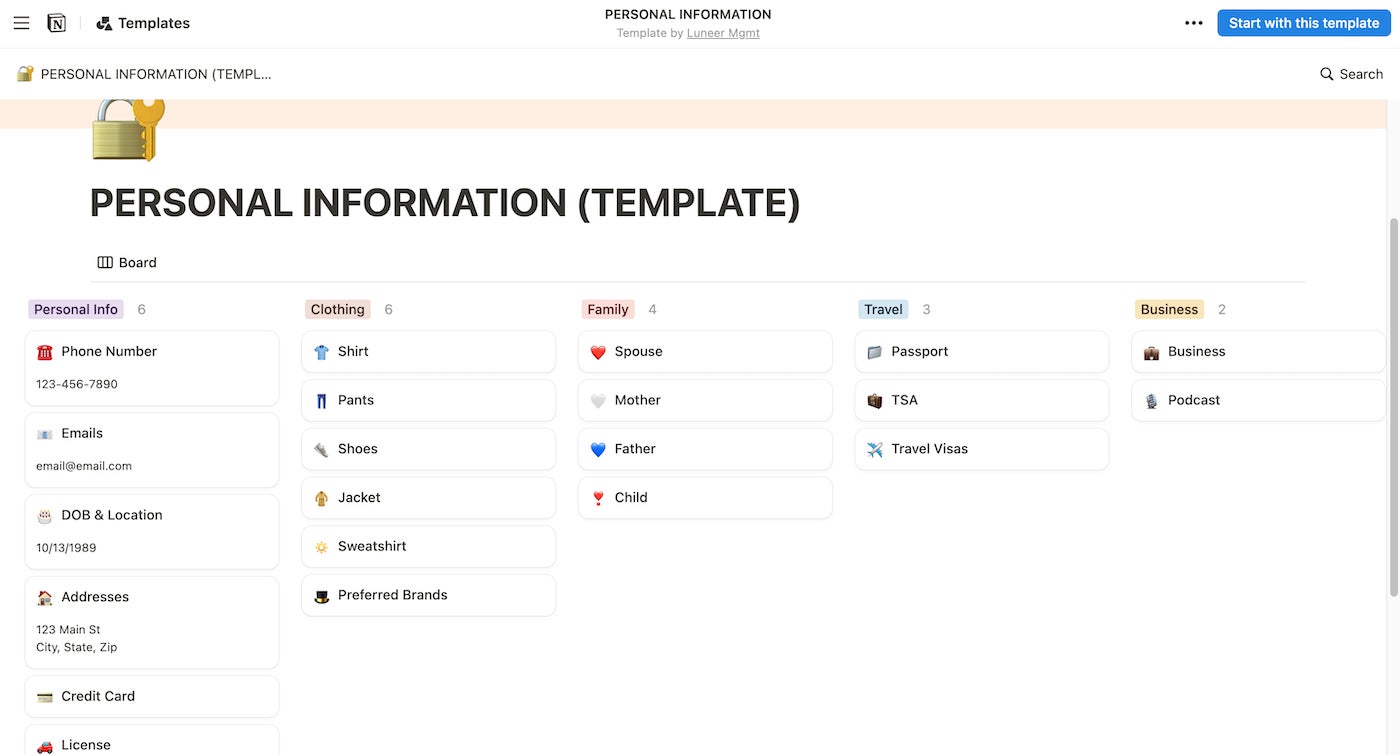
Notion is a project workspace that freelancers and individuals can customize into a personal CRM. It offers over a hundred templates for tracking personal information, business data, and project timelines. This platform also has multiple data viewing options, including timelines, boards, and calendars. Its other features include to-do lists, notes, task tracking, goal tracking, and a website builder.
Why I chose Notion
Notion allows users to organize nearly any type of personal information within a highly customizable workspace. Its combination of notes, databases, task management, and document organization makes it especially useful for individuals who want a centralized system for managing both personal and professional information.
The platform works particularly well for tracking journal entries, vacation plans, job applications, meeting notes, personal goals, and project documentation. Its drag-and-drop editor also makes organizing content, customizing layouts, and building workflows feel intuitive even for nontechnical users.
Compared with the other providers on this list, Notion leans more toward personal organization and knowledge management than traditional CRM functionality. However, it offers fewer built-in communication and AI-powered tools than platforms like HubSpot or Pipedrive. Users who want native email tracking, automated follow-ups, or stronger communication features may find those platforms more practical right out of the box.
Notion pricing
Visit Notion
Features
- Wikis: Centralize all your knowledge and documentation in one organized repository with features for syncing updates and linking related documents.
- Project workspaces: Customize Notion’s connected workspaces and use them for managing projects, tasks, checklists, timelines, and databases.
- Notion AI: Use Notion’s AI tools to power database searches, generate documents, get insights from PDFs and images, and access GPT-4 and Claude.
Pros and cons
| Pros | Cons |
|---|---|
What makes ClickUp the best customizable personal CRM?
Overall rating: 4.37/5
Pricing: 4.5/5
General features: 4.72/5
Ease of use: 3/5
Support: 5/5
Expert score: 4.13/5

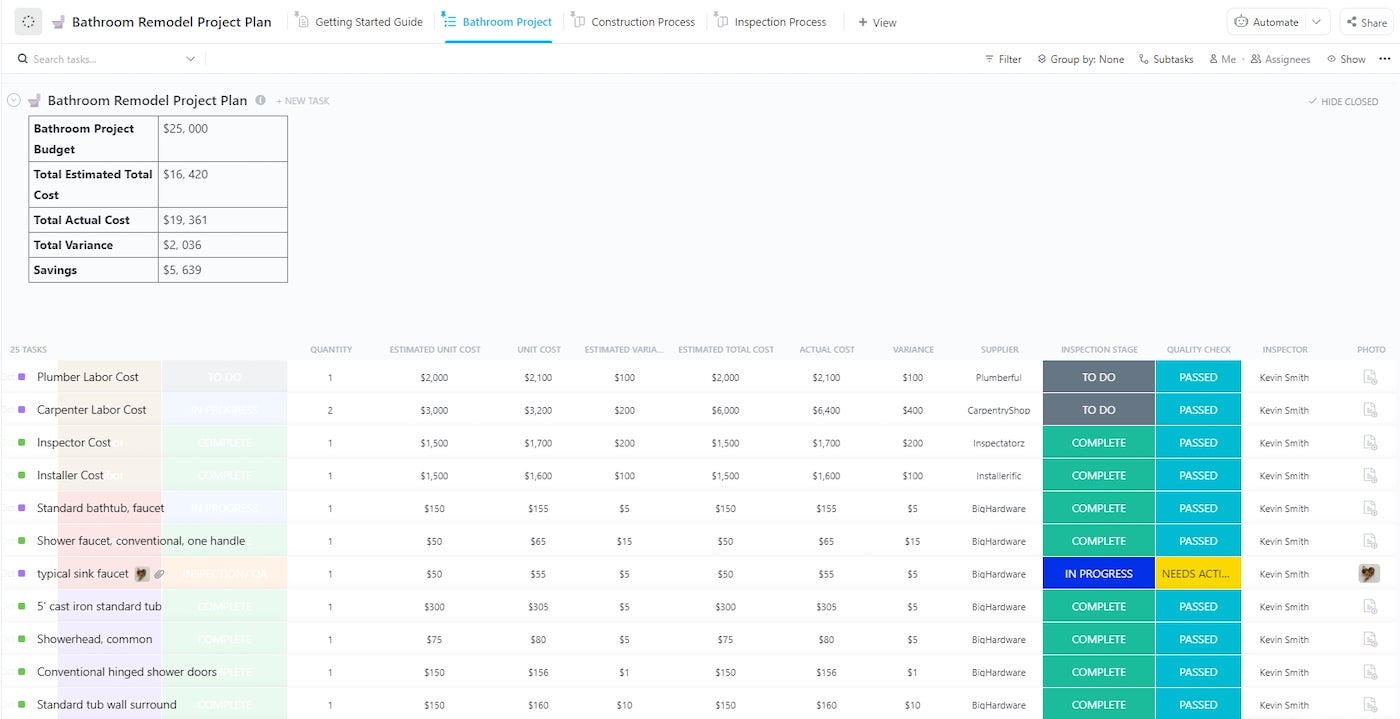
ClickUp is a complete work management system you can customize to fit any personal or business need. This platform is built on centralized workspaces that you can use to manage anything from mundane day-to-day tasks to large-scale projects. It also offers over 70 templates for various personal uses, including contact management, daily action plans, bucket lists, holiday planners, travel itineraries, and home projects.
SEE: 5 Best CRM With Project Management
Why I chose ClickUp
ClickUp offers one of the most customizable personal CRM workflows I evaluated, making it a strong option for individuals who want more control over how they organize contacts, tasks, reminders, and personal projects. As an active ClickUp user myself, I’ve found its flexibility especially useful for building workflows that combine relationship management, productivity tracking, and project organization in one workspace.
The platform includes customizable dashboards, task labels, reminders, automations, multiple data views, and unlimited tasks on its free plan. I also like that users can tailor the workspace to match their preferred level of complexity, whether they want a lightweight personal organizer or a more detailed setup for managing projects, clients, and day-to-day responsibilities.
That same flexibility can also create a steeper learning curve. Because ClickUp is not a traditional CRM and offers extensive customization options, it may feel overwhelming for users who prefer a simpler, more ready-to-use platform. Individuals looking for a more straightforward CRM experience may find HubSpot or Pipedrive easier to adopt with minimal setup.
Want to know more? Read our full ClickUp review.
ClickUp pricing
Visit ClickUp
Features
- Customizable views: Visualize your daily, weekly, or monthly tasks using ClickUp’s customizable list, board, and calendar views.
- Pre-built automations: Save time by automating routine tasks using pre-built or customized workflows and task statuses.
- Performance monitoring: Track and analyze your progress across personal projects, money earned, and time spent on tasks using ClickUp’s productivity dashboard widgets.
Pros and cons
| Pros | Cons |
|---|---|
What is a personal CRM?
A personal customer relationship management software is a platform that lets individuals, solopreneurs, and freelancers maintain relationships with their networks. It offers useful features like contact management, a contact database, activity tracking, meeting scheduling, cadence reminders, and note-taking. These key features help users stay on top of their day-to-day tasks and maintain communication with personal contacts.
Benefits of personal CRM tools
Sometimes, you forget to return a call or a message, fail to send greetings on a special occasion, and even miss meetings despite having phone reminders. With the help of personal CRM apps, you can ensure you don’t miss important milestones and appointments. There are four quick benefits of using a personal CRM app.
- Organized personal contacts: With a CRM, you can keep all your contact records in a central database.
- Streamlined communication: Set reminders for a meeting or automate emails and other communications to stay connected promptly.
- Better work-life balance: Sync your personal CRM with your calendar to stay on top of important dates, events, and occasions.
- Improved personal relationships: Stay connected with your friends, family, and colleagues, and send them timely greetings and congratulatory messages.
SEE: 8 Benefits of CRM Software for Businesses
Key features to look for in a personal CRM software
When choosing a personal CRM, look for one that fits your feature and budget needs. Determine if you need it for simple contact management or more complex project tracking. Consider three standout features as you look for a personal CRM.
- Contact management: Store, organize, and track all your personal contacts in a central database that’s easy to access.
- Calendar integration: Connect your CRM to your calendar to automate meeting scheduling, appointment reminders, and important task deadlines.
- Multichannel communication: Send emails, text messages, and social media messages to your contacts directly from your CRM.
How to pick the right personal CRM
Before committing to a personal CRM, it’s important to research the software’s features and capabilities to understand its ideal use cases. That way, you can ensure the provider can address your CRM feature needs. I recommend asking the following questions so that you can pick the best personal CRM for you:
- Does this CRM tool fit into my daily life and needs?
- Does this CRM offer tools for managing my contacts and appointments?
- Does this software offer a free version with all the basic features I need?
- Does this software have scalable CRM pricing plans that fit my budget?
- Can I integrate this tool with my email client, calendar, and communication apps?
- How easy is this software to learn, navigate, use, and implement?
- What do actual users say about this software on reputable review sites?
Methodology: How did I evaluate the best personal CRM software?
I used an in-house rubric to identify and rank the best personal CRM tools. Each provider was evaluated based on core personal CRM functionality, usability, pricing, customization, and overall value for individual users. I also reviewed product documentation, platform resources, and verified user feedback to understand better each tool’s ease of use, reliability, and customer support quality. Finally, I incorporated my own hands-on testing and research experience to determine the expert score.
Scoring criteria
- Pricing (25%): I evaluated free plans, entry-level pricing, scalability, and the overall value offered for individuals, freelancers, and solo professionals.
- General features (30%): I reviewed contact management, reminders, calendar integrations, meeting scheduling, note-taking, task management, customization, and automation capabilities.
- Ease of use (20%): I assessed setup, onboarding, interface design, navigation, and how easy each platform is to manage day to day.
- Customer support (13%): I considered support availability, self-service resources, tutorials, documentation, and responsiveness.
- Expert score (12%): This reflects my overall assessment of each platform based on firsthand testing, usability, flexibility, feature quality, and real-world practicality for personal relationship management.
Frequently asked questions
What is the best CRM for an individual?
The best CRM for an individual varies depending on the user’s budget, feature needs, technical skill, and personal preferences. For example, if you’re looking for a free and complete CRM, HubSpot might be your best option. If you want a non-traditional CRM to track your personal productivity, consider ClickUp or Notion.
Can you use Google as a CRM?
No, you cannot use Google as a CRM software. However, you can use Google Workspace productivity apps like Gmail, Contacts, Calendar, and Sheets as basic tools for managing your contacts and customer relationships.
Can I create my own CRM with Excel?
Yes, you can create a simple CRM system using Excel. Although the main purpose of this tool is not CRM, you can store and organize your customer data and interactions here. However, you might need to transition to a traditional CRM system once you scale up your business operations to meet more advanced feature needs.