


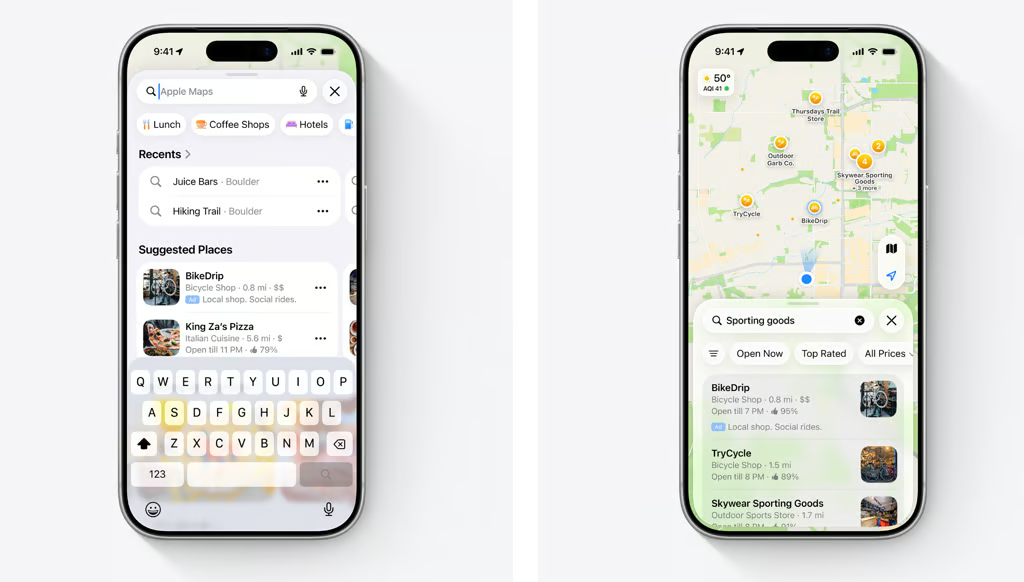
Apple has opened its Maps advertising platform to businesses in the U.S. and Canada, allowing eligible companies to pay for greater visibility when customers search for nearby businesses.
The platform launched Aug. 14 after Apple announced in March that Maps advertising would arrive in summer 2026. Businesses can create campaigns, choose monthly spending limits, upload photos and add promotional messages, according to MediaPost.
Ads can appear at the top of relevant search results or at the top of Maps’ Suggested Places section before a user searches. Apple says sponsored locations will be clearly labeled, as platforms face broader scrutiny over how paid search results are presented. Customers can call a business or get directions directly from an ad.
Apple is selling high-intent searches
The appeal for advertisers is straightforward: Maps users are already looking for somewhere to go.
Apple says more than 1 billion relevant searches for businesses occur on Maps each month and that one in two results in a user taking action. Gen Z and millennials also account for 57% of Maps users, based on a GWI Core Study cited by Apple.
Businesses can use Apple Business for an automated campaign experience, while agencies and advertisers seeking greater control can use the Apple Ads platform. Apple Ads supports campaign scheduling, keyword selection, location targeting and additional bidding options. Its API also allows advertisers to manage campaigns and retrieve reports programmatically.
Apple is also offering an introductory incentive. Eligible businesses can receive a monthly statement credit equal to 15% of their ad spending for up to one year, capped at $1,000 per month per brand. Apple says eligibility restrictions and additional terms apply.
Apple is positioning Maps ads as a privacy-focused alternative to advertising based on detailed personal profiles. The company says targeting uses contextual signals such as approximate location, search terms and the visible map area rather than precise location history, age or gender. Apple also says users’ personal data is not collected or stored for these ads or shared with advertisers.
Not every business can buy space
The new marketplace comes with significant restrictions. Apple limits Maps advertising primarily to businesses with physical locations customers can visit.
Home-service companies, including plumbers, electricians, locksmiths, HVAC businesses, roofers and pest-control companies, are barred. Other restricted categories include gambling, dating, alcohol, religious advertising, cryptocurrency ATMs and some medical services. Political advertising is also prohibited.
A new battleground for local advertising
Unlike traditional display advertising, location-based placements can reach customers close to making a purchase or visit — a market Google is also expanding through specialized local ads. That makes the placement potentially valuable for businesses competing for nearby customers, but it also means advertisers will have to prove that paying for the top spot produces enough calls, directions and visits to justify the cost.
Apple is effectively turning Maps into another commercial doorway alongside its existing advertising business. For local businesses, that creates another place to spend money — and another platform to measure carefully before committing a larger budget.
Read more: Apple’s privacy positioning extends beyond advertising, but a multibillion-dollar lawsuit involving facial analysis in Apple Photos shows how closely its on-device data practices are being scrutinized.