
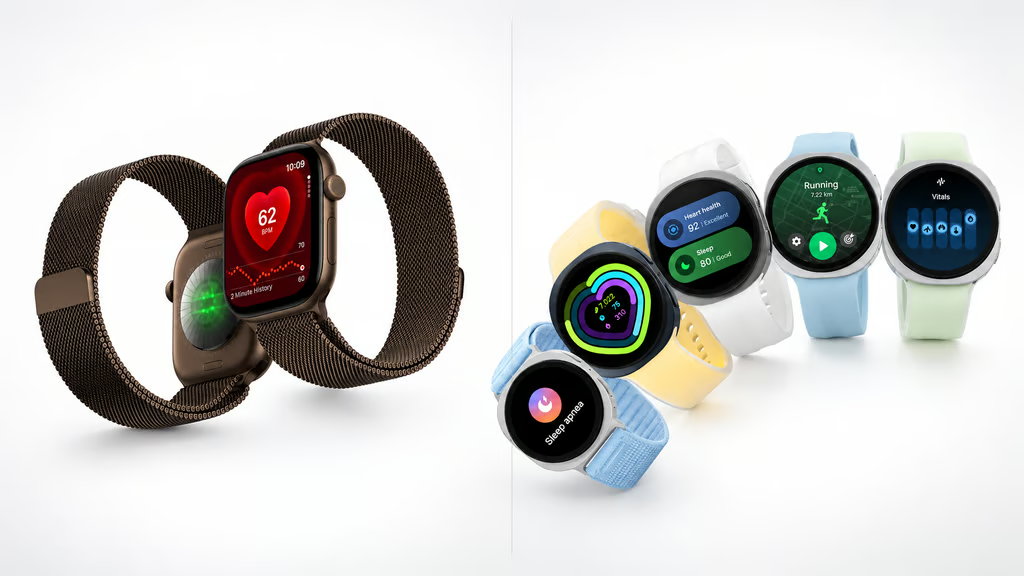


At roughly $400, Apple and Samsung’s latest mainstream smartwatches look like direct rivals. Your phone may make the choice before the specs do.
Apple Watch Series 12 went on sale Sept. 18 starting at $399, while Samsung’s Galaxy Watch9 starts at $379.99. Both focus on health, AI, and everyday wear, but Series 12 requires an iPhone and Watch9 requires Android. That ecosystem split does most of the deciding; buyers choosing between platforms still have real differences to weigh in health features, battery life, displays, and AI integration.
| Apple Watch Series 12 | Samsung Galaxy Watch9 | |
| Starting US price | $399 | $379.99 |
| Sizes | 42mm, 46mm | 40mm, 44mm |
| Processor | S11 | Snapdragon Wear Elite |
| Peak brightness | 2,000 nits | Up to 3,000 nits |
| Rated battery | Up to 24 hours | Up to 30 hours with always-on display |
| Phone support | iPhone 11 or later | Android 13 or later |
How we compared them: We checked current US pricing, compatibility, health tools, display specifications, software, and battery claims, then weighed those figures against independent battery testing. Manufacturer battery estimates use different conditions, so they were not treated as direct head-to-head results.
Compatibility decides the matchup
Apple’s Series 12 specifications require an iPhone 11 or later, including the second-generation iPhone SE or newer, running iOS 27. Galaxy Watch9 works with compatible phones running Android 13 or later and at least 1.5GB of RAM; iPhones are not supported.
Some Samsung health functions narrow that compatibility further. Samsung Health Monitor, which handles ECG, blood pressure, and sleep apnea features, requires a compatible Galaxy phone and supported country. Galaxy Watch9’s health scores also have different setup requirements, with Vitals needing at least seven nights of sleep data to establish a baseline.
Samsung builds Gemini into Watch9 with a raise-to-talk gesture. The 40mm Bluetooth model starts at $379.99 and the 44mm version at $409.99; buyers considering other Android options can compare it with the best Wear OS smartwatches for 2026.
Health and battery separate the experience
Apple’s major Series 12 upgrade is its Health Sensing System. It measures heart rate every five seconds and HRV as often as every five minutes, feeding daytime Vitals and a Readiness score based on activity, training load, vitals, and sleep. Apple says its heart-rate system delivered the highest accuracy in a company study of more than 1,000 participants; Recovery HRV and more frequent background measurements are among the broader Series 12 health-sensing changes.
Samsung takes a broader coaching approach with Vitals, Fitness Index, Daily Cardio Load, and Heart Health Score. Samsung positions Vitals as a wellness feature rather than a diagnostic tool.
Battery life still means regular charging on both. Apple rates Series 12 for up to 24 hours of normal use. Samsung rates Watch9 for up to 30 hours with the always-on display enabled, while WIRED averaged about 25 hours on the 40mm model.
Samsung has the brighter display on paper at up to 3,000 nits versus Apple’s 2,000 nits. Watch9 uses sapphire crystal, while aluminum Series 12 models use Ceramic Shield 2; Apple reserves sapphire for titanium and ceramic versions.
The $20 price gap is small enough to be almost irrelevant. In the end, the better buy is the one that fits your phone ecosystem best: Apple leans into tighter iPhone integration and newer health sensing, while Samsung gives Android users deeper Gemini integration and broader health coaching. At this price, ecosystem fit matters more than chasing a marginal spec advantage.
Read more: For longer battery life without leaving Apple’s ecosystem, the Series 12 vs. Ultra 4 comparison shows what an extra $400 adds.