


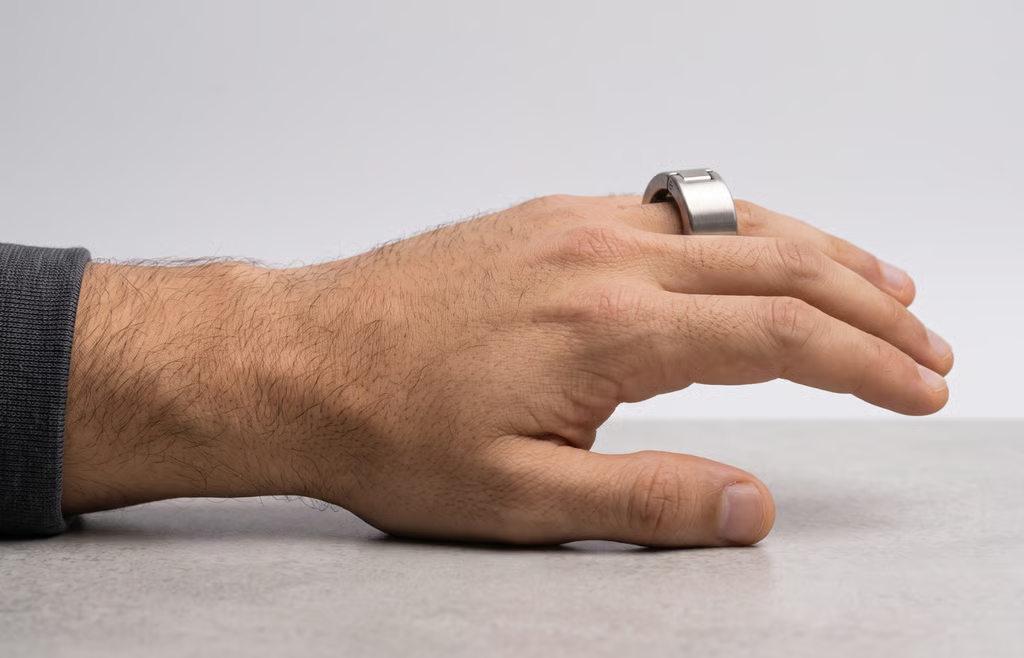
Glucose tracking may eventually be as simple as wearing a ring.
UC San Diego researchers have developed CHARM, a smart ring prototype that reads glucose from sweat collected at the finger. Early human testing compared its estimates with commercial CGMs and blood-glucose meters to see whether a finger-worn device could follow glucose changes throughout the day.
A ring could make glucose monitoring feel less intrusive and easier to fit into daily life if the technology proves reliable.
CHARM collects sweat without a workout
CHARM does not need you to work up a sweat. According to UC San Diego, a soft hydrogel inside the ring passively draws tiny amounts of fluid from the skin. A small channel carries the sweat across sensors that detect glucose.
Glucose in sweat is not the same as a blood-glucose reading. Researchers use personalized calibration to estimate corresponding blood-glucose levels, then CHARM sends the data wirelessly to a phone. People familiar with wearables for blood sugar tracking will recognize the app-connected setup.
Battery life reaches about 12 hours in the current prototype. Sensing hardware and wireless electronics fit inside the ring itself.
Early tests tracked commercial monitors closely
Researchers tested CHARM with healthy participants and people with type 1 diabetes, comparing its estimates with commercial CGMs and blood-glucose meters. Results published in Nature Communications showed that the ring captured the same meal-related rises and falls seen in the reference readings.
Some sweat-based readings lagged blood measurements by roughly 15 to 20 minutes in individual tests. Researchers also reported that personalized calibration settings remained relatively stable for about two months.
More health data fits into the same ring
CHARM can monitor ketones alongside glucose, with researchers also checking those readings against commercial blood measurements.
Sensors can be configured for lactate and uric acid. Vitamin C and alcohol are supported too, with up to four biomarkers monitored at once.
Consumer products currently take a different route. Oura Ring, for example, gets glucose data from Dexcom Stelo. Smartwatches used for glucose tracking generally display readings supplied by a compatible CGM. CHARM puts the sensing technology on the finger.
Everyday glucose tracking still has hurdles
A ring-based glucose sensor could appeal to someone tired of juggling multiple devices. People already getting blood sugar alerts on their smartwatch could benefit most if a ring reduces the gear and upkeep involved in daily monitoring.
If you are watching this category, focus on the basics before getting excited. Accuracy during fast glucose changes and calibration frequency come first. All-day battery life and water resistance will help determine whether a ring can stay on through normal routines.
Researchers still have work to do in those areas. Broader clinical testing and better water resistance remain priorities, and the prototype’s current battery life falls short of the multi-day wear people have come to expect from smart rings.
CHARM remains a research prototype and is not commercially available. FDA guidance says no smartwatch or smart ring has been authorized, cleared or approved to independently measure or estimate blood glucose without piercing the skin. Anyone relying on glucose readings for treatment decisions should continue using an FDA-authorized glucose monitor.
Read our breakdown of five smartwatch health alerts worth knowing across Apple, Samsung, Google, Garmin, and Huawei devices.