


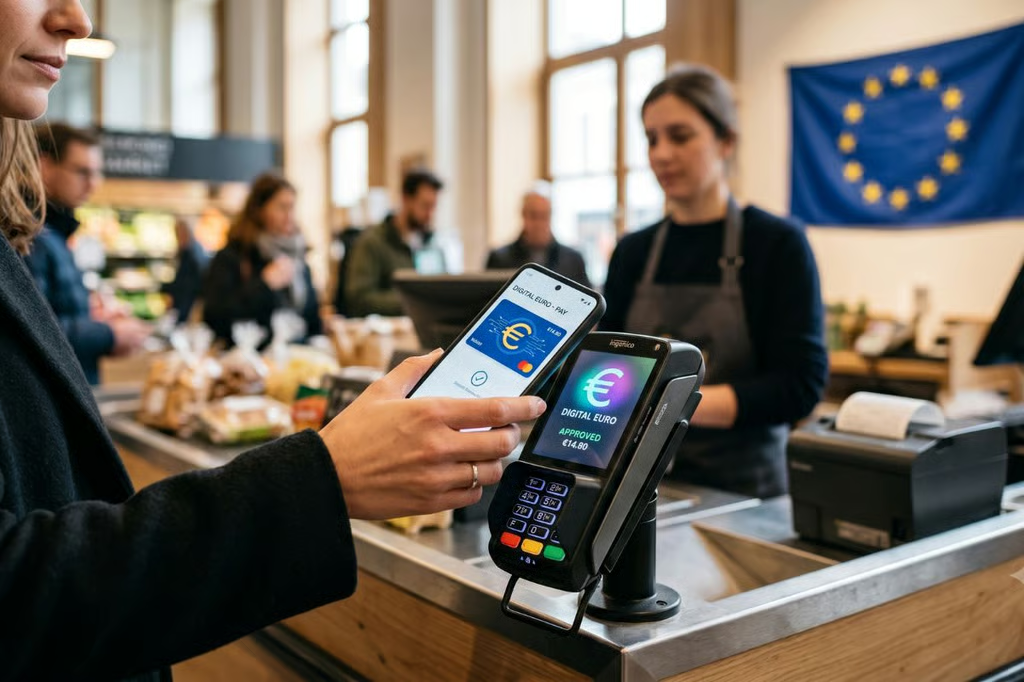
Europe wants its own way to pay before every tap, swipe, and online checkout runs through someone else’s system.
EU lawmakers are moving closer to rules for a digital euro, a public virtual currency designed to give the bloc a homegrown alternative to US-linked payment giants including Visa, Mastercard, Apple Pay, and Google Pay. The proposal reflects a growing concern in Brussels that Europe’s daily payment habits have become too dependent on systems built and controlled elsewhere.
Behind the proposal is a worry that Europe’s payment habits have become too easy to outsource.
Why Europe wants its own payment rails
Europe’s concern starts with scale. According to the European Central Bank (ECB), nearly two-thirds of card payments in the euro area are handled by non-European companies, mostly Visa and Mastercard.
Much of the bloc’s daily payment activity now flows through systems based outside Europe. In 13 of the 21 eurozone countries, there is no national card scheme for everyday purchases in shops or online stores.
EU officials argue that dependence carries political weight. Centrist EU lawmaker Gilles Boyer said payment systems are “not neutral” but “instruments of power,” as he urged support for a sovereign, pan-European payment option.
Recent tensions with Washington have made that argument easier to sell in Brussels. Officials have pointed to US sanctions against International Criminal Court judges in 2025, including French judge Nicolas Guillou, who said he lost access to his Visa card.
A virtual wallet for everyday payments
The digital euro would not sit inside a regular bank account. Users would keep it in a separate virtual wallet, then move money into it from an account or cash deposit.
Once funded, it could be used in shops, online, or for direct payments between people. AFP reported that banks and public institutions, such as post offices, could help users create accounts, keeping access from depending solely on commercial banking apps.
ECB adviser Alessandro Giovannini told AFP the project is meant to sit alongside the tools people already use.
“It wouldn’t replace anything. Cash would still be available, and people could use existing private payment methods,” Giovannini said.
The rollout remains years away. The ECB hopes to make it available in 2029 if EU negotiators approve the rules by the end of this year. A pilot program could begin in mid-2027.
What's hot at TechRepublic
- Blackpoint Cyber vs. Arctic Wolf: Which MDR Solution is Right for You?
- Why AWS Sellers Choose Deepgram Over Other Voice AI Tools
- SS&C Intralinks DealCentre AI vs. Datasite: Which platform is built for the future of dealmaking?
- SS&C Intralinks FundCentre AI vs. Juniper Square: Which platform better supports modern private markets fund managers?
- Verito vs. Rightworks: Which IT Provider Is Best for Your Firm?
More choice for users, more pressure on banks
A digital euro would add a public option beside private payment tools at the counter and online.
Banks see a costlier version of the same change. They would have to update their systems, support the new wallet, and manage the risk of customers moving money out of regular accounts.
The price tag is already disputed, with the European Banking Federation estimating a banking-sector cost of €18 billion and the ECB putting it far lower.
Lenders also fear weaker demand for their own online services and more competition for Wero, the pan-European payment system backed by European banks.
The project may look like another wallet, but the fight around it is about who controls the systems behind Europe’s most routine transactions.
Alibaba Cloud is expanding in France as European companies seek greater control over where AI workloads run.