
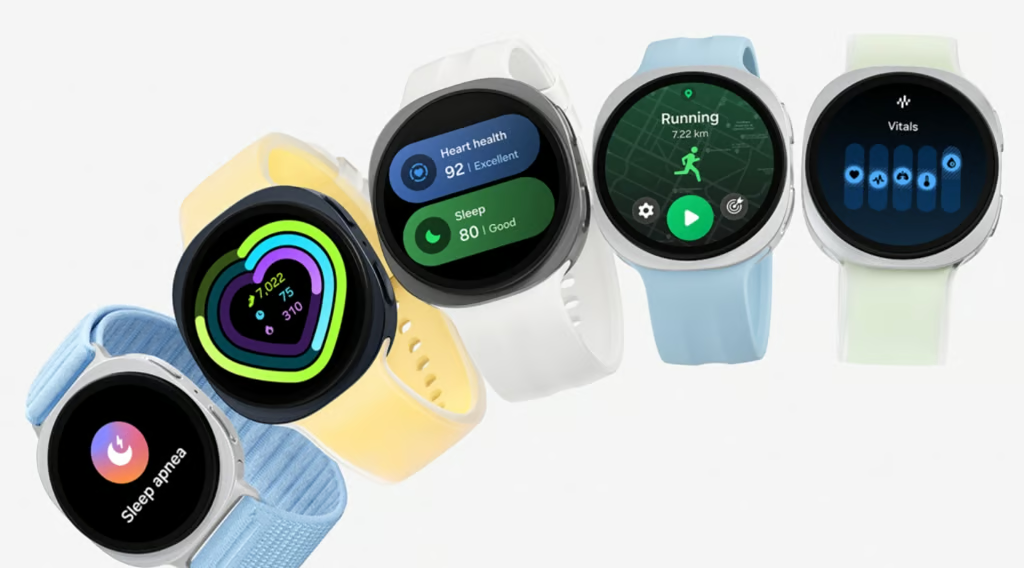


Samsung’s Galaxy Watch9 can turn sleep, activity, and cardiovascular data into personalized health scores, but those results depend on more than simply putting the watch on. Vitals, Daily Cardio Load, Fitness Index, and Heart Health Score each rely on different data, setup steps, or minimum tracking periods before they become useful.
Samsung unveiled the Galaxy Watch9 on July 22, 2026, with general availability beginning August 7 in select markets. Now that the watch is reaching buyers, the practical question is not which health features Samsung announced, but what users must do before those features work as intended and which functions depend on their phone, software, or region.
The scores need different data before they become useful
Vitals tracks five overnight signals: heart rate, heart-rate variability, blood oxygen, respiratory rate, and skin temperature. It compares those measurements with the wearer’s baseline, which requires at least seven nights of sleep data.
Samsung also requires Android 13 or later, Samsung Health 7.0 or later, and a Samsung account for Vitals. The company began previewing these newer Samsung Health features in June, before the Watch9 itself was announced.
Daily Cardio Load has a different learning period. It analyzes workouts and activities reaching heart-rate Zone 3 or higher and needs at least seven days of activity records. Samsung recommends 28 days of continuous wear for optimal accuracy and warns that stress, tension, or anxiety can also raise heart rate and affect the score.
The feature works on Galaxy Watch7 or newer with Android 11 or later and Samsung Health 7.0 or later, so it is part of a broader software expansion rather than a Watch9-only capability. The Watch9 and Watch Ultra2 launch instead puts those health tools alongside Samsung’s latest wearable hardware.
Fitness Index requires at least one bioelectrical impedance analysis measurement, one VO2Max measurement, two days of activity records, and step-count data before it can generate a score.
Heart Health Score takes a different approach, drawing on factors including average sleep, moderate-to-vigorous activity, BMI, and vascular load. These measurements can reveal trends, but they should not be treated as direct medical diagnoses.
Phone and regional limits can change the experience
Galaxy Watch9 can pair with compatible Android phones, but Samsung Health Monitor is limited to compatible Samsung phones and watches. In the U.S., it supports ECG, sleep-apnea monitoring, and blood-pressure tracking on supported devices.
Blood-pressure monitoring also requires calibration with a separate upper-arm cuff and recalibration every 28 days. Samsung says the function is intended for wellness rather than diagnosis or treatment.
Those compatibility differences can matter in mixed Android fleets. Organizations considering Galaxy Watches for employee wellness programs should verify paired-phone requirements, regional support, and onboarding steps before standardizing deployment.
The bigger change with Watch9 is not simply that Samsung added more health scores. It is that more of the watch’s value now depends on sustained data collection, correct setup, and understanding what each metric can — and cannot — establish.
Read more: For more on how Samsung is expanding wearable health tracking without turning the watch into a clinical device, see how Galaxy Watch supports diabetes management without directly measuring glucose.