


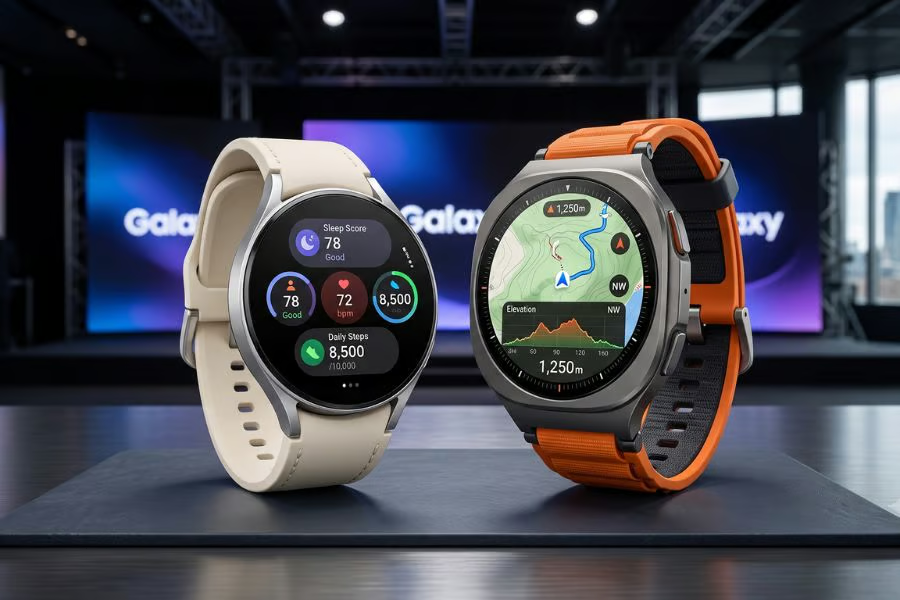
Samsung’s latest smartwatches raise a simple question: what should a watch do after recording health data?
At its July 22 Galaxy Unpacked livestream in London, the tech company introduced the Galaxy Watch9 and Galaxy Watch Ultra2. Both watches add new health guidance and Qualcomm’s Snapdragon Wear Elite platform.
Differences in design, battery life, and specialized sports support separate the two models. Android users now have two distinct upgrade paths.
Galaxy Watch9 favors a lighter fit
Galaxy Watch9 comes in 40mm and 44mm sizes with aluminum cases designed to sit closer to the wrist. Samsung is emphasizing comfort to support regular activity and overnight tracking.
Key hardware includes:
- Lighter construction: Weight ranges from 31.5 grams to 34 grams, depending on size.
- Brighter display: Both versions reach up to 3,000 nits.
- Two battery sizes: Samsung uses a 390mAh battery in the 40mm model and 445mAh in the 44mm version.
- Everyday protection: IP68, 5 ATM water resistance, and MIL-STD-810H certification cover routine exercise and daily exposure.
Soft silicone, sports, and fabric bands provide options for workouts, sleep, or all-day use. The watches also include 32 GB of storage.
Galaxy Watch Ultra2 adds trail and dive hardware
Galaxy Watch Ultra2 uses a 47mm titanium body that is 12% thinner than its predecessor, despite carrying a larger battery.
Major upgrades include:
- Longer endurance: An 800mAh battery delivers up to 60 hours of claimed use.
- Brighter screen: Display brightness reaches 5,000 nits for outdoor visibility.
- Trail support: Route previews show terrain and elevation, while hydration prompts use estimated sweat loss.
- Dive tracking: EN13319 certification supports depth, water temperature and dive-time readings.
- Stronger protection: IP69K, 10 ATM, and MIL-STD-810H ratings prepare the watch for harsher conditions.
Mares-developed diving software will add decompression guidance and nitrogen monitoring later in 2026. Access to premium functions will require a separate subscription.
Shared software turns health data into guidance
Both watches run Wear OS 7 with One UI 9 Watch. Samsung Health serves as the hub for their health data, workout content, and planned Strava route integration.
Shared health tools include:
- Vitals: Builds an overnight baseline and flags significant changes.
- Heart Health Score: Summarizes cardiovascular wellness and provides personalized recommendations.
- Daily Cardio Load and Fitness Index: Assess training volume, recovery, and overall fitness.
- Sleep apnea monitoring: Adds more information about breathing disruptions through an updated FDA-cleared capability.
TM Roh, head of Samsung’s Device eXperience division, said that Samsung wants to make the “shift from reactive treatment to proactive care” easier through continuous tracking.
Galaxy Watch9 starts at $379. Galaxy Watch Ultra2 starts at $699. Preorders opened July 22 in select markets, and general availability begins August 7.
What's hot at TechRepublic
- Blackpoint Cyber vs. Arctic Wolf: Which MDR Solution is Right for You?
- Why AWS Sellers Choose Deepgram Over Other Voice AI Tools
- SS&C Intralinks DealCentre AI vs. Datasite: Which platform is built for the future of dealmaking?
- SS&C Intralinks FundCentre AI vs. Juniper Square: Which platform better supports modern private markets fund managers?
- Verito vs. Rightworks: Which IT Provider Is Best for Your Firm?
Buyers should pay for functions they will use
Android users mainly interested in sleep, routine workouts, and general health trends should begin with the Watch9. It provides the same core Samsung Health features as the Ultra2, and its lighter body may be easier to wear overnight.
Choose the Ultra2 if you regularly run trails, dive, or spend long periods away from a charger. Casual gym users are less likely to benefit from paying $320 more for features they may rarely use.
Recent Galaxy Watch owners should compare the new models with limits they already encounter. Poor outdoor visibility, insufficient battery endurance, or missing sport support can justify an upgrade; new health summaries alone may not.
Health alerts can help users notice changes and prepare better questions for a doctor. No smartwatch score should be treated as a diagnosis or a replacement for medical testing.
Find out how Samsung Galaxy Watch uses AGEs Index to offer blood sugar-related health insight without a CGM.