


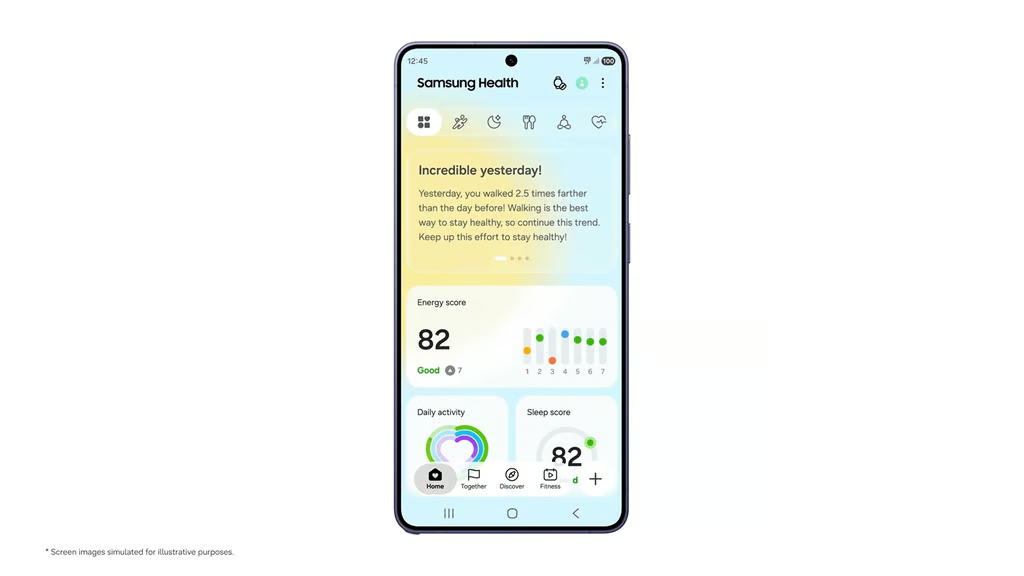
Samsung’s latest Health app update gives Galaxy users a clearer wellness dashboard, but it leaves one practical question open: which new features work now, and which require the next watch?
Samsung began rolling out the update on June 8, 2026, after previewing several AI-powered health tools for its upcoming Galaxy Watch. The company has not officially used the “Galaxy Watch 9” name in its announcement, so that label should be treated as reported shorthand until Samsung confirms the hardware.
What works now in Samsung Health
The most immediate change is the redesigned Samsung Health app. The app now organizes health data around five areas: Sleep, Activity, Nutrition, Mindfulness, and Vitals. Daily wellness tips and AI-powered Energy Score are also moving into easier reach on the home screen.
For current users, the confirmed update is largely app-side. It does not mean every newly announced Galaxy Watch feature is available on existing hardware.
The update also expands nutrition and lifestyle tracking. The Antioxidant Index now includes daily history and trend charts, while the AGEs Index can run automatically during sleep to show longer-term lifestyle patterns. That fits Samsung’s broader Galaxy Watch approach: useful pattern tracking, but not a replacement for medical tools such as continuous glucose monitors, finger-stick tests, or clinician-directed care.
Hearing Health also monitors ambient noise through Galaxy Watch and provides hearing-protection insights across the Galaxy ecosystem. Samsung has not published a device-by-device list showing which current watches support each part of the feature.
Samsung says the new health features require an Android phone running Android 10 or later, Samsung Health v7.0 or later, and a Samsung account; some features may also require user activity and data accumulation over time. The company also says feature availability, supported devices, and rollout timing may vary by market, model, and other factors.
What still depends on the next Galaxy Watch
The most important open question involves Samsung’s new watch-based metrics: Vitals, Heart Health Score, Daily Cardio Load, and Fitness Index.
Vitals analyzes five overnight signals — heart rate, heart-rate variability, respiratory rate, skin temperature, and blood oxygen — against a user’s resting baseline. Heart Health Score builds on Vascular Load by combining sleep, stress, activity, and body composition data into a daily heart-wellness metric. Daily Cardio Load measures accumulated cardiovascular strain, while Fitness Index uses heart rate, VO₂ max, and daily steps to compare a user’s fitness with peer groups.
Samsung says the newly announced health features will first be available on the upcoming Galaxy Watch. That wording leaves room for later software support on older models, but it does not confirm it.
For IT buyers, health-tech teams, and Galaxy Watch owners, the update mixes an app redesign with watch-based metrics that may depend on newer sensors or future software eligibility. Samsung is also testing Galaxy Watch data for more structured health use cases, including GLP-1 muscle loss monitoring.
Samsung describes the features as wellness tools, not tools for diagnosis, treatment, or medical decision-making. The same boundary applies across wearables: Apple Watch diabetes management features still depend on approved medical devices and clinician guidance for care decisions.
Until Samsung publishes device-level compatibility, the Samsung Health app redesign is rolling out now, but the most important new watch-based metrics should be treated as previewed features for the next Galaxy Watch, not confirmed upgrades for every current model.
Read more: Samsung’s Galaxy Watch AC sleep feature shows how wearable health data is moving deeper into the smart-home stack, with the same dependency on compatible Samsung hardware.