


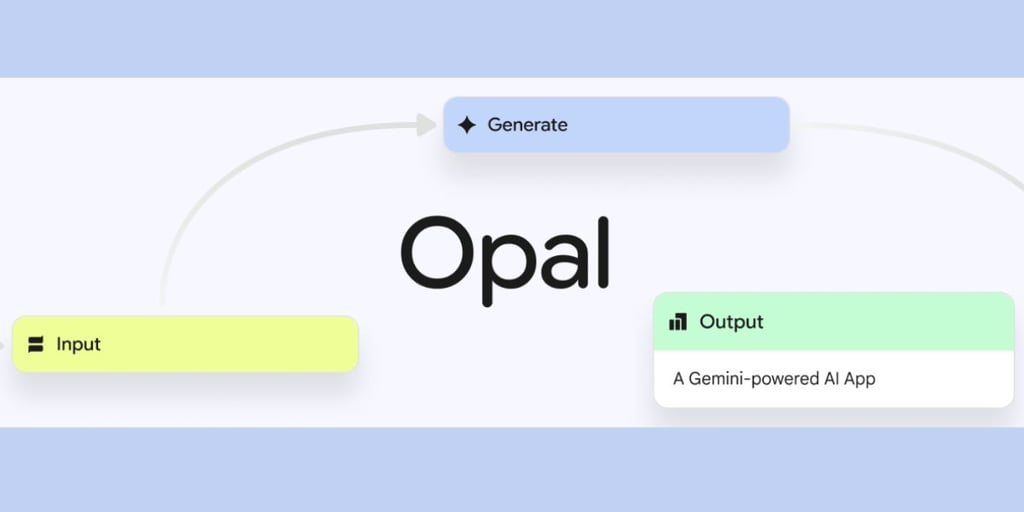
Google is taking its no-code AI builder global. The company is expanding Opal, its tool for creating AI-powered mini-apps through natural language, to 15 new countries.
In a Google Labs blog post, senior product manager Megan Li said the expansion follows a surge of “sophisticated and highly creative” apps built by early US users, noting that new updates aim to make Opal faster and more reliable as it reaches more creators.
From early US success to the global stage
Opal will begin rolling out to 15 new countries, including Canada, India, Japan, South Korea, Vietnam, Indonesia, Brazil, Singapore, Colombia, El Salvador, Costa Rica, Panama, Honduras, Argentina, and Pakistan. Google said the expansion aims to put the tool “into the hands of more creators globally” as interest in no-code AI development continues to grow.
The wider rollout builds on early momentum in the US, where Opal quickly drew interest from creators experimenting with productivity, marketing, and creative tools built entirely through natural language. According to Li, that enthusiasm reinforced its vision of making AI app creation accessible to anyone, anywhere, with no coding skills required.
Opal was first introduced as an experimental project under Google Labs in July 2025.
Less time debugging and more time building
Opal is designed to simplify how people turn ideas into working AI tools. The platform combines a visual workflow builder with built-in AI connections, letting users prototype, test, and share mini-apps directly through their Google accounts. As part of Google Labs, it serves as a proving ground for how intuitive AI creation can become.
As the tool expands, Google is rolling out key upgrades designed to enhance performance and usability. Opal now runs faster, with significant under-the-hood improvements that shorten startup times and support parallel workflow runs, allowing multiple steps to execute simultaneously for quicker results.
Google also added advanced debugging tools to streamline troubleshooting. Errors are now shown in real time and pinpointed to specific steps in a visual editor, an update the company says will help creators spend “less time debugging and more time building.”
More Google coverage
- New Google Search AI Mode is ‘Total Reimagining,’ Says CEO Sundar Pichai
- In Major Ruling, Judge Finds Google ‘Willfully Acquired and Maintained Monopoly Power’ Over Digital Ad Market
- Google’s Big Bet on Nuclear Energy: ‘The Race to Power AI-Driven Data Centers is Accelerating’
- Computer History Museum Releases Original AlexNet Code: Why It Matters
AI creation tools are entering a more intuitive era
Google’s expansion of Opal comes amid a broader move toward tools that simplify how people build with AI. The rise of “vibe coding,” a rapidly growing approach centered on creating apps through intent or description rather than code, is transforming how both developers and everyday users build software.
Apple and Anthropic are reportedly also working on a vibe-coding tool, with a public release still to come, showing how quickly this new method is gaining momentum. Opal is Google’s latest step in that direction, extending its effort to make AI creation more intuitive and accessible.
While Opal focuses on creativity, Google is applying the same intelligence to protecting work and storage across its platforms.