


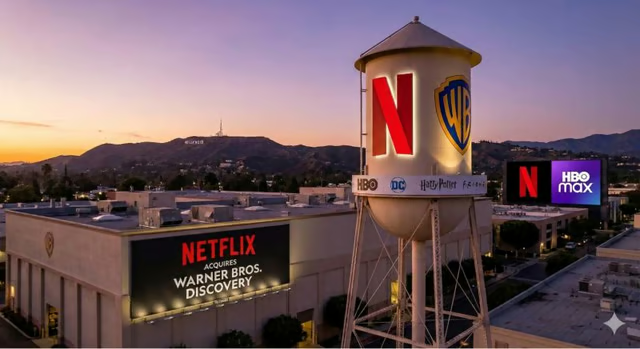
Well, that escalated quickly: Netflix just bought itself a Hollywood empire. And the media landscape may never look the same.
On Dec. 5, the streaming giant stunned the entertainment world with a roughly $72 billion deal to acquire Warner Bros. Discovery (WBD)’s film and television studios, streaming assets, and much of its content empire. This includes HBO, HBO Max, DC Studios, and one of the largest film and TV libraries in the world.
“Our mission has always been to entertain the world,” Ted Sarandos, co-CEO of Netflix, said in a press release. “By combining Warner Bros.’ incredible library of shows and movies — from timeless classics like Casablanca and Citizen Kane to modern favorites like Harry Potter and Friends — with our culture-defining titles like Stranger Things, KPop Demon Hunters and Squid Game, we’ll be able to do that even better.”
He added: “Together, we can give audiences more of what they love and help define the next century of storytelling.”
A media empire under one roof
Under the agreement, Netflix will pay roughly $72 billion in equity value — about $82.7 billion including debt — for assets that include HBO Max, Warner Bros. Studios, DC Studios/DC Entertainment, and the sprawling Warner film and television libraries.
Earlier this week, the company submitted a mostly cash-binding bid that outpaced rivals such as Paramount Skydance and Comcast, securing its place as a frontrunner.
Executives have already hinted at how the integration might work: HBO Max will remain a standalone service for now, theatrical distribution through Warner Bros. will continue — even as Netflix starts weaving Warner’s massive catalog into its own offering.
What's hot at TechRepublic
- Blackpoint Cyber vs. Arctic Wolf: Which MDR Solution is Right for You?
- Why AWS Sellers Choose Deepgram Over Other Voice AI Tools
- SS&C Intralinks DealCentre AI vs. Datasite: Which platform is built for the future of dealmaking?
- SS&C Intralinks FundCentre AI vs. Juniper Square: Which platform better supports modern private markets fund managers?
- Verito vs. Rightworks: Which IT Provider Is Best for Your Firm?
What it means for viewers, creators… and Hollywood’s future
For viewers, the immediate upside is enormous: Netflix would become a one-stop shop for decades of content — think prestige TV from HBO, blockbuster franchises from Warner Bros., and superhero epics from DC, all alongside Netflix originals. The sheer volume and range of entertainment under one roof could make Netflix an even more dominant force.
For creators and the broader industry. However, this could be a shock to the system. With so much content controlled by a single gatekeeper, smaller studios and independent voices could struggle to find space in a future increasingly shaped by consolidation. And with theatrical releases now coming from a streaming-first company, traditional cinema distribution may face fresh challenges.
The company says it sees the acquisition as a way to define the next century of storytelling.
But with regulatory scrutiny already looming, the final shape of this mega-merger — and its impact on content, creators, and culture — remains uncertain.
For more on how streaming giants are reshaping the media world, check out the recent Apple TV rebrand story — and what it means for the streaming wars.