


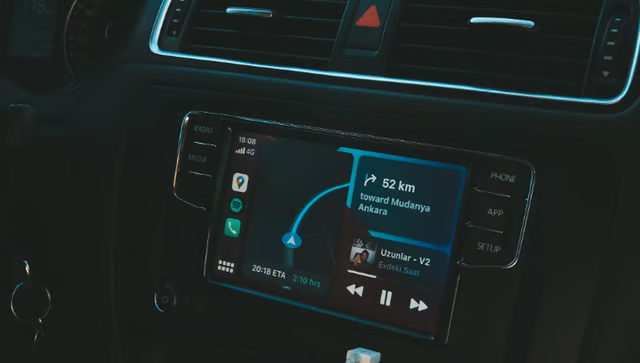
Android 10 users may soon need a newer phone — or at least a newer operating system — to keep using Android Auto.
Some users are beginning to see warnings that Android Auto will soon stop supporting their devices, pointing to a coming change in the service’s minimum operating-system requirement. According to AndroidAuthority, Google has not formally announced the change.
If the warning reflects an upcoming policy shift, Android 11 could become the minimum version for both wired and wireless Android Auto connections.
Android Auto may drop Android 10 support
Android Auto has already become obsolete on several older versions of Android, with the wired version still supporting Android 9 while the wireless version requires Android 11.
Google has yet to officially announce the change, which leaves some uncertainty around what users are actually seeing. The notification could be a bug or an early warning of an upcoming change.
If Google does go ahead with the change, users whose phones cannot upgrade beyond Android 10 could lose Android Auto access. Since Android Auto is widely used for navigation, calls, messages, and media while driving, owners of affected phones may have few options.
The compatibility challenge behind the possible Android Auto cutoff
A phone can remain perfectly usable even after its operating system stops receiving major upgrades. The problem is that individual apps and connected services can gradually raise their minimum requirements.
Android Auto’s possible Android 10 cutoff illustrates that problem. A device may still handle calls, messages and everyday apps, but losing one important service can eventually make keeping the phone less practical.
That is especially relevant for services tied to other hardware, such as cars, wearables or workplace systems, where compatibility depends on both sides continuing to support the same software.
What's hot at TechRepublic
- Blackpoint Cyber vs. Arctic Wolf: Which MDR Solution is Right for You?
- Why AWS Sellers Choose Deepgram Over Other Voice AI Tools
- SS&C Intralinks DealCentre AI vs. Datasite: Which platform is built for the future of dealmaking?
- SS&C Intralinks FundCentre AI vs. Juniper Square: Which platform better supports modern private markets fund managers?
- Verito vs. Rightworks: Which IT Provider Is Best for Your Firm?
Android 10 users should check their upgrade options now
Android 10 users do not need to replace their phones based on the warning alone. Google has not yet confirmed a new minimum requirement for Android Auto.
Users should first check whether their phone can upgrade to Android 11 or later. A device currently running Android 10 is not necessarily stuck there if a newer software update remains available from its manufacturer.
Those whose phones cannot move beyond Android 10 should watch for an official Google announcement and consider what alternatives they have if Android Auto support ends.
The broader lesson is that operating-system support increasingly determines how long connected services remain usable. A phone can still work well while gradually losing compatibility with the apps and services its owner relies on.
For now, Android 10 users should wait for confirmation from Google, but the warning is a useful reminder that an aging operating system can eventually become a compatibility problem even when the phone itself still works.
Other news: Google is limiting free Gemini accounts to its Flash-Lite model starting Oct. 9, while paid subscribers retain access to more capable models and additional reasoning options.