


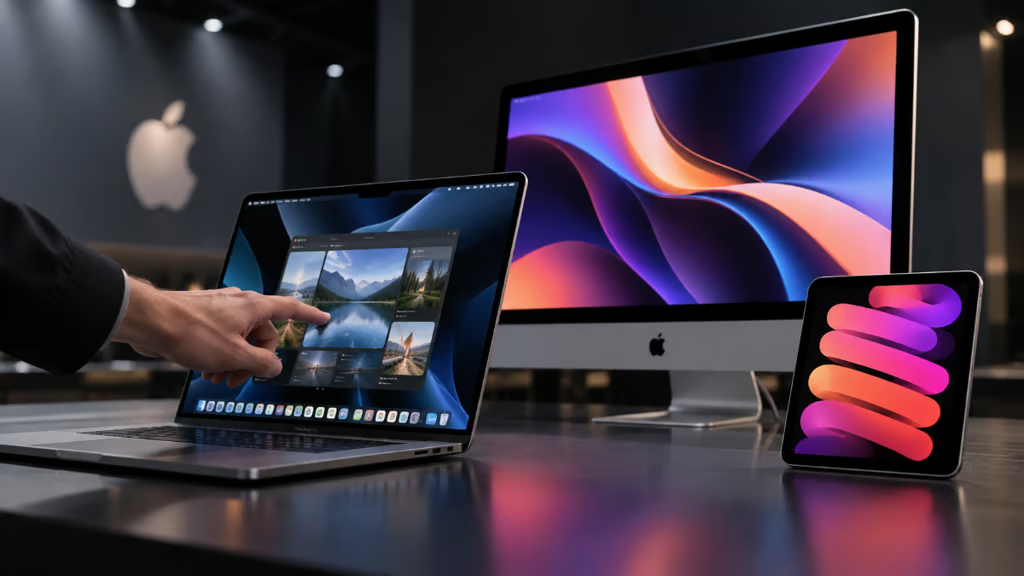
Apple has kept touchscreens off its laptops for years. October could finally change that.
Bloomberg’s Mark Gurman reported Oct. 15 that Apple had invited selected journalists to a product experience in Los Angeles on Oct. 28. Touchscreen MacBooks, M6-powered computers, and an updated iPad mini are expected, although the reported gathering does not establish when Apple will announce them.
For professionals and IT teams planning hardware purchases, the reported lineup raises a practical question: whether to wait for redesigned devices or choose a more conventional upgrade. Pricing, application support, and shipping dates will help determine which option makes sense.
OLED displays and new controls for the MacBook Pro
Redesigned 14-inch and 16-inch MacBook Pro models are expected to feature OLED screens, offering deeper blacks and better contrast than current displays. According to Bloomberg’s report, both laptops would also have lighter designs and Dynamic Island, the iPhone interface that displays notifications and ongoing activities, replacing the familiar camera notch.
Direct touch input would allow users to tap menus, scroll through documents, or zoom into images without reaching for the trackpad. Earlier touch-friendly macOS plans suggest interface elements could adjust to finger input, including controls that expand when selected. Traditional navigation would remain available alongside these gestures.
M6 Macs and OLED iPad mini complete the expected lineup
Separate processor upgrades are anticipated for the standard 14-inch MacBook Pro and iMac, with both retaining their existing designs. Following the introduction of the M6 Mac mini, these additions would bring the chip to more computers without a major exterior redesign.
A refreshed iPad mini could receive its first OLED panel, replacing the LCD screen used in the current model. Bloomberg also reports that the front-facing camera would move to the landscape edge for video calls and that Apple plans a revised speaker system.
Apple has not confirmed the reported lineup or disclosed pricing and release dates.
Buyers should review their upgrade priorities
Prospective buyers could face a choice between significant design changes and more conventional performance improvements. Anyone planning a purchase should consider how the new hardware would address limitations in their current equipment.
- Creative professionals should consider how touch fits into their workflow. Photographers and designers accustomed to keyboard shortcuts may find some screen interactions convenient, but repeatedly reaching across a laptop keyboard could interrupt precise editing. Anyone relying on a drawing tablet should wait for confirmed stylus support and application compatibility before treating a touchscreen MacBook as a replacement.
- IT managers should evaluate deployment needs before ordering new machines. Identify which employees need additional performance and which have a clear use for touch input. Before a fleet purchase, pilot critical applications, docks, external displays, and management tools on the proposed hardware. Review macOS 27 compatibility separately from the remaining Rosetta support window: operating-system support and the ability to run Intel-based applications are different requirements. Ask software vendors about native Apple silicon support before budgeting for replacements.
- Existing owners should identify the limitations of their current devices. Mac users experiencing slowdowns can examine memory pressure in Activity Monitor to determine whether demanding applications are exceeding available resources. For iPad mini owners, a display upgrade may be more compelling for watching videos or reviewing detailed images than for routine browsing and reading.
For buyers with flexible deadlines, the reported late-October launch window is a reason to compare confirmed specifications before committing. Teams replacing failing equipment should weigh the cost of waiting against their immediate needs. Touch input alone should not determine an upgrade; application compatibility, memory, connectivity, and total purchase cost should guide the decision.
More on Apple devices: Apple’s first foldable carries a steep repair bill, with an iPhone Duo inner-screen fix priced close to $1,000.