
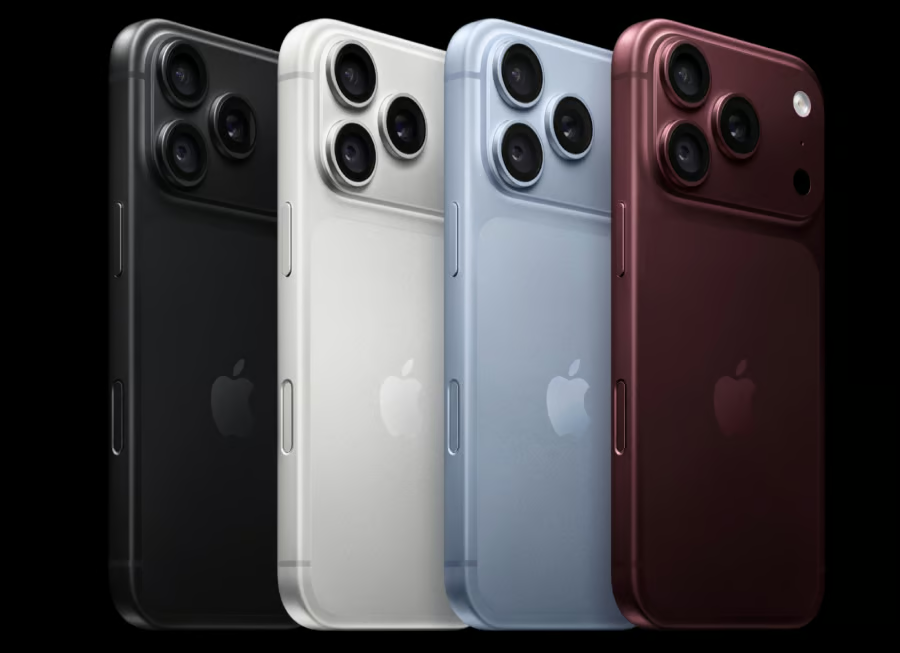


Apple has introduced the iPhone 18 Pro and iPhone 18 Pro Max, betting that greater camera control, longer battery life and more on-device AI will persuade buyers to pay at least $1,199 for its latest premium phones.
The models debuted Wednesday at Apple’s “Surprise and shine” event, the company’s first major hardware launch under newly appointed CEO John Ternus, who succeeded Tim Cook on Sept. 1.
For prospective buyers, the main question is whether the variable-aperture camera, A20 Pro chip and Siri AI offer enough practical improvement to justify upgrading from a recent Pro model.
Variable aperture arrives on iPhone
The headline feature of the new lineup is a reimagined 48-megapixel Fusion Main camera equipped with a variable aperture system. The system uses six laser-cut blades and a new rotor mechanism to widen or narrow the aperture, adjusting depth of field and light intake.
“With iPhone 18 Pro, we’ve made advancements to the areas our users care about most: camera, performance, battery, and intelligence. And we didn’t just make incremental improvements in these areas — we took huge leaps forward to create the best Pro iPhone we’ve ever made,” said Greg Joswiak, Apple’s senior vice president of Worldwide Marketing.
Creative users gain dedicated “Pro controls” inside the native Camera app, unlocking manual adjustments for shutter speed, white balance, four aperture settings, and a real-time histogram. For video, users can capture 4K time-lapses in Dolby Vision HDR and apply Cinematic effects to regular footage up to 60 frames per second after capture.
Apple takes aim at fake images
Apple is also tackling a growing problem around image authenticity. The new, opt-in Apple Reference Image feature captures signed sensor data that Apple says Private Cloud Compute can develop into an unalterable reference version of a photo. Private Cloud Compute processes that data, while the resulting reference image can be viewed alongside the regular photo in the Photos app.
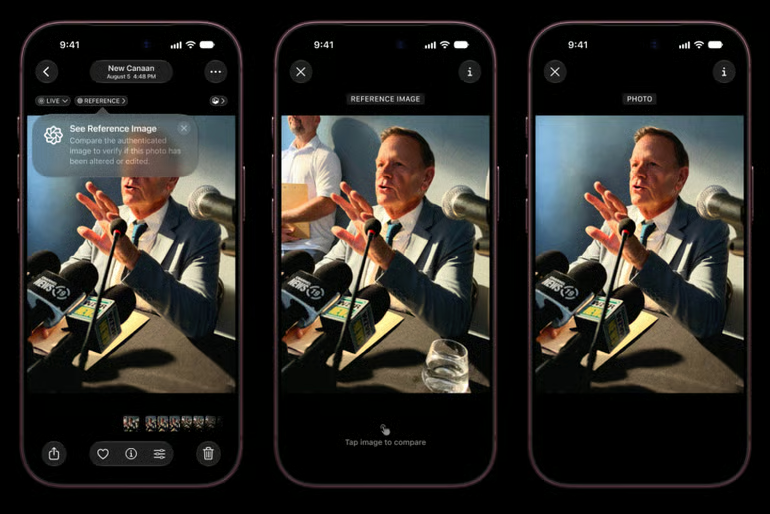
Apple says the system is designed to help photographers, journalists and ordinary users determine whether an image has been altered. The company also points to image metadata and planned SynthID support as additional tools for identifying AI-generated or edited content. Apple says SynthID will arrive in a software update later this year and will apply to most edited images, depending on the edits performed.
That could become one of the more interesting long-term additions to the iPhone, particularly as synthetic images become harder to distinguish from photographs.
A20 Pro pushes performance and AI
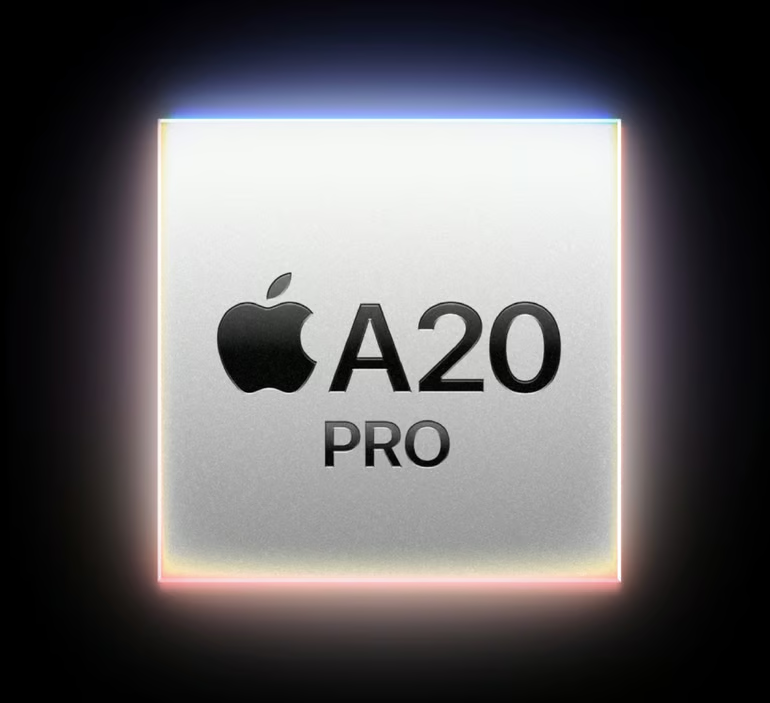
Under the hood, the phones run on Apple’s A20 Pro, built using a 2-nanometer process. The chip has a six-core CPU, seven-core GPU and a dual 16-core Neural Engine. Apple says the GPU is up to 40% faster than the A19 Pro, while total neural processing capacity doubles compared with the previous generation.
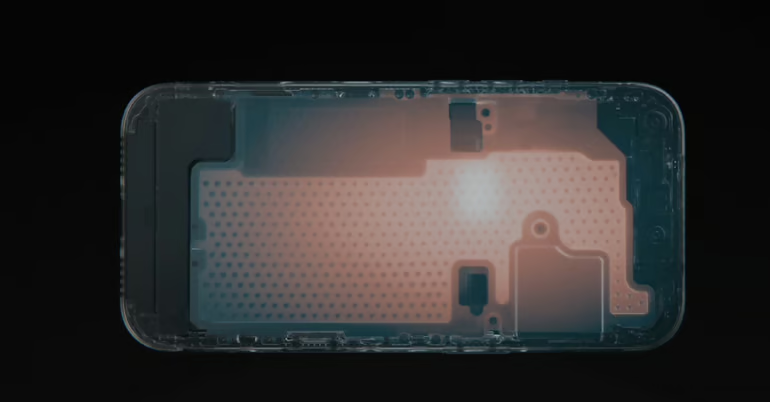
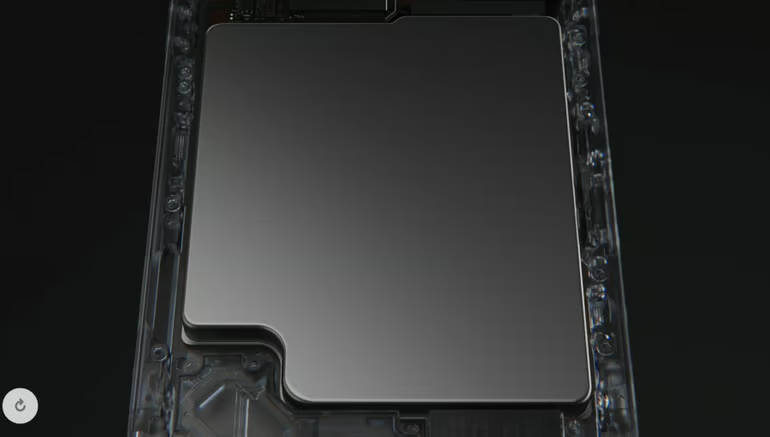
A redesigned vapor chamber with three times the surface area of the system in the iPhone 17 Pro is intended to keep temperatures under control during demanding workloads. That matters beyond gaming. Apple is increasingly positioning the iPhone as an AI device, and the A20 Pro is designed to handle more processing locally.
Must-read Apple coverage
- Nearly 7 in 10 iPhone Owners Plan iPhone 17 Upgrade
- Apple Prepares AI-Powered Siri Upgrade With Google Search Integration
- Apple’s Xcode 26 Beta Now Supports GPT-5 and Claude
- Apple’s Vision Pro Adoption Stalled As Content Released ‘Drip by Drip’
Siri AI gets another shot
The iPhone 18 Pro also arrives with iOS 27 and Siri AI, Apple’s revamped AI-powered assistant.
Siri AI can use personal context from messages, emails and photos, understand what is on the screen and take related actions. A Siri mode in the Camera app can also provide information about objects in front of the user.
Apple says processing is handled on-device where possible, with Private Cloud Compute used for more demanding tasks. Siri AI will initially roll out as a beta in English, with French, Japanese, Korean, Portuguese and Spanish support coming in October.
Siri AI will not initially be available in the European Union and is unavailable to users under 13. Apple also says features that depend on server-side models will carry daily usage limits, with expanded access eventually available for a fee.
Battery gets a major boost
Battery life is another major selling point. Apple rates the eSIM-only iPhone 18 Pro for up to 36 hours of video playback and the eSIM-only Pro Max for up to 45 hours. Those models use the space previously occupied by a physical SIM tray for a larger battery.
Apple says the eSIM-only Pro Max delivers the biggest battery-life increase it has introduced on an iPhone. The company also says the iPhone 18 Pro can reach a 50% charge in about 15 minutes with a compatible 60W USB-C cable and power adapter, both sold separately. Five minutes of wired charging on the Pro Max can provide around seven hours of video playback, according to Apple’s testing.
Price and availability
In the US, the iPhone 18 Pro starts at $1,199 with 256GB of storage, while the iPhone 18 Pro Max starts at $1,299. Storage options now extend to 2TB.
Both models come in black, silver, glacier and burgundy. Preorders begin Sept. 12, with availability starting Sept. 18.
For photographers, video creators and mobile professionals, the iPhone 18 Pro’s most practical improvements are greater control before capturing an image, longer battery life and more capacity for demanding on-device work. Apple Reference Image could also provide journalists and other professionals with an additional way to examine whether a photo has been altered, although it cannot independently prove that the scene itself was accurately represented.
The upgrade case is less clear for owners of recent Pro models who primarily use their phones for everyday photography, messaging and browsing. With prices starting at $1,199 and Siri AI still subject to beta, regional and usage restrictions, buyers may want to wait for independent camera, battery and thermal testing before deciding whether the new features will meaningfully improve how they use their phones.
Read more: Apple’s leadership change under CEO John Ternus could shape its approach to AI, hardware and future products.