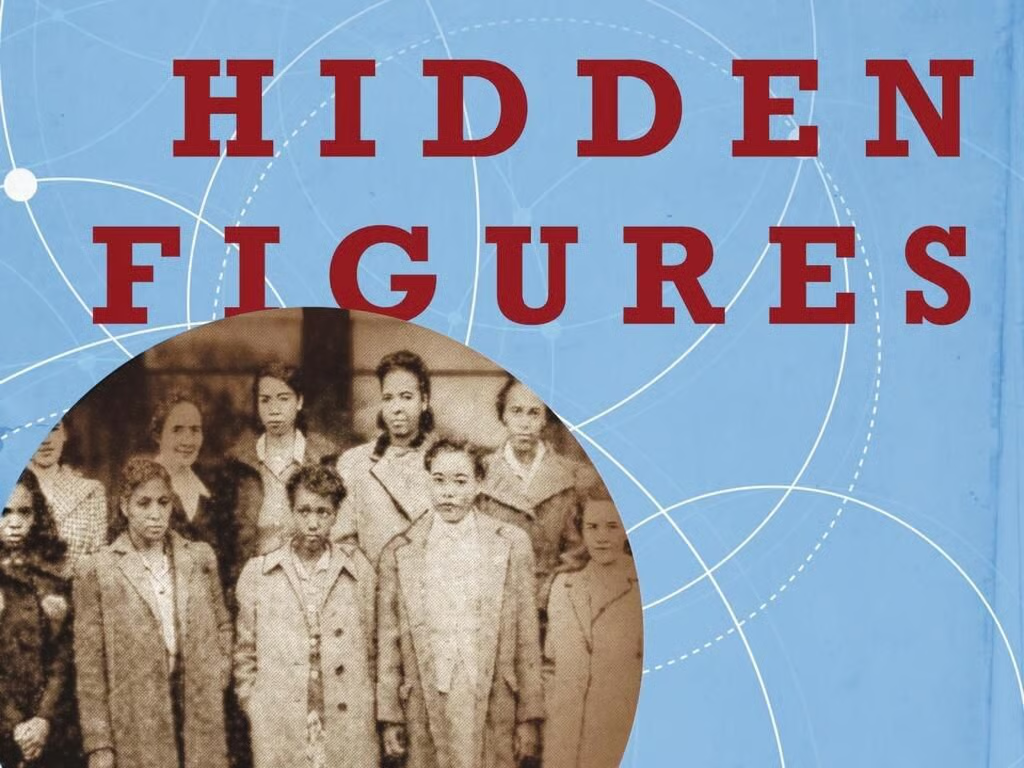
Hidden Figures: The American Dream and the Untold Story of the Black Women Mathematicians Who Helped Win the Space Race by Margot Shetterley
Long before the civil rights movement, a team of black women mathematicians were recruited to help NASA send astronaut John Glenn into orbit. This untold story, written by Shetterley is so incredible that it has inspired a motion picture, out in January 2017, starring Grammy-nominated singer-songwriter Janelle Monae. Shetterly also founded a digital archive called “The Human Computer Project.”
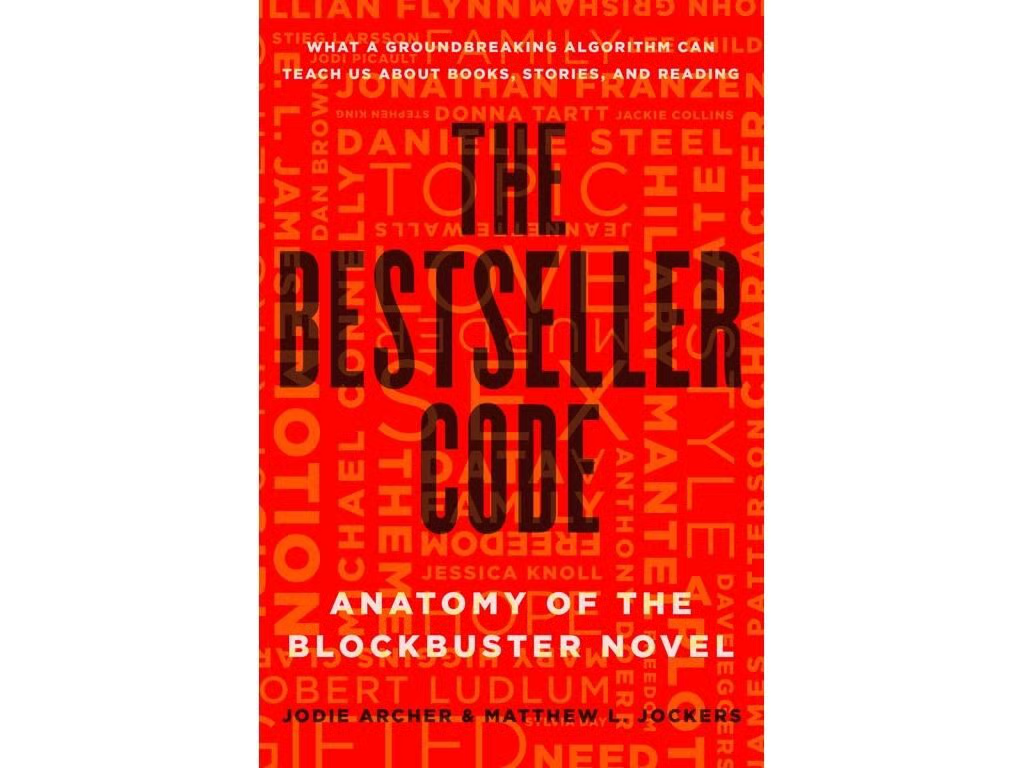
The Bestseller Code: Anatomy of the Blockbuster Novel by Jodie Archer and Matthew L. Jockers
This title applies data algorithms in a unique way–to uncover the code behind creativity. While the book does not help a writer craft a bestseller, it does help explain how the magical formula works, in scientific terms. The system analyzed 20,000 contemporary novels for plot, character, setting, and style. It created a “bestseller-ometer” to determine how these factors worked together to appeal to readers, and it was successful in selecting the bestseller 80% of the time.
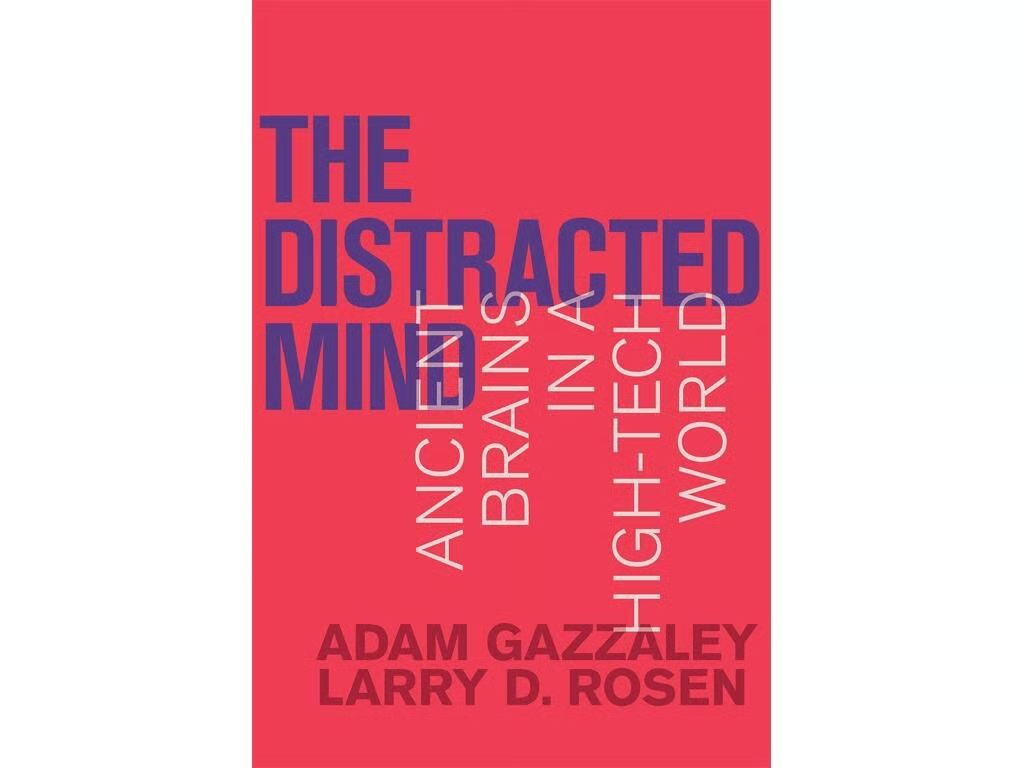
The Distracted Mind: Ancient Brains in a High-Tech World by Adam Gazzaley and Larry Rosen
In this title, co-written by a neuroscientist and a psychologist, a compelling argument is made for smarter use of our devices, which are increasingly at risk of distracting us in our highly-connected world. The authors show the detrimental effects of multitasking, and offer practical tips for helping us all pay better attention.
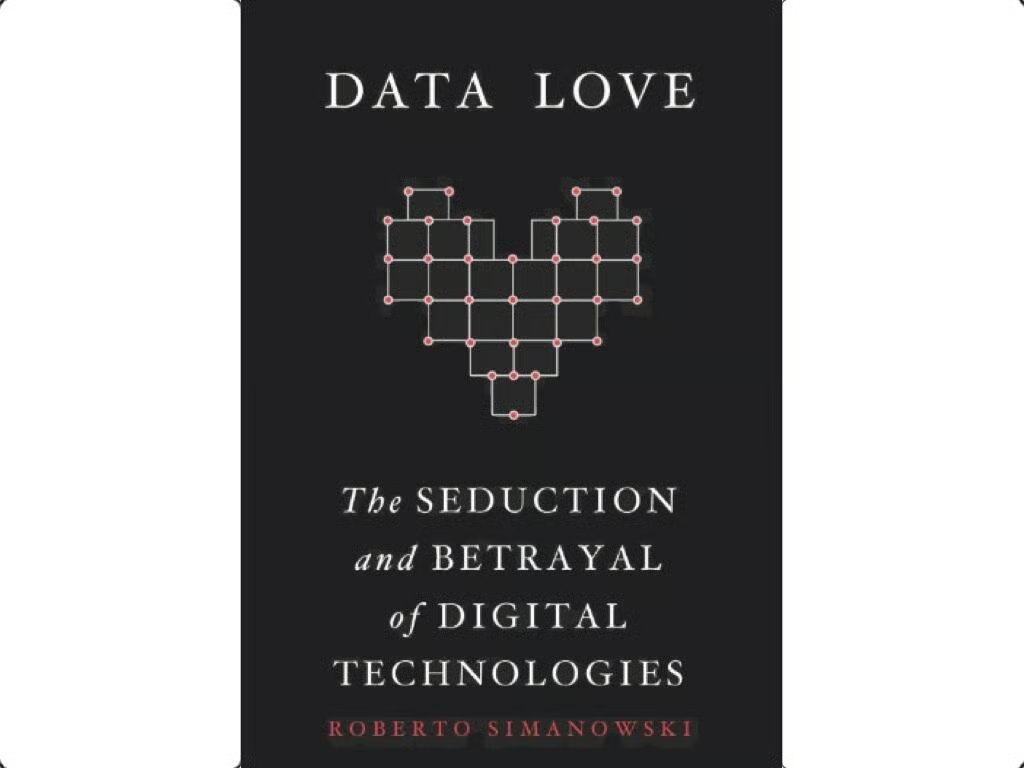
Data Love: The Seduction and Betrayal of Digital Technologies by Roberto Simanowski
Simanowski, a professor at the City University of Hong Kong, takes a philosophical approach to the “love” he sees in the recent explosion of data analysis. This title explores the larger social implications of big data on society.
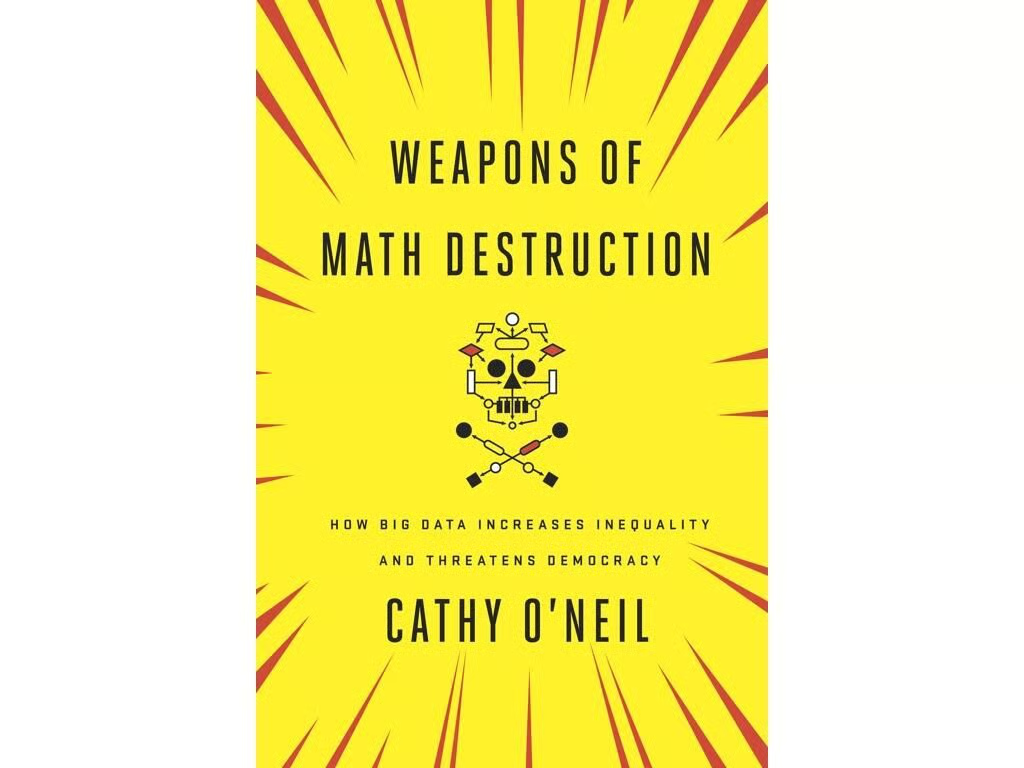
Weapons of Math Destruction: How Big Data Increases Inequality and Threatens Democracy by Cathy O'Neil
This new title, longlisted for the National Book Award, comes from Cathy O’Neil, who has a background in math and spent time working for a risk software company, assessing risk for a hedge fund. O’Neil then became a data scientist, and currently appears on Slate’s Money podcast. According to Kirkus, which awarded Weapons of Math Destruction a starred review, this is a “simultaneously illuminating and disturbing account, she describes the many ways in which widely used mathematic models–based on ‘prejudice, misunderstanding, and bias’–tend to punish the poor and reward the rich.”
Hope Reese is a writer based in Louisville, Kentucky, currently living in Budapest. Her work has appeared in the Atlantic, the Boston Globe, Vox, Vice and other publications.