Images: WGA lurks in Windows Update - TechRepublic

Images: WGA lurks in Windows Update

  • EULAs in view

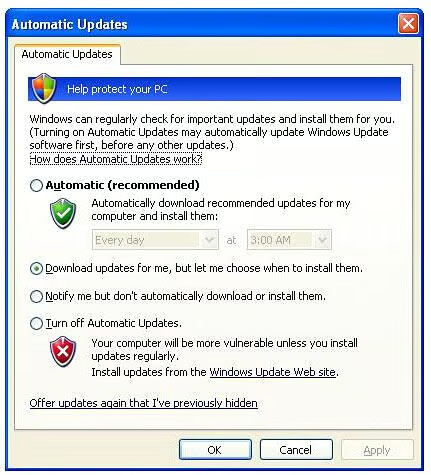
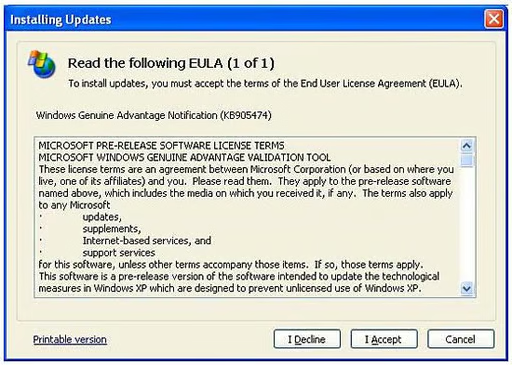
    Microsoft offers users four basic modes to select from when accessing the Windows Update configurator from Windows’ Control Panel.\r\nIn automatic mode, the download and installation take place on their own, and the opportunity to consent to or refuse specific updates comes\r\nup only in connection with the End User License Agreement (EULA) from Microsoft. ZDNet’s David Berlind takes a closer look at EULAs in his blog, including the question of whether the agreement accurately communicates the intent and behavior of the\r\nsoftware, as well as the ramifications of not accepting it.

    David Berlind/ZDNet
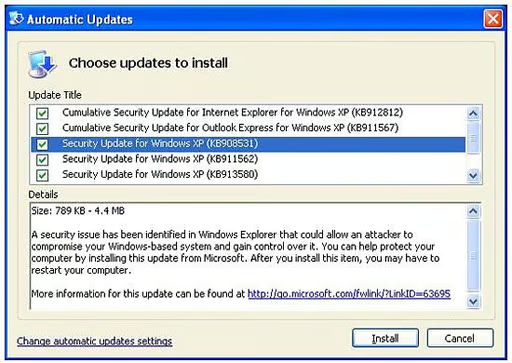
  • A user who chooses to exercise control over the process sees a\r\nlist of updates that have been downloaded to the PC. Each update has a\r\nname, and highlighting that name calls up a short summary of the purpose\r\nof the update and a link to further information.\r\nIn this round of updates, Berlind was not able to spot whether any also\r\nincluded the Windows Genuine Advantage (WGA) software. It didn’t seem to\r\nbe included at first, but a later round of checks revealed that it was\r\nindeed there.\r\n

    \r\nThe WGA program is a precursor to the antipiracy features Microsoft is\r\nbuilding into Windows Vista, expected in January 2007. In Vista, certain\r\noperating system features will only work as long as it is a properly\r\nlicensed copy.

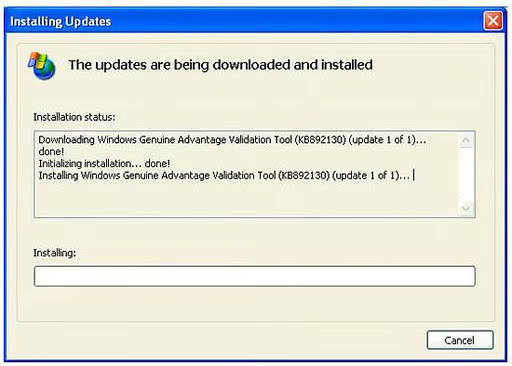
  • Going through the download-and-install process a second time,\r\nBerlind found that the update included the WGA component after all. In\r\nthis screen, the Windows Genuine Advantage Validation Tool appeared to\r\nhave been downloaded, initialized and installed without ever asking for\r\nuser consent.

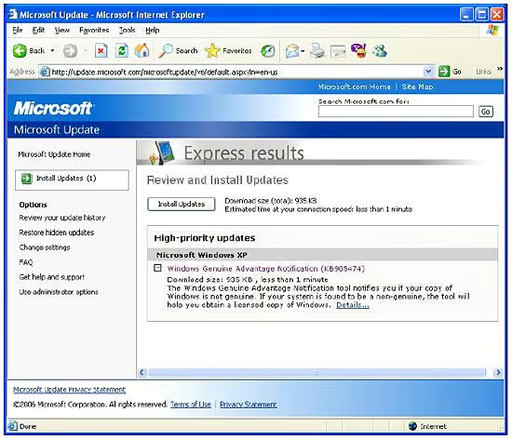
  • Following the steps laid out by Microsoft eventually yielded\r\nword that yet another update was waiting–a “high-priority update”\r\ncalled “Windows Genuine Advantage Notification.” The summary text: “The\r\nWindows Genuine Advantage Notification tool notifies you if your copy of\r\nWindows is not genuine. If your system is found to be non-genuine, the\r\ntool will help you obtain a licensed copy of Windows.”\r\n

    \r\nA few more steps lie ahead for those who want a full accounting,\r\nprompting Berlind to wonder: How many users will follow this circuitous\r\nroute to figure out what this is about?

  • Microsoft notes that the WGA tool is “prerelease software” in the End User License Agreement (EULA), which is displayed when WGA Notifications is about to be installed. People can decline the download at that point. Berlind says that most people click on the license “accept” button without paying any attention to it.

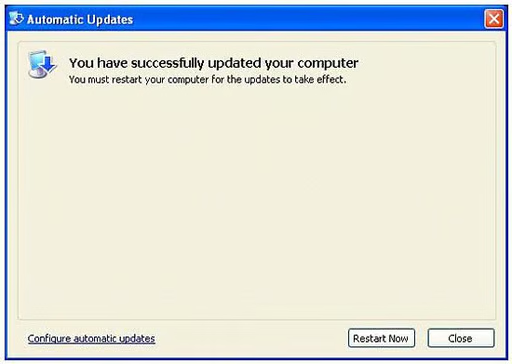
  • This is all the user sees once the updates are done. Berlind\r\nsuggests that this would be a good place for Microsoft to offer more\r\ndetails and functionality–for instance, listing the updates in some\r\nclickable fashion so users can get more information about what they’ve\r\njust done to their computers and perhaps a way to undo specific updates.

1 of 6
BD

Bill Detwiler is the Editor for Technical Content and Ecosystem at Celonis. He is the former Editor in Chief of TechRepublic and previous host of TechRepublic's Dynamic Developer podcast and Cracking Open, CNET and TechRepublic's popular online show. Previously, Bill was an IT manager in the social research and energy industries. He has bachelor's and master's degrees from the University of Louisville, where he has also lectured on computer crime and crime prevention.