Screenshots: Five encryption tools for Windows - TechRepublic

Screenshots: Five encryption tools for Windows

  • a1_TrueCrypt_1.png

    TrueCrypt 1

    \n\tThis gallery is also available as a post in the TechRepublic Five Apps Blog.

    \n

    \n\tOn any given installation of Windows Vista or 7 Ultimate or Windows 8 Pro, there is a neat little built-in feature for encrypting drives called BitLocker. Although it has its uses, like operations involving the encryption of your system drive, a Trusted Platform Module or TPM chip is required. Some business-grade laptops and desktop motherboards supply this hardware, but not everyone has access to a TPM.

    \n

    \n\tPerhaps full disk encryption is not the goal here, and you want to encrypt files on an individual basis rather than partitions, or you want to create virtual mountable “encrypted disk” files that you can tote around and attach at will, whenever you need to drop or grab a file. Whatever your end goal, I will show you five apps for disk and file encryption that will get the job done handily, no matter the task.

    \n

    \n\tThis blog post is also available as TechRepublic Screenshot Gallery.

    \n

    \n\t\n\n

    \n

    \n\tCredit: Images by Matthew Nawrocki for TechRepublic

  • TrueCrypt 2

    \n\tFive Apps

    \n

    \n\t1. TrueCrypt

    \n

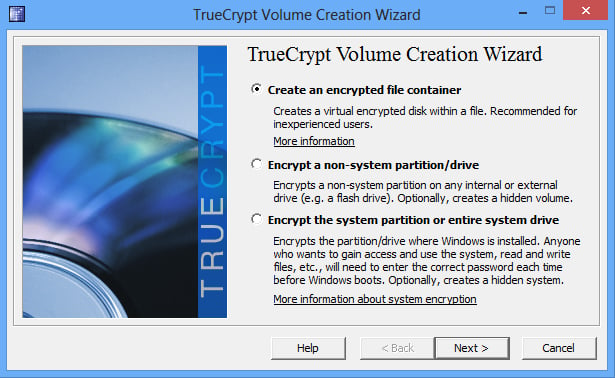
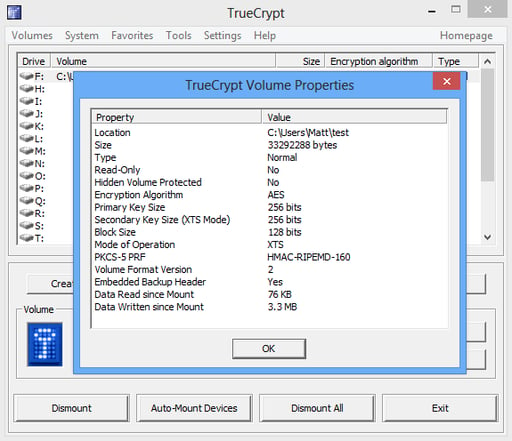
    \n\tMake no mistake; TrueCrypt is one of the most popular freeware alternatives to BitLocker for whole-disk encryption. You can protect all of your drives with high-grade AES and Blowfish encryption schemes, prevent pesky snoops from peeking inside files and even incorporate highly secure boot-strapping. If you are extra paranoid, TrueCrypt can even create a dummy partition with a separate key you can divulge under duress, keeping your confidential partition from ever seeing the light of day. As an added bonus, TrueCrypt is multi-platform and not simply limited to Windows machines.

    \n

    \n\tCredit: Images by Matthew Nawrocki for TechRepublic

  • Kruptos 2 Professional 1

    \n\t2. Kruptos 2 Professional

    \n

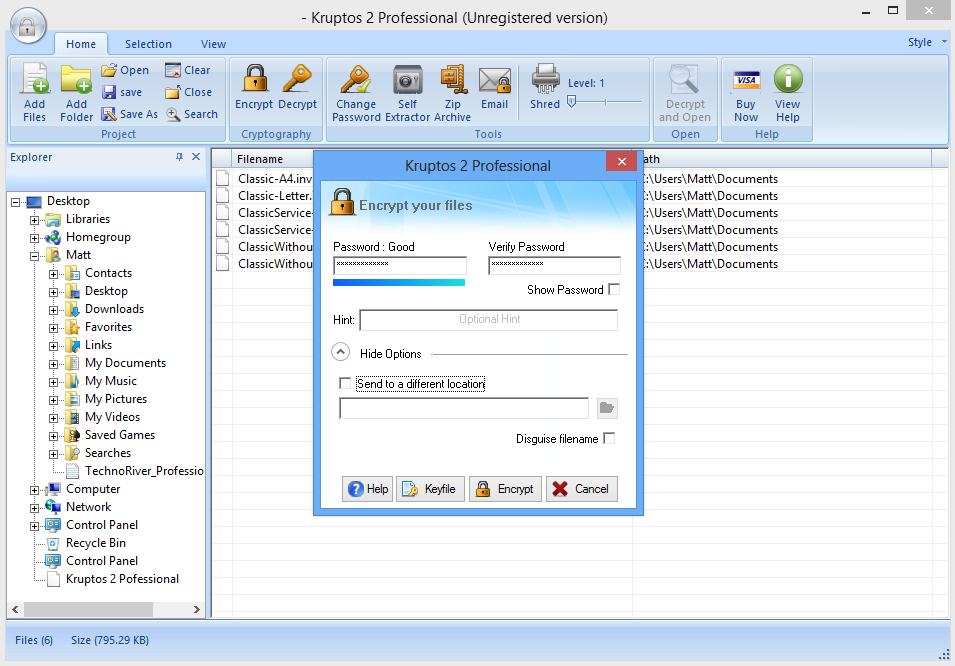
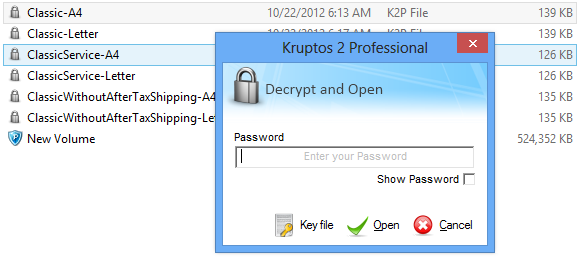
    \n\tIf you are looking for something that takes care of file encryption, Kruptos 2 Professional does a nice job here with its easy to use interface and quick performance. You can also create encrypted ZIPs and self-extracting EXE files as well as secure deletions so that files cannot be recovered so easily. Before running the application, it’s advisable to run it as Administrator in order to avoid any file-write errors that could come up in some directories.

    \n

    \n\tCredit: Images by Matthew Nawrocki for TechRepublic

  • Kruptos 2 Professional 2

    \n\tCredit: Images by Matthew Nawrocki for TechRepublic

  • Privacy Drive 1

    \n\t3. Privacy Drive

    \n

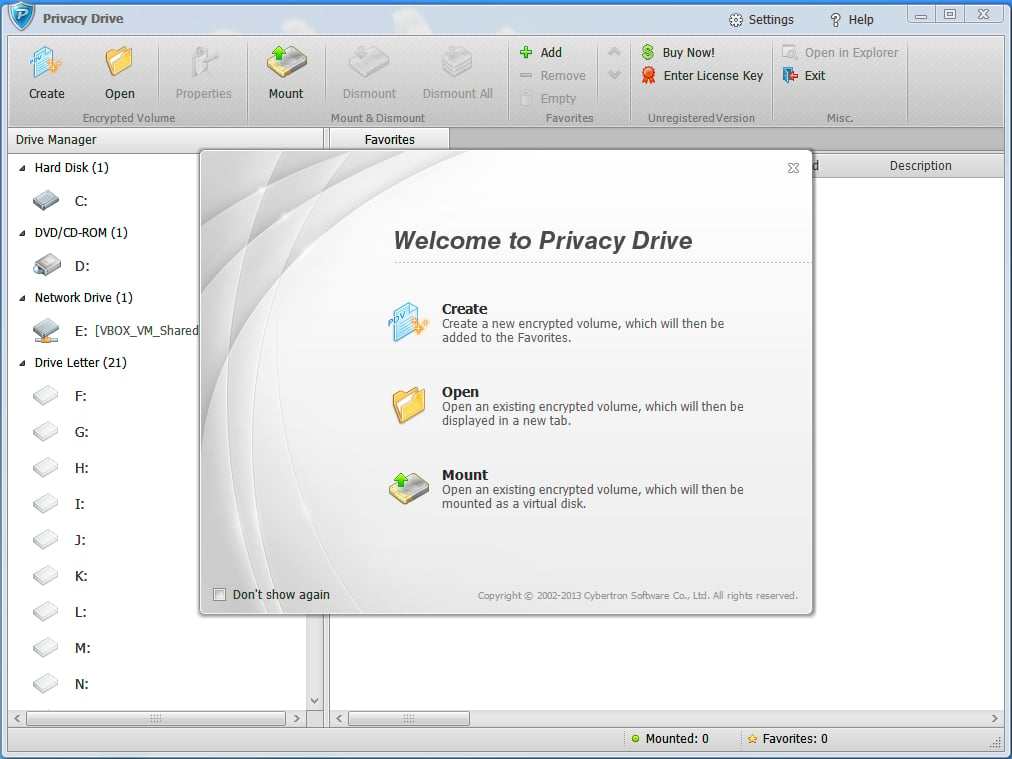
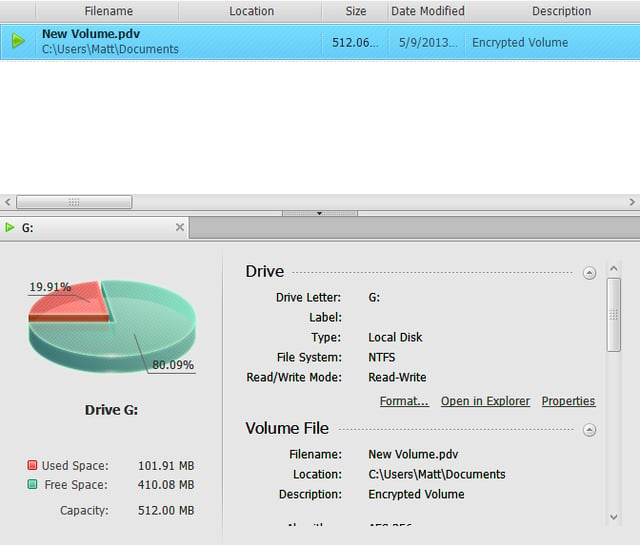
    \n\tFor whipping up secure data containers that can be mounted to your computer for easy and secure access, in a way similar to TrueCrypt’s encrypted containers, Privacy Drive accomplishes the task. It has a clean and simple user interface that incorporates fancy pie graphs for encrypted disk space information and other extras.

    \n

    \n\tCredit: Images by Matthew Nawrocki for TechRepublic

  • Privacy Drive 2

    \n\tCredit: Images by Matthew Nawrocki for TechRepublic

  • GNU Privacy Guard (GnuPG) 1

    \n\t4. GNU Privacy Guard (GnuPG)

    \n

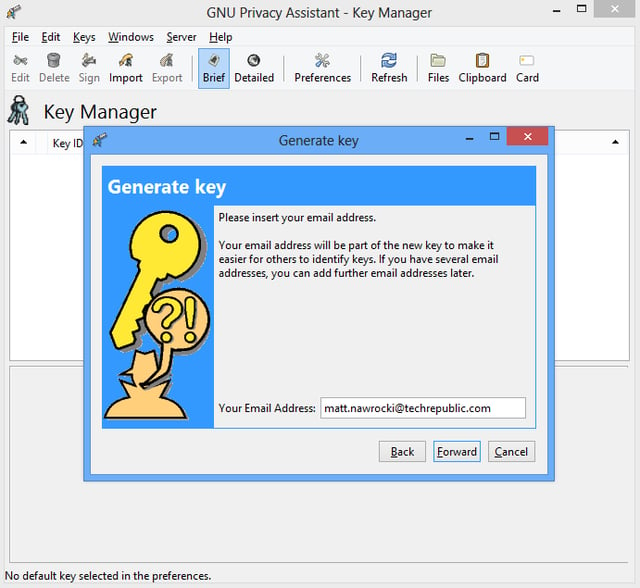
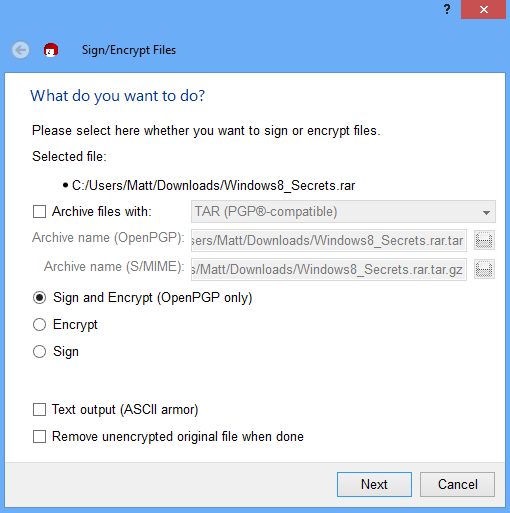
    \n\tIf you insist on only using fully open-source software, GNU Privacy Guard seems fairly competent at handling file encryption. The software seems to be spread out over many tools, but the Windows GUI portion of GnuPG seemed easy enough to get around. You can also manage root certs for S/MIME emails and a key manager to keep all your custom keys safe for use.

    \n

    \n\tCredit: Images by Matthew Nawrocki for TechRepublic

  • GNU Privacy Guard (GnuPG) 2

    \n\tCredit: Images by Matthew Nawrocki for TechRepublic

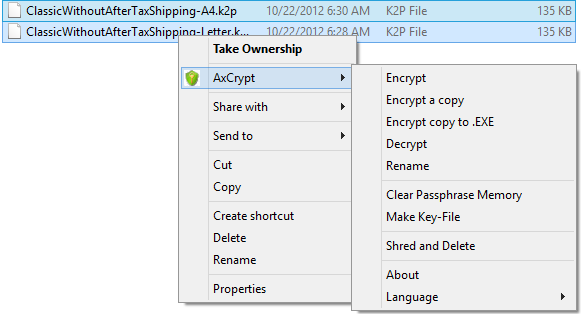
  • AxCrypt 1

    \n\t5. AxCrypt

    \n

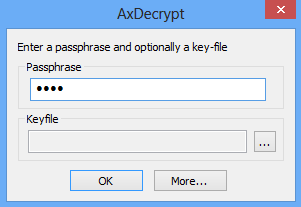
    \n\tSome encryption tools opt for the extremely sparse and no-frills approach to design by residing exclusively in the right-click context menu for Windows Explorer. This is where AxCrypt comes in. Simply select files you want to encrypt, right-click and select your preferred encrypt / decrypt operation you wish to perform. Just because it might appear simple looking, doesn’t mean that it lacks in features though. It feels just as competent as most of the previous apps listed.

    \n

    \n\tCredit: Images by Matthew Nawrocki for TechRepublic

  • AxCrypt 2

    \n\t 

    \n

    \n\tAlso read:

    \n

    \n

    \n\tCredit: Images by Matthew Nawrocki for TechRepublic

1 of 10
Matthew Nawrocki

A former avid technology writer and an IT guru, Matthew is here to help bring the best in software, hardware and the web to the collective consciousness of TechRepublic's readership. In addition to writing for TechRepublic, Matthew currently works as a Customer Success Professional for Ultimate Software in Santa Ana, California.