


- Best overall VPN for the U.K.: NordVPN
- Best for unlimited connections: Surfshark
- Best for number of VPN servers: Private Internet Access
- Best for torrenting: ExpressVPN
- Best for travel in Europe: CyberGhost
- Best open-source VPN: Proton VPN
This review highlights some of the best virtual private networks (VPNs) for users in the United Kingdom in 2026, including IT professionals, remote workers, business users, and privacy-conscious consumers.
VPN usage in the U.K. continues to grow as individuals and organizations prioritize online privacy, secure remote access, and protection when using public Wi-Fi or cloud-based services. VPNs encrypt internet traffic and route connections through secure servers, helping users add an additional layer of privacy and security while browsing online.
In addition to protecting data, many VPN users in the U.K. also rely on VPNs to securely connect to business environments, reduce exposure to cyber threats on public networks, and access region-specific content while traveling abroad.
SEE: 10 Myths about Cybersecurity You Shouldn’t Believe (TechRepublic Premium)
However, not all VPNs provide the same level of performance, transparency, privacy controls, or enterprise features. Choosing the right VPN depends on factors such as security requirements, speed, device compatibility, and ease of use. Here are some of the best VPN services for U.K. users.
| Product | Simultaneous connections | # of U.K. and worldwide (WW) servers | # of countries | Location of headquarters | Pricing |
|---|---|---|---|---|---|
| NordVPN | 6 | 440 U.K. and 6,300 WW | 111 | Panama | From £3.25 per month |
| Surfshark | Unlimited | 200 U.K. and 3,200 WW | 94 | Netherlands | From £1.70 per month |
| Private Internet Access | Unlimited | 1,200 U.K. and 35,000 servers WW | 91 | USA | From £2.03 per month |
| ExpressVPN | 8 | 150 U.K. and 3000 servers WW | 105 | British Virgin Islands | From £5.61 per month |
| CyberGhost | 7 | 500 U.K. and 9,600 WW | 91 | Romania | From £1.85 per month |
| ProtonVPN | 10 | 36 U.K. and 3,000 MW | 69 countries | Switzerland | From £4.28 per month |
NordVPN: Best overall VPN for the U.K.
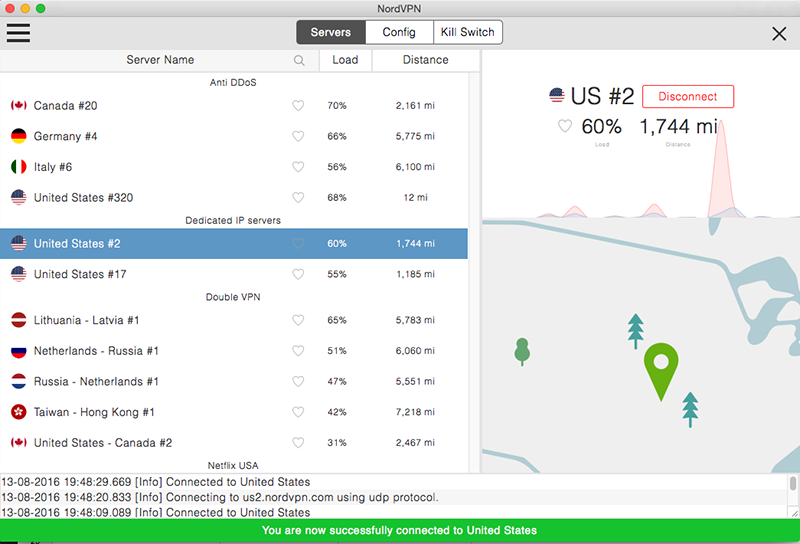
NordVPN is a good choice in the U.K. due to the high performance it offers, as well as making it possible to access overseas content by masking a U.K. IP address. Additionally, it is particularly good at providing British travelers with access to U.K. content while they are traveling internationally. Whether it’s BBC iPlayer or access to British sporting events online, NordVPN can do the job. The company has hundreds of VPN servers spread across the U.K. and thousands internationally. Users are unlikely to be very far from a NordVPN connection point. In addition to good British VPN performance, NordVPN is noted for its streaming quality and collection of security features. Its pricing structure is also reasonable.
Pricing
The Standard plan costs £10.89 per month or £56.83 for the annual plan. The two-year Standard plan costs £78.33 which works out at £3.25 per month. There is also the complete plan at £13.09 per month or £89.85 for the annual plan. The two-year plan costs £132.03. Basic users get a secure, high-speed VPN but are missing malware protection, ad blocking, password management, data breach scanning and 1TB of encrypted cloud storage.
Standout features
NordVPN provides a wealth of security features. These include antivirus, malware detection, data breach scanning, password management, 256-bit encryption, cloud storage, cyber insurance, a way to check malicious links and privacy protection. The company backs this up with independent audits that regularly verify its claim to not keep logs, which can potentially be accessed by unwanted eyes or given to the police when a warrant is issued.
With more than 6,300 NordVPN servers worldwide and the ability to choose the city you prefer to connect to, it has a proven track record when it comes to high performance streaming of services such as Netflix. Brits can also use it to access American TV shows and content that would otherwise be restricted due to their use of a U.K. IP address.
The NordVPN service allows six simultaneous connections and up to 10 devices to be protected. As it is registered in Panama, the company lies beyond the reach of various information-sharing alliances. Users are also unlikely to run into many compatibility issues as it runs well on Windows, MacOS, Android, iOS, Linux and more.
Pros
- Excellent for streaming Netflix, Hulu, Prime and more.
- Great U.K. speeds.
- A wealth of security features.
- No logs.
- Outside the jurisdiction of surveillance alliances.
Cons
- More expensive than some of its rivals.
- Limited to six simultaneous connections.
- Some users find its apps awkward to use, especially on smartphones.
Why I picked NordVPN
NordVPN isn’t quite as cheap as some U.K. VPN options, nor does it have the most U.K. servers. But I feel it scores well in most categories, offers plenty of U.K. servers and has the biggest presence in terms of the number of countries covered.
Visit NordVPN
Surfshark: Best for unlimited connections
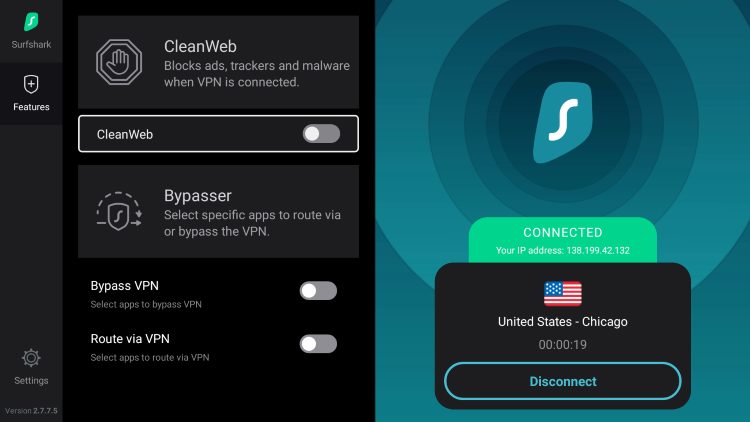
Surfshark offers many of the features of NordVPN at a much lower price. It operates around half the servers of its big rival. But it still provides more than 200 U.K. servers and more than 3,000 worldwide. It is good at unblocking overseas movies, TV shows and streaming services. It also allows unlimited simultaneous connections and has decent security and privacy capabilities. As it is based in the Netherlands, however, it can fall victim to the prying eyes of various countries that like to snoop on internet traffic.
Pricing
Surfshark recently cut the price of its two-year subscription to £44.32 for 26 months or £1.70 a month. In comparison, the 12-month plan costs £39.82. This is for the Starter plan, which comes with a VPN, an ad blocker, a pop-up blocker and unlimited simultaneous connections. Further plans are a little more expensive and add more features. But they remain competitively priced.
Standout features
Although Surfshark doesn’t offer quite as many security features as NordVPN, it still has plenty: AES-256 encryption, split-tunneling, leak protection, a whitelister, kill switches if a connection is dropped, and malware and ad protection. It even provides a way to mask VPN traffic as regular internet traffic in case a government likes to block VPNs.
Performance is good, too. It is probably more than sufficient for most users. It is good at unblocking services such as Netflix, BBC iPlayer and Amazon Prime. As for ease of use, users report that Surfshark is simple to navigate and easy to use. There are plenty of apps available that can be shared across as many devices as the user desires.
Pros
- Unlimited simultaneous connections.
- Low cost.
- Good performance.
- Decent range of security and privacy features.
Cons
- Doesn’t provide static IP addresses.
- No free version.
- Dutch headquarters lie within surveillance alliance jurisdictions.
Why I picked Surfshark
Both Surfshark and Private Internet Access offer unlimited simultaneous connections, but I give Surfshark the nod due to its slightly lower cost and greater number of countries served.
Visit Surfshark
Private Internet Access: Best for number of VPN servers
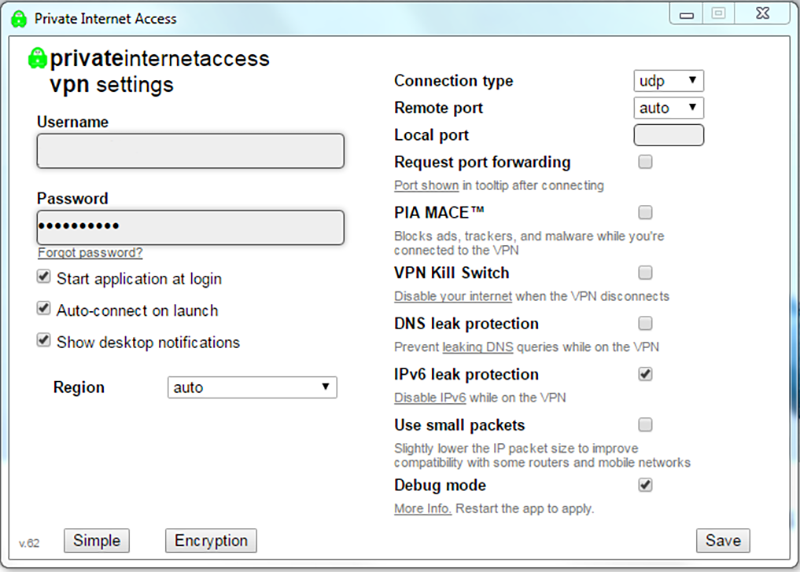
This U.S.-based provider has a no-logs policy that has been verified by third parties. It has a good record of standing up to government agencies that try to bully it into providing user data. In some cases, it has shut down VPN servers rather than comply. However, it is located within the jurisdiction of the Five Eyes.
Private Internet Access is strong when it comes to the quantity of servers under its control — 35,000 beats everyone else. Its extensive customization features may be attractive to certain users who may then be willing to pay more for it than others in this guide.
Pricing
Pricing starts at £2.71 per month based on a one-year subscription.
Standout features
PIA is strong on privacy and is one of the rare VPNs that are based on open source. Its features include AES 256-bit encryption, a kill switch, obfuscation (making it harder for apps and services to realize you’re using a VPN), multi-hop to route your traffic through another server for stronger encryption and split tunneling for users who want to use a VPN for some applications and not for others. This VPN is noted for streaming and unblocking content that has geographical protection.
Performance is adequate, but not as good as some of its rivals. But it offers unlimited simultaneous connections and supports pretty much all platforms. Linux users find it easy to use as it has a familiar interface, but non-Linux users may struggle.
Pros
- Unlimited simultaneous connections.
- More servers than any other VPN provider.
- High level of customization.
Cons
- Complex dashboard.
- No free version.
- Headquarters fall under surveillance alliance jurisdiction.
- Performance is less than that of some other VPNs.
Why I picked Private Internet Access
Nobody comes close to PIA when it comes to the sheer quantity of servers available all over the world. Coupled with low cost and unlimited simultaneous connections, this VPN has plenty going for it.
Visit Private Internet Access
ExpressVPN: Best for torrenting
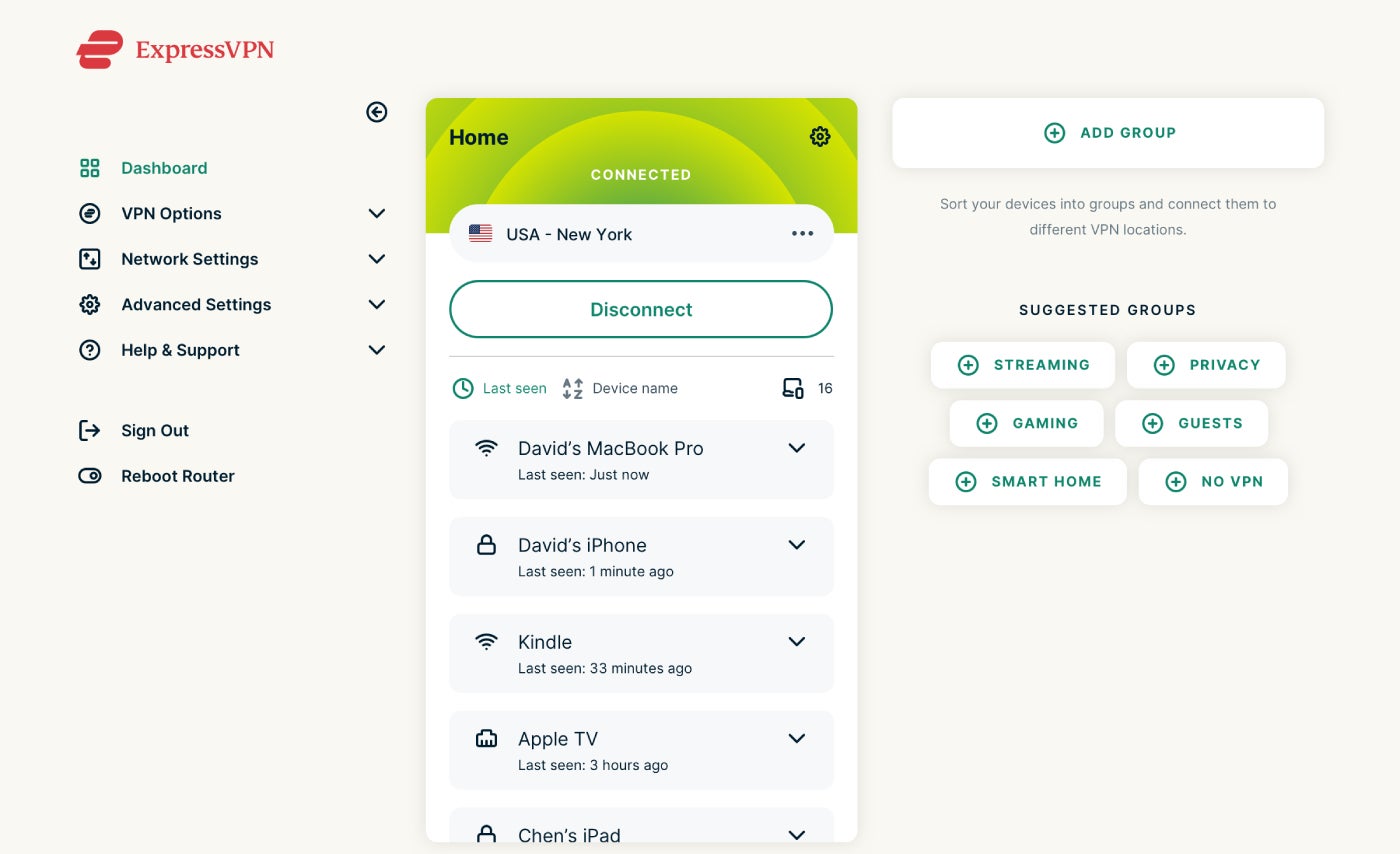
ExpressVPN is pricier than its rivals but makes up for it with a raft of top security features. It is excellent at helping British road warriors and expats keep up-to-date with home-grown streaming content and sports channels. The company also provides plenty of apps and works across almost all platforms and devices. Users can connect manually to plenty of U.K. locations, too, if they wish.
Pricing
ExpressVPN offers a monthly, six-month and 12-month plan. A monthly plan starts at $6.60 for a 12-month plan and rises to £10.76 if paid month to month. Prices may vary based on short-term discounts. The lowest amount found so far for longer contracts, based on discounts, is £5.61.
Standout features
Users can determine whether to prioritize speed or security to suit their online and privacy needs with ExpressVPN. The performance is good enough that many use it for torrenting. Its speed makes it a good choice for advanced users and for those who are into online gaming and use streaming services extensively.
The company goes to great lengths to protect user privacy, despite being located in the British Virgin Islands. It has a verified no-logs policy and the most servers of any VPN provider. Ease of use is another ExpressVPN strength. Security features include 256-bit encryption, a password manager and a kill switch.
Pros
- Extensive VPN server network.
- Not under any surveillance alliance jurisdiction.
- No-logs policy.
Cons
- Only eight simultaneous connections.
- No static IP addresses.
- Not the cheapest VPN.
Why I picked ExpressVPN
ExpressVPN is the priciest VPN on our list. That said, some are just as expensive or more so if you pay for them month to month. ExpressVPN is a very good VPN with wide coverage. Users seem especially impressed by its torrenting performance.
Visit ExpressVPN
CyberGhost: Best for travel in Europe
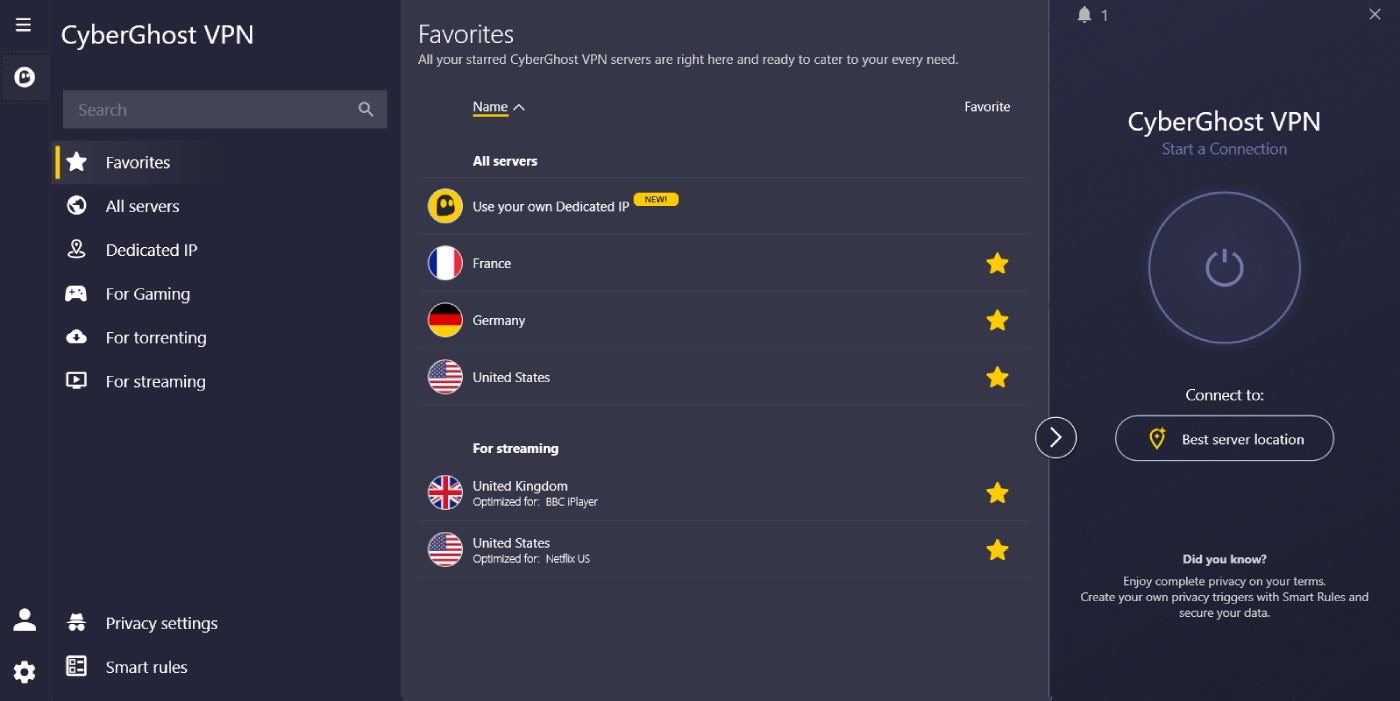
CyberGhost is a decent VPN and has more than 9,000 servers around the world. As it is based in Romania, it provides excellent privacy protection and has the bulk of its servers in Europe. This makes it one of the best selections for Brits frequently traveling to or living in Europe.
This VPN service also provides access to certain servers that are optimized for gaming and streaming or have added security features. Some servers are specifically recommended for Netflix, for example. Beyond that, it comes with content-blocking, but it can sometimes struggle to unblock certain services, particularly when the user is outside of Europe.
Pricing
Pricing per month for 24 months works out at £1.85 a month (includes three extra months free). If you pay it month to month, the rate shoots up beyond £10.
Standout features
The company has more than 500 servers in three U.K. cities. Brits located in Europe can specify the type of server they want to access, such as one optimized for Netflix or even one known as the NoSpy server. As it is in Romania and not in a colocation provider, it is pretty much out of the reach of government tentacles.
It has a strong privacy and no-logs policy; however, these are not independently audited. Its security features are adequate, as is its performance. But neither comes near what is offered by some of its rivals.
Pros
- Specialized servers for streaming, gaming, torrenting and privacy.
- Easy to use and learn.
- Inexpensive.
- Dedicated IP addresses are available.
Cons
- Support is not as strong as that of other VPN providers.
- Seven simultaneous connections.
Why I picked CyberGhost
With its headquarters in Romania and most of its servers in Europe, CyberGhost is the obvious choice for Brits traveling to or living in Europe.
Visit CyberGhost
Proton VPN: Best open-source VPN
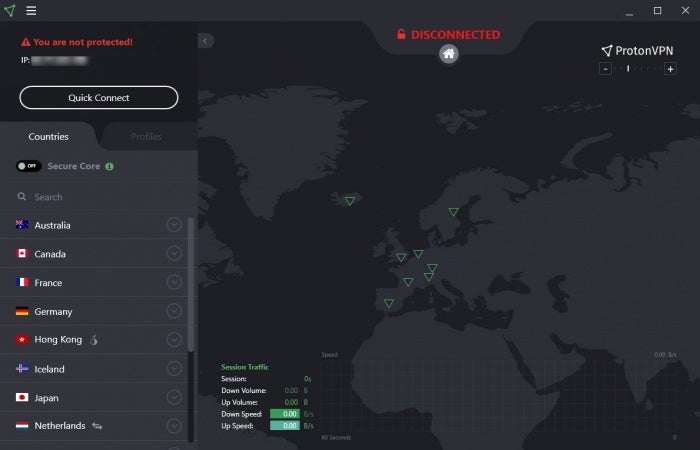
Proton’s claim to fame is its Proton Mail service, which provides great levels of privacy and encryption for those using email. Anyone sending sensitive emails can use it to mask the content and prevent it from being intercepted and read. The company has added other services, such as a VPN. As such, its VPN is good but not the best. Its main audience is likely to be either those already using Proton Mail or those favoring open-source tools.
Proton provides VPN users with a network of around 3,000 servers. For highly sensitive traffic, its Secure Core service routes network traffic through countries like Switzerland and Iceland that lie outside the surveillance territories. The company is especially strong on anonymity and is based in Switzerland. But it doesn’t have an especially strong server footprint in the U.K.
Pricing
Pricing starts at £4.28 per month for two years and rises based on shorter contracts. Users pay more for the professional version.
Standout features
Proton VPN uses AES 256-bit encryption, a malware blocker, good customer support, unlimited data and no ads. It allows up to 10 devices to connect simultaneously and can run most platforms (Windows, MacOS, ChromeOS, Linux, iOS and Android).
As an open-source tool, its code is open to inspection. If desired, users can install Proton VPN onto their router to protect all devices connected to that Wi-Fi network. Its free plan is also better than many, so some users may be happy to take advantage of it rather than pay a subscription.
Pros
- Secure Core servers located in countries that are not part of surveillance alliances.
- Good free version with unlimited data.
- Open source.
Cons
- No static IP addresses.
- 10-device limit.
- Complicated interface.
Why I picked Proton VPN
There are two open-source VPNs on the list, but Proton VPN comes out ahead due to its track record within the open-source world. Its Proton Mail service is trusted around the world for privacy, and its newer VPN service follows in that tradition.
Visit ProtonVPN
More cloud security coverage
- Blackpoint Cyber vs. Arctic Wolf: Which MDR Solution is Right for You?
- 6 Best Open Source Password Managers for Windows
- Unified by Design: The Smart Stack Advantage of NinjaOne and Microsoft Intune
- Free Business Email: I Found 8 Legit Ways to Get One
How to choose a VPN in 2026
When selecting a VPN, users should evaluate several important factors before making a decision.
Security and Privacy Features
Strong VPNs should include modern security protections such as:
- AES-256 encryption
- WireGuard or OpenVPN protocols
- Kill switch functionality
- DNS leak protection
- Multi-factor authentication support
- Verified no-logs policies
Independent security audits and transparency reports have become increasingly important in 2026 as users seek greater assurance around privacy and data handling practices.
Performance and Reliability
VPN performance can vary significantly depending on server availability, network congestion, and protocol optimization. Users who regularly stream content, participate in video conferencing, or transfer large files should prioritize VPNs with:
- Large global server networks
- High-speed infrastructure
- Optimized streaming and gaming servers
- Low latency connections
Reliable uptime and consistent speeds are especially important for hybrid and remote work environments.
Device Compatibility
Modern VPNs should support a wide range of platforms and devices, including:
Users who frequently switch between devices should look for services that support multiple simultaneous connections.
Consumer vs. Enterprise VPNs
Consumer VPNs are generally designed for personal privacy, streaming, and everyday browsing. Enterprise VPN solutions often include additional features such as:
- Centralized administration
- Identity management integration
- Dedicated IP addresses
- Secure remote workforce access
- Compliance and audit controls
Organizations should evaluate whether business-focused capabilities are necessary for their environment.
Open Source vs. Proprietary VPNs
Some VPN providers offer open-source applications that allow researchers and developers to review code transparency. Other providers rely on proprietary platforms with additional features and integrations.
Open-source VPN applications may appeal to technically experienced users, while consumer-focused proprietary VPNs often prioritize simplicity and usability.
Customer Support and Transparency
Strong customer support remains an important factor when evaluating VPN services. Providers should ideally offer:
- Live chat support
- Knowledge bases and setup guides
- Email support
- Transparent pricing
- Clear privacy policies
- Independent security audits
Transparent communication around data handling and infrastructure practices can help build trust with users.
Why VPN Usage Continues to Grow in the UK in 2026
VPN adoption in the U.K. remains high as users increasingly prioritize cybersecurity, online privacy, and secure access to digital services. Common reasons people use VPNs include:
- Protecting data on public Wi-Fi
- Securing remote work connections
- Enhancing online privacy
- Encrypting internet traffic
- Accessing region-specific content while traveling
- Reducing exposure to cyber threats
Mobile VPN usage has also grown significantly as more users rely on smartphones and tablets for work, banking, and everyday communications.
Frequently Asked Questions (FAQ)
What is a VPN?
A virtual private network (VPN) encrypts internet traffic and routes it through a secure server, helping improve privacy and security while browsing online.
Are VPNs legal in the UK?
Yes. VPNs are legal to use in the United Kingdom for legitimate privacy, security, and business purposes.
What is the best VPN protocol in 2026?
WireGuard and OpenVPN remain two of the most widely trusted VPN protocols due to their balance of speed, security, and reliability.
Do VPNs slow down internet speeds?
Most VPNs introduce some speed reduction because traffic is encrypted and routed through secure servers. However, premium VPN providers typically minimize performance impacts through optimized infrastructure.
Are free VPNs safe?
Some reputable free VPNs can be safe for light usage, but many free services have limitations involving bandwidth, server access, logging practices, or advertising. Users should carefully review privacy policies before using free VPN services.
Should businesses use enterprise VPNs?
Organizations with remote or hybrid workforces often benefit from enterprise VPN solutions that provide centralized management, stronger access controls, and integration with broader cybersecurity platforms.
Can a VPN protect against cyberattacks?
A VPN helps encrypt internet traffic and reduce exposure on unsecured networks, but it should not replace endpoint protection, MFA, patch management, or other cybersecurity controls.
Are VPNs useful for public Wi-Fi security?
Yes. VPNs can help protect sensitive information when using public Wi-Fi networks by encrypting data transmitted between devices and VPN servers.
Methodology
Our VPN recommendations are based on market research, product analysis, industry reporting, independent testing, user reviews, and cybersecurity best practices. Each VPN solution was evaluated using factors such as:
- Security and encryption capabilities
- Performance and reliability
- Server availability and geographic coverage
- Device compatibility
- Privacy and transparency practices
- Customer support quality
- Pricing and overall value
The goal of this review is to help users identify VPN solutions that balance usability, security, privacy, and performance for modern personal and business use cases in 2026.
This article was originally published by Drew Robb in June 2024 and updated by Ken Underhill in May 2026.