


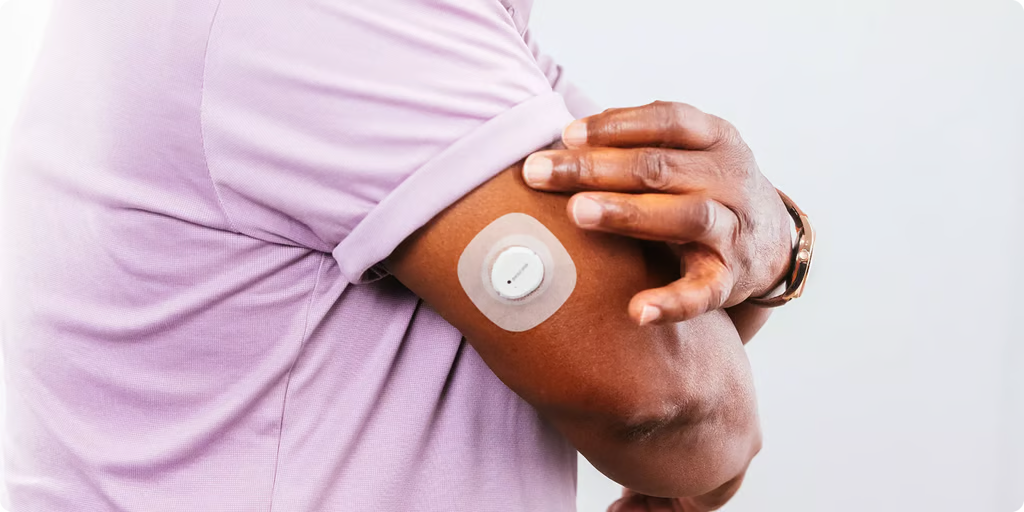
Continuous glucose monitors (CGMs) can warn people when their blood sugar rises. Researchers have now paired one with an implant capable of responding automatically.
Scientists at ETH Zurich have developed a wireless device that lowered blood sugar without administering insulin in mice with type 2 diabetes, according to findings published Oct. 22 in Science.
The system links glucose monitoring to automatic treatment, but it has not yet been tested in humans.
A phone connects the glucose sensor to the implant
Researchers call the device ECHO, short for electrocatalytic closed-loop health optimization. A commercial CGM, typically worn on the upper arm, measures glucose in fluid beneath the skin. ECHO relies on readings from the separate sensor to determine when treatment should begin.
Measurements travel over Bluetooth to a smartphone or smartwatch, similar to the connection used by CGM-compatible apps. Once glucose exceeds a programmed threshold, the connected device instructs ECHO to activate. Treatment stops automatically when levels return to the target range.
According to ETH Zurich, a small electrical current activates a catalyst containing tiny gold and platinum particles. It converts some of the excess glucose into gluconate, a substance subsequently eliminated through urine. No insulin or other glucose-lowering medication is delivered.
An electronic controller housed in a 3D-printed casing manages the reaction, with power supplied wirelessly.
Blood sugar returns to normal within an hour in mice
Within an hour of activation, ECHO brought blood sugar back into the normal range in mice with type 2 diabetes, according to the study published in Science. Researchers also evaluated the implant’s effects over a six-week treatment period.
Glucose control was accompanied by metabolic changes. Treated mice lost weight as their bodies began using more fat for energy. Triglyceride levels also declined, and researchers reported no detectable hypoglycemia or adverse physiological, inflammatory, or behavioral effects during the six-week treatment period.
Researchers also tested the catalyst in a reservoir containing five liters of glucose-containing nutrient solution, roughly equivalent to an adult human’s blood volume. The catalyst converted glucose in that larger volume, but the experiment did not establish whether the implant could safely control blood sugar in a human body.
Having completed these experiments, the team plans to develop ECHO into a medical device, with human testing still ahead.
What must be proven before automatic treatment reaches patients
ECHO’s potential lies in connecting glucose readings directly to treatment without delivering a glucose-lowering drug. If future human studies establish that it works safely, the approach could reduce some of the manual responses involved in diabetes management. For now, the mouse results demonstrate an experimental approach rather than an available treatment option.
The distinction between monitoring and treatment matters. An implantable glucose monitor entering human testing collects readings; ECHO is designed to act on them. Evaluating a future treatment implant would therefore require evidence about both its glucose-lowering effects and the reliability of the connected system controlling it.
Existing smartwatch glucose alerts illustrate how settings and connectivity can affect access to readings and warnings. For ECHO, important questions include what happens when sensor readings become unavailable, wireless power is interrupted, or a connected device loses communication. The findings described here do not establish how it would handle those situations in everyday human use.
Patients and clinicians would also need to understand how automatic glucose removal interacts with prescribed medications, whether interventions are recorded, and how treatment could be paused. Longer-term human evidence would be needed to assess sustained effectiveness and safety. Those answers would determine whether the technology reduces the burden of diabetes care while giving patients and clinicians enough information and control to manage treatment.
Read more: While ECHO remains experimental, a clinical trial found that continuous glucose monitors improved blood sugar control in some adults with type 2 diabetes who were not using insulin, showing how connected monitoring can already support care.